寡人好色
5、寡人好色
原创 杨子 道藏研究 2021-03-04
本真自然的天性流露,让人无比喜欢。据观察,总是对“男人好色”不满意的,多半不是女人,而是男人。
因为我们的哲学、史学甚至文学,基本都是出自男人之笔。中华文明史涣涣几千年,千秋史笔,基本都是男性。
不好色,还算是男人吗?翻遍史书,即使太监,有条件后,也要找宫女“对食”,就是结成“夫妻”一起过活。据说,折磨女人最残酷的不是男人,而是太监。因为其“不能事”,加上在宫里的地位犹如“蝼蚁”,没有作为一个生命的起码尊严,卑躬屈膝白日工作结束,在漫长的黑夜里,其内心的狂乱和无名之火,都发在了枕边人身上。
古典文字,关于性爱美好的描述,要比白话文含蓄多了,但确是含而不隐,淫而不色,经典文字,莫过于张生与崔莺莺的性爱过程中,张生的心理活动:
软玉温香抱满怀。阮肇到天台,春至人间花弄色。将柳腰款摆,花心轻拆,露滴牡丹开。(元王实甫《西厢记》)

然而,这只是成功男人的体验罢了。此之谓好色。
如果美食好吃,谁又不好?如果颜色好看?喜欢也是自然的天性。
真正可怕的,不是天性流露,而是对天性的压抑和扭曲。
男人看到漂亮的女人,忍不住动作,跟小狗狗见电线杆就抬腿一个原理。小狗见到稍微有一点儿高度的东西就抬腿,多半不是为了撒尿,而是一种“宣言”,宣布对领地的占有。
在动物界,雄性对世界最大的野心,就是领地和异性。而且占有领地面积的大小、占有异性数量的多少,往往是决定其成功程度的标志。这一法则,在人类也适用。似乎,更适用。
帝王不但追求国土面积无限扩大,后宫数量也是一个目标。皇帝的后宫可佳丽三千,多的看不过来,有些宫女,一辈子都见不到皇帝。就连四大美女之一的王昭君,也是见不到君王的。王昭君在宫里守寡,实在办办法,最后自己主动申请去和亲,把自己体面的嫁了,而且是国嫁。这是她的智慧。否则再老下去,没法收拾。可见后宫竞争的激烈程度。也难怪元稹有诗云:
廖落古行宫,宫花寂寞红;
白头宫女在,闲坐说玄宗。
那些青春年少被送进宫的美女们,白了头也没见到她们朝思暮想的玄宗皇帝。帝王的女人之多,超越了数字统计。公卿大夫往下,数量越来越少,到社会底层,娶一个媳妇都困难。
考证了一下,说男人好色是毛病,并把好色归类于“不良嗜好”,源自儒家。
儒家所谓的“寡人之疾”指的就是“寡人好色”,意思是男人的通病就是好色。典出《孟子》一书,孟子去见梁惠王,劝他行王道、施仁政,
王曰:“寡人有疾,寡人好色。”(《孟子 梁惠王下》)
齐宣王并不想为了成为什么明君而牺牲自己的爱好。他直白地说:
“我有个毛病,我好色。”

孟子于是举例历史事实,说明了好色是大家的共同的爱好,不影响行王道、施仁政。可见,当初的儒家,对意识形态还是态度灵活的。
管仲给齐桓公出主意—---“尊王攘夷”以成大事。齐桓公也说自己好猎、好色,怕成不了事。管仲立即说这两点不妨碍争霸事业,只要会用人就行。但用人有疑,派人掣肘,就有碍争霸(言外之意:你要用我,就得相信我)。于是齐桓公拜管仲为相。成就了霸业。管仲不但不反对“好色”,他还充分利用了“男人好色”这一天性,去赢利。他把妓院收归国有,与盐业、铁等一样,成为官办企业,保证了国税收入。管仲这是利用人性赚钱。
利用人性赚钱,是永远赚不完的。很多成功的人,都是充分了解并利用了人性。
可见,那个时代的主流价值观认为,“好色”与“好游”、“好猎”、“好吃”等一样,只是一种奢侈的爱好。特别是对君王来说。尽情拥有异性,是至尊的特权。翻遍史书,代代如此。
同为战国时代,在楚国,就因为“好色”的话题引起了一番故事。楚王好色,大臣们不敢说。就相互告状,揭发同僚好色。有一则,很是有趣。
楚国大夫登徒子,跟楚王说防着宋玉,不要让他出入后宫之门,因为宋玉长得帅、又善言、又好色。
宋玉知道了,就替自己辩解说:
……东家之子,增之一分则太长,减之一分则太短 ;著粉则太白,施朱则太赤;眉如翠羽,肌如白雪;……(战国 宋玉《登徒子好色赋》)
宋玉说他的邻居(东家之子)这么美的女人,“然此女登墙三年,至今未许也”,趴在墙上偷窥他三年,他一直都没有回应美女那份痴情。说明自己不好色。而登徒子的老婆奇丑无比,登徒子却非常喜爱她,还与她生了五个孩子。可见登徒子才是好色之徒。
很显然宋玉这种理论和逻辑都是有问题的。但不管怎么说,《登徒子好色赋》一旦成文,便成了千古名篇,而登徒子好色之名也做实了。真是天大的冤枉。文人,损起来是很可怕的。也难怪历史上的聪明脑袋都不敢得罪读书人。就怕会他们下笔编排自己。
在中国历史,敢得罪读书人的君王,排前三名的是秦始皇、汉高祖、毛泽东。
有人借儒家书籍的话点批秦始皇,于是始皇让大家给自己提意见,没人说,但背后言论纷纷。始皇帝认为那些儒生“腹诽”,在肚子里批评自己,于是把他们给坑了。由是,后世提起儒生,还有一种称呼是:
始皇未坑之辈!
尽管秦始皇的丰功伟绩也不少,却因得罪了读书人,而骂名千古。
刘邦看不起那些口若悬河、夸夸其谈的儒生。
沛公不好儒,诸客冠儒冠来者,沛公辄解其冠,溲溺其中。与人言,常大骂。(司马迁《史记 郦生陆贾列传》)
大意:沛公不喜欢儒生,客人中有戴着儒士帽子来的,沛公就拿了他的帽子,在里面小便。跟儒生说话,经常破口大骂。
文革的事,不讲。

回到原话题。
到了唐朝,访妓成了一种上流社会的时尚。去风月场所,不仅是要有钱,更重要的,还得有文化。那时候的妓女不但有倾国倾城之貌,还要歌舞琴棋等才艺俱佳。所以那时候能与妓女同行都是风光无限的事。
李白,一生梦想做神仙,号“谪仙人”,意思是“贬谪到人间的神仙”。他的诗中,三句不离酒,四行不离仙,所以浪漫,所以诗仙。他的诗中有“三好”非常明显,即“好仙、好酒、好色”。关于“好色”,他曾有诗云:
安石东山三十春,
傲然携妓出风尘。
楼中见我金陵子,
何似阳台云雨人。
(唐 李白《出妓金陵子呈卢六四首之一》)
此诗很有画面感。读来让人忍不住发笑。
作者对于谢安(安石)的“傲然携妓出风尘”的自由与洒脱充满着羡慕嫉妒恨,他个人的真性情,以及,唐朝的开放与豪迈,跃然纸上。“傲然携妓”一词似乎也只能在那个魏晋风流时代,及开放的大唐王朝,也只能在谢安、李白这样的不羁文人身上最为合适,他梦想醉熏熏的走在大路中央,臂挽集容貌与才华于一身的名妓,无比自豪,鼻孔朝天,迈着六亲不认的步伐,傲然而去。接下来就是“阳台云雨”,又把那个才情色貌俱全的宋玉给拉出来了,有无穷意,巫山之景象,不字而成。
李白的可爱在于其真性情。

不仅是对“好色”的描述生动有趣,而且对自己的“好酒”也毫不掩饰,他曾以诗言志:
《春日醉起言志》
……
所以终日醉,颓然卧前楹。
……
感之欲叹息,对酒还自倾。
浩歌待明月,曲尽已忘情。
这是李白的言志诗,他认为人生如梦,辛劳一生是不值得的,要及时行乐,所以他的志向直白而简单,那就是:
喝酒,
自己喝酒,
终日醉酒。
哈哈。
不仅“好酒”与“好色”,而且直言“好酒色”的文字也不少:
美酒樽中置千斛,
载妓随波任去留。
(李白 《江上吟》)
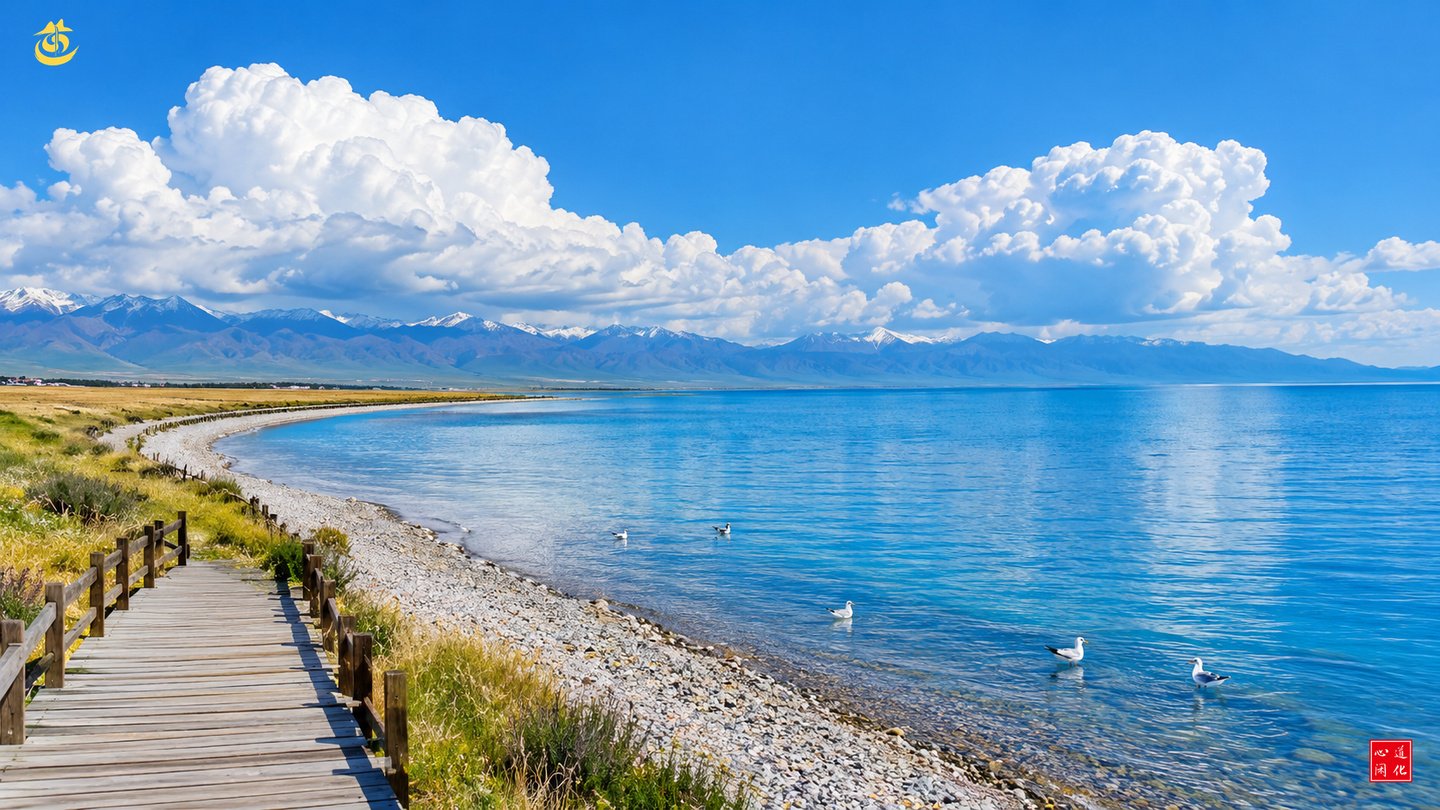
一千斛的美酒,喝到飘飘欲仙,然后载着美妓随便到处闲逛,爱停哪儿停哪儿。多么轻松、自由、超然、洒脱的心态。现代人也只有羡慕的份儿,谁敢公然效法?(都是偷偷摸摸地进行)
李白的真性情还在于他直白地描写自己的内心活动,比如对功名地位的渴望。本平静地过着普通人的生活,某一天突然接到通知,唐玄宗诏他进京,于是欣喜若狂,下笔就是:
仰天大笑出门去,
我辈岂是蓬蒿人。
真是没有一点城府,这里倒觉得此人虽有些浅薄,但更多的是幽默、真性情,彰显了简单、可爱的人性。一个心机很深的人,绝写不出这样反映真实内心的文字。
理智和从流,往往是对天赋的抹杀。
后人提起李白,基本的印象是“唐诗第一人”,他的思想自由奔放,表达尽情尽兴,能感觉到一个伸直不弯的秉性,一个平铺四展的心灵。没有一点拘束和扭曲感。唐王朝的伟大,从文人的自信中可以看出来。越自信的人,越敢讲真话;越自信的朝代,敢讲真话的人越多。到了清朝时,文字狱的原因,文人的表达多是含蓄而扭曲,唯唯诺诺,言不由衷。看着让人肚子疼。
不是李白之后,再无李白;而是,唐朝之后,再无唐朝。
大唐之后,不知有多少帝王梦想恢复大唐荣耀,恢复唐朝在国际上的影响力。但唐朝的强大,重在文化、根在信仰。
唐朝时的国教是道教,当时国考的必考书,是《道德经》,这一点往往被人忽视。
如果没有信仰的根植与引领,没有开明的政治,唐朝的开放、自由、繁荣都没可能实现。想要恢复大唐王朝的辉煌,可能需要先研究一下那个朝代的信仰、文化、制度,以及,对人性的尊重。
文字的后世影响力,往往超越当时人们的想象,也超越后人的意识。
......
太长了。不写了。
两首道情,送给你:
《苍生》
天下苍生苦不休,种在春时收在秋;
朝廷如山精粮库,农夫家中无稀粥。
《高居》
双子塔楼八千梯,高居楼顶与云齐;
一朝悟得老君意,心向谷口更下低。
YZ.2019.5.6
"I, the Sovereign, Am Fond of Beauty"
21. "I, the Sovereign, Am Fond of Beauty"
Originally published by Yang Zi, Daozang Research, 2021-03-04
A true and natural outflow of the inborn disposition is something people find endlessly endearing. From what I have observed, those most dissatisfied with "men's love of beauty" are usually not women, but men.
Because our philosophy, our historiography, and even our literature have issued almost entirely from the pens of men. Chinese civilization flows broad through several thousand years, and the historian's brush through all those ages has been, almost without exception, male.
If a man does not love beauty, does he even count as a man? Comb the histories: even eunuchs, once they had the means, would find palace women for "duishi"—that is, pairing off as "husband and wife" to live together. It is said that those who tormented women most cruelly were not men but eunuchs. Because they "could not perform," and because their standing in the palace was that of "ants," without the barest dignity of a living being, when the day's bowing and scraping was done, in the long black nights the frenzy and nameless fires of their hearts were all spent upon the one who lay beside their pillow.
Classical writing is far more reserved than the vernacular in describing the loveliness of lovemaking, but it is suggestive without being lewd, sensual without being obscene. The classic of classics is the account of Zhang Sheng's state of mind during his lovemaking with Cui Yingying:
Soft jade and warm fragrance, held filling my arms. Ruan Zhao arrives at Mount Tiantai; spring comes to the world, and the flowers play with their colors. Gently sway her willow waist; tenderly part the flower's heart; the dew drips, and the peony opens. (Wang Shifu of the Yuan, Xixiang Ji)
Yet this is only the experience of a successful man. This is what is meant by loving beauty.
If fine food is delicious, who does not love it? If colors are lovely? To delight in them, too, is a natural disposition.
What is truly fearful is not the outflow of the natural disposition, but its suppression and distortion.
When a man sees a beautiful woman and cannot help acting on it, it is the same principle as a little dog lifting its leg at a utility pole. A pup that lifts its leg at anything with the least bit of height is mostly not urinating—it is making a "declaration," announcing possession of territory.
In the animal kingdom, the male's greatest ambitions toward the world are territory and the opposite sex. And the size of the territory held, the number of mates possessed, are very often the markers of how successful he is. This law applies to humankind as well. It seems, indeed, to apply even better.
Emperors pursued not only the boundless expansion of their territory; the size of the harem was a target in itself. An emperor's rear palace might hold three thousand beauties—more than he could ever look at; some palace women lived a whole lifetime without once seeing the emperor. Even Wang Zhaojun, one of the Four Great Beauties, never got to see her sovereign. Wang Zhaojun kept a widow's watch in the palace, and there was truly no way out, until at last she applied on her own initiative to go on a heqin marriage mission, marrying herself off with dignity—and as a marriage of state at that. That was her wisdom. Otherwise, growing older still, there would have been no tidying up the situation. One sees how fierce the competition within the rear palace was. No wonder Yuan Zhen has lines:
Bare and lonely, the ancient traveling palace; its palace flowers bloom red in solitude;
white-haired palace women remain, sitting idle, talking of Xuanzong.
Those young beauties sent into the palace went white-haired without ever seeing the Emperor Xuanzong they had dreamed of day and night. The number of an emperor's women passed beyond counting. Below the high ministers and grandees the numbers shrank and shrank, until at the bottom of society a man could scarcely take a single wife.
I did a little checking: the claim that a man's love of beauty is a defect, and its sorting into the category of "bad habits," began with the Confucians.
What the Confucians called "the sovereign's ailment" refers precisely to "the sovereign's love of beauty"—meaning that the ailment common to men is loving beauty. The allusion comes from the book Mencius: Mencius went to see King Hui of Liang and urged him to practice the kingly way and extend benevolent government—
The king said: "I have an ailment: I love beauty." (Mencius, "Liang Hui Wang Xia")
King Xuan of Qi had no wish to sacrifice his own pleasures to become some enlightened ruler. He said it outright:
"I have a flaw. I love beauty."
Mencius thereupon cited matters of history to show that loving beauty was an affection shared by all, and that it did not hinder practicing the kingly way and benevolent government. One sees that the Confucians of that age were still flexible in their attitude toward doctrine.
Guan Zhong advised Duke Huan of Qi—"honor the king and expel the barbarians"—to accomplish the great enterprise. Duke Huan, too, said of himself that he loved the hunt and loved beauty, and feared nothing would come of him. Guan Zhong replied at once that neither would hinder the bid for hegemony, so long as the duke knew how to use men. But to use a man and yet doubt him, sending others to hobble him, would hinder the hegemony (the unspoken sense: if you mean to use me, you must trust me). So Duke Huan bowed to Guan Zhong as prime minister, and the hegemony was achieved. Not only did Guan Zhong not oppose "loving beauty"; he made full use of this male disposition to turn a profit. He took the brothels into state ownership, and like salt and iron they became government-run enterprises, guaranteeing the state's tax revenue. Guan Zhong was making money out of human nature.
Making money out of human nature is a purse that never empties. Many a successful man is one who has fully understood, and made use of, human nature.
One sees, then, that in the mainstream values of the age, "loving beauty," like "loving travel," "loving the hunt," and "loving good food," was merely a luxurious pastime—above all for a sovereign. Possessing the opposite sex to the heart's content was the privilege of the most exalted. Comb the histories: so it was, generation after generation.
Again in the Warring States era, in the state of Chu, the very theme of "loving beauty" gave rise to a story. The King of Chu loved beauty, and his ministers dared not say so—so they went telling on one another, exposing colleagues for loving beauty. One episode is especially delicious.
Dengtuzi, a grandee of Chu, told the King of Chu to be on guard against Song Yu and not let him pass in and out of the gates of the rear palace, because Song Yu was handsome, eloquent—and fond of beauty.
When Song Yu learned of it, he rose in his own defense:
...The daughter of my neighbor to the east: add an inch, and she would be too tall; take away an inch, and she would be too short; powder her, and she would be too white; rouge her, and she would be too red; brows like kingfisher plumes, flesh like white snow... (Song Yu of the Warring States, "Dengtuzi Haose Fu")
Song Yu said that a woman as beautiful as this neighbor's daughter—"yet this girl climbed the wall for three years, and to this day I have not said yes"—had climbed the wall to peek at him for three years, and he had never once answered her devotion. This proved that he was not fond of beauty. Dengtuzi's wife, on the other hand, was unspeakably ugly, yet Dengtuzi loved her dearly and had five children by her. Clearly it was Dengtuzi who was the lecher.
Obviously there is something wrong with Song Yu's reasoning and logic. But however you look at it, once "Dengtuzi Haose Fu" ("Rhapsody on the Lecher Dengtuzi") was set to paper, it became a classic for a thousand ages, and Dengtuzi's name as a lecher was fixed in place. What a monumental injustice. When a man of letters turns to wounding, he is a fearsome thing. No wonder the clever heads of history never dared give offense to the reading men. What they feared was being arranged and written up by the brush.
In Chinese history, the rulers who dared give offense to the reading men rank, in the top three: Qin Shihuang, Emperor Gaozu of Han, and Mao Zedong.
Someone used the words of the Confucian books to point criticism at Qin Shihuang, and the First Emperor invited all to offer him their opinions. No one said a word, but behind backs the talk never stopped. The First Emperor judged that those scholars were "criticizing him in their bellies," and so he had them buried. Hence, when later ages speak of the scholars, one form of address still remains:
Those the First Emperor failed to bury!
Though Qin Shihuang's mighty achievements were far from few, because he gave offense to the reading men, his ill name has lasted a thousand ages. Liu Bang looked down on those Confucians who talked in torrents and spouted grandly.
The Lord of Pei had no liking for the Confucians. Whenever a guest arrived wearing a Confucian's cap, the Lord of Pei would take off the cap and urinate into it. When he spoke with people, he constantly swore. (Sima Qian, Shiji, "Li Sheng Lu Jia Liezhuan") The gist: the Lord of Pei disliked the Confucians; of his guests, any who came wearing a scholar's cap—the Lord of Pei would take the cap and relieve himself into it. Talking with the Confucians, he would often burst into violent abuse.
The affairs of the Cultural Revolution—I will not speak of them.
Back to the original subject.
Come the Tang dynasty, visiting the courtesans had become the fashion of high society. To go into the quarters of wind and moon, one needed not only money—more important, one had to have culture. The courtesans of that day had not only looks to topple states and cities; they were complete mistresses of song, dance, zither, and chess. So in those days, to walk out in the company of a courtesan was a thing of boundless glory.
Li Bai spent his life dreaming of immortality; his sobriquet, "Zhexianren"—"the Banished Immortal"—means "an immortal demoted to this human world." In his poems, not three lines pass without wine, not four without an immortal—hence the romance, hence the Poet Immortal. In his verse the "three loves" stand out plainly: "love of immortality, love of wine, love of beauty." Of "love of beauty" he once wrote:
At East Mountain, An Shi passed thirty springs;
proudly he led courtesans out of the wind and dust.
In the tower he saw my belle of Jinling—
how like the one amid clouds and rain on Yang Terrace!
(Li Bai of the Tang, "Chu Ji Jinling Zi Cheng Lu Liu," No. 1 of Four)
The poem is full of picture. One reads it and cannot help laughing.
The author brims with envy, jealousy, and longing for Xie An's (Anshi's) freedom and dash in "proudly leading courtesans out of the wind and dust"; his own true character, and the openness and swagger of the Tang, leap off the paper. The phrase "proudly leading courtesans" can really fit only that age of Wei-Jin style and the open Great Tang, and only on untamed men of letters like Xie An and Li Bai. He dreamed of walking tipsy down the very middle of the great road, a famous courtesan—beauty and talent in one—on his arm, proud beyond measure, nose in the air, striding off with the step of a man who acknowledges no kin, proud and free. And then comes "clouds and rain on Yang Terrace," dragging out that Song Yu, complete in talent, looks, and sensuality—an endless suggestiveness; the scene of Mount Wu, conjured without a single word.
Li Bai's lovableness lies in his true character.
Not only are his portrayals of "loving beauty" vivid and delightful; he hid nothing of his "loving wine" either. He once spoke his mind in verse:
"Rising Drunk on a Spring Day to Declare My Mind" / ......
And so, drunk all day long, I lie limp before the front pillars. / ...... / Moved, I would heave a sigh—then pour myself more wine.
I sing aloud, awaiting the bright moon; when the song is done, feeling is forgotten.
This is Li Bai's poem of his purpose. He held that life is like a dream, that a lifetime of toil is not worth it, that one must seize one's pleasure in time. So his ambition is blunt and simple, and it is this:
Drinking wine,
drinking wine alone,
drunk all day long.
Haha.
Not only "loving wine" and "loving beauty"—the words that say plainly "loving wine and beauty" are no few:
Fine wine, a thousand hu set in the casks;
with courtesans aboard, we drift as the waves please.
(Li Bai, "Jiangshang Yin")
A thousand hu of fine wine, drunk until you float half-way to immortality, and then drifting wherever you please with a beauty aboard—anchoring wherever you like. What a light, free, detached, easy state of mind. Moderns can only look on in envy—who would dare copy it openly? (It all goes on in secret.)
Li Bai's true character shows, too, in his plain speaking about his own inner life—his hunger, for instance, for fame and position. He had been living the plain life of an ordinary man, when one day, without warning, came the summons: Emperor Xuanzong of Tang called him to the capital. Transported with delight, his pen flew:
Laughing to high heaven, I walk out the gate—
how should my kind be men of weeds and brambles?
Truly not a shred of guile in him. Here one feels the man, if somewhat shallow, is above all humorous and genuine, showing a simple, lovable human nature. A man of deep design could never have written words so true to his inner heart.
Reason and conformity are, more often than not, the murder of natural gift.
When later ages speak of Li Bai, the first impression is "the first man of Tang poetry." His thought runs free and unbridled, his expression spends itself to the full; one senses a nature straight and unbending, a spirit spread open and flat. Not a trace of constraint or distortion. The greatness of the Tang dynasty can be read from the confidence of its men of letters. The more confident a man, the more he dares to speak the truth; the more confident a dynasty, the more its people dare to speak the truth. Come the Qing, with its literary inquisitions, the expression of the literati turned mostly veiled and twisted, timid and compliant, saying one thing and meaning another. It makes your belly ache to watch.
It is not that after Li Bai there was no Li Bai; it is that after the Tang there was no Tang.
After the Great Tang, who knows how many emperors dreamed of restoring its glory, restoring the Tang's influence in the world. But the strength of the Tang lay in culture, and its roots lay in faith.
The state religion of the Tang was Daoism, and the required text of the state examination was the Daodejing—a point often overlooked.
Without rooted faith to plant and to lead, without enlightened politics, the openness, freedom, and prosperity of the Tang could never have come about. To restore the glory of the Great Tang dynasty, one might first need to study that age's faith, culture, and institutions—and, its respect for human nature.
The afterlife influence of the written word often surpasses the imagination of the people of its own time, and the awareness of later ages.
......
Too long. I'll stop here.
Two Daoqing chants, for you:
"The Common People"
The common people of all the world toil without rest; sown in the spring, harvested in the autumn;
the court's granaries pile high like mountains with fine grain, while in the farmer's house there is no thin gruel.
"Living High"
Twin towers, eight thousand steps; dwelling at the top, level with the clouds;
then one morning he grasps the mind of Laojun, and his heart turns toward the valley mouth, bowing lower still.
YZ.2019.5.6