性也?命也?---再读《闲情偶寄》
1、性也?命也?---再读《闲情偶寄》
原创 杨子 道藏研究 2021-08-26 21:18

防疫针后,胳膊上的肿包慢慢消下去了,偶尔还有痛感,但总体在渐好过程中。只是精力集中度还没有恢复到从前。所以暂停了对《道藏》的阅读和选译,有一搭没一搭地整理读过的闲书,今天顺手拿到明末清初李渔的《闲情偶寄》,页边的批注,颇有趣。发现无论时代隔了多久,共同的爱好和性情,总是让人有“同情感”。看到李渔写“喜读闲书,畏听庄论”,喜欢看一些没用的闲书,害怕听到庄重严肃的言论,真是有知己感。
最早知道李渔的名字,是少年时读到鲁迅笔下的评论,他把李渔、宋玉、司马相如等列为“帮闲”文人,当时感觉这个称呼很有新意。我们这一代人,从小就一直被教育要成为“帮忙不添乱”的人,与人相处以“帮忙”为要。没想到还有“帮闲”的人。于是觉得很好玩儿。
后,又从林语堂先生的书中看到他对李渔作品的推崇,以及,李渔之书对林氏的深刻影响。
“在李笠翁的著作中,有一个重要部分专门研究生活乐趣,是中国人生活艺术的袖珍指南,从住室与庭院、室内装饰、界壁分隔到妇女梳妆、美容、烹调的艺术和美食的导引。富人穷人寻求乐趣的方法,一年四季消愁解闷的途径、性生活的节制、疾病的防治……”(林语堂《生活的艺术》)

而且,林语堂有一本书也取名《闲情偶寄》。只是大家一提《闲情偶寄》都会立即想起李渔之作,并不怎么赞美林语堂。这其中的原因,让人想起美国两任美国第一夫人的演讲。
特朗普太太梅拉尼娅做了一个演讲。之后,媒体批评她抄袭奥巴马总统太太米歇尔的演讲。对此,特朗普发表演说回应:
奥巴马的太太米歇尔发表一个演讲,大家好评如潮,让她和奥巴马得到很多赞誉。而我的太太梅拉尼娅发表同样一个演讲(Exactly the same one),大家都不夸我们, 真是不明白(I don’t get it )。
把全场笑翻。很逗。

回到原书。大体翻了下我在全书页边的注释,差不多对这本书的感受是:
读《闲情偶寄》
色在耳目之内,人在山水之间;
情在风云之表,思在虚无之颠。
全书行文流畅,情感表达,朴素自然。确实是“雅人韵士”之语,“家弦户诵”之作。
这些帮闲书,从传统观点看,最是无用。但不知为什么,我自小最喜欢读没用的书。一提古圣贤大道理就头疼;但一说到“游仙诗”、“烟霞曲”、“闲情赋”等就觉得清新明快,飘然悠然神仙感。竟然把“看蚂蚁搬家”、“共星月神话”、“听朋友说鬼”当成超凡的境界去追求。
李渔的书,就属于这种。他的朋友余怀在为他作序时说:
“世之腐儒,犹谓李子不为经国之大业,而为破道之小言者。”
可见,李渔的书在当时被称为不谈治国大事的“小言”之书。不过,我偏喜欢这种真性的书,读来饶有兴趣,感觉比“仁义道德”更贴近生活和心灵。包括明代晚期公安派“三袁”“独抒性灵”的文章,都属于此类,一并喜欢。上次文中提到袁宏道描述那位“妻梅子鹤”的林和靖抱怨家庭累赘时的内心活动,想想就忍不住发笑,笑到现在。
关于文章的功效,中国传统观点普遍认为要“文以载道”,李渔则注重“文以载情”。少年时候的我,接受的是“文以载道”的教育,后来渐渐觉得“文以载情”似乎更真切和重要。而今,越来越觉得“文以随心”更要紧。所谓:随心即是道场!随心即是真性情。

关于“文以载道”,我文字中自然也有,但多是翻译古人的文章。而且自己也越来越不喜欢说教性的“真理”了。 大道理都是正确的,很多鸡汤文章列一大堆正确的废话,读起来感觉很正确,
“嗯,嗯,说的是!说的是!说的真是!”,
然后呢?除了浪费了你的时间,再也没有然后了。
相对于“真理”,我更喜欢“真情”一些。一直坚信我们不是一个讲理的民族,而是一个讲情的民族。

渐渐发现,在这个薄情寡义的时代,讲情的人,心苦。越是重情重义的人,越是活得累,睡不好,吃不好,也最心寒。炎热的夏天,火热的心,想想没情义的人,象是给披了一件“薄情衫”一样,顿时就凉快、冷静下来了。而那些忘恩负义的、不孝父母、不操心孩子的、昧心欺诈的,没有契约精神的,等等,反倒过得光鲜体面。真真是:
“多情者多艰,寡情者少难”。
这种悖论有点象元朝时“知识无用论”的逻辑:
不读书有权,不识字有钱,不晓事倒有人夸荐。老天只恁忒心偏,贤和愚无分辨。折挫英雄,消磨良善,越聪明越运蹇!志高如鲁连,德过如闵骞,依本分只落的人轻贱。
不读书最高,不识字最好,不晓事倒有人夸俏。老天不肯辨清浊,好和歹没条道。善的人欺,贫的人笑,读书人都累倒。立身则小学,修身则大学,智和能都不及鸭青钞。
(《朝天子·志感》)
于是,渐渐地,我就觉得“重情”这件事吧,不那么让人温暖了。于是便倾向于“文以随心”的方式了。也不管载不载正经大道,抒不抒真情厚义,但是“随心而为”就是了。社会已给我们太多的面具和妆粉,写作再端起“什么什么”破架子,说些自己看着都觉得空洞乏味的大道理,实在无趣。更不要说去昧着良知唱赞歌了。

社会有一个隐蔽的变化,那就是,知识分子悄然失去了自古以来为民请命的使命感和清高的风骨。只有少数人坚决不愿从流。秦伯益院士说:“我不愿意再被人家当花瓶了,我觉得自己有更有兴趣的、更重要的事情要做”。
知识分子的务实又现实,就是人们说的“精致的利己主义者”,晒脸晒富晒风流,无视民间苍生愁。大家都忙着博名博利博眼球,为了这个社会更美好而讲实话的人,越来越少。出门,总感觉尘土飞扬、俗气熏魂。(哈哈,这是自命清高的小矫情)于是,特别理解一句话:
面上扫开十层甲,眉目才无可憎;
胸中涤去数斗尘,语言方觉有味。
([明]洪应明《菜根谭》)
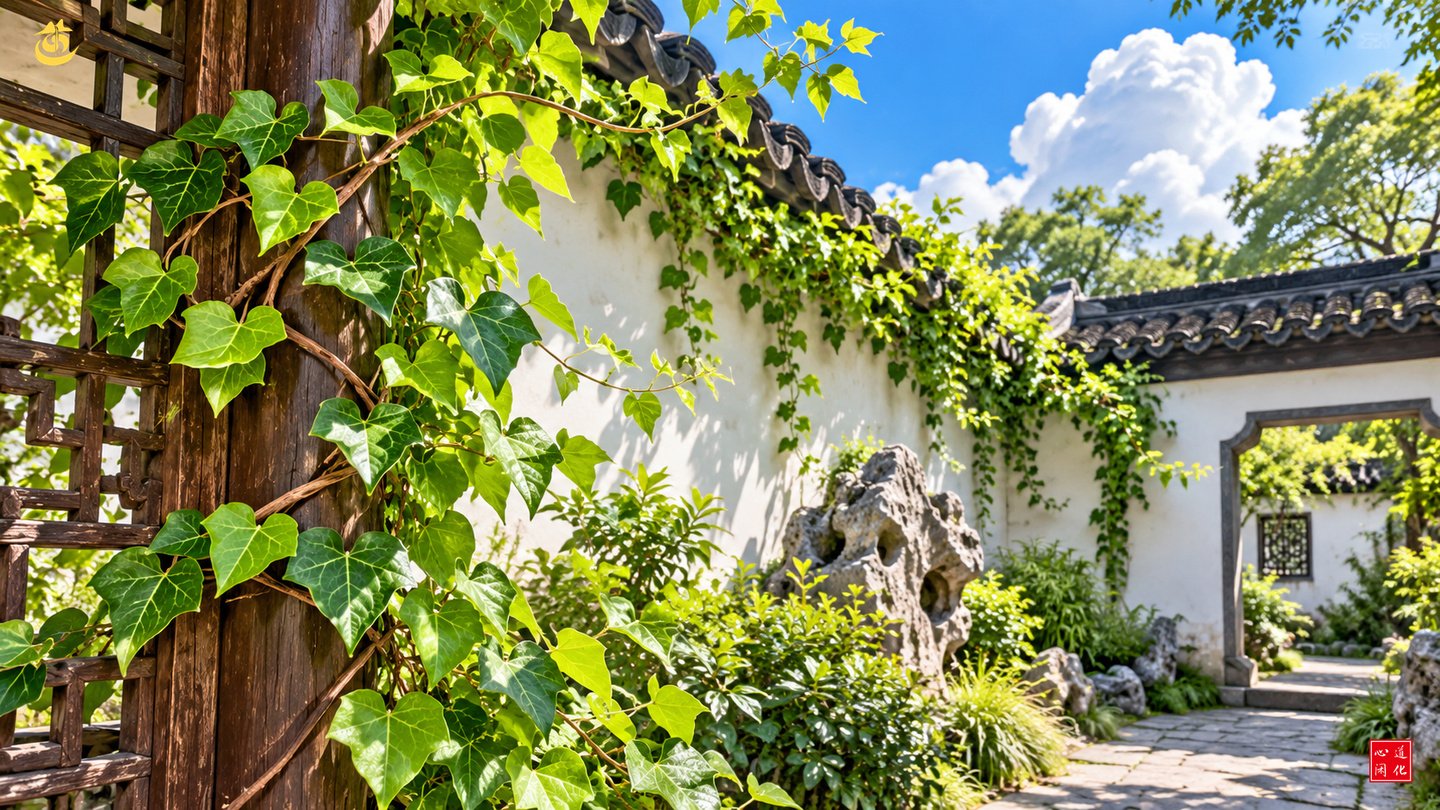
对我而言,读书如扫甲,写作如涤尘。古人说“三日不读书,面目可憎”,我虽没有那么严重,但是“三日不读书,便觉心慌”倒是不夸张。写作却是很能清心的一件事。只是有些原则:不谈国事,不涉政治,不写与自己无关的红尘琐事,不操心别人的事。只专注地取悦当下的自己,让心灵安静而自在。
与其借口大道理地操心这、铺派那,字里行间,话里话外,向这个示好,向那个致意,取悦你,讨好他……累个半死,还不如真性情地写写自己内心真实的想法,把文字挂在空中,任岁月风干。年老了,下酒。真实的语言,无论对错,结构如何,都是有趣的。
这个社会,可怕的不是世风日下,而是我们对世风日下的漠视和苟且,以及,明哲保身似的默许不正确的思潮在我们周围泛滥,而不敢说出自己真实的想法,并且也不让自己的亲友自由良知地表达。任由邪气渐长,而不敢断呵一声“妖怪!”唯恐被当成唐僧让妖怪惦记上了。
近年来,微信里,很多朋友都不再说什么。但凡有点身份地位的,朋友圈,要么空白,要么一年半载的发一朵花,或是一片云什么的。有一位朋友曾说相关部门研究一个人时,先看微信朋友圈,经常晒吃、晒喝、晒家事的,发牢骚的,基本都是无事人。越是内容空白的,越有“潜力”。这种理论也是时代的别出新裁吧。

不发朋友圈的人,通常也不经常文字互动。最常见的沟通,就是早上发个“早安”的例行图片。我开始很不习惯这种表达方式,觉得没必要这么形式化地应酬联系。有事就直说,没事不用发这些虚礼客套的信息,浪费彼此的时间。但后来慢慢理解了,有些人还真不是走形式。可能是确实没有什么好玩的信息,或是身份、职业等的原因,由于缺少信息安全感,才造成形式化的“图片问候”,简直就是电子时代的“道路以目”。想到这里,我对早上开机后的“早安”图片,多了几分理解和温情。几个月前,一位朋友的例行“早安”图片中,居然有句话颇有意思,上面明信片一样的印着:
别人凭着良知说出了我们的心里话,努力使这个社会朝着温情、正义的方向发展,而我们连点赞的勇气都没有。这便是时代中最窝囊的无奈人。
看到那句话,让我对发信人顿生了几分好感。

能认识到纵容不德是一种对时代的辜负,是时代中最窝囊的人,也算是一个有点起码良知的人。其实很多人内心还是有是非曲直的,只是不得已装糊涂罢了。
人们对事情的判断,往往不是站在真理的这一端,而是利益的那一端。对他们而言,符合自身利益的,就是真理。不是真理,也要尽力让社会认可这就是真理。生而为人,占尽便利,不愿对社会和他人有些许担当。极尽各种聪明才智,穷尽各种手段,与一切有风险的因素,划清界线。此乃中国人特有的聪明,但却让人细思极恐。
明哲保身的生存方式,是中国人的“伟大”发明。至今仍有人把“假话全不说,真话不全说”当成圣经,这种态度也是源于古人的箴言:
逢人且说三分话,未可全抛一片心。
我把这种态度归为了“乌龟法”大类中,因为《增广贤文》中确实有这个理论:
近来学得乌龟法,得缩头时且缩头。
----《增广贤文》
如果前几句处世哲学还可说是聪明人的“明哲保身”,那演绎到最后,就是不堪的窝囊人生了。---不提。

回到《闲情偶寄》。
作者反复提及,他特别爱吃,各种鱼都爱吃,特别是螃蟹,视螃蟹如命,每年快到螃蟹上市的季节时,他就开始节约开支,准备好资金买螃蟹,他自称是“买命钱”,一定要自己动手吃,才算是真的懂。他描述吃螃蟹的文字,可能是最有艺术性的“舌尖上的中国”。(写到这,我忽然肚子饿了,呵呵)……
里面有一小章是讲甲鱼的:
一日,邻人网得巨鳖,召众食之,死者接踵,染指其汁者,亦病数月始痊。予以不喜食此,得免于召,遂得免于死。岂性之所在,即命之所在耶?(李渔《闲情偶寄·鳖》)
李渔好吃一切鱼,唯不爱吃甲鱼。一天,邻居捉到一只大甲鱼,请大家一起吃,一连死了数人,就连只尝了几滴鳖汁的,也病了几个月才好。李渔因不喜欢吃,就未被邀请,于是得免于死。他因此思考:难道我的性之所在,就是我的命之所在吗?
看到这句,我的眼睛在这行字上停住了,反复看,玩索不尽。
人的习性、性情到底与命运多大的关系?
个人觉得,同等条件下,性情(或性格)确实有些关系。但一个人命运最重要的决定因素,或不是性格。
曾听人说鸡汤语“性格决定命运”,有人甚至把这句话写成书,办培训班,或当成至理名言去谆谆教诲年轻人。这些鸡汤就如麻醉剂一样慢慢钝化人们的思维,说的人多了,似乎就成了真理。可是希特勒的宣传部长戈培尔那句名言所表达的:
“谎言重复一千遍,便是真理。”
这样的情况不光德国出现过,中国也有过:

昔者曾子处费,费人有与曾子同名族者而杀人,人告曾子母曰:‘曾参杀人。’曾子之母曰:‘吾子不杀人。’织自若。有顷焉,人又曰:‘曾参杀人。’其母尚织自若也。顷之,一人又告之曰:‘曾参杀人。’其母惧,投杼逾墙而走。(《战国策·秦策二》)

有个与曾参同姓的,杀了人。有人告诉曾参的母亲说:“曾参杀人了”,他母亲深知其子秉性,淡定地说:“我儿子是不会杀人的”,她继续织布;然后又有第二个人又来说……接着第三个人来说同样的话。曾参的母亲就害怕了,越墙而走。
一个人再好,怀疑他的人多,信任他的人少,这种局面持续下去,最初信任他的人,变得和别的人一样不再信任他。这就是社会。从众,是人性。对一个人的判断能始终保持不变的人,是极少的。因为这至少得有两个因素:一,识人准的本领;二,内心有定性,保持观点独立的本事。不是所有的人都可以突破传媒洗脑和社会大众普遍压力的。宣传,太重要了。
所以,那些深谙其道的人,早早地掌握着左右舆论的权柄,便可以颠倒黑白,上下其手。
原来的工作圈儿,叫“上市公司高管群”,特别搞笑,内部称“可乐群”。那时候还没有微信,段子都在短信上,讲话也都没有禁忌,手机也还没有录像功能,也不流行举报亲友的文化。共识认为出卖朋友为不耻。凡是“大义灭亲”不近人情的,一律不欢迎。饭桌上经常哄堂大笑一片。有一次,某上市公司总经理说了一段:
人在社会上混吧,想要混出名堂,得有三个条件:
一,你得行;
二,得有人说你行;

三,说你行的人,得行。比如你要去我们单位吧,我说你行才行,保安说你行,就不管用。
于是桌上,掌声一片。
这也就是人们拼命要与权力挂钩的原因。在中国,目前为止,所有朝代都是。孔子对读书人最大的恩德,就是点透了一句:“学而优则仕”,这才是他成为“万世师表”最核心的原因,只是后世之人说不出口。这是人性。这话到了元代,就有人就诠释得更直白:
宁可少活十年,休得一日无权。大丈夫时乖命蹇。有朝一日天随人愿赛田文养客三千。(元 严忠济《天净沙》)

不得不说,“学而优则仕”这句话,在中国,至今还是“真理”。当有一天,当官不是读书人的第一梦想时,中国才可能有质的飞跃和根本上的转变,才有从制度上与西方相较的可能。否则,无论朝代如何更迭,朝廷如何改革,最终还是旧瓶装新酒,新酒成旧酒,循环往复,再转上几千年,还是权力导向,而不是民心导向。
回到“性格决定命运”那句话。
性格影响命运,这一点不错。但说性格决定命运,有点过了。
相对而言,命运最大的决定因素,不是性格,甚至不是家庭,而是社会制度和运行规则。
出生在帝王之家,男孩子性格再暴虐,女孩子再飞扬跋扈,都是贵为王子、公主。出生在平民之家,男孩子再正直聪明,女孩子再温柔良善,还是辛苦一生,永无出头之日。乌鸦变凤凰的情况,历史也是有的,但属于小概率事件。出生不同,完全没有可比性。与性格没有半毛钱关系。
出生在一线城市的孩子,在高考的分数面前,比比山东、安徽、河南等地的考生,就知道了。相差一百多分的并不稀罕。录取线面前,一分之差,命运便是天地之别,更何况差几十分,差一百多分,甚至更多。出生在不同地域的孩子就有这么大差别,而那些出生在权贵之家的孩子,更不用说了。制度,才是命运真正的决定因素。没听说谁性格好可以加分的。

所以,说性格决定命运,这一观点,是有问题的。别总把命运坎坷归罪于自己脾气不好,或不如别人聪明努力。制度不公,机会不平,再勤奋努力都没用。明白这个,就可以逍遥人生了,别削尖脑袋往成功的路上去奔了。望山跑死马。
(这,是躺平吗?不是吧,这是积极幸福学)
……(此处略500字)
可见,人世间,最真的,不是理论,而是性情。最入心的,不是真理,而是真情。
愿我们都能做个真性情的人,活脱脱地过一生。

照例,附两首道情:
我写公众号,本是阅读《道藏》时的调剂;你留言,本也是茶余饭后的消遣。今天翻看小编发来的通稿,把这些年所有的留言也全部归档保存,成为文章的重要组成部分。重读一遍,温暖倍至。忽然觉得,本来就是我们大家在共同更新这个公众号,共同记录这个时代,共同学习道文化。
两首道情,送给隔屏相伴的你:

《知己》
经年相伴悟道真,最是人间好知音;
道经消君千古怨,留言去我心上尘。
难述与君情何似,月影穿潭不见痕;
莫言玄门多寂寞,满屏尽是有情人。
2021.8.23
前注:最早知道周穆王巡游,还是读了他与西王母的绯闻诗:八骏日行三万里,穆王何事不重来?(李商隐《瑶池》)
今日重读《穆天子传》,对照了一下《山海经》中的记录,发现周穆王巡游可不是神游,而是确有其事,确有其地。

《神游》
世人游览先动身,熙熙攘攘挤断魂;
唯有道家情若虚,世间风景皆在心。
闲来同邀穆天子,神游大荒至昆仑;
冰封寒梅三尺厚,红头一点便是春。
2021.8.23

《灾》
千年暴雨世人心,隔屏静观水淹人;
待到皇家救援到,已没人头三尺深。
2021.7.25
《道根》
世人争荣尊儒家,唯我独把道情夸;
外教繁花盛开后,终是大道佑中华。
2021.8.22
Character, or Fate? — Rereading Xianqing Ouji
38. Character, or Fate? — Rereading Xianqing Ouji
Originally published by Yang Zi, Daozang Research, 2021-08-26 21:18
After the vaccination shot, the swelling on my arm has slowly gone down; there is still an occasional ache, but on the whole it is on the mend. Only my powers of concentration have not yet returned to what they were. So I have paused my reading and selective translating of the Daozang (Daoist Canon), and been desultorily sorting out the idle books I have read; today my hand happened on Xianqing Ouji by Li Yu of the late Ming and early Qing, and the marginal notes are great fun. I find that no matter how many ages lie in between, shared loves and shared temperaments always give one a fellow-feeling. To see Li Yu write that he "loves reading idle books and dreads listening to solemn discourse"—loving to read useless idle books, dreading to hear grave and serious talk—truly gave me the feeling of a kindred spirit.
I first came to know Li Yu's name when I was young, reading Lu Xun's comments: he classed Li Yu, Song Yu, Sima Xiangru, and the like among the "bangxian" literati—men of letters who attend upon the leisure of others—and at the time the label struck me as very fresh. My generation was educated, from childhood, to be people who "help out without adding to the trouble," taking "helping out" as the first thing in getting along with others. I had never imagined there were also people who "attended upon leisure." So I found it great fun.
Later, in Mr. Lin Yutang's books, I saw the high esteem in which he held Li Yu's work, and the deep influence Li Yu's books had had upon Lin.
"In Li Liweng's works there is an important section devoted entirely to the study of the joys of living, a pocket guide to the Chinese art of life, from rooms and courtyards, interior decoration and partition walls to women's dressing and cosmetics, the arts of cooking and the guidance of good food; ways for rich and poor alike to seek delight, remedies for melancholy through the four seasons, the moderation of the sex life, the prevention and cure of disease..." (Lin Yutang, "The Importance of Living")
What is more, Lin Yutang gave one of his own books the same title, Xianqing Ouji. Only, whenever Xianqing Ouji is mentioned, everyone at once thinks of Li Yu's work, and no one much praises Lin Yutang. The reason for this recalls the speeches of two First Ladies of the United States.
Mrs. Trump, Melania, gave a speech. Afterwards, the media criticized her for copying the speech of President Obama's wife, Michelle. To this, Trump responded in an address:
Michelle, Obama's wife, gives a speech, and everyone rains praise upon it, winning her and Obama abundant acclaim. And my wife Melania gives exactly the same speech (Exactly the same one), and nobody praises us—I truly don't understand (I don't get it).
It brought the whole house down. Very funny.
Back to the book. Flipping generally through the notes I made in the margins of the whole volume, my feeling about the book is roughly this:
On Reading Xianqing Ouji
Beauty lies within the eye and ear; man dwells amid mountains and waters;
feeling rides above the wind and clouds; thought climbs to the summit of the void.
The book's prose flows smoothly, and its expression of feeling is plain and natural. Truly the language of "refined and graceful spirits," a work "sung in every household."
These leisure-attendant books are, from the traditional point of view, utterly useless. But for some reason, ever since childhood I have loved reading useless books. At the first mention of the great principles of the ancient sages my head aches; but at talk of "poems on roaming immortals," "songs of mist and cloud," "rhapsodies on idle feeling" and the like, I feel something fresh and brisk, an airy, immortal sense. I even took up "watching ants move house," "sharing star-and-moon myths," and "listening to friends tell ghost stories" as transcendent realms to pursue.
Li Yu's books belong to just this kind. His friend Yu Huai, in the preface he wrote for him, said:
"The pedants of the world still say that Master Li does not write of the great enterprise of ordering the state, but of petty words that breach the Dao."
Evidently Li Yu's books were in their day called books of "petty words" that treated of no great affairs of state. Yet I am partial to just such books of true nature—reading them is an endless delight; they feel closer to life and to the heart than "benevolence, righteousness, and virtue." Including, too, the late-Ming Gongan school's "Three Yuan" essays that "voice the spirit alone"—they belong to the same kind, and I love them equally. In an earlier essay I mentioned Yuan Hongdao's account of Lin Hejing—the man who "took plum for his wife and cranes for sons"—and Yuan's own complaints about the encumbrance of a family; just thinking of it sets me off laughing, and I am laughing still.
On the function of writing, the traditional Chinese view held broadly that writing should "carry the Dao," whereas Li Yu stressed that writing should "carry feeling." As a youth I was schooled in "writing carries the Dao"; later I gradually came to feel that "writing carries feeling" seemed truer and more important. And now I feel more and more that "writing follows the heart" matters most. As the saying goes: the heart that follows itself is itself the place of practice! The heart that follows itself is itself true nature.
As for "writing carries the Dao," my own writing naturally has that too, but mostly in translating the ancients. And I have grown less and less fond of preachy "truth." Great principles are all correct; many inspirational platitude-filled articles pile up a heap of correct platitudes, and reading them feels very right—
"Mm, mm, well said! Well said! Truly well said!",
And then what? Apart from wasting your time, there is no then.
Relative to "truth," I prefer "true feeling" a little more. I have always been convinced that we are not a nation that speaks of reason, but a nation that speaks of feeling.
Little by little I have discovered that in this cold and ungrateful age, those who speak of feeling suffer in their hearts. The deeper one's feeling and loyalty, the wearier one's life—sleeping badly, eating badly, chilled most of all. In the blazing summer, with a burning heart, one need only think of people without feeling or loyalty, and it is as if a "thin-feeling gown" had been draped over one—coolness and calm come at once. While the ungrateful, the unfilial to parents, the unthinking of children, the treacherous and swindling, those without the spirit of contract, and so on, live glossy and presentable lives instead. Truly:
"Those of deep feeling meet many hardships; those of little feeling meet few."
This paradox is a little like the logic of the "knowledge-is-useless" theory of the Yuan dynasty:
He who does not study holds power; he who cannot read has money; he who understands nothing is praised and recommended. Heaven is merely, perversely partial; wise and fool are not told apart. Heroes are crushed, the good and kind are ground down—the cleverer one is, the worse one's luck! With aspiration high as Lu Lian and virtue surpassing Min Qian, if one keeps to one's honest duty one is held only in contempt.
Not to study is highest; not to read is best; he who understands nothing is praised as fine. Heaven will not sort clear from turbid; good and ill have no road drawn between. The good are bullied, the poor are mocked, and the scholars all drop from exhaustion. For standing, the Lesser Learning; for self-cultivation, the Greater Learning—yet wisdom and ability count for less than a duck-green banknote.
(Chao Tianzi · Zhi Gan)
So, gradually, I came to feel that this business of "valuing feeling" was not so warming after all. And so I inclined toward the way of "writing follows the heart." Never mind whether it carries the proper great Dao, never mind whether it voices true feeling and deep loyalty—"following the heart" is the thing. Society has already given us masks and powder enough; if in writing one still puts on the wretched airs of "so-and-so" and mouths great principles that even oneself finds hollow and vapid, it is truly tedious. Still less should one sing hymns of praise against one's conscience.
There is a hidden change in society: the intellectuals have quietly lost the sense of mission—felt since antiquity—of pleading for the people, and the aloof and upright moral spine. Only a few resolutely refuse to go with the stream. Academician Qin Boyi said: "I am no longer willing to be treated as a mere ornament; I feel I have more interesting, more important things to do."
The intellectuals' being practical and worldly is what people call "refined egoism"—posting faces, wealth, and glamour, blind to the sorrows of the common folk beneath. Everyone is busy chasing fame, profit, and eyeballs; those who speak the truth for the sake of a better society grow fewer and fewer. Going out the door, one always feels the dust flying and vulgarity searing the soul. (Haha—this is the petty affectation of one who fancies herself above it all.) So I understand one saying especially well:
Sweep ten layers of armor from the face, and the brows and eyes at last cease to repel;
wash several pecks of dust from the breast, and language at last begins to have savor.
(Hong Yingming of the Ming, Caigentan)
For me, reading is like sweeping off the armor, and writing like washing away the dust. The ancients said, "Three days without reading and the face becomes repulsive"; I am not so bad as that, but "three days without reading and the heart begins to panic" is no exaggeration. Writing is in truth a fine way to clear the heart. Only, there are a few principles: no state affairs, no politics, no red-dust trifles unrelated to me, no fretting over other people's business. Just attentively please the self of the present moment, and let the heart be quiet and at ease.
Rather than caring and scheming under the pretext of great principles—between the lines and outside the words, courting this one, paying respects to that one, pleasing you, flattering him... and working yourself half to death—better to write, true to your nature, the real thoughts of your own heart, hang the words in the air, and let the years dry them; then, when you are old, take them with a drink. Words that are real, whatever their merits or structure, are always interesting.
In this society, the terrible thing is not that public morals decline day by day, but our indifference and compromise before that decline; it is that, in the manner of "protecting one's own safety," we tacitly allow mistaken currents of thought to flood around us, not daring to speak our true thoughts, and not allowing our kin and friends to express themselves with free conscience either. Letting the evil air grow and grow, we do not dare one sharp shout of "Monster!"—for fear of being taken for Tang Seng and marked down by the monsters.
In recent years, on WeChat, many friends no longer say anything. Anyone with a bit of standing leaves their Moments either blank, or posts, once in six months or a year, a flower, or a cloud, or the like. One friend once said that when the relevant departments vet a person, they look first at the WeChat Moments: those who constantly post their meals, drinks, family affairs, and grievances are basically people with nothing going on. The blanker the content, the more "potential" the person. This theory, too, is perhaps the age's own brand of originality.
People who post nothing in Moments usually do not interact much in writing either. The commonest form of communication is a perfunctory "good morning" picture in the morning. At first I was very unused to this form of expression, feeling there was no need for such formalized socializing. If there is something to say, say it straight; if there is nothing, do not send these empty courtesies that waste both parties' time. But later I slowly understood: some people really are not just going through the motions. Perhaps they truly have no entertaining news to share; or else, because of their position or profession and the want of a sense of informational security, they arrive at the formalized "picture greeting"—nothing short of the electronic age's "exchanging looks along the road." Thinking of this, I feel a few degrees more understanding and warmth toward the "good morning" pictures that greet me when I turn on the phone each day. A few months ago, a friend's routine "good morning" picture actually carried a rather interesting line, printed like a postcard:
Others, following conscience, have spoken the thoughts of our hearts and striven to move this society toward warmth and justice—while we lack even the courage to give a like. These are the most hapless and helpless people of our age.
Seeing that line, I felt a sudden good measure of fellow feeling for its sender.
To be able to recognize that indulging the unvirtuous betrays the age, and that one is the most hapless sort of the age, is at least to have some shred of basic conscience. In truth, many people still have right and wrong in their hearts; they merely have no choice but to play the fool.
People's judgments of things rarely stand at this end of truth; they stand at the other end of interest. For them, whatever accords with their own interest is the truth. What is not truth, they strive to have society accept as truth. Born as human beings, they take every convenience for themselves, unwilling to bear the least responsibility toward society and others. They exhaust every cleverness and every means to draw a clear line between themselves and anything that carries risk. This is a cleverness peculiar to the Chinese—and the more one thinks on it, the more frightening it becomes.
The way of survival called "protecting one's own safety" is the "great" invention of the Chinese. There are people still who take "tell no lies at all, tell not all the truth" for a Bible; this attitude, too, traces back to the ancients' maxim:
When you meet a man, speak but three-tenths; never throw your whole heart out at once.
I have filed this attitude under the general head of the "turtle method," for the Zengguang Xianwen does indeed contain the theory:
Of late I have learned the turtle's method: when it is time to draw in the head, draw it in.
----Zengguang Xianwen
If the first few lines of this worldly wisdom can still be called the clever person's "protecting one's own safety," carried to its conclusion it is a life of unbearable meekness.----Enough of this.
Back to Xianqing Ouji.
The author mentions over and over that he loved to eat—loved every kind of fish, and crabs above all, treasuring crabs as he did his own life. Each year, as the crab season drew near, he would begin to pare his expenses, getting his funds ready to buy crabs; he called the money his "life-buying money," and insisted that only by doing the eating with his own hands could he truly be said to understand. His writing on the eating of crab may be the most artistic "A Bite of China" there is. (Writing this, I suddenly feel hungry. Heh.)...
There is one short chapter inside, on the soft-shelled turtle:
One day a neighbor netted a giant soft-shelled turtle and called everyone together to eat it; the dead followed one upon another, and even those who dipped a finger in its juice were ill for months before recovering. Because I do not care for this food, I was spared the invitation, and so was spared death. Can it be that where one's nature lies, there one's fate lies? (Li Yu, Xianqing Ouji, Bie)
Li Yu loved eating every fish there is; only turtle he could not abide. One day a neighbor caught a great soft-shelled turtle and invited everyone to share it; several people died in succession, and even those who tasted a few drops of its juice were ill for months before recovering. Because Li Yu did not care for it, he was not invited, and so escaped death. This set him thinking: can it be that where my nature lies, there my fate lies?
At this line my eyes stopped on the page; I read it over and over, toying with it without end.
How great a part, in the end, do a person's habits and temperament play in fate?
My own feeling is that, all else being equal, temperament (or character) really does have some bearing. But the most important determinant of a person's fate is perhaps not character.
I have heard people repeat the motivational platitude "character determines fate"; some have even made it into a book, run training classes, or used it as a maxim of the last importance to earnestly teach the young. Such platitudes, like an anesthetic, slowly dulls people's minds; once enough people say it, it seems to become the truth. But then, what Goebbels, Hitler's propaganda minister, expressed in his famous line:
"A lie repeated a thousand times becomes truth."
This sort of thing has appeared not only in Germany; China has known it too:
Long ago, Zengzi was living in Fei. There was a man in Fei of the same name and clan as Zengzi who had killed a man. Someone told Zengzi's mother, "Zeng Shen has killed a man." Zengzi's mother said, "My son does not kill people," and went on weaving as before. After a while, someone again said, "Zeng Shen has killed a man." His mother still went on weaving as before. Presently, one more came and told her: "Zeng Shen has killed a man." His mother was frightened, threw down the shuttle, climbed over the wall, and fled. (Zhanguo Ce, "Qin Ce II")
A man of the same surname as Zeng Shen had killed someone. Someone told Zeng Shen's mother, "Zeng Shen has killed a man." His mother, who knew her son's character through and through, said calmly, "My son would never kill," and went on with her weaving; then a second person came and said the same... and then a third came and said it again. And Zeng Shen's mother grew afraid, climbed over the wall, and fled.
However good a person may be, if those who doubt him are many and those who trust him few, and this goes on long enough, even those who trusted him at first come, like everyone else, to trust him no more. Such is society. Going along with the crowd is human nature. Those who can hold their judgment of a person unchanging from first to last are very few, for it takes at least two things: first, the skill of judging people accurately; second, inner steadfastness, the capacity to keep an independent view. Not everyone can break through media brainwashing and the general pressure of the crowd. Propaganda matters enormously.
So those who know this game well grasp the lever of public opinion early, and with it can turn black into white and manipulate affairs at will.
My old work circle had a group called "Listed-Company Executives"—hilarious; internally we called it the "Cola Group." There was no WeChat in those days; the jokes went around by text message, and no topic was out of bounds; phones could not yet shoot video, and the culture of reporting one's friends and relatives was not yet in fashion. The consensus held that selling a friend out was a disgrace. Anyone who "sacrificed family ties in the name of righteousness" and offended human feeling was uniformly unwelcome. The dinner table often roared with laughter. Once, the general manager of a listed company offered this:
For a person to make something of himself out in society, there have to be three conditions:
One: you have to be good;
Two: someone has to say you are good;
Three: the person who says you are good has to have clout. For instance, if you want to get into our unit, it counts only if I say you are good; if the security guard says you are good, it does not help.
At that, the table burst into applause.
This is why people fight so hard to link themselves to power. In China, so far, in every dynasty. The greatest kindness Confucius ever did the reading class was to see through and speak one line: "He who excels in learning shall go into office." That is the true core of why he became the "Model Teacher for All Ages"—only, people of later ages cannot bring themselves to say it aloud. It is human nature. In the Yuan dynasty, someone put it more bluntly still:
Better to live ten years less than to be one day without power. A true man, his hour untimely, his fate hard-struck. But some day, when heaven grants my wish, I shall rival Tian Wen and keep three thousand retainers. (Yan Zhongji of the Yuan, Tianjing Sha)
I have to say: the line "he who excels in learning shall go into office" is still "truth" in China to this day. Only on the day when holding office is no longer the first dream of the reading class will China become capable of a qualitative leap and a fundamental change—capable of comparing with the West at the level of institutions. Otherwise, no matter how the dynasties turn over and the courts reform, it will be, in the end, new wine in old bottles and the new wine turning old, round and round, spinning on for another few thousand years—oriented still by power, not by the people's hearts.
Back to the line "character determines fate."
That character influences fate—nothing wrong there. But to say that character determines fate is going too far.
Comparatively, the greatest determinant of fate is not character, not even family, but the social institutions and the rules by which they run.
Born into an imperial house, a boy, however violent and cruel his character, and a girl, however arrogant and overbearing, are exalted as prince and princess. Born into a commoner's home, a boy, however upright and clever, and a girl, however gentle and kind, still toil all their lives, with no day of emergence ever coming. The crow that turns phoenix does appear in history—but as a small-probability event. Different births simply admit of no comparison. It has not half a coin's worth to do with character.
For children born in the first-tier cities, one need only set their gaokao scores beside those of candidates from Shandong, Anhui, Henan, and elsewhere. Gaps of a hundred-odd points are nothing rare. Before the admissions line, a single point's difference parts fate by the whole distance between heaven and earth—to say nothing of gaps of dozens, of a hundred-odd, or more. Children born in different regions differ by this much—and as for children born in the houses of the powerful and noble, no more need be said. Institutions are the true determinant of fate. I have yet to hear of anyone getting extra points for good character.
So the view that character determines fate—this view is flawed. Do not keep blaming the roughness of your fate on your own bad temper, or on being less clever and hardworking than others. When the institutions are unjust and the opportunities unequal, all the diligence in the world is useless. Understand this, and you can live free and unfettered—no need to strain every nerve to force your way toward success. A mountain that looks close may still be so distant that a horse runs itself to death trying to reach it.
(Is this "lying flat"? No, surely not—this is the positive study of happiness.)
... [500 characters omitted in the source]
One sees from all this: in the human world, the truest thing is not theory but temperament. What goes deepest into the heart is not truth but true feeling.
May we all be people of true nature, living our one life vividly, to the full.
As usual, two Daoqing chants appended:
My writing this official account was, at first, a pastime amid my reading of the Daozang (Daoist Canon); your leaving comments was, at first, an amusement over tea and after meals. Today, going through the dispatch sent by the editors—all these years' comments have been archived entire and kept, become an important part of the articles—reading them over again, the warmth doubled. Suddenly I felt that all along it has been we, together, who keep this official account updated, recording this age together, learning Daoist culture together.
Two Daoqing chants, for you who keep me company across the screen:
"A Kindred Spirit"
Companions through the years, awake to the truth of the Dao—you are the finest soulmate in this human world;
the Daoist classics dissolve your grievances of a thousand ages; your comments sweep the dust from my heart.
How shall I tell what my feeling for you is like? The moon's shadow crosses the pool without a trace;
say not the mysterious gate is lonely and bare—the whole screen is filled with people of feeling.
2021.8.23
Fore-note: my first knowledge of King Mu of Zhou's tour came from the gossip poem about him and the Queen Mother of the West: "Eight fine steeds, thirty thousand li a day—why has King Mu never come again?" (Li Shangyin, "The Jade Pool")
Rereading the Mu Tianzi Zhuan today and checking it against the records in the Shanhaijing, I find that King Mu of Zhou's tour was no wandering of the spirit, but a real event, in real places.
"Wandering in Spirit"
Worldly travelers set their bodies moving first, jostling and crowding till the soul is squeezed out;
only the Daoist keeps feeling like the void, and all the world's scenery lies within the heart.
In idle hours I invite the Son of Heaven Mu, and in spirit we wander the Great Waste to Kunlun;
the cold plum is sealed in ice three feet thick—one point of red, and it is spring.
2021.8.23
"Disaster"
A thousand-year rainstorm, and the hearts of the age; across the screen I silently watch the flood swallow people;
by the time the state's rescuers arrive, the water already stands three feet over the drowned heads.
2021.7.25
"The Root of the Dao"
The world scrambles for glory and honors Confucianism; I alone sing the Daoqing chant's praise;
when the foreign teachings' blossoms have bloomed and fallen, it is the great Dao, in the end, that shelters China.
2021.8.22