《爱女书摘》引导孩子背书
8、《爱女书摘》引导孩子背书
原创 杨子 道藏研究 2021-08-20

说明:今天的唠叨,太长了,怕你读着太累,改成两篇,明天发后半部分---“再读《病梅馆记》”
不知是什么原因,近几年格外的怀旧。从思念父母、姐姐和哥哥,到怀念小时候的家里的书房、院子,以及,院里的花园、竹子,一直到妈妈做的菜、小时候读过的书,一切一切,连同好多曾忘记了的童谣、游戏,背过的医古文、唐诗、散文等等,都慢慢清晰起来。越来越体悟到蒙学和家教的影响之深。于是也就借着回忆,整理小时候读过的书,把未完成的《爱女书摘》再补充下去。
我读过的书摘中,从南北朝时的《昭明文选》,到清朝的《古文观止》、《古文辞类篡》、《经史百家杂钞》可读性相对强些,但还是显得太多太杂了,有些实在迂腐的思想类文章确实是不适用了,还是重新整理一下吧。我非常留意清朝以后的学者对古文的整理编篡,可惜没有人再全心专注做此事了。所以,国学的《集》这一类中,少了清朝中后期的作品。民国的那些学者们,个个志力于独开门派,继承创新,有自己的新学术篇章,所以他们相对不太重视对古籍的重编归类,总觉得那样不是自己的新创。而且也是信古的少,疑古的多;尊古的少,批古的多。那是一个时代的特征。

但其实,学术的意义并不一定总是创新。把过去的整理一番,让后人读起来少走弯路,其意义也不亚于写一大堆没人看得懂的理论。那些流传了几百年、几千年的书,历久弥新,一定是有其道理的。

民国的有些被捧上天的“大师”,过誉的不少,越是没有精读过他们作品的人,越对传言深信不疑。因为没读过原著,就没有判断依据,只能人云亦云。于是越捧越高,近乎膜拜。这种盲目的崇信,有些原因是人们对当下学术风气的不满,所以怀旧;也有“浅思”、“不思”或“跟风”的因素。余英时先生在接受采访时说,当年有国内的某某到美国访问,提起胡适,评价说:“胡适的学术很厉害,就是政治观点不怎么样”,这一观点代表大陆官方、民间对胡适的一致印象。余英时先生说,他们的看法恰恰相反,他们觉得胡适的学问不咋地,但他的“自由、民主”政治观点却是中国知识分子最稀缺的……
整理古文并不易。中国的古籍实在太多了,门派多,道家、法家、墨子、儒家、阴阳家、兵家、名家、小说家等等;体裁也多,诗、词、歌、辞赋、论辩、书说、序跋、奏议、赠序、诏令、传状、史、记、碑、志、杂记、箴铭、颂赞、哀祭等等,实在太丰富了,若全部精读,恐怕一辈子时间也不够用。择其要即可,其余可泛读。但脑子里需要有一个框架,一旦需要,要知道哪里去寻找。我经常有中药铺的思维,不是所有的药都要吃一遍,但药橱里的药都有什么功效,大致分类及存放位置一定要清楚。以备不时之需。家藏图书,也是一样。
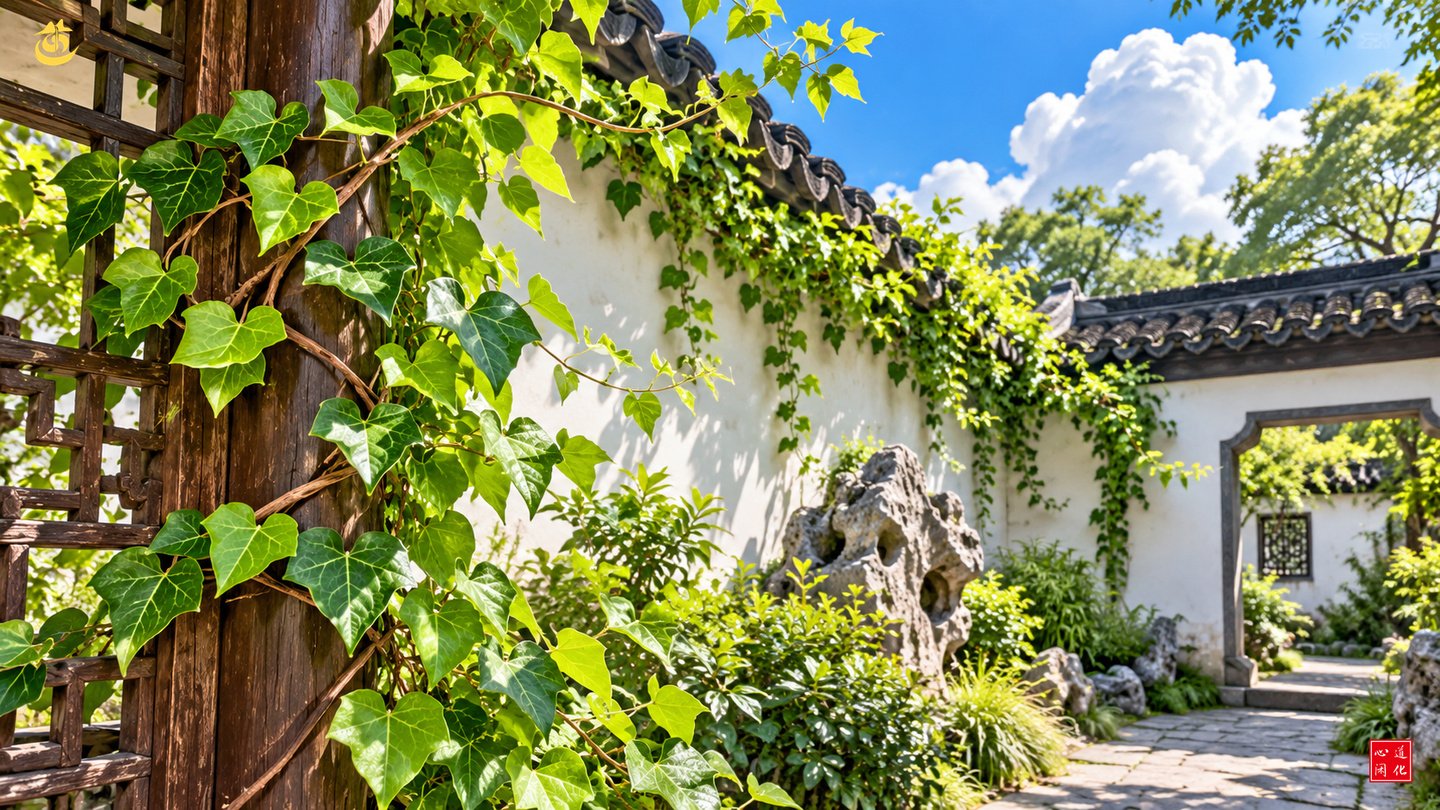
曾经读到过一位名医讲他的老师给病人看病,开了方子,顺手从院子里捡起一片叶子入了药,病人吃了果然灵验。后来,遇到同样的症状,他也在药方中加了片树叶,不管用。去问他的老师。老师说:“我给他瞧病那天,刚好是立秋,病人之症为秋凉所至,我于是取了一片秋叶,取其当令之气作引子,现在是什么季节?不能胡乱用。”那位名医当下领悟。
中医阴阳平衡的基础理论是不变的,但组方用药却是千变万化的。中医组方用药都是因人而异,一人一方,甚至还受时令节气的影响。好的医生从来不会从古人的方子中生搬硬套。因为时代不同了,药性也有变化,加上病因,特别是个体差异等等,都不同了,所以,开方要灵活。
家庭教育,也是一样。
《爱女书摘》,是我自己取的名。是女儿小时候阅读书摘汇集。中国的古文,典籍庞杂,给孩子选书,成了我很有使命和有责任感的一件事。

开始,我也是按传统书单给孩子背诵蒙学经典《弟子规》、《三字经》、《千字文》、《笠翁对韵》、《唐诗》等,因为我们小时候就是这么被教育的。后来感觉到这是通用教材,每个孩子都是不同的,应该用不同的教材。这一想法与我们中医之家的思维方式有关。
于是我就开始选摘自己认为适合孩子情况的典籍,特别是中国古典文章,向女儿推荐阅读。会背的还有奖励。顺便说下我当时主持家政的“财经刺激政策”。当时我在上市公司工作,满脑子都是“经济奖励”+“精神鼓励”的管理方式。
我们家的小狗叫“欢欢”,泰迪犬,在家地位很高,爬在谁肚子上睡觉,谁都不敢动。于是,家庭内部的流通货币,就叫“欢币”,正面有金额,还有孩子手工画的小狗头像。女儿对于自己可以发行“欢币”非常荣耀,画了尺寸大小不等、小狗表情各异的不同金额纸币。(“欢币”原样我留了一些,现在上海)
女儿手中的“欢币”真正要与我手中的人民币等额兑换,还需要我在背面签字。只要我签了字,她随时可以来换币。但怎么样才能获得我的签字呢?
背书、考试成绩、做家务、帮助同学、做良善事等等,一切家长认可的行为,都可以。孩子也对此也非常欢迎,背书的积极性一直很高。这些经济手段都是孩子读小学之后开始的,在幼儿园时,也是大量的背诵(主要是英文儿歌),但当时孩子还没有经济意识,背诵只是在无意间,唱唱跳跳中完成的。求知,是人天生的本能。我从不给孩子报任何辅导班,就是怕破坏了小孩子求知的本能,让孩子觉得学东西是一种任务。

因为“欢币”的流通,使得女儿可以轻松得到她需要的东西,而且不用向家长央求。这养成了女儿从来都不会开口要钱的习惯,她从记事起都是靠自己的本领挣零花钱,因为她的勤奋,也就成了一个从不差钱的小朋友。印象中,除了游戏机不许买之外,别的消费我都支持,特别是买书。女儿爱看漫画,经常看漫画时咯咯笑。在古籍中,她看动画版的《庄子》、Q版《三国》也是非常开心。等她识字和理解能力强一些时,我就开始引导她读古籍原文。最典型的,就是孩子在初三时把《道德经》翻译成了英文,青少年的语气(部分译文我发在了本公众号)。
印象中,很少带孩子逛商场,去书店多一点,各自在感兴趣的分类书架上选取,最后银台汇合。孩子买书、文具、玩具等,我先垫付。回到家,她把自己存的欢币等额给我。我会签字“注销”,于是这些“欢币”就完成了它的使命。她自己买的比较多的是校门口的“口袋书”,还有就是各种各样的笔,成篓成盒的笔,到处都是,实在受不了。但那是孩子的自由,只要不出格,我也任孩子自由支配她的“欢币”。
有一次我到女儿房间,看她在数“欢币”,好多。我就问:“富婆,数钱哪?”,孩子认真说:“小敏姐姐说妈妈生日了,我想给妈添个大件”(小敏:我的秘书,和我女儿感情深厚)。我当时眼泪差点下来。孩子辛苦挣的,当娘的才舍不得花孩子的钱呢。“欢币”政策只是个游戏而已,目的是鼓励她勤奋背书,并教给她一点经济常识罢了。孩子偏当真了,认为她可以用自己的能力来行孝了。这是意外的温暖,但还有一种说不出的滋味,似乎是心酸。

按照我自己接受的家庭教育,觉得自己应该尽着孩子去花,无条件给经济供应。但观察了一下社会,那些无限娇惯的孩子,30多岁了还在啃老,实在也不敢给孩子一种“父母供给是理所当然”的概念。我姐姐就认为她无条件供给孩子是应该的,她宁愿为孩子奋斗一生,从不为自己考虑半点。这一点我不同意,说这样不利于孩子的成长。姐姐说等孩子长大了就好。但我观察多个家庭的结果是:“长大”并没有一个绝对的时间。更多的孩子是在溺爱之下,永远长不大。就算是工作了,成家了,吃父母的,喝父母的,也都“理所当然”,有些孩子甚至还觉得自己的父母没有别的父母提供的物质条件好,认为父母对不起自己,满肚子的委屈和满腔的情绪。从而对父母缺少起码的尊重和赡养责任感。很多家长要也是要求不高,只要孩子过得好,自己怎样艰辛都没关系。我觉得这是有问题的。总觉得孩子长大了,应该让父母过上比自己好的日子,至少不能低于自己的生活水准。这无关经济水平,而是一种道德。虽然我反对道德绑架,但“老了靠自己”,是最让人心寒的事。
“儿在城中坐大官,亲在家中背朝天”,这种情况是夸张了,但经常看到报道说“弃老”现象,确实越来越严重,特别是在农村。比我年长一些的朋友,聊天间,最大关切不再是“钓鱼岛”,而是“如何养老”。这是非常现实的问题。中国传统文化的“养儿防老”已受到了最严峻的挑战。“要想生活富,少生孩子多种树”,“只生一个好,政府来养老”,这些观念伴随着我们几十年了,到头来发现,“养老靠自己,才是硬道理。”不免未老先忧。
回到“欢币”的话题。

孩子可挣“欢币”的项目很多,通过做家务、背书,或考试成绩来换。奖励原则是相对领先。比如,考试成绩只有班级前三名或满分可换。第四名及以后,没有奖励。我们当时还有操作细则,小考满分是10元(天天小测验),周测验满分是20元,月考满分是50元,期中(终)考一个满分是100元。洗碗、擦地、背《新概念》也有“工分”可换“欢币”,在经济刺激和口头赞夸下,女儿在小学一年级时,就背诵完了《新概念》前两册,二年级又背诵的第三册。第四册有难度了,于是我把每篇课文加到了50元。没想到,她在小学三年级时背完了(实话,我背不下来)。由此我试验到,孩子的背诵潜力似乎是无穷的。而且,在背诵完一篇文章后,她捧着上面红笔标注的“对号+100分”的书,拿着一张欢币,欢天喜地回自己房间去的样子,非常有荣誉感和满足感,非常可爱。

其实小孩子的记忆力是极强的,分别心,只是长大之后才有的。在孩子的价值观和分别心、好恶感没明朗之前,多给孩子背诵一些基础性的知识架构书,是极有好处的。等孩子有了判断能力,家长对孩子的影响力会越来越小,就算你用半生的坎坷经历去告诉孩子“这里是坑”,他们也听不进 ,偏要去试试,就算是摔得鼻青脸肿,也不认错。到了叛逆期,就更明显。凡是父母说的,都是不对的。凡是父母禁止的,都要偷着做。这也是常态。所以,想要给孩子一些好的影响,越早越好。这就是所谓的开蒙。
女儿的国学开蒙书,都是我选的。有时古文太长,小学的孩子还不能完全读下来,有时甚至没兴趣,于是我就采用了一种写信的方式。平时在孩子耳边唠叨,孩子不一定听得入心。于是我就给她写信,在信中介绍某本书,先把这本书讲个大概,写得精彩些,符合女儿当下的心态,于是,她自动到书柜中去寻找这本书。就是通过这种方式,我向女儿推荐了一些国学典籍。总编起来,叫《爱女书摘》。这一过程持续到初中。之后,孩子渐渐长大,自己会选书了,加上大部分时间都在应试训练。我就推荐的少了,《爱女书摘》的编辑,就停了。但孩子初中后就开始给我推荐图书,女儿向我推荐的书有《1984》、《瓦尔登湖》等等。我们吃饭时一起看电视剧,属于共同的阅读和讨论。大家在对电视剧人物的评论中,尽情表达自己对人、事的看法和观点。那是最热闹休闲的时刻。

再后来,孩子出国了,她接受的教育已经超越我的认识和想像,于是我就没再写信推荐中国古籍了。但我们在网络聊天时,我经常会因为一个话题岔开了,就开始隔屏讲书,滔滔不绝,有时会激情讲上几十分钟,甚至东拉西扯好几本书,或好几个国家的同类事,然后补一句自夸加解嘲:“你妈读书真勤奋啊”,女儿会笑着安慰鼓励说:“是的,妈爱看书,向妈学习”然后两人哈哈大笑。
接着续补《爱女书摘》。近来想把小时候读过的书再过一遍,补选一些进去。于是开始随手翻阅。
未完待续……
照例:附两首随笔道情:
《午后》
情入玄门似烟霞,心安之处便为家;
秋凉又见南飞燕,纵是相逢也天涯。
檐下斜卧品诗句,古井清泉神仙茶;
何得此生多生趣,万卷经书度年华。
YZ.2021.8.20

《秋夜》
秋夜深深人不眠,起身披衣坐窗前;
一山突起丘陵妒,正义无声天无言。
弱柳静立荷花池,瘦影孤照秋水寒。
唤出嫦娥两相视,清曲一首信手弹。
YZ.2021.8.20
"Excerpts for My Daughter": Guiding a Child to Memorize Books
45. "Excerpts for My Daughter": Guiding a Child to Memorize Books
Originally published by Yang Zi, Daozang Research, 2021-08-20
A note: today's chatter has run too long, and fearing it will tire you, I have split it into two pieces; tomorrow I will post the second half---"Reading Bingmei Guan Ji Again"
For whatever reason, these past few years I have been unusually nostalgic. From missing my parents, my elder sister and my elder brother, to remembering the study and the courtyard of my childhood home, the flower garden and the bamboo in the courtyard, right down to the dishes my mother cooked, the books I read as a child—everything, together with many half-forgotten nursery rhymes, games, the classical medical texts and Tang poems and prose I once memorized, has slowly come clear again. More and more I realize how deep the influence of early schooling and family teaching runs. And so, riding on these memories, I am putting in order the books I read as a child, and carrying the unfinished "Excerpts for My Daughter" further on.
Of the excerpt collections I have read, from the Zhaoming Wenxuan of the Northern and Southern Dynasties to the Qing's Guwen Guanzhi, Guwen Cilei Cuan, and Jingshi Baijia Zachao, the readability is comparatively strong, but they still seem too many and too mixed; some of the genuinely pedantic essays of thought are truly no longer fit for use—better to re-arrange them. I have paid close attention to how scholars after the Qing organized and compiled the old prose, but alas, no one now devotes himself wholly to this work. So in the Ji ("Collections") category of our national learning, works from the middle and late Qing are missing. The scholars of the Republican era were each bent on founding schools of their own, inheriting and innovating, with new academic chapters of their own; so they paid comparatively little mind to re-editing and classifying the ancient books, always feeling that such work was no new creation of their own. And in that era, there were few who trusted the ancients and many who doubted them; few who honored the ancients and many who criticized them. That was the mark of an age.
But in truth, the meaning of scholarship is not always innovation. To put the past in order, so that those who come after read it with fewer detours—its significance yields nothing to writing a great pile of theory nobody can understand. Those books handed down for hundreds, for thousands of years, ever new with age, must have their reasons.
Some of the Republican-era "masters" raised to the skies were overpraised, not a few of them; and the less closely people have read their works, the more firmly they believe the hearsay. Never having read the originals, they lack any basis for judgment and can only echo what others say. And so they are exalted higher and higher, until it approaches worship. Some of this blind credulity comes of people's dissatisfaction with the present academic climate—hence the nostalgia; but there is also the factor of "shallow thinking," "not thinking," or "following the crowd." Mr. Yu Ying-shih, in an interview, said that when a certain somebody from the mainland once visited America and mentioned Hu Shi, the appraisal was: "Hu Shi's scholarship is formidable; it is only his political views that leave something to be desired"—a view representing the shared impression of officialdom and the public on the mainland about Hu Shi. Mr. Yu said their view was precisely the opposite: they felt Hu Shi's learning was nothing much, but his political views of "freedom and democracy" were the scarcest thing among Chinese intellectuals...
Putting old prose in order is not easy. China's ancient books are simply too many: many schools—the Daoists, the Legalists, Mozi, the Confucians, the Yin-Yang school, the Strategists, the Logicians, the Novelists, and so on; and many genres—poems, ci lyrics, songs, cifu rhapsodies, disputation, letters and discourses, prefaces and postscripts, memorials, presentation prefaces, edicts, biographies, histories, records, stelae, epitaphs, miscellaneous notes, admonitions and inscriptions, hymns and encomia, laments and sacrificial texts, and so on. It is all far too rich: to read it all closely would take more than one lifetime. Choose the essentials and let that suffice; the rest can be skimmed. But one needs a framework in one's head, so that when the need arises, one knows where to look. I often think in the manner of the Chinese pharmacy: one need not taste every drug in the drawers, but what each drug in the cabinet does, its rough classification, and where it is kept must be perfectly clear—in readiness against the day of need. It is the same with a family's collected books.
I once read a famous physician telling how his teacher, seeing a patient, wrote a prescription and, in passing, picked up a leaf from the courtyard and added it to the medicine; the patient took it and it worked indeed. Later, meeting the same symptoms, he too added a tree leaf to his prescription—and it did nothing. He went to ask his teacher. The teacher said: "The day I saw that patient was just at the Start of Autumn; the patient's ailment was brought on by autumn chill, so I took an autumn leaf, borrowing the qi of the season in force, to serve as the guiding herb. What season is it now? One cannot use things carelessly." The famous physician understood on the spot.
The foundational theory of yin-yang balance in Chinese medicine does not change, but the composing of prescriptions and the use of drugs shift in a thousand ways. In Chinese medicine prescriptions are always tailored to the person—one person, one prescription—and are even influenced by the season and the solar terms. A good doctor never mechanically copies the prescriptions of the ancients. The times are different, the properties of drugs have changed, and the causes of illness and above all the differences between individuals have all changed; so the writing of prescriptions must be flexible.
Family education is the same.
"Excerpts for My Daughter" is a name I chose myself; it is a compilation of the excerpts my daughter read in her childhood. China's old prose and its canon are vast and tangled, and choosing books for my child became for me a matter of real mission and responsibility.
At the start I too followed the traditional book lists, having her memorize the classics of early schooling—Dizigui, Sanzijing, Qianziwen, Liweng Duiyun, the Tang poems, and the like—because that was how we were taught when we were little. Later I came to feel that these are one-size-fits-all textbooks; every child is different, and different children should have different materials. This way of thinking had to do with the habits of mind in our Chinese-medicine family.
So I began to select, as suited my child's own case, classics—classical Chinese prose above all—to recommend to my daughter for reading, with rewards for whatever she could recite. Incidentally, let me mention the "financial stimulus policy" under which I then administered the household. I was working at a listed company in those days, and my head was full of the management style of "monetary reward" + "moral encouragement."
Our family's little dog is called "Huanhuan," a toy poodle, of very high standing in the household: whoever's belly she climbs onto to sleep, that person dares not stir. And so the household's internal currency came to be called "Huan coins"—the denomination printed on the face, along with a little dog's head the child drew by hand. My daughter took enormous pride in being able to issue Huan coins, and drew banknotes in assorted denominations, in assorted sizes, with the little dog wearing assorted expressions. (I have kept some Huan coins as they were; they are now in Shanghai.)
For the Huan coins in my daughter's hands truly to be exchanged at par for the renminbi in mine, they also needed my signature on the back. Once I had signed, she could come to make the exchange at any time. But how was she to earn my signature?
Memorizing books, exam results, doing chores, helping classmates, doing good deeds—any behavior a parent approves could count. The child welcomed this too, and her enthusiasm for memorizing stayed high throughout. These economic measures all began after she entered primary school; in kindergarten there was also a great deal of reciting (English nursery rhymes mainly), but at that time she had no economic sense, and the memorizing got done casually, amid singing and dancing. The thirst for knowledge is a born instinct of human beings. I never enrolled my child in a single cram class, precisely for fear of ruining a little child's instinct for seeking knowledge, of making her feel that learning was a task.
Because Huan coins circulated, my daughter could easily obtain what she needed without ever having to beg her parents for it. This bred in her a habit of never once asking for money: for as long as she can remember, she has earned her pocket money by her own efforts, and thanks to her diligence she grew into a child who was never short of cash. As I recall, apart from game consoles, which were not allowed, I supported every kind of spending—buying books above all. My daughter loved comics, and often giggled as she read them. Among the classics, she read the cartoon edition of the Zhuangzi and the Q-version of the Three Kingdoms with great delight. When her reading and her comprehension grew stronger, I began guiding her toward the original texts. The most typical case: in her third year of junior high she translated the Daodejing into English, in a teenager's voice (I posted part of the translation in this WeChat official account).
As I remember, I rarely took her shopping in the malls; we went to the bookstore more, each picking from the shelves that interested us and meeting up at last at the cash register. When she bought books, stationery, toys and so on, I would pay first; back home she would give me Huan coins to the same value. I would sign them "canceled," and so those Huan coins had fulfilled their mission. What she bought most on her own were the "pocket books" sold at the school gate, and pens of every kind—pens by the basket and by the box, lying about everywhere, truly beyond endurance. But that was the child's freedom; as long as she did not go too far, I let her spend her Huan coins as she pleased.
Once I went into my daughter's room and found her counting her Huan coins—quite a pile. I asked: "Counting your money, moneybags?" And the child said, all earnest: "Sister Xiaomin said Mama's birthday is coming, and I want to buy Mama something big." (Xiaomin: my secretary, deeply attached to my daughter.) The tears nearly came to my eyes then. Money a child has worked hard to earn—what mother could bear to spend her child's money? The Huan-coin policy was only a game, meant simply to encourage her to memorize diligently and teach her a little economic common sense. But the child took it in earnest, believing that with her own abilities she could now practice filial devotion. It was an unexpected warmth—and yet there was a taste in it beyond words, something like heartache.
By the family education I myself received, I felt I ought to let the child spend freely, supplying money unconditionally. But having looked around at society—those endlessly spoiled children still sponging off their parents in their thirties—I truly dared not give my child the notion that "what parents supply is only natural." My elder sister holds that supplying her child unconditionally is simply right; she would rather struggle all her life for the child, never sparing a thought for herself. On this point I disagree, and have said it does not help a child grow. My sister says it will all be fine once the child grows up. But what I have observed across many families is this: for "growing up" there is no fixed date. More children, drowned in doting, never grow up at all. Even once they work, once they have families of their own, eating off their parents and drinking off their parents is still "only natural"; some children even feel their parents have not provided as good a material life as other people's parents, and believe their parents owe them an apology, their bellies full of grievance and their breasts full of resentment. And so they lack even the basic respect for their parents and the sense of duty to support them. Many parents ask for little: so long as the child lives well, no hardship of their own matters. I think there is something wrong in this. It has always seemed to me that when a child is grown, the parents should be given a life better than the child's own—at the least, no lower than the child's own standard of living. This has nothing to do with economic level; it is a matter of virtue. Though I oppose moral blackmail, "in old age, rely on yourself" is the most chilling thing of all.
"The son sits a high official in the city; the parents bend their backs to the sky at home"—that is an exaggeration, but reports of the phenomenon of "abandoning the old" do keep appearing, and it grows ever more serious, especially in the countryside. Among my friends a few years older than I, when talk turns to what matters, the greatest concern is no longer the "Diaoyu Islands" but "how to provide for old age." This is a most practical question. The "raise children to provide against old age" of traditional Chinese culture has met its sternest challenge. "If you would live in comfort, have fewer children and plant more trees"; "one child is best—the government will care for your old age"—these notions have kept us company for decades, and at the end of it all we discover: "providing for old age by your own strength is the only hard truth." One cannot help worrying about old age before growing old.
Back to the subject of Huan coins.
There were many ways for the child to earn Huan coins: chores, memorizing, or exam results. The reward principle was relative excellence—exam results could be exchanged only for a place in the top three of the class or a perfect score; fourth place and below earned nothing. We even had rules of implementation at the time: 10 yuan for a perfect score on the daily quiz, 20 for a perfect weekly test, 50 for a perfect monthly exam, 100 for each perfect score on the midterm (or final). Washing dishes, mopping floors, and memorizing from "New Concept English" also earned "work points" exchangeable for Huan coins. Under this economic stimulus and verbal praise, my daughter finished memorizing the first two volumes of "New Concept English" in her first year of primary school, and the third volume in her second year. The fourth volume was harder, so I raised the rate to 50 yuan per text. To my surprise she finished memorizing it in her third year of primary school (truth be told, I could not memorize it). From this experiment I learned that a child's capacity for memorizing seems inexhaustible. And the way, having memorized a passage, she would carry off the book with its red-pen "checkmark + 100" and a Huan coin, skipping back to her room in high delight—full of honor and satisfaction, and utterly charming.
In fact a small child's memory is extremely powerful; the discriminating mind is something that comes only with growing up. Before a child's values, its likes and dislikes, its discriminating mind have taken clear shape, it does the greatest good to have the child memorize books that build basic frameworks of knowledge. Once the child has judgment, the parents' influence grows ever smaller: even if you use the hard knocks of half a life to tell the child "there is a pit there," it will not hear you—it must go and try for itself, and even with a bruised nose and a swollen face it will not admit the error. In the rebellious years this grows plainer still: whatever the parents say is wrong; whatever the parents forbid must be done in secret. That too is the norm. So if you want to give a child some good influence, the earlier the better. This is what is called opening the mind's eyes.
The books that opened my daughter's national learning were all chosen by me. Sometimes an old text was too long for a primary-school child to read straight through; sometimes she had no interest at all. So I adopted the method of writing letters. The everyday nagging in a child's ear does not necessarily reach her heart; so I wrote her letters, introducing a book—first sketching its outline, writing it up vividly, in keeping with my daughter's state of mind at the moment—and she would go of her own accord to the bookcase to find the book. It was through this method that I recommended a number of classics of national learning to my daughter. Collected together, they were called "Excerpts for My Daughter." This went on until she entered junior high. After that, the child gradually grew, chose her own books, and most of her time went to exam training; I recommended less, and the editing of "Excerpts for My Daughter" stopped. But from junior high the child began recommending books to me—the ones my daughter commended to me included "1984" and "Walden." At meals we would watch television dramas together, a shared reading and discussion; over our judgments of the characters everyone freely aired their views on people and affairs. Those were our warmest hours of leisure.
Later still, the child went abroad. The education she was receiving went beyond my understanding and imagination, and I stopped writing letters recommending Chinese classics. But when we chatted online, I would often wander off from some topic and begin lecturing through the screen, pouring out in a steady stream—sometimes holding forth with passion for tens of minutes at a stretch, even dragging in several books or similar goings-on in several countries—and then adding a line of self-praise spiked with self-mockery: "Your mother certainly is diligent about reading!" And my daughter would laugh and comfort and encourage me: "That's right, Mama loves reading—I'll learn from you, Mama"—and the two of us would laugh our heads off.
Now to continue filling out "Excerpts for My Daughter." Of late I have wanted to go once more through the books I read as a child and add some selections; and so I have begun idly turning the pages.
To be continued...
As usual, two Daoqing chants from my notebook are appended:
"Afternoon"
Feelings entering the mysterious gate are like rosy mist; wherever the heart is at peace, that is home;
In the autumn chill I see again the swallows flying south; though we meet, it is still the ends of the earth.
Lying back under the eaves, savoring lines of poetry; clear spring from the ancient well, tea for an immortal;
How has this life been granted so many delights? Ten thousand scrolls of scriptures to pass the years.
YZ.2021.8.20
"Autumn Night"
Deep in the autumn night, sleepless, I rise and wrap a robe and sit before the window;
A single peak rises and the hills are jealous; justice is silent, and heaven says nothing.
By the lotus pond the frail willow stands quietly; its thin shadow shines alone on the cold autumn water.
I summon Chang'e out, and we gaze at each other; a clear tune, played offhand on the strings.
YZ.2021.8.20