助梁开国--陶弘景(2)
2、助梁开国--陶弘景(2)
原创 杨子 道藏研究 2021-08-06 17:43
接上篇,继续介绍陶弘景的故事:
(四)助梁开国,山中宰相
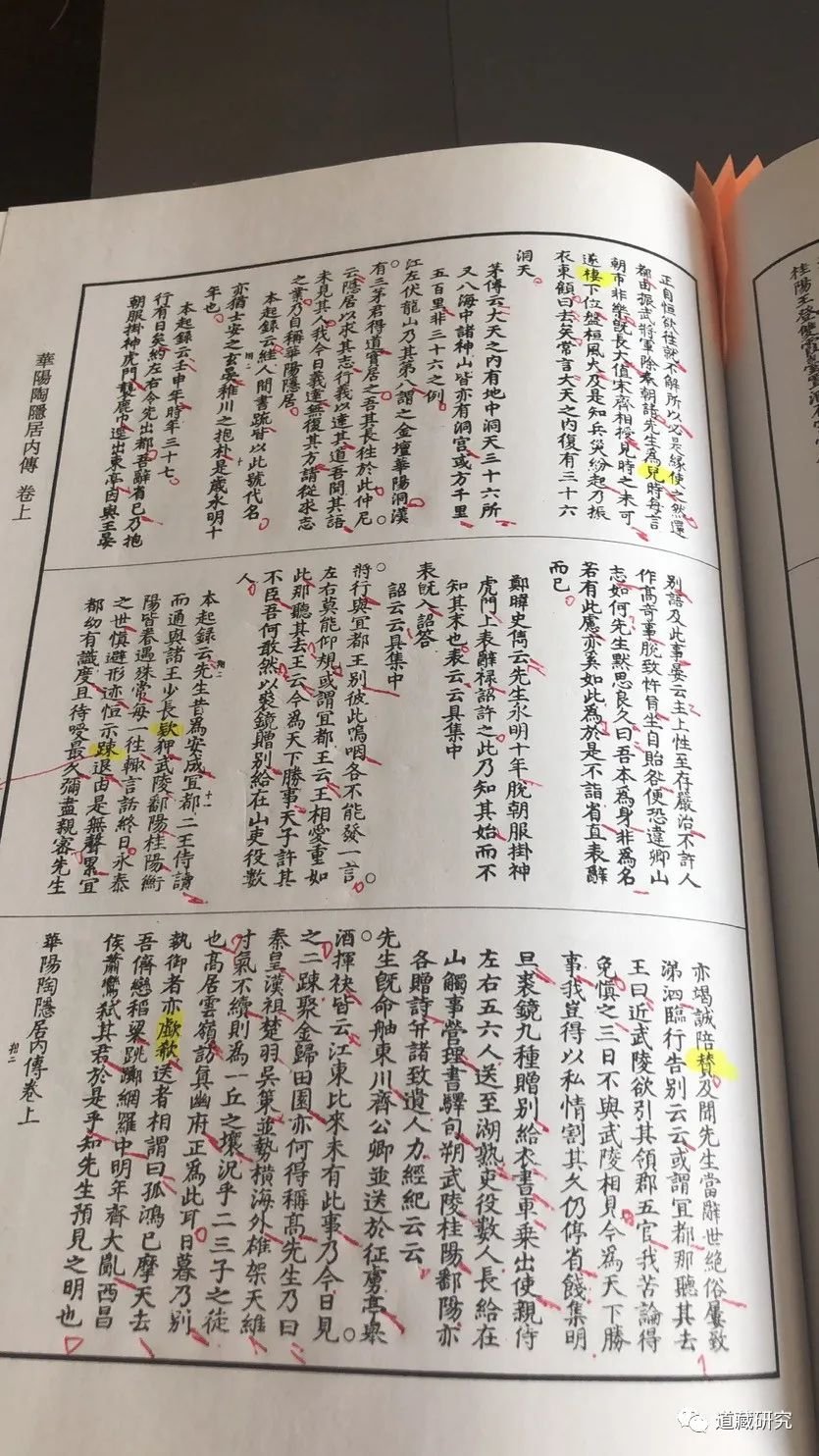
至于陶弘景不愿辅佐齐帝萧宝卷的原因,《齐书》中有记载:东昏侯萧宝卷在位时,“残忍酷暴,书契未闻,剜剔孕妇,格煞百姓,每一月几三十余出,往无定处,东行驱北。明旦应出郊,即驱逐史司,奔驰叫呼盈路,鼓声所闻,便徒铣奔走。犯者皆手刃,工商废业,樵苏路断。或委病弃尸,不得殡葬。万姓嗷嗷,甚乎涂炭之上。”
东昏侯,是梁武帝萧衍给萧宝卷追封的贬称,以此来说明他的昏昧无道。读这段文字,让人不寒而栗。萧宝卷残暴到什么地步呢?“书契未闻”,史书上都读不到的残酷。“剜剔孕妇,格煞百姓”甚至把孕妇抓起来去打胎流产,把婴儿从娘胎里挖出来,把老百姓吓得魂飞魄散。(注:呵!该有多残暴的心,才能把孩子从孕妇肚子打下来)而且特别爱出游,“每一月几三十余出”,几乎天天出行了,而且每次出行,劳师动众,到处大呼小叫,锣鼓喧天,到处驱逐,满城戒严……搞得“万姓嗷嗷,甚乎涂炭之上”,真是生灵涂炭。下图为我点注的原文图片:
陶弘景自幼博览群书,当然是有智慧的。他预知这样的君王死期不远,所以不看好这位萧宝卷的齐政权。加上他本性好仙通道,所以决然挂冠而去。
同时,他深谙识人之术,别具慧眼,一眼看出征东将军萧衍是个有前途的人。
先生上观天象,知时运之变,俯察人心,悯涂炭之苦,乃亟陈图谶,贻书赞奖。……及诸图谶并称梁字,为应运之符。
他静观天象,通晓时运之变;又俯察世道人心,悲悯百姓的涂炭之苦。于是用图谶的方式确定了萧衍是未来的国君,提前对他进行心理暗示,并支持鼓励。而且替他测了国号为“梁”。
陶弘景为萧衍测国号的过程,历史记录很详细:
受封揖让之际,范云、沈约并乘策佐命,未知建国之号。先生引王子年《归来歌中》水刃木处。王子年《归来歌》亟论水刃木皆是羡词,兼引王君《回文识》焉。荣牵三诗,并盛称梁字为应运之符。
萧衍要建国,不知定什么国号。陶弘景就用图谶去测,结果,“天意”取了王子年《归来歌中》的“水、刃、木”三个字的合体,即是“梁”字。又引经据典地解释与“梁”字相关的一切,都是吉祥荣耀,于是他说这“梁”字为应运之符,就是顺应天意的最好国符,于是萧衍定国号为“梁”。也就是说,陶弘景为梁测准了国运,并为梁武帝萧衍铺垫好了“君权神授”的舆论基础。
登基后的梁武帝对陶弘景该有多感恩,可想而知。
他开始报恩。
梁武帝即位,弥加钦重。使朱嗣之及舍人黄陆责劲至山,因召先生。
诚召陶弘景到朝廷,要委以重任。
陶弘景是怎么回复的呢?
画二牛,一在野,甚自得,一衣以文绣,有人扣刀执绳以随。帝曰:是将学曳尾龟,宁有可致之理?
他画了一副《二牛图》,一头牛在田野,悠闲自得地吃草,另一头则是用豪华的笼头捆着,有人执刀牵着走。梁武帝一看就明白了,说:他这是在学习庄子啊,要做在泥水里摆着尾巴、自由自在的乌龟,也不愿到朝堂之上受拘束。一个心向自由的人,高官厚禄是无法吸引他的,权势也不能威胁他,功名也不能迷惑他。
乃与先生书曰:今万乘为累,欲东向修弟子礼,其可得乎?因问享国之期日:吾历数奢促如何?先生启云:再环辰。次又云:光武一去四八,今则直上七七,然后乘彼白云。帝在祚四十九年,其预翰来兆,皆此类也。
于是梁武帝不再勉强陶弘景出仕。并给陶弘景写信说要以弟子之礼向他请教,请他帮测一下朝运。于是陶弘景算了一下,梁武帝有49年的帝王命。后来的事实证明,果然。这是后话。
在山中的岁月,他并没有停止对梁武帝的辅佐,而梁武帝更觉得离不开他的智慧。于是“书问不绝,月常信数。时人谓山中宰相”。于是经常快马传书,经常向他请教国家大事,当时人们都称他山中宰相。“大同二年卒,时年八十五,颜色不变,屈伸如常云云。”如果按史记他的生卒年月算,应该是活了81岁,但这里贾嵩说他活了85岁,可能笔下误,因为后面的章节中,说他活了81岁。在那个“七十古来稀”的时代,也是非常长寿了。
关于陶弘景在山中与外界的沟通,也是非常丰富有趣的。举几个例子:
关于和梁武帝的书信交流。梁武帝对他在山中的生活很是好奇,来信问山里都有什么啊?有没有发现什么稀罕?陶弘景的答复,实在太有趣的:
《诏问山中何所有赋诗以答》
山中何所有,岭上多白云。
只可自怡悦,不堪持赠君。
古人写东西很有趣,就是言简意赅,这首诗的名字就交待了很多信息,“诏问”,就是皇帝来信发问,“山中何所有”,是皇帝问的内容,“赋诗以答”,就是写首诗当作回信。大意:您问我山中有什么?岭上多的是白云。但只能我一个人独自欣赏,没办法送给您呀。
对皇帝这么说话,幽默风趣,虽是什么也没送,但他送的这份礼物却载入史册。因他这首诗,后人也有了谈论梁武帝的资料。南北朝时期,本来就动荡,国家不统一,朝代更迭频繁,没几个帝王能为历史重视,偏就是因为与这些才人的对话,让他们载入青史趣话。
但陶弘景对朋友讲话,就动情多了。他跟朋友和诗,为友情流泪,最有名气的一首:
《和约法师临友人诗》
我有数行泪,不落十馀年。
今日为君尽,并洒秋风前。
与朋友相处如此,那么,他独处时的情感如何呢?他那么向往山中独居,真正一个人住在山中,他写游仙诗,写赋,也写怨词,其中有一首《寒夜怨》:
《寒夜怨》
夜云生。夜鸿惊。
凄切嘹唳伤夜情。
空山霜满高烟平。
铅华沉照帐孤明。
寒月微。寒风紧。
愁心绝。愁泪尽。
情人不胜怨。
思来谁能忍。
多情如斯。孤独如是。不官不婚,但却不是不问世情,更不是无思无情。“思来谁能忍”,相思情绪来了,谁能忍得住?这才是真性情的人。史料中并没有记录他的情感史。所以不能妄猜名士风流。或许写的是别的意思。中国文字博大精深,怎么理解都可以。谁知道呢?
(五)寻真杂记
说说陶弘景和茅山的寻真缘起。
《本起录》云:时年二十九。青汉官新成,帝锐意游宴,先生拜表献颂,于时称绝。
大意:陶弘经29岁那年,皇帝游宴上,他给皇帝拜表献颂,由于文采非凡,于时称绝。歌功颂德是中国所有时代的共同特征,听人赞颂是所有帝王的特权和最大爱好。以陶弘景的才华和文笔,他的拜表之文称绝当世,一点都不奇怪。常人看来,他应该是更进一步,从此平步青云才是,但他却生病了。
忽一日於石头恍然,若有所适,无所觉知者七日,乃豁然自差,云:睹见甚异事。秘不得知。
大意:忽然有一日,于石头山中恍然大悟,那感觉让人想到王阳明忽然龙场得悟似的,所不同的是,得悟后没有兴奋地大喊大叫,而是显得很怪异,昏晕状态。不认识人,也不服药,不吃不喝,七天七夜,没有知觉了,后来豁然自愈。跟人说他见到了非常奇异的事,至于什么事,“秘不得知”,他不说。不可说,不可说。对此,后世的读者,理解,理解,真的理解。
然后他就拜道士孙游岳为师,受符图、经法、诰诀,遂遍游名山,寻访仙药真经。第一次去了茅山。从此开始了更专业的求道之路。“获前真杨、许兴宁中手书”。在茅山得到杨羲、许谧手书真迹。也是得到了上清派道法的真传衣钵。
游历山水二百余日,乃还。未几复往,更求遗述,多有所得。
大意:陶弘景在茅山游历了200多天,才回去。没多久,又去了,再寻求道门遗述真迹,多有所得。
这一点我一直很羡慕古人,想要读好书,就出门去找,一找就能找到。奇怪了,我怎么从来就找不到呢?我也经常留意在旧书摊上翻来翻去,从来没发现过什么有价值的古籍呢?
有一天,随手翻朱熹注的《周易本义》,突然想到朱熹对《周易》本义的还原,究竟有多靠谱?于是先列了一下朱熹的源本资料,一个人的学术观点是否可靠,可根据他的本底资源来判断。
CCTV记录频道有披露,朱熹写《周易本义》所依据的河图、洛书,这其实并不准确,朱熹以为他所依凭的两个底本就是河图、洛书。其实,后人考证后确认,朱熹用的两本都是洛书,并没有河图。原因是,朱熹派他的弟子蔡元定去四川找河图洛书。蔡元定找到了三本,但他只给了朱熹两本,都是洛书。另一本,就是蔡元定藏起来的很象太极图的那本,才是河图,他没舍得给朱熹,而是作为家宝自家私传了,真到元末明初才被公布于世,被称为《天地自然河图》。
后来,我竟然把研究朱熹观点的事情忘记了,只是思考蔡元定是怎么得到的?这么宝贝的图书,怎么说去找就找到了?我就没那个幸运,呵呵。
说起找书,插个曲。
前十来天,千年不遇的洪灾,淹了我的家乡,全省一片汪洋。我平时不太看新闻,洪灾那天还发信息给朋友说自己“今天居然有闲心弹琴了”,还传去自己弹古琴的照片,知情人一定觉得我没心肝吧,都大灾了,你还有心情弹琴?晚上孩子从国外来信息,问老家情况,我才知道天难突降。

立即打开手机视频,看到了郑州地铁五号线上人们泡在水里,封闭在车厢内,视频中寂静无声,移情换位到视频中的水中,一下子惊魂。被困在一个封闭的空间内,看着水位一点点没过脚踝,没上膝盖,没过腰间,没过胸脯,想想就让人窒息。第一反应是:车内一定有应急破窗锤啊,既然已经漏水,为什么不砸玻璃?至少会有空气进来;水漫过来,为什么要进封闭空间呢?(后来看到各种网络发的原因后,无比心痛)。然后看到了被大水瞬间封掉的隧道、地下车库等;还有街上被大水冲走的路人......
马上关掉视频,赶紧给哥哥打电话确认他们是否平安,没想到我哥却忙着在筹备线上公益讲课,讲针灸,热火朝天地天正为抗洪募捐,他只负责讲课,太极六合针法协会负责收款并捐赠事宜。我问他大家都忙着抗洪,谁顾上听课?再说,每人收100元,能募几个钱?我哥就发来了一张捐款单子,原来听课的人知道是公益慈善课,有人好多倍地支付。后来给发来了的捐款凭证,还有去年给武汉疫情的捐款回执等,他们一起合作在灾难来临时的善举。以及哥哥在网上指导学员扎针的部分截屏。网络课,大家可离线听,倒是方便。我赞扬鼓励一番,马上说,“快回老宅,把老家一楼书房里的书挪到楼上去,不然水泡了,咱爹一辈子的心血就没了。老爷子在天之灵会责怪我们的。快去!快去!另外啊,如果路上水过汽车半轮,就弃车逃生,不要躲在车里等救援,自救最重要”。
于是大哥二哥就驱车回老家了。没多久,就给我发来了几张老家书房保存完好的照片。又一张残破封面的家谱照。原来他们在挪书时,无意间发现了我们的家谱,厚厚的一本,记载了祖上好多代人的故事。
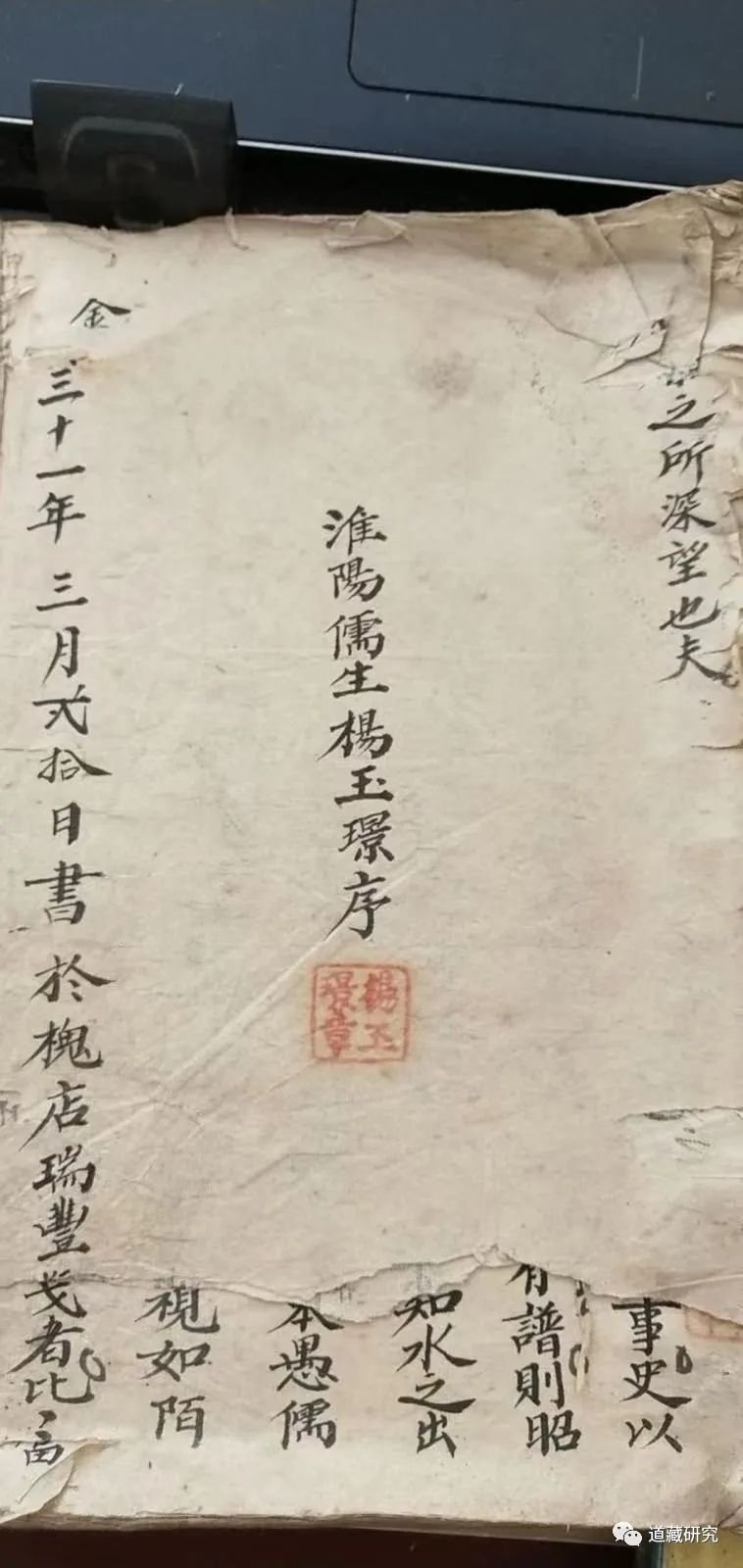
哥哥给我拍两张图片先给我看下,他因后面要忙着搬书,就没顾上拍了。我一看封面,都破成那样了。但看到只剩下大半页的封面,第一感觉是,我是家中的异类和叛徒。家谱上明明写着“儒门”,我却一直声声称道家,也从不在乎家里或社会如何误解道家及道教,坚定认为守住我们的文化是我们的良知和责任。社会越是埋汰道文化,我内心的天平越倾向道家,而且常以道玄清高自居,静心自守,不问红尘。不管祖上多么尊儒,我都不肯再锦上添花,心甘情愿地为道清守一生。一个人叛家,莫过于此。而且随着年龄的增长,阅读社会和图书的加深,我越来越为崇尚道家而庆幸。哪怕没有同路人,不被社会理解。我相信自己选对了信仰。
大多数人家续家谱,记录辉煌骄傲的体面事,是所有家谱的主旋律,不光彩的事,从来不提。以给后代荣耀感。而我们的家谱中,居然还写到了“同室操戈”这几个字,可见,写家谱的人没有咱们这个时代的政治和谐概念,这是最直接的“家丑后扬”。
我二哥边翻看边读给我听:“内容丰富啊!咱老祖爷及之前的名字,都清晰可辩,故事还要细读。咱爷这一辈的,故事大体明白。这里记录咱们三爷中了举人,是咱家最后一位举人。”我说:“咱三爷我记忆深刻,他肯定不是举人啊。院子里都是柿子树,秋天的时候,满院子的小灯笼啊,仙景一般,三爷经常当神仙,几天不吃不喝睡不醒地“过阴”,还把他到阴间的事讲得有鼻子有眼的。大哥结婚时,咱三爷受(寿)头穿的是清朝的官服,隆重辉煌,我记得清楚,只是不知道原因,也不知他哪儿弄来的”,二哥说那个中举的三爷早年死了,他后面的那位弟弟于是排了行三,就是咱们小时候知道的三爷,喜欢到阴间去游玩的那位。但这是后话。这本家谱成文时,前面一位举人应该还活着,所以还排在行三……
父亲生前找了一辈子的家谱,居然在他过世一年多后无意间被发现,而且就在他的书房内。父亲以前一直认为是文革抄家焚书时给烧掉了,所以他晚年花了好几年时间续写家谱,竟然没有想到把家里的藏书再翻找一遍。
人生,时时有遗憾。
人生,处处有发现。
这,是洪灾带来的意外。
落笔随意,离题万里,忘记来路。今儿,就到儿吧。
未远待续……
照例,两首道情,送给你:
《续脉》
迢迢万里道,不见一人行;
孑然只此身,幽幽续道情。
YZ.2021.8.5
正弹琴,忽然觉得天色暗了,一抬头,刚才还是黛色的山水景色,突然变成了动画。黑压压的云从山边卷压过来,催楼欲倒的感觉。于是情绪顿时激动起来,换到书桌前坐下,看着窗外,啪啪啪就打出了这首打油诗。真是玩疯了,外面疫情加台风,往窗下看,路上没有行人,车辆也很少。一惯拥挤的大学路,通畅无比。这样窝家的日子早已习心为常。跟天玩,跟地玩,跟琴玩,跟台风玩,跟文字玩,跟古人玩。一个人玩儿。于是记录:
台风欲来,风云滚滚,借苍天风云之势,起火炼丹,忙得热火朝天,不亦乐乎。
《台风欲来忙炼丹》
仙家扶琴坐窗边,静看怒云过青山;
卷卷滚滚压城来,风雷震耳惊七弦。
势藏风中风无影,心飘海上海齐天;
借天风云支鼎炉,起火投药炼仙丹;
云潮齐涌天边来,台风助我火三千。
内丹外丹真火成,换得长生不使钱;
人人自有通天窍,怎奈世人自作难。
劝君随我入大道,颠之倒之悟三玄;
玄门有道玄无尽,自去自来做神仙。
YZ.2021.8.5
Helping Found the Liang: Tao Hongjing (2)
10. Helping Found the Liang: Tao Hongjing (2)
Originally published by Yang Zi, Daozang Research, 2021-08-06 17:43
Continuing from the previous piece, I go on with the story of Tao Hongjing:
(IV) Helping found the Liang, the Prime Minister in the Mountains
As for why Tao Hongjing was unwilling to assist Xiao Baojuan, emperor of Qi, the "Qi Shu" records it: when Xiao Baojuan, the Marquis of Donghun, was on the throne, "he was cruel and violent beyond what written records have ever heard; he cut open pregnant women and struck down commoners; in almost every month he went out more than thirty times, never to a fixed place, driving people north as he went east. If he was to go to the suburbs the next morning, he would at once drive out the officials; running and shouting filled the roads, and wherever the drum was heard people fled barefoot. Those who crossed him he killed with his own hand; trade and crafts were ruined, and the roads of woodcutters and gatherers were cut off. Some abandoned the sick and cast out the dead, unable to give burial. The myriad people cried out in anguish, worse than being on burning coals."
The Marquis of Donghun is a derogatory posthumous title that Emperor Wu of Liang, Xiao Yan, gave to Xiao Baojuan, to show how benighted and unprincipled he was. Reading this passage makes one shiver. How brutal was Xiao Baojuan? "Beyond what the records have ever heard"--a cruelty not to be read of even in the histories. "He cut open pregnant women and struck down commoners"--he even seized pregnant women and forced miscarriages, dug the infants out of the womb, and scared the common people out of their wits. (Note: Ah! what a brutal heart it takes to beat a child out of a pregnant woman's belly) And he was especially fond of outings, "almost thirty-odd outings in a month," out nearly every day; and every outing set great crowds in motion, with shouting everywhere, gongs and drums shaking the sky, people driven off everywhere, the whole city under curfew ... bringing about "the myriad people crying out in anguish, worse than being on burning coals"--truly the people were in misery. The picture below is my punctuated photo of the original:
Tao Hongjing had read widely from childhood and of course had wisdom. He foresaw that such a ruler's death was not far off, so he took no favorable view of this Xiao Baojuan's Qi regime. Added to that, his nature loved immortals and was attuned to the Dao, so he resolutely hung up his cap and left.
At the same time he was deeply versed in judging people and had a special eye; at a glance he saw that Xiao Yan, the General Who Conquers the East, was a man with a future.
The Master looked up to the heavenly signs and knew the turn of the times; he looked down upon the hearts of men and grieved at their misery on burning coals, and so he urgently set forth the prophetic charts and sent a letter of praise and support. ... And the various prophetic charts all named the word "Liang" as the token of the responding mandate.
He quietly observed the heavens and understood the turning of the times; he looked down on the ways of the world and the hearts of men and pitied the people's misery. Then by means of prophetic charts he fixed upon Xiao Yan as the future ruler, planting the suggestion in his mind ahead of time and giving him support and encouragement. He also divined the dynastic name for him as "Liang."
The process by which Tao Hongjing divined the dynastic name for Xiao Yan is recorded in detail in history:
At the time of the investiture and the cession of the throne, Fan Yun and Shen Yue both attended with their counsel, aiding the mandate, but the name of the state to be founded was not yet known. The Master cited the "water, blade, wood" passage in Wang Zinian's Guilai Ge. Wang Zinian's Guilai Ge repeatedly discusses how water, blade, and wood are all auspicious words, and he also drew on Master Wang's "Huiwen Shi." Three poems were brought together in honor of it, and all extolled the word "Liang" as the token of the responding mandate.
When Xiao Yan was to found the state, he did not know what dynastic name to fix. Tao Hongjing used the prophetic charts to divine it, and the result was that "heaven's intent" took the combining of the three characters "water," "blade," and "wood" from Wang Zinian's Guilai Ge--which is the character "Liang." He further cited the classics to explain that everything connected with the word "Liang" was auspicious and glorious, and so he said this "Liang" word was the token of the responding mandate, the best dynastic talisman for following heaven's intent; thereupon Xiao Yan fixed the dynastic name as "Liang." That is to say, Tao Hongjing accurately divined the Liang's dynastic fortune for it and laid the ground of public opinion for Emperor Wu of Liang, Xiao Yan, that "the ruler's power is conferred by Heaven."
One can imagine how grateful Emperor Wu of Liang was to Tao Hongjing after he ascended the throne.
He began to repay the kindness.
When Emperor Wu of Liang took the throne, he grew all the more reverent. He sent Zhu Sizhi and the attendant Huang Lu bearing an edict to the mountain, and so summoned the Master.
He sincerely summoned Tao Hongjing to court, meaning to entrust him with weighty responsibilities.
How did Tao Hongjing reply?
He painted two oxen: one in the wild, thoroughly at ease; the other dressed in embroidered trappings, with a man holding a knife and a rope following it. The emperor said: this is going to imitate the turtle dragging its tail; how could there be any way to bring him here?
He painted a "Picture of Two Oxen": one ox in the fields, grazing at its leisure; the other bound in a splendid halter, led along by a man holding a knife. Emperor Wu of Liang understood at a glance and said: he is studying Zhuangzi; he wants to be the turtle wagging its tail in the mud, free and easy, and will not be constrained in the hall of court. A person whose heart turns toward freedom cannot be drawn by high rank and salary, cannot be threatened by power, and cannot be dazzled by fame.
Then he wrote to the Master saying: now the ten-thousand-chariot throne is a burden; I wish to face east and perform the rites of a disciple--may that be possible? He then asked about the term of the reign, saying: how long or short is my allotted number? The Master replied: twice around the celestial cycle. He said further: Guangwu departed at four eights, but now it goes straight up to seven sevens, and then one rides those white clouds. The emperor was on the throne forty-nine years; his foretelling of things to come was all of this sort.
So Emperor Wu of Liang stopped pressing Tao Hongjing to take office. And he wrote to Tao Hongjing saying he would ask his instruction with the rites of a disciple, and invited him to divine the fortune of the dynasty. Tao Hongjing calculated and said Emperor Wu of Liang had forty-nine years of imperial destiny. Later events proved it so. But that is a story for later.
During the years in the mountains he did not stop assisting Emperor Wu of Liang, and Emperor Wu felt all the more that he could not do without his wisdom. Hence "letters and inquiries never ceased, often several in a month; people of the time called him the Prime Minister in the Mountains." So there were constant fast-horse letters, constantly asking his counsel on affairs of state, and people of the day all called him the Prime Minister in the Mountains. "He died in the second year of Datong, at the age of eighty-five, his color unchanged, his bending and stretching as usual, and so on." If one reckons by the birth and death years recorded in the histories, he should have lived eighty-one years, but here Jia Song says he lived eighty-five--perhaps a slip of the pen, because in a later chapter it says he lived eighty-one. In an age when "few since old times reach seventy," that was still a very long life.
About Tao Hongjing's contact with the outside world from his mountain, there is much that is rich and interesting. A few examples:
On the exchange of letters with Emperor Wu of Liang. The emperor was very curious about his life in the mountains and wrote to ask: what is there in the mountains? Have you found anything rare? Tao Hongjing's reply is simply delightful:
"Answering with a Poem the Imperial Question of What Is in the Mountains"
What is there in the mountains? On the ridges, many white clouds. / I can only enjoy them for myself; I cannot take them up and present them to you.
The ancients wrote with great charm: a few words carry a world of meaning. The very title of this poem tells you a great deal: "imperial inquiry" means the emperor wrote to ask; "what is in the mountains" is what the emperor asked; "answering with a poem" means he wrote a poem as his reply. In sum: you ask what there is in the mountains? On the ridges there are plenty of white clouds. But I can only enjoy them alone; there is no way to give them to you.
To speak to an emperor like that is witty and charming. Though he sent nothing at all, the gift he sent went down in history. Because of this poem, later ages have material for talking about Emperor Wu of Liang. The Northern and Southern Dynasties were turbulent to begin with, the realm not unified, dynasties changing often, and few emperors were thought worthy of history's notice; it is precisely because of dialogues with talents like this that they entered the annals as delightful anecdotes.
But when Tao Hongjing spoke to friends, he spoke with far more feeling. He matched poems with friends and wept for friendship; the most famous one:
"Matching Master Yue's Poem on Visiting a Friend"
I have a few lines of tears that have not fallen for more than ten years.
Today for you they are spent, all spilled before the autumn wind.
If this is how he was with friends, what of his feelings when he was alone? He so longed to dwell alone in the mountains; truly living alone there, he wrote roaming-immortal poems, wrote rhapsodies, and also wrote plaint songs. Among them is "Lament on a Cold Night":
"Lament on a Cold Night"
Night clouds rise. Night geese are startled.
Mournful and shrill, their crying wounds the night's feeling.
The empty mountain is full of frost; the high mist lies level.
The pale glow sinks and shines; the bed-curtain is lonely and bright.
The cold moon is faint. The cold wind is tight.
The grieving heart is cut off. The grieving tears are spent.
The lover cannot bear the plaint.
When the longing comes, who can endure it?
So full of feeling. So lonely. He held no office and did not marry, but that is not to say he was indifferent to the world's affections, still less that he was without thought or feeling. "When longing comes, who can endure it?"--when the ache of longing arrives, who can hold it back? This is a person of true feeling. The historical records say nothing of his romantic history, so one must not idly guess at the romantic adventures of a famous scholar. Perhaps he meant something else. Chinese writing is vast and profound, and can be read in any way at all. Who knows?
(V) Miscellaneous notes on the search for truth
Let me speak of how Tao Hongjing's search for truth with Maoshan began.
Benqi Lu says: he was then twenty-nine. The Qinghan Palace had just been completed; the emperor was bent on outings and banquets, and the Master submitted a memorial presenting a eulogy, which was hailed as matchless at the time.
In sum: the year Tao Hongjing was twenty-nine, at an imperial outing and banquet he presented a memorial and a eulogy to the emperor; because of his extraordinary literary talent, it was hailed as matchless in its day. Singing of merit and praising virtue is a common feature of every age in China, and hearing oneself praised is the privilege and greatest delight of every emperor. With Tao Hongjing's talent and pen, that his memorial should be called peerless in its age is not the least surprising. To ordinary eyes he ought to have gone further and risen straight to the clouds from then on--but instead he fell ill.
Then one day at Shitou he fell into a trance, as if he were going somewhere, and for seven days he knew and felt nothing; then of a sudden he was himself again, healed, and said: I saw a most extraordinary thing. It was kept secret and never known.
In sum: one day, all at once, he came to a sudden awakening in the Shitou mountains; the feeling puts one in mind of Wang Yangming's sudden enlightenment at Longchang. What was different was that after the awakening he did not shout in excitement, but seemed very strange, in a faint and dazed state. He recognized no one, took no medicine, neither ate nor drank; for seven days and seven nights he had no consciousness, and then of a sudden he was healed of himself. He told people he had seen a most extraordinary thing, but as for what it was, "kept secret and never known"--he would not say. Must not speak of it, must not speak of it. To this, we readers of later ages say: we understand, we understand, we truly understand.
Then he took the Daoist Sun Youyue as his teacher, received talismans and charts, scriptures and methods, and instructions and formulas, and thereafter wandered all the famous mountains, searching for elixirs of immortality and true scriptures. The first time he went to Maoshan. From then began a more professional road of seeking the Dao. "He obtained the handwritten texts of the former perfected Yang and Xu from the Xingning era." At Maoshan he obtained the authentic handwritten manuscripts of Yang Xi and Xu Mi. He also received the true transmission and mantle of the Shangqing school's Daoist methods.
He wandered the mountains and rivers for more than two hundred days before returning. Not long after he went again, seeking further surviving writings, and gained a great deal.
In sum: Tao Hongjing wandered Maoshan for over two hundred days before going back. Before long he went again, seeking the remaining records of the Daoist school, and found much.
This is something I have always envied about the ancients: if they wanted to read a good book, they went out to look for it, and looked and found it. Strange--how is it I never find any? I often poke around secondhand bookstalls too, and have never once come across any valuable old text.
One day, leafing idly through Zhu Xi's "Zhouyi Benyi," it suddenly occurred to me: just how reliable is Zhu Xi's restoration of the original meaning of the Zhouyi? So I first listed Zhu Xi's source materials; whether a person's scholarly views are sound can be judged from the base resources he had.
CCTV's documentary channel revealed that it is not accurate to identify the two diagrams on which Zhu Xi based "Zhouyi Benyi" as the Hetu and the Luoshu: Zhu Xi believed the two base texts he relied on were the Hetu and the Luoshu. In fact, later research confirmed that the two texts Zhu Xi used were both Luoshu, and there was no Hetu. The reason is that Zhu Xi sent his disciple Cai Yuanding to Sichuan to find the Hetu and Luoshu. Cai Yuanding found three texts, but gave Zhu Xi only two, both Luoshu. The other one--the one Cai Yuanding hid away, the one that looks very much like a Taiji diagram--was the real Hetu; he could not bear to give it to Zhu Xi, and kept it as a family treasure passed down privately, only made public at the end of the Yuan and beginning of the Ming, when it came to be called "Tiandi Ziran Hetu."
Later I actually forgot all about my study of Zhu Xi's views, and only wondered how Cai Yuanding had got hold of it. Something that precious--how could he just go and find it? I have no such luck, ha ha.
Speaking of finding books, let me insert an interlude.
Some ten days ago, a flood said to come once in a thousand years inundated my hometown; the whole province was a vast sheet of water. I do not usually watch the news, and on the day of the flood I even messaged a friend saying that "today I actually had the leisure to play the zither," and sent a photo of myself playing the guqin. Anyone who knew the circumstances must have thought me heartless--with a great disaster on, how could you be in the mood to play the zither? In the evening my child messaged from abroad asking about our old home, and only then did I learn that calamity had suddenly fallen.
I immediately opened a video on my phone and saw people on Zhengzhou Metro Line 5 soaked in the water, sealed inside the carriages; the video was utterly silent. Putting myself in the water in that video, I was terrified in an instant. Trapped in a closed space, watching the water rise bit by bit over the ankles, over the knees, over the waist, over the chest--just thinking of it makes one choke. My first reaction was: there must be an emergency window-breaking hammer in the carriage; since water was already coming in, why not smash the glass? At least air would get in; with the water rising, why had they gone into a closed space? (Later, when I saw the various reasons posted online, my heart ached beyond measure.) Then I saw the tunnels and underground garages sealed off in an instant by the flood, and pedestrians on the street swept away by the water ...
I turned off the video at once and hurried to call my brother to check that they were safe. To my surprise, my brother was busy preparing an online charity lecture on acupuncture, in full swing raising donations for the flood relief; he was only responsible for giving the lecture, while the Taiji Liuhe Acupuncture Association handled collecting and donating the money. I asked him: everyone is busy with flood relief, who has time to listen to a lecture? Besides, at a hundred yuan a person, how much could that raise? My brother sent me a donation list--it turned out that when the listeners knew it was a charity class, many paid many times over. Later he sent the donation receipts, and also last year's donation acknowledgment for the Wuhan epidemic, the good works they had done together when disaster struck, along with screenshots of my brother guiding students online in needling. With an online class, people can listen offline too, which is convenient. I praised and encouraged him, then said at once: "Hurry back to the old house and move the books in the first-floor study upstairs, or if the water soaks them, our father's life's work will be gone. The old gentleman's spirit in heaven would blame us. Go quickly! Go quickly! And another thing: if the water on the road comes over half the car wheels, abandon the car and flee for your life; do not hide in the car waiting for rescue. Saving yourself matters most."
So my eldest and second brothers drove back to the old home. Before long they sent me a few photos of the old study, intact. And another photo of a genealogy with a tattered cover. It turned out that while moving the books they had happened upon our family genealogy, a thick volume recording the stories of many generations of ancestors.
My brother took two pictures and sent them for me to see first; he had to hurry on with moving the books and did not manage to take more. I looked at the cover, so worn as that. But seeing that only a little more than half a page of the cover remained, my first feeling was that I am the odd one out and the rebel of this family. The genealogy plainly says "Confucian school," yet I have all along called myself Daoist, and have never cared how the family or society misunderstands the Daoist school and Daoism, firmly holding that guarding our culture is our conscience and our duty. The more society belittles Daoist culture, the more my inner balance tips toward the Daoist school, and I often hold myself aloof in the loftiness of Daoist mystery, keeping the heart in quiet and asking nothing of the red dust. However much our ancestors honored Confucianism, I refuse to add flower to brocade, and am willing to keep the Dao in purity all my life. No one rebels against a family more than this. And as I grow older and read more deeply in society and in books, I am more and more glad that I prize the Daoist school. Even if I have no companions on the road and am not understood by society. I believe I have chosen the right faith.
Most families, when continuing a genealogy, record the glorious, honorable, respectable things--that is the main theme of every genealogy; the disgraceful things are never mentioned, so as to give descendants a sense of pride. And yet our genealogy actually contains the words "brothers turning their weapons on each other within the same house." You can see that the person who wrote the genealogy had no notion of our era's "political harmony"; this is the most direct case of "family shame made public."
My second brother read it aloud to me as he flipped through it: "It is rich in content! The names of our oldest ancestors and those before are still clearly legible; the stories need a careful read. Our grandfather's generation is roughly clear. Here it records that our third great-uncle passed the juren exam--the last juren in our family." I said: "I remember our third great-uncle well; he certainly was no juren. The courtyard was full of persimmon trees; in autumn the whole yard was little lanterns, a fairy scene. Third Great-Uncle often played at being an immortal, going for days without eating or drinking, sleeping and not waking, 'crossing to the underworld,' and he told his doings in the netherworld in vivid detail. At my eldest brother's wedding, our Third Great-Uncle, in the role described as shoutou (受/寿头), wore Qing-dynasty official robes, solemn and splendid; I remember it clearly, only I never knew the reason, nor where he had got them." My second brother said that the third great-uncle who passed the juren died young, and the younger brother after him was then ranked third--that is the Third Great-Uncle we knew as children, the one who liked to go touring in the underworld. But that is a story for later. When this genealogy was written, the earlier juren was presumably still alive, so he was still ranked third ...
My father spent his whole life looking for the genealogy, and it turned up by chance more than a year after he passed away--and right there in his own study. He had always believed it had been burned in the house searches and book burnings of the Cultural Revolution, so in his last years he spent several years continuing the genealogy by hand, and it never occurred to him to rummage once more through the family's stored books.
Life has its regrets at every moment.
Life has its discoveries everywhere.
This, was an unexpected discovery brought about by the flood.
The writing has wandered as it pleased, straying ten thousand li from the topic, forgetting the road back. Today, let us stop here.
To be continued ...
As usual, two Daoqing chants, for you:
"Continuing the Line"
The road stretches ten thousand li, not a single person walking it;
Alone, only this body; quietly, quietly, I carry on the Daoqing chant.
YZ.2021.8.5
I was playing the zither when suddenly I felt the sky darken. I looked up, and the landscape that had been dark blue hills and water had all at once turned into an animation. A mass of black clouds came rolling and pressing in from the edge of the mountains, with a feeling that they would push the building over. My mood grew excited at once; I moved to sit at the desk and, watching out the window, tapped out this doggerel verse, pa pa pa. I was truly playing wild: outside there was the epidemic and a typhoon, and looking down at the street below there were no pedestrians and very few cars. University Road, usually so crowded, was completely clear. Days cooped up at home like this had long since become habitual. I play with heaven, play with earth, play with the zither, play with the typhoon, play with words, play with the ancients. Playing all by myself. So I record it:
The typhoon is about to come, wind and clouds rolling; borrowing the momentum of heaven's wind and clouds, I start the fire and refine the elixir, busy and bustling in high spirits--is this not a joy.
"Busy Refining the Elixir as the Typhoon Approaches"
An immortal sits by the window with the zither, quietly watching furious clouds cross the green hills;
Rolling, rolling, they press in upon the city; wind and thunder shake the ears and startle the seven strings.
The force hides in the wind, and the wind leaves no trace; the heart drifts on the sea, and the sea is level with the sky;
Borrowing heaven's wind and clouds to set up the ding and furnace, I light the fire, cast in the herbs, and refine the immortal elixir;
Cloud tides surge together from the edge of heaven; the typhoon lends me three thousand flames.
Inner and outer elixirs are formed through true fire; I win long life without spending a coin;
Everyone has an orifice that opens to heaven; what a pity the world makes difficulties for itself.
I urge you to follow me into the great Dao, upside down and downside up, to wake to the three mysteries;
The Mysterious Gate has the Dao, mystery without end; coming and going on my own, I make myself an immortal.
YZ.2021.8.5