一段鳗鱼一段金 ----鳗鱼药用
5、一段鳗鱼一段金 ----鳗鱼药用
原创 杨子 道藏研究 2023-10-22
平生,最大的心愿就是社会能了解《道藏》这一国宝图书,希望《道藏》中的精华内容能为社会了解、应用,为更广大的民众健康、幸福服务。(这是当年的所谓初心,其实现在也无所谓了,谁想了解就了解,不想了解与我无关。我只做自己喜欢的事,图个自己个儿开心,身外的一切,不再关心,也不在乎。但若有人希望了解《道藏》中的相关内容,我还是乐意分享)
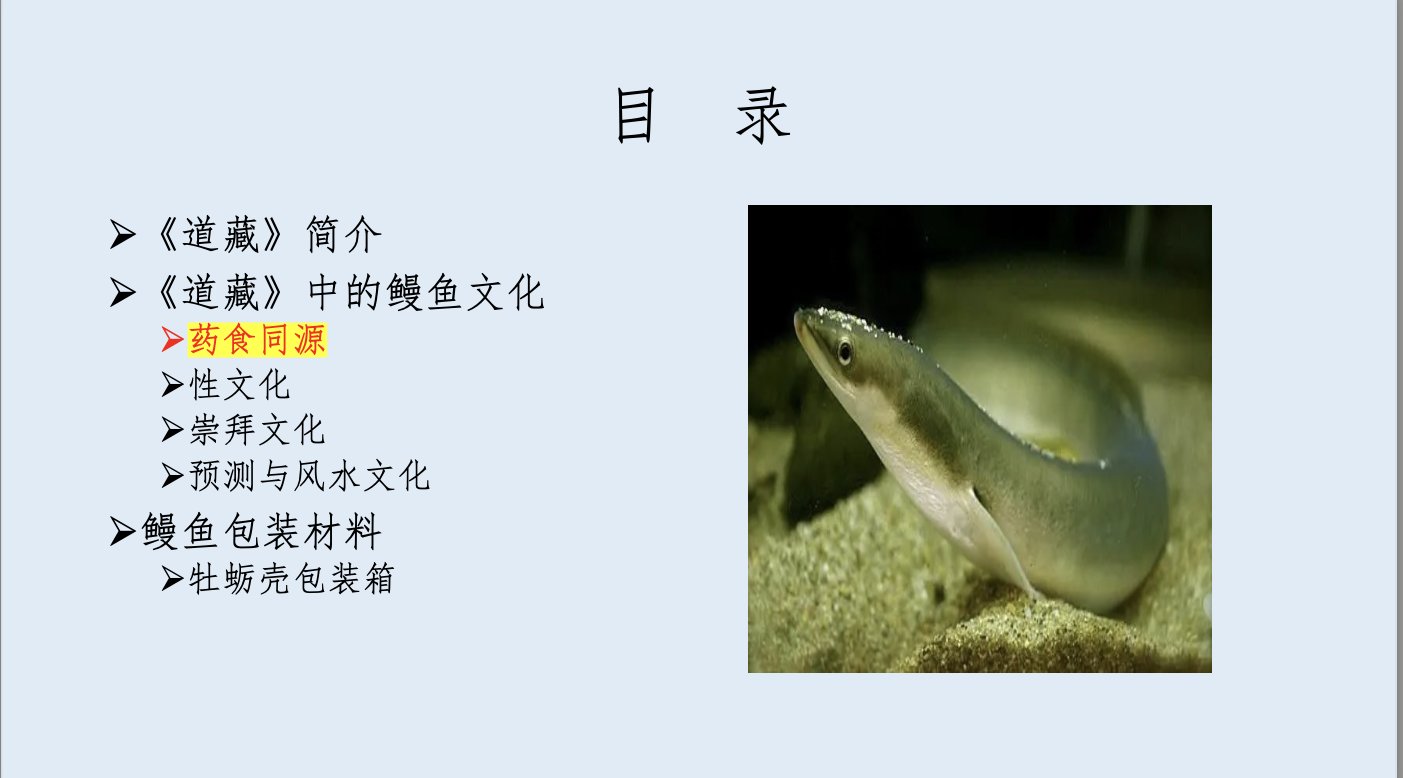
十天前,受邀参加福清鳗鱼节,去做论坛上做了个报告,题为“《道藏》中的鳗鱼文化----鳗鱼药用”,会后,本公众号后台收到几个留言,说想看一下那天我做的PPT,于是今天把相关鳗鱼药用内容当作今天文章的插图贴出来,有需要的可自取。

时间原因,那天只是简单介绍了一下目录中鳗鱼的“药食同源”文化。今天也不写别的了,就简单说说参会的一点现场感受,及这两天的琐琐碎碎。要不然只发一些图片,显得怪怪的。
我是10月12号下午到福清的,晚上和刘会长、赖处一起去参加鳗鱼协会的晚宴。全国及各省的鳗鱼协会领导及鳗鱼养殖、加工的大牛企业家们坐满一个世大的圆桌,畅聊鳗鱼产业的各种故事。
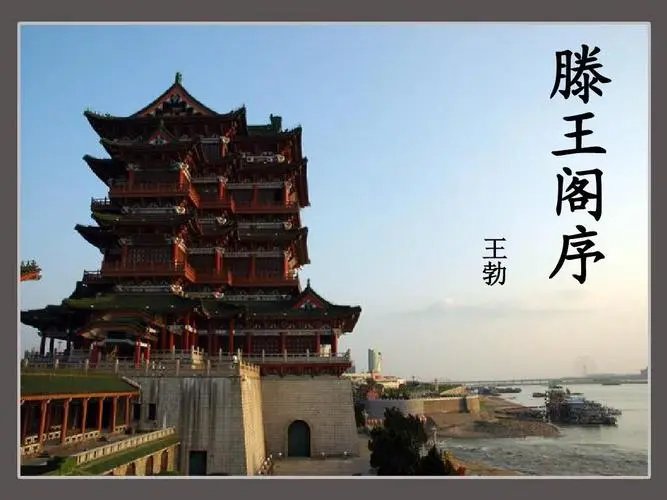
走进宴会厅的第一感觉,就想了千古名篇《滕王阁序》中形容的场景:
十旬休假,胜友如云;千里逢迎,高朋满座。(王勃 《滕王阁序》)
太形象了。好一派热闹繁华。
然而,我内心却激动不起来,反而有一种静静的伤感。一个原因是我越来越不喜热闹,越是人多的地方,越觉得孤独。或许是公司正经历某地个别权力部门的些许不公正对待。但同时深知,这肯定不是主要的,因为正是从此次事件中,我感受到了更多的人间正义和人情温暖。读道书多年,早已心静如水。时至今日,生命中的跌宕起伏、成败荣辱已不再左右我的心。我所悲凉的原因到底是什么呢?估计是对大环境的失望。是谁也不敢讲、不敢议论的生存环境,以及功利社会的功利人情。我开始理解那些冒着生命危险向未知的世界游去,把背影留给母国的人。仿佛人家泡在水里,那种透骨的寒冷却侵到了我的心里。没有绝望到一定的程度,谁愿意一把年纪了还决意背井离乡?因为阅读古籍,我的心似乎不再是天生的拳头形状,倒像是在现实与远古之间的线段一样,被拉得细细长长,隐隐作痛。于是不禁又想起了《滕王阁序》中的另一句:
兴尽悲来,识盈虚之有数。
萍水相逢,尽是他乡之客。

作者王勃是“兴尽了,悲才来”,我这属于“兴未尽,悲已来”,只因内心早已明了“盈虚之有数”。过得好的时候,千万不可太得意,还是有些敬畏之心;大火大盛之时,要心存一些悲悯与冷静,不是坏事。时时知道控制和平衡自己的得失心意,可能就是成熟的标志吧。这“萍水相逢,尽是他乡之客”,可真是写实,写尽当场大部分人的心声。福建、广东、江西、台湾一带,一种特殊的汉人族系,叫“客家人”,祖上都是历代北方人南迁过来的,到了当地,入客籍(有点类似现在的绿卡)并以客人自居,于是被称为“客家人”,我虽入未客籍,但无论走到哪里,总有一种“客居“感,所以觉得自己是新客家人。“萍水相逢,尽是他乡之客”,是我一直的心态。
最近两年,特别明显地理解了《淮南子》说的“木叶落,长年悲”,这简单六个字的深义。少年时也读《淮南子》,读过这段,当时还把“长”读成了cháng,当时理解为叶子落了,多愁善感人的要很长时间悲伤,以为人人都是林黛玉,甚至还理解为“长”与“常”是通假字,觉得“常年悲”更有味道。到了一定的年龄,不用人校正,自动地读成了zhǎng,这是因为年长的原因吧,年长的人,看到秋天萧瑟,树叶零落,会觉得悲伤。那这句话,就有了真正的味道了。“少年不知秋伤”,实情。一种内心的情感,是要到一定的年龄段,或真正经历过,才可能会真的懂。“木叶落,长年悲”,是历过风霜的人与大自然的共鸣与互动。南北朝时的瘐信曾把淮南子这句话引进了他的千古名篇《枯树赋》。

说到《枯树赋》,我想是上了年纪的人必读的一篇精美的赋文。历朝历代都伴随着政界领袖和知识精英们度过了晚年,道出了人生无奈的心酸与无助。毛泽东晚年格外喜欢这篇《枯树赋》,曾三次落泪吟诵。写到这里,突然想介绍一下这篇文章,下次吧,不然文章就岔题太远了。
经历,真的是一种财富,岁月也是,它会让你明白原来无论怎么勤奋思考都想不明白的问题。
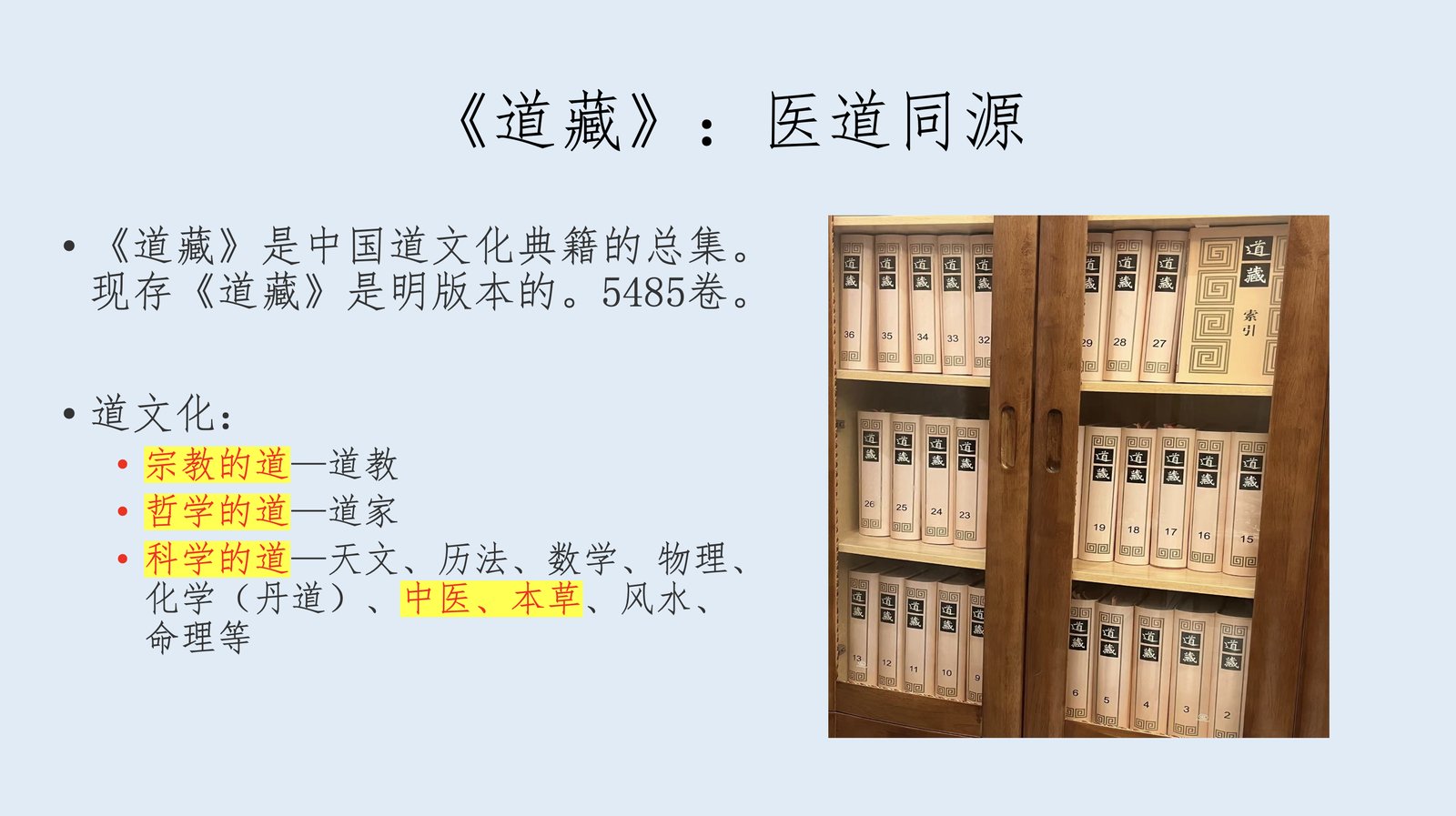
(图注:上图为我家里书柜中的《道藏》,是我研究用的版本。道文化主要分为宗教、哲学、科学三部分,鳗鱼药用属于科学部分中的中医与本草相关知识)
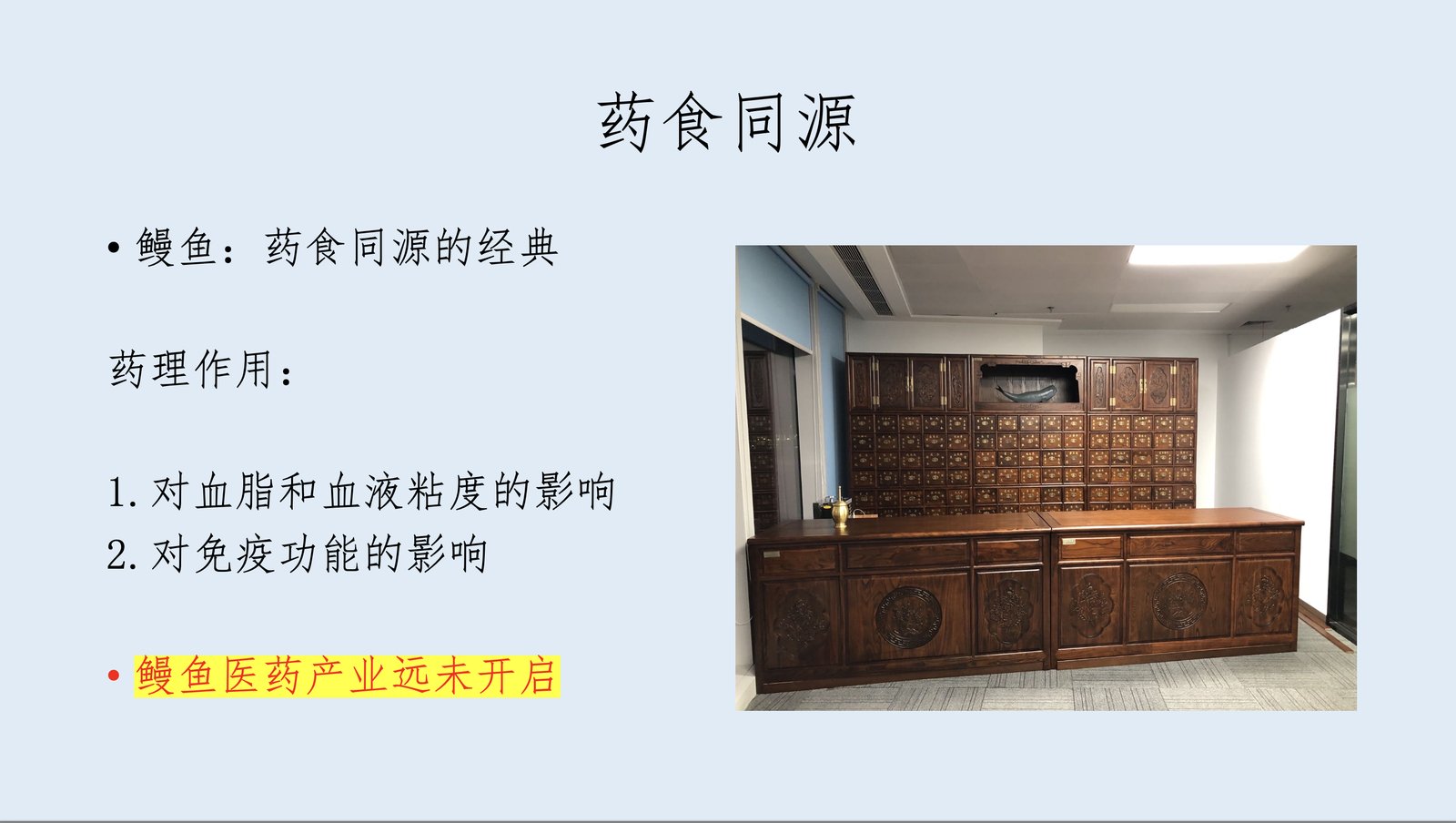
(图注:上图为公司茶室的一角,我是在中药铺里长大的,幼时最深刻的记忆是中药橱柜,于是备一套在身边,时刻回归精神家园)
晚餐进行了很久,听到最多的就是大家在谈鳗鱼的药用功效时,都在说“据民间传说,鳗鱼有什么什么功效”,我很想给他们一些文献底气,以后可以更好地宣传他们的产品,补上一句“那不是民间传说,那是古典医药书中明文记载的”,但可能又是修行的原因,“不抢话、打断别人的话,尽量不驳别人的面子,不扫别人的兴,不好为人师”,早已刻印在我心里。于是不吭。因为我第二天要给大家展示《道藏》中收录的鳗鱼药用相关的中药文献。
……
突然不想记流水账了。就直接把第二天的PPT,贴出来吧。
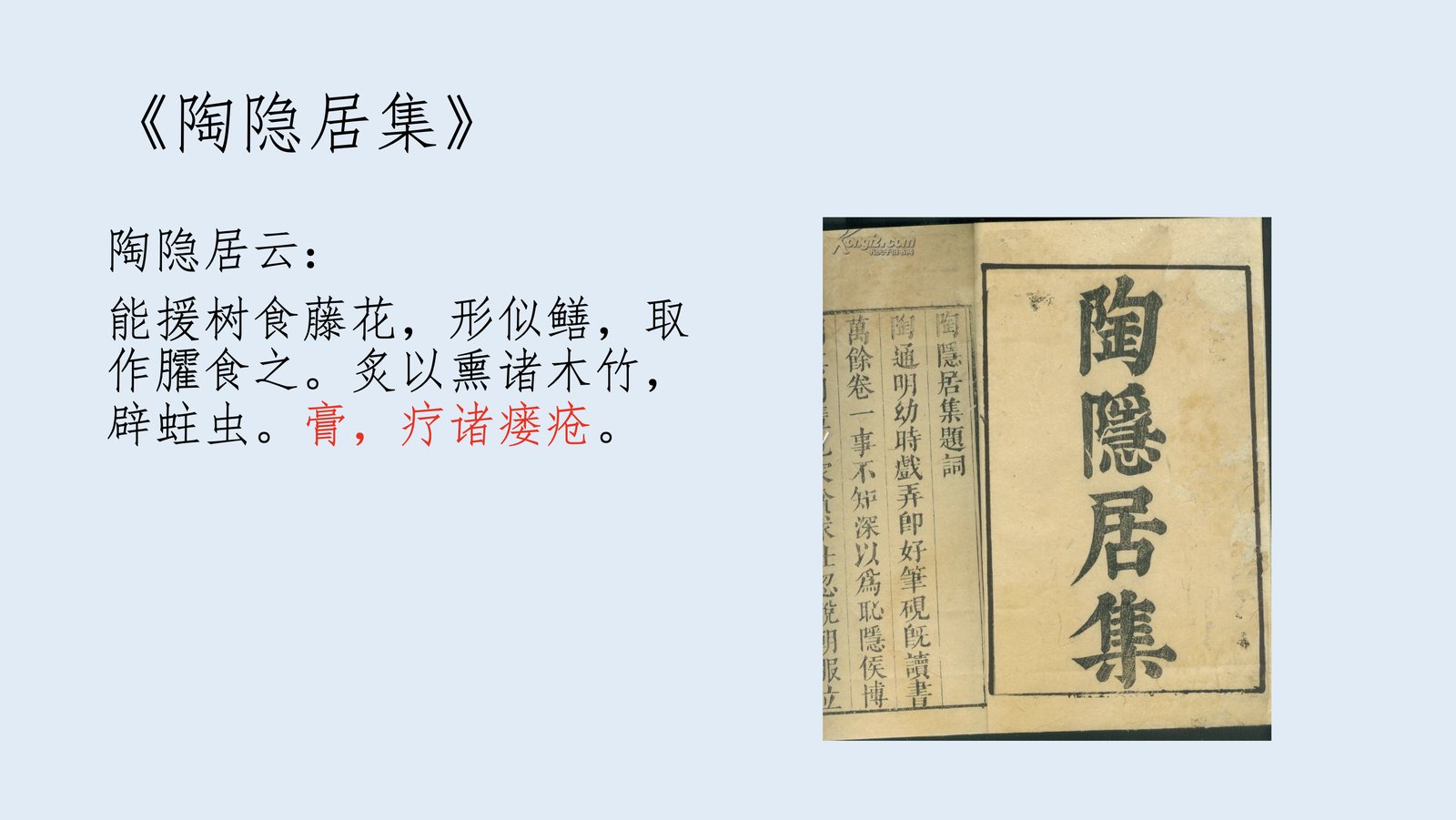
这是南北朝时期道士陶弘景记录的鳗鱼的药用,除了可以熏竹木家具杀虫(熏后家具不生虫)之外,而且,这里指出了治疗多种瘘疮的药用方式,是膏。中医药传统剂型有丸、散、膏、丹、酒、露、汤、锭八种。传统配制比方便携带或服用的有丸、散、膏、丹。此处,陶弘景写的能治瘘疮的是膏剂而不是其它,这是值得一提的,因为其他书上没有这一说明。
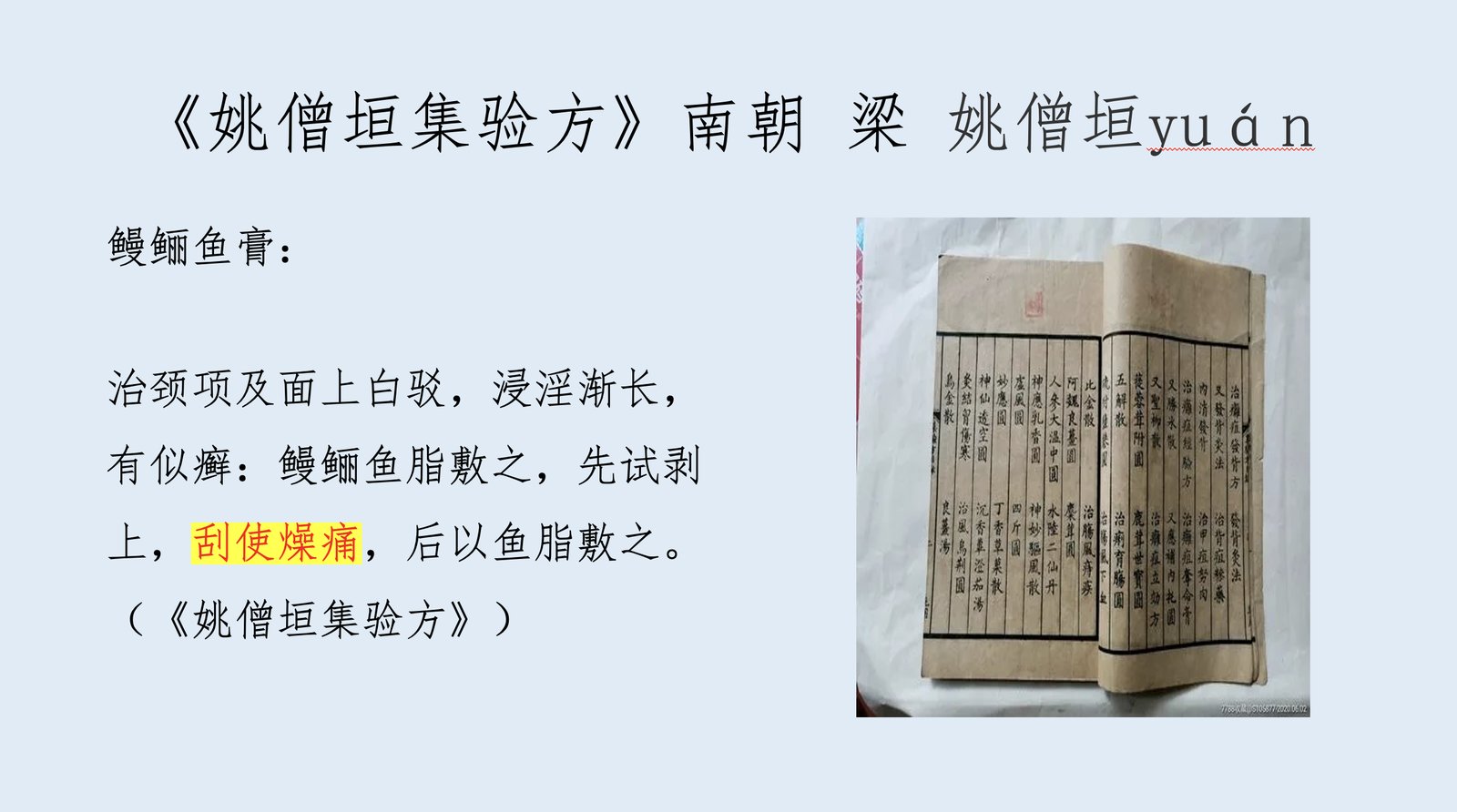
这也是南北朝时期的记录,主要关注“刮使燥痛”,直接轻涂不起作用。
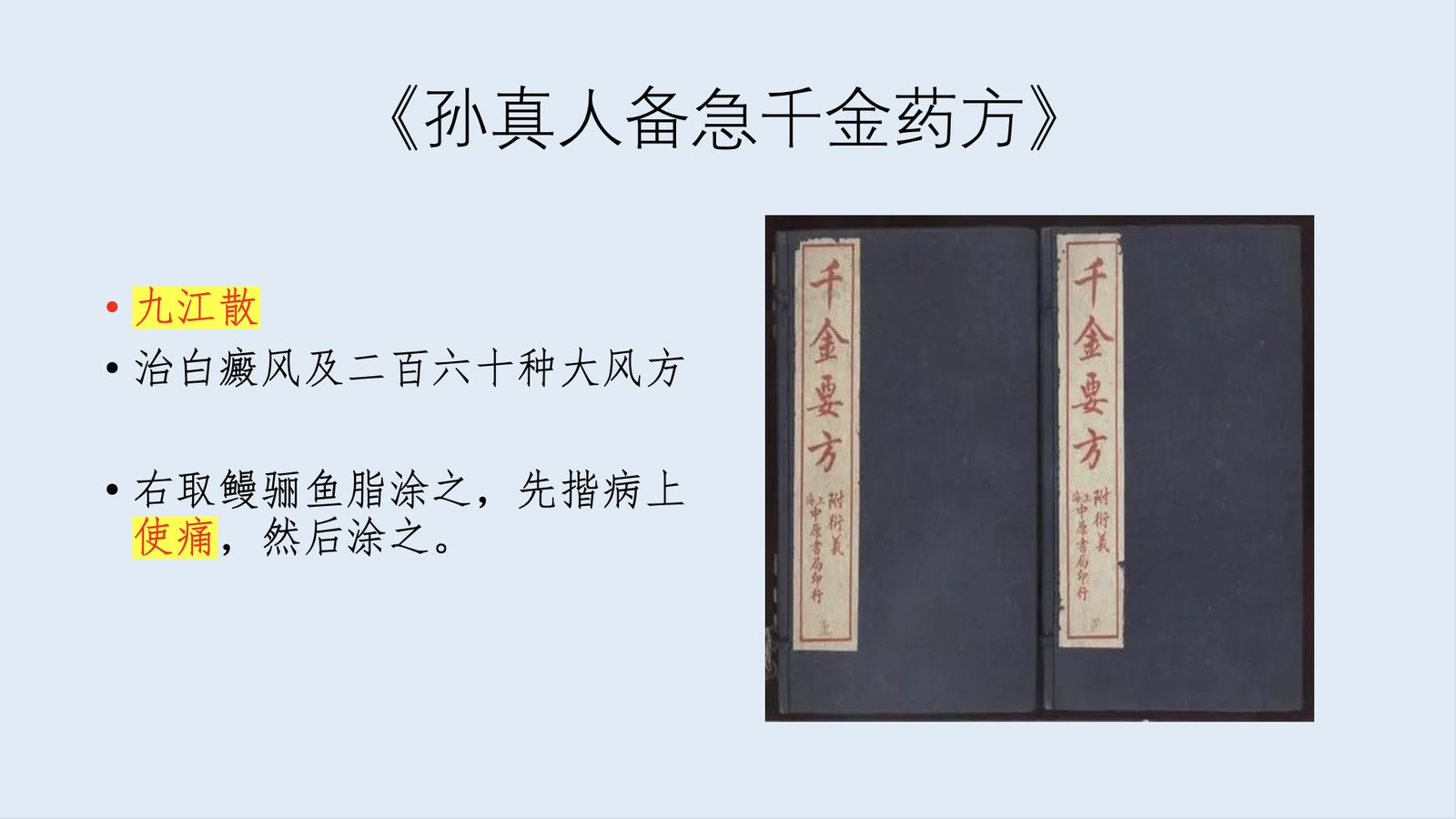
这是药王孙思邈(陕西省铜川人)记录的九江散,治白癜风及二百六十种大风方。值得一提的是在治白癜风时的用法,取鳗骊鱼脂涂之,先揩病上使痛,然后涂之。重要的话可以重复:一定要记得要涂得痛,不然无效,轻轻涂沫在皮肤上,不起作用。这种方法在后面还有提到,用穿山甲的鳞片去刮,这个就没办法了,因为现在穿山甲现在是保护动物,而且为了保护它,已从本草中除名了。有条件的地方其实可以人工养殖,因为它的作用是不可替代的。
这本书叫《孙真人备急千金药方》,又叫《千金药方》,是中华历代国宝药典,因为药王孙思邈是道士,所以世人尊称他为孙真人,于是他的书就以“孙真人”命名。
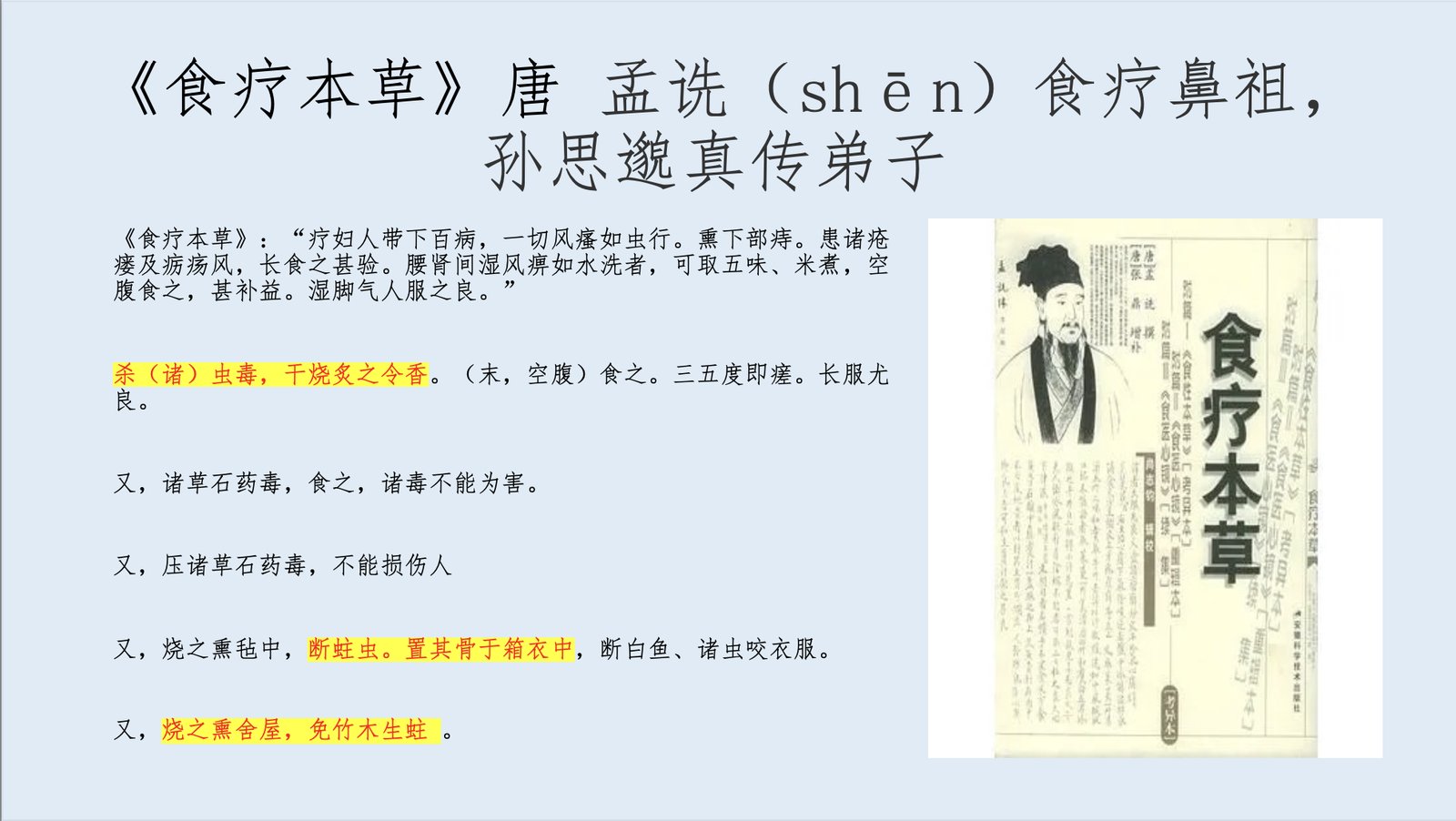
这是食疗养生的鼻祖孟诜,河南汝州人,是药王孙思邈真传弟子。在《食疗本草》一书中,他指出了用熏、食的方法,治妇女下身病及诸疮瘘及疬疡风,还说“长食之甚验”,经常吃非常灵验。甚至还指出了可以治湿脚气,以及熏杀诸虫等功效。看图片一目了然。
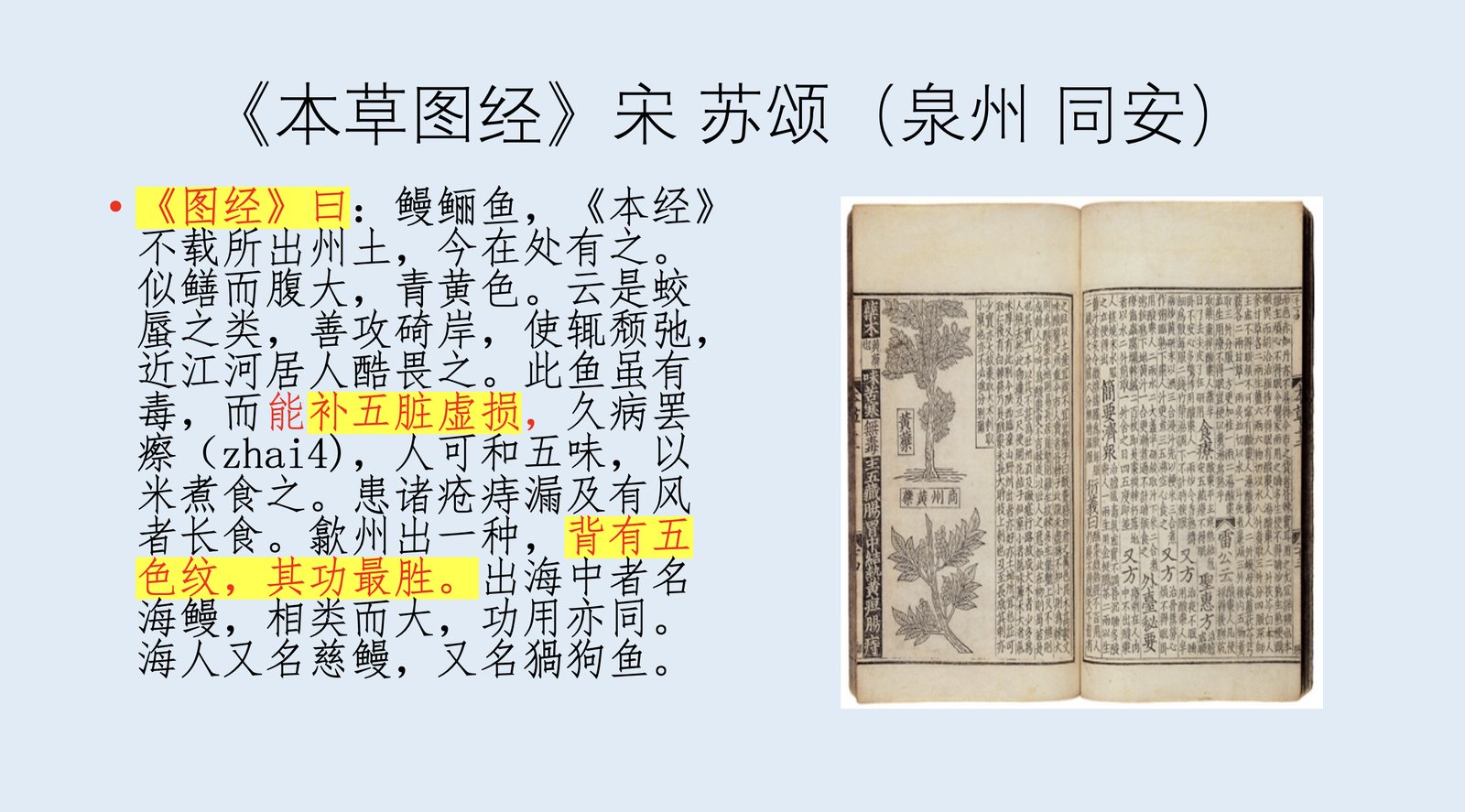
宋朝的苏颂,是泉州同安人(现在的厦门同安)是天文学家、天文机械学家、药物学家。他在引用了《图经》中说法,补五脏虚损,还指出背有五色纹的鳗鱼,功用最强。也提到了海鳗。
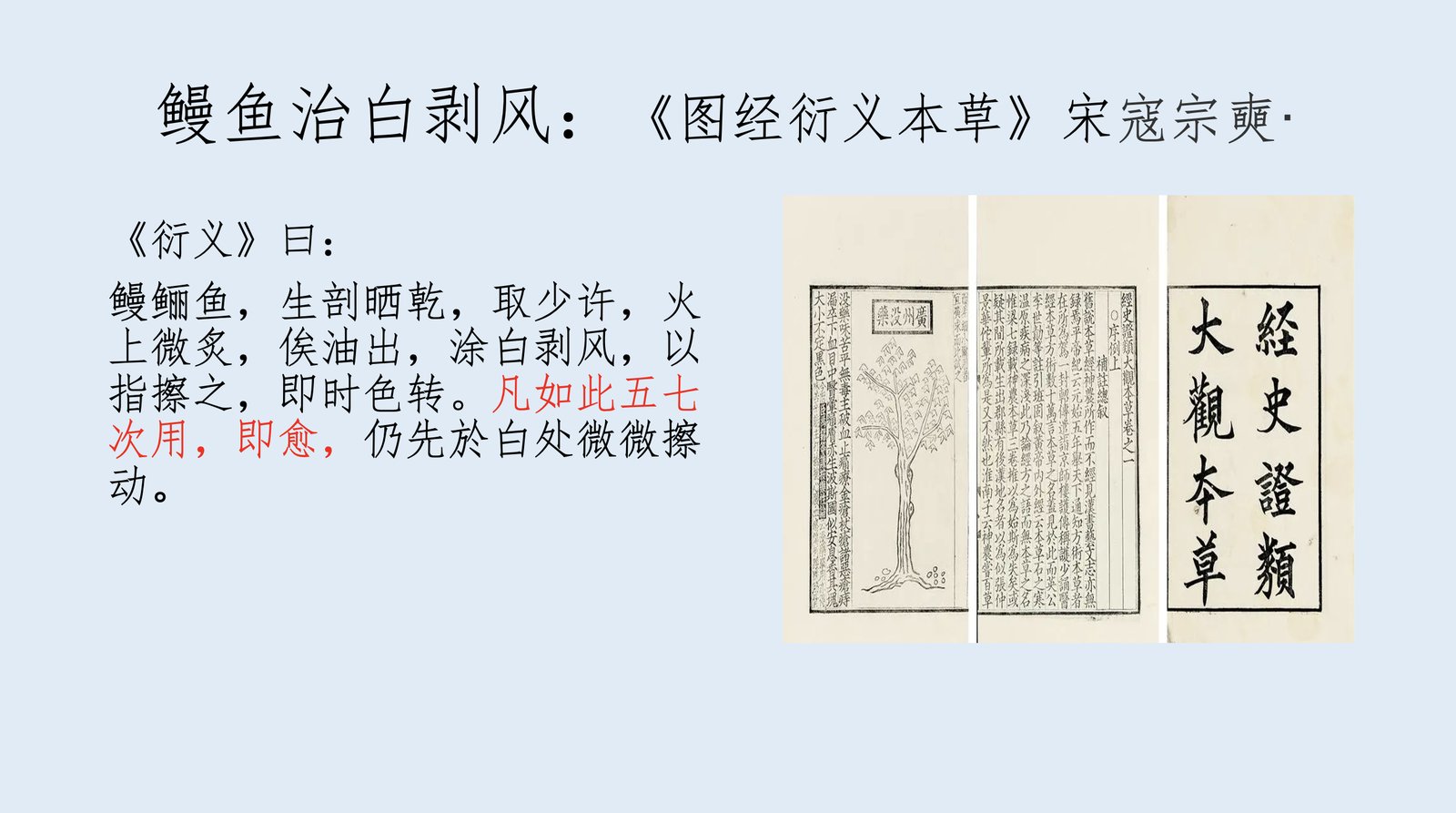
这本《图经衍义本草》是宋朝寇宗奭所编写的药物集,受到各医药名家的推崇。明朝李时珍对这本书评价极高,说本书“参考事实,核其情理,援引辨证,发明良多,东垣、丹溪诸公,亦尊倍之。”这里说用鳗鱼油擦白癜风几十次,就可以好了。干脆利落。
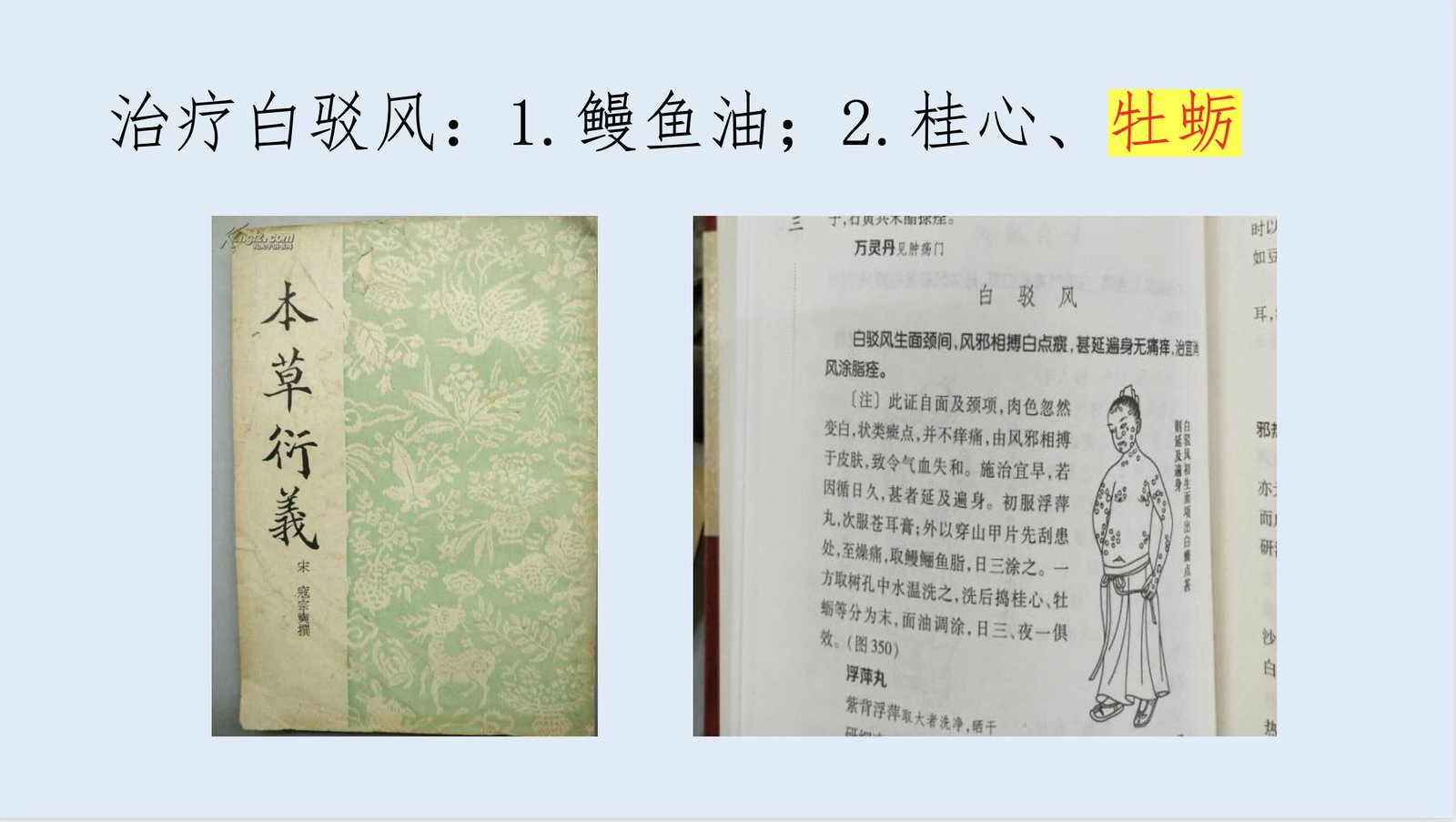
本图与前面一图是同一本书,只是翻译介绍的更详细些,这里说了要用穿山甲鳞片去擦。而且,也介绍了另外一种治白癜风的方法,用桂心与牡蛎粉。需要说明的是,中药的“牡蛎”指的是牡蛎壳,而不是牡蛎肉。这里研粉用的是牡蛎壳粉。
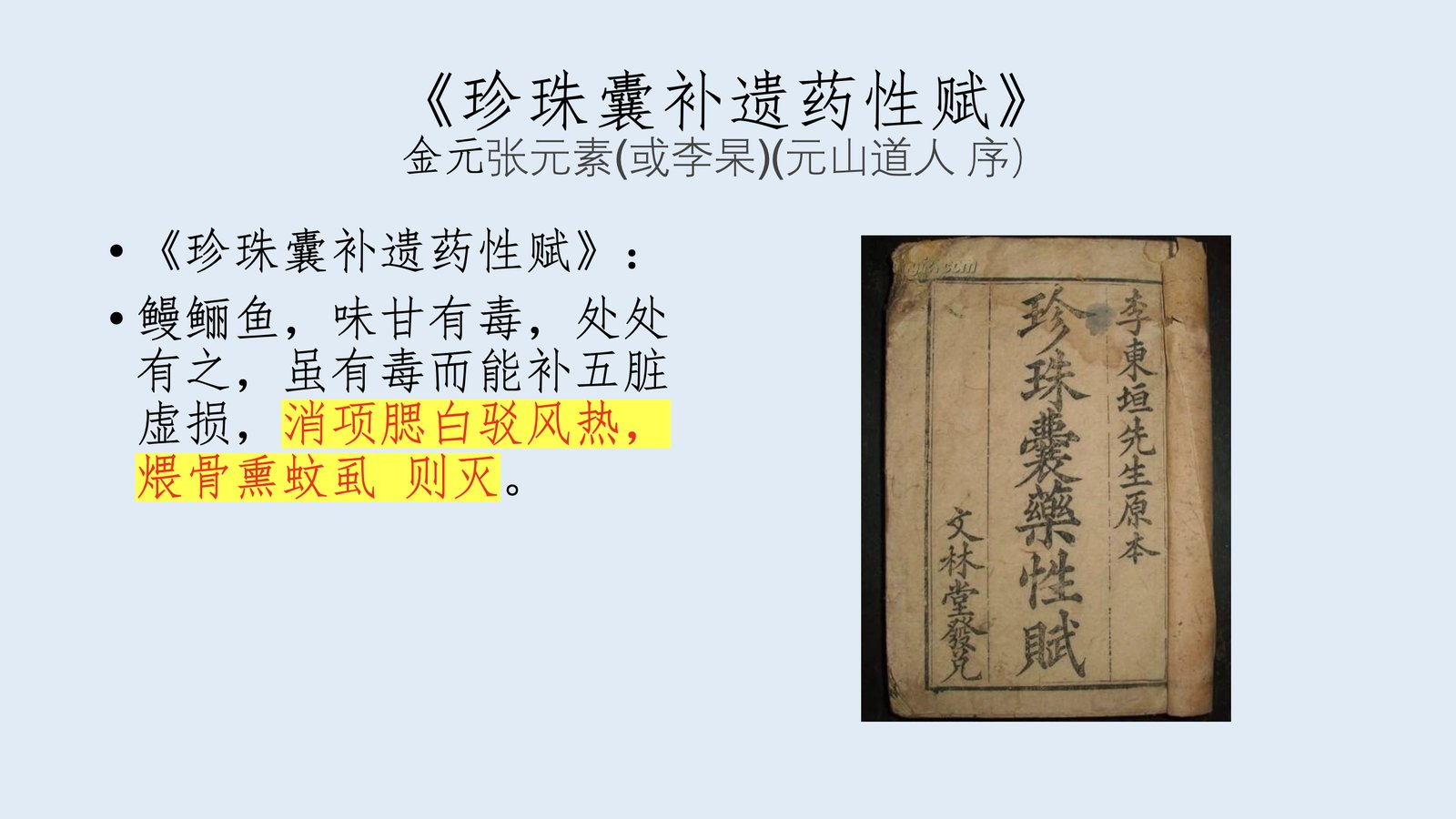
到了金元时期,煨鳗鱼的骨头用来熏蚊子,就可以灭了,真有趣。蚊香新材料哈。这个比较好理解,但下图中有说蚊子可以化成水,我虽是标注了存疑符号,但还是愿意相信。有条件了一定试试。
但熏法可以杀毒灭虫,却是各家医书、药书中常记录的。而且,现代也有应用。
原来工作单位用的生产设备,是进口的。我清晰地记得在所有的报关材料中,一个叫“熏蒸证明”,指的是进口设备用的外包装是木质的,这个木材在海关,就是严查的重点,因为里面可能有寄生虫或别的病毒。那么就需要“熏蒸证明”,证明这批设备的包装用木材是经过“熏蒸”处理的,安全可靠。我想,是不是所有的木质家具厂也应该都提供一下呢?不管如何,我要在家里做艾灸,熏熏人,也熏熏家具,家里肯定不生小虫子,南方潮湿,很有必要。此时,突然想起,疫情几年,每当大楼封锁时,我确实点燃过艾绒,当时是为防止病毒进屋,看来对家具、人身都是有好处的。记得看到一个记录片,一位老先生痴迷艾灸,天天在家里熏,整个人熏得黑不溜秋的,乍一看,非洲来的,还油光发亮。但他说自己不生病的原因就是保持“熏燎”。

在中国,人死了,要先放在床上停尸,这个过程一般要几天。除了在死人脸上有蒙面纸外,最典型的就是在床头(一定是床头)烧纸,不停地烧,如果有人来吊唁,立即就点纸;如果没有人来吊唁,那么守灵的亲人要接时辰点烧纸钱。其实这就是“熏杀”传尸病毒的最好方法。因为人死了体温下降,病毒很聪明,立即会觉得“此地不可久留”,它们会本能地寻找新的宿主。而病毒出逃的最佳路线就从“七窍”,所以,头部风险最大。古人真聪明,把熏杀病毒说声送纸钱,是多么的智慧。如果说为了防止传染病毒,恐怕都没人参加丧礼,料理后事了。现代人没文化,说盖蒙面纸是迷信,烧纸钱、放鞭炮会污染空气,等等,把几千年留传下来的丧葬文化都给取消了。还说这是创新与改革,说是文明的进步。无知愚昧。
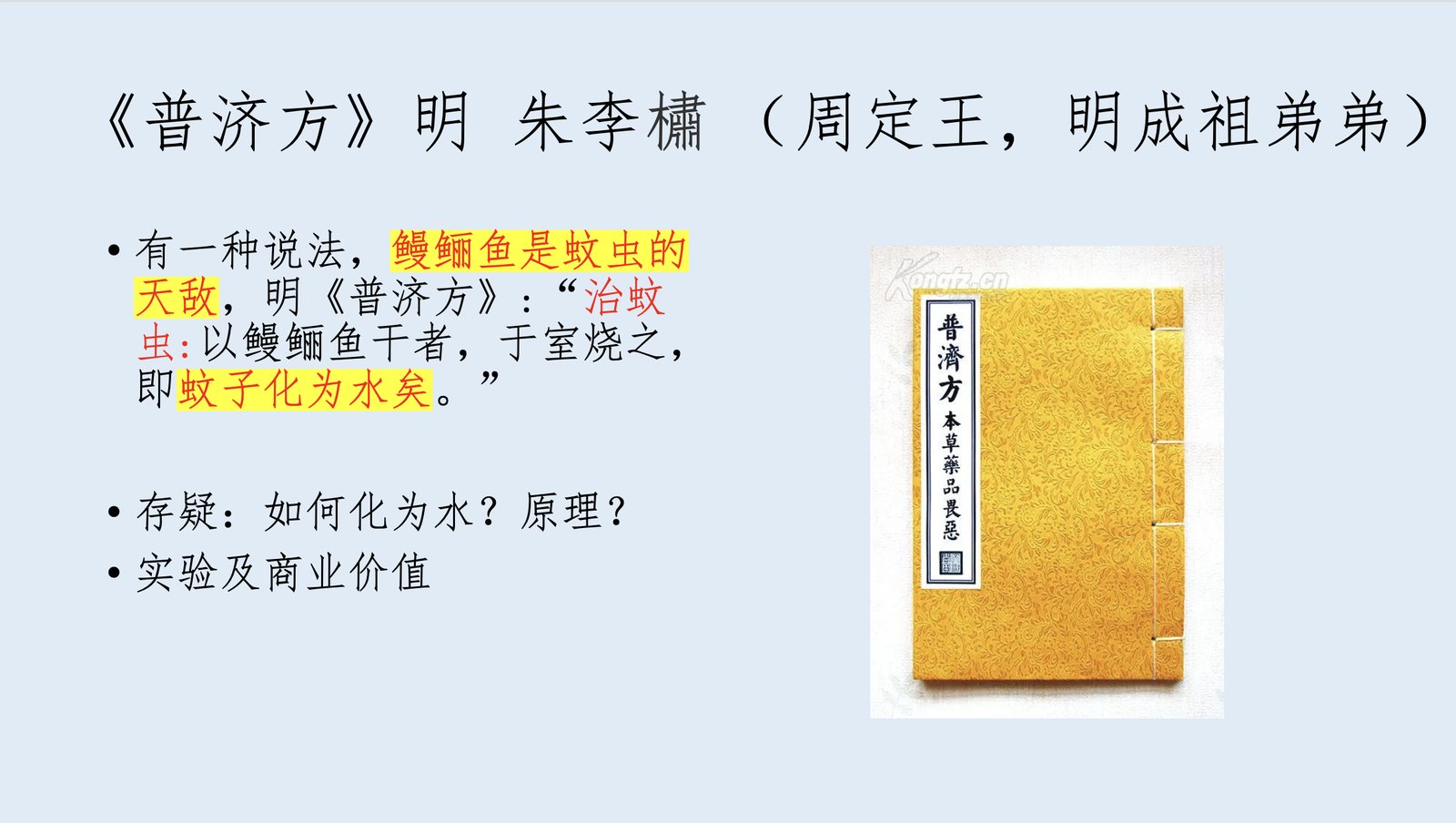
这本《普济方》的作者李橚是明成祖的弟弟,算是皇室成员,他写药书应该是有丰富的参考资料的,身边也是有权威御医把关的吧,怎么就写鳗鱼干烧了可以把蚊子化水呢?我表示疑问,但不会断然否定自己知识和认知范围之外的事情。
突然想到一种熏葬文化,有一个叫丹尼的原始部落,生活在太平洋上有个岛国巴布新几内亚。这个部落的丧葬文化非常特殊,用烟熏的方法对逝去先人的遗体进行保护,烟熏后的尸体,数百年都不腐烂。烟熏后任何虫子与微生物都不会生,可以一直保存下去,这是有道理的。不要说熏干透了,就算那只是表面熏过的腊肉,也可以放很长的时间而不会腐坏。细想来,这比做成木乃伊或用福尔马林泡要好些吧。做木乃伊还得先开膛破肚,把五脏六俯都切了,再放进去香料,层层裹裹,把灵魂都裹窒息了,肉身已死了,还再让灵魂受罪,真不忍心啊。至于把身体泡在化学水里面,想想都很头皮发麻。对比一下,如果还想保存肉身,这烟熏方法还是相对靠谱一些。像给故去的人做艾灸一样的,在烟上熏,这个应该是最不痛苦的一种干尸方法。而且用香料熏,气味还不错……
突然,似乎想通了,鳗鱼骨头熏灭蚊子的原理,可能是化为水了,也可能是熏没了,坟子本来就小体格,熏后缩水,就没了。哈哈,这个实验,我没有做过,就是在这里天马行空地打字,各种胡思乱展现在屏幕上,逗你玩,哄你开心。有些事,听听即可,看看即罢,不必太叫真,生活本简单。你我的使命都不是讨论宇宙真理。一起打发时间,愉快地度过这个周末,就不负相识。
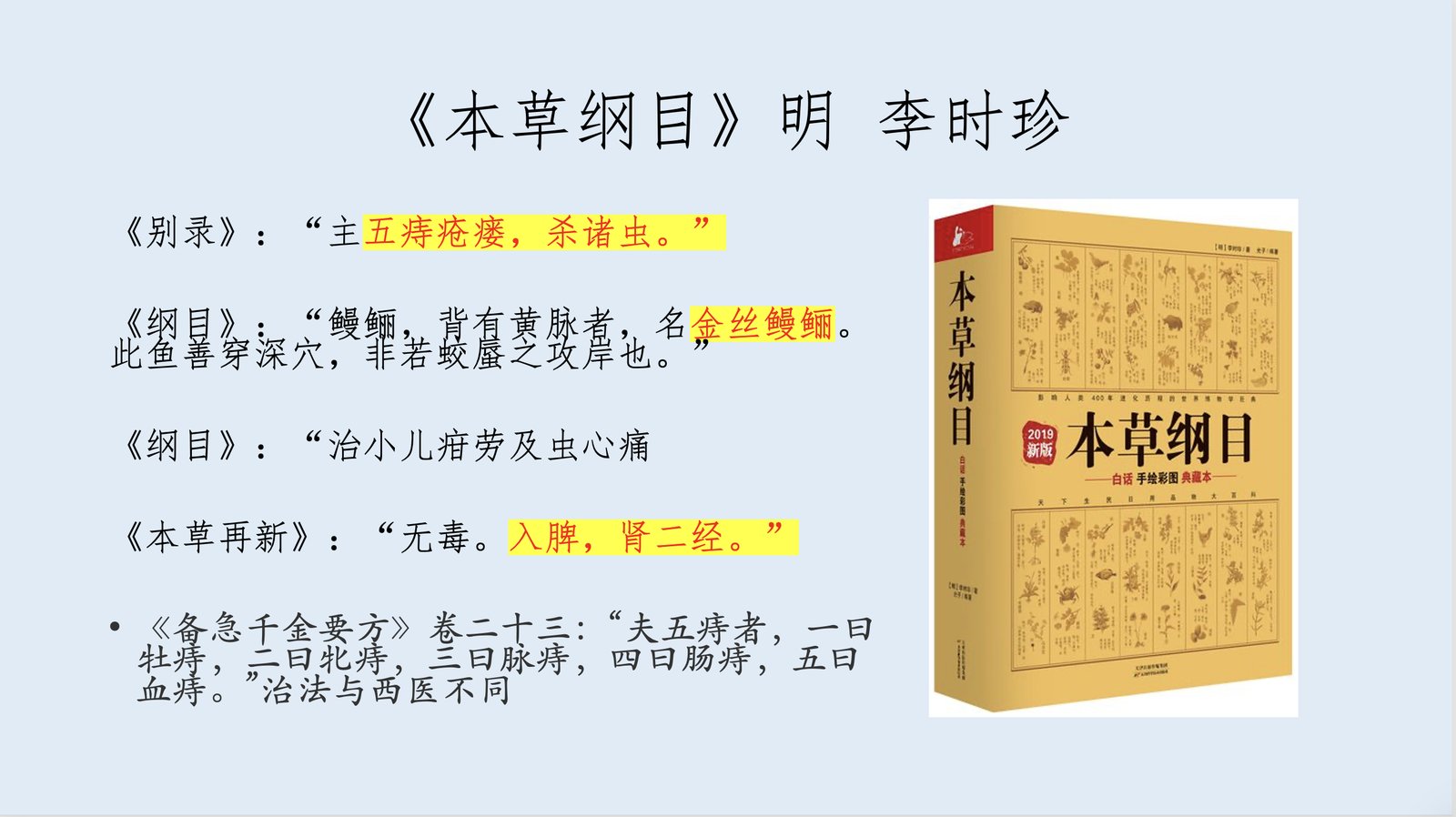
明李时珍记录说鳗鱼无毒,也有不少书上说鳗鱼有毒。看到中药中的有毒,不要怕,有一种说法“是药三分毒”,中药用的就是以毒攻毒,什么东西吃多了都有不适症状。可控就行。
之前给一位朋友看过PPT,他问了一个问题,差点把我笑死。
友:你发的资料上说鳗鱼可以治五痔,可是痔疮只有内痔、外痔、混合痔,三种呀,哪来的五痔?
强忍着笑,把《备急千金药方》中的那段给抄出来了,如下:
“夫五痔者,一曰牡痔,二曰牝痔,三曰脉痔,四曰肠痔,五曰血痔。”(唐 孙思邈《备急千金要方》)
中医根据其症状不同进行分类,是为了用不同的药物去治疗。治法与西医不同,西医的方法比较简单高效:割掉。不光是痔疮,甚至人的内脏器官也一样,病了就切掉。
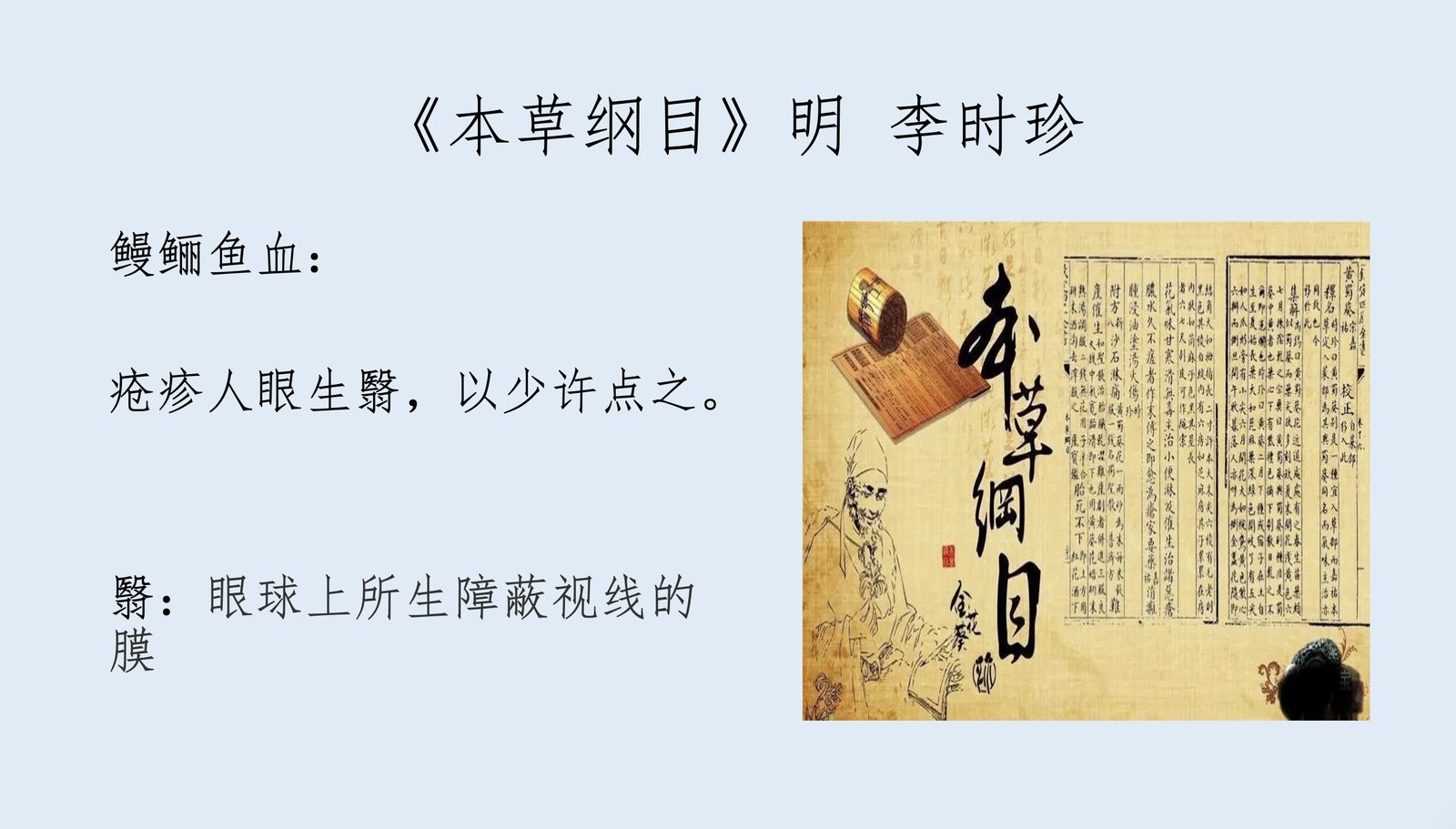
李时珍这里还记录了鳗鱼血治眼翳,就是眼球上长的一种膜,影响视力。所以也有鳗鱼治夜盲症的说法。后面会的食疗方子。这里不啰嗦。
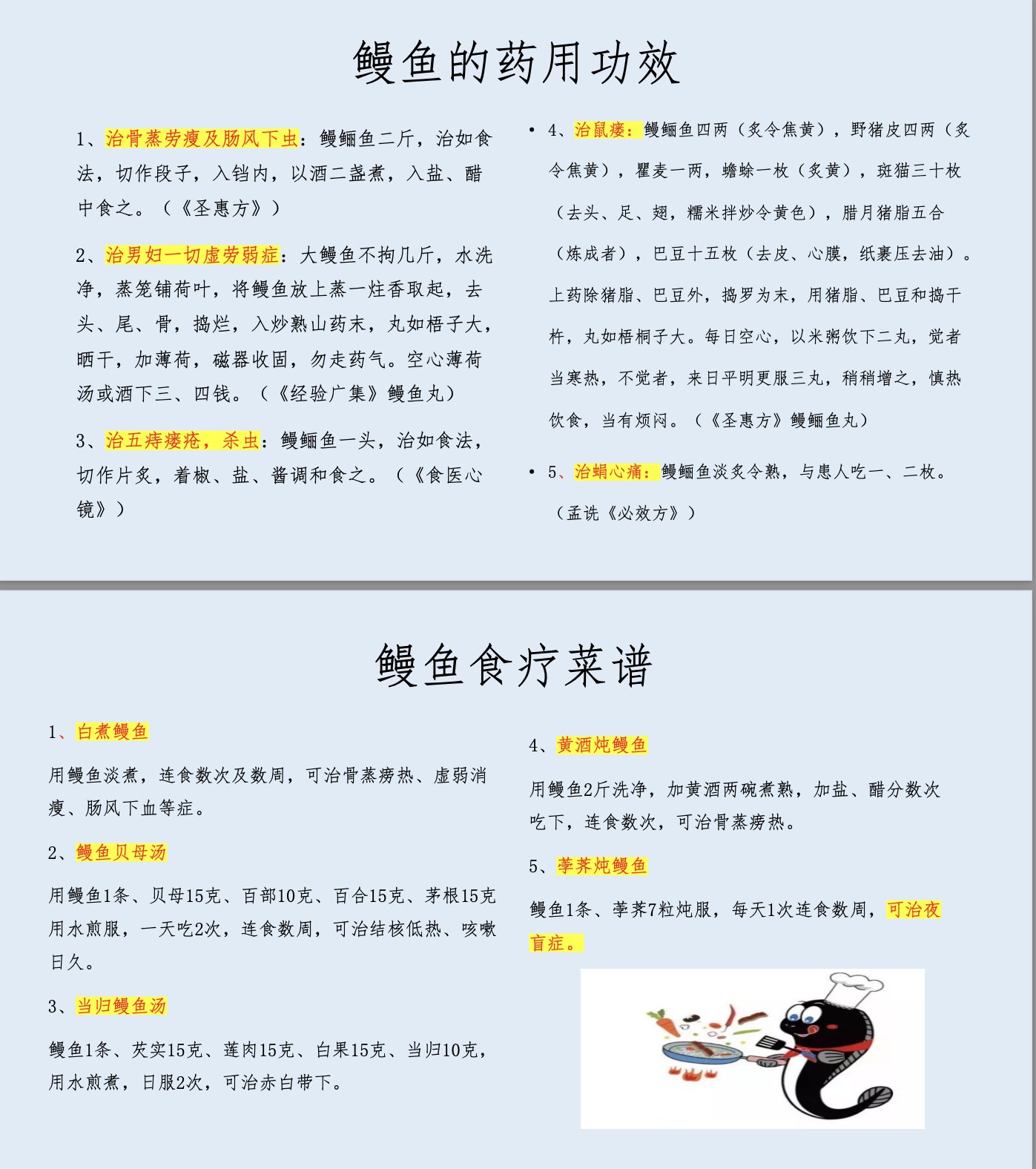
这两张图都是食疗方子,看图就行。
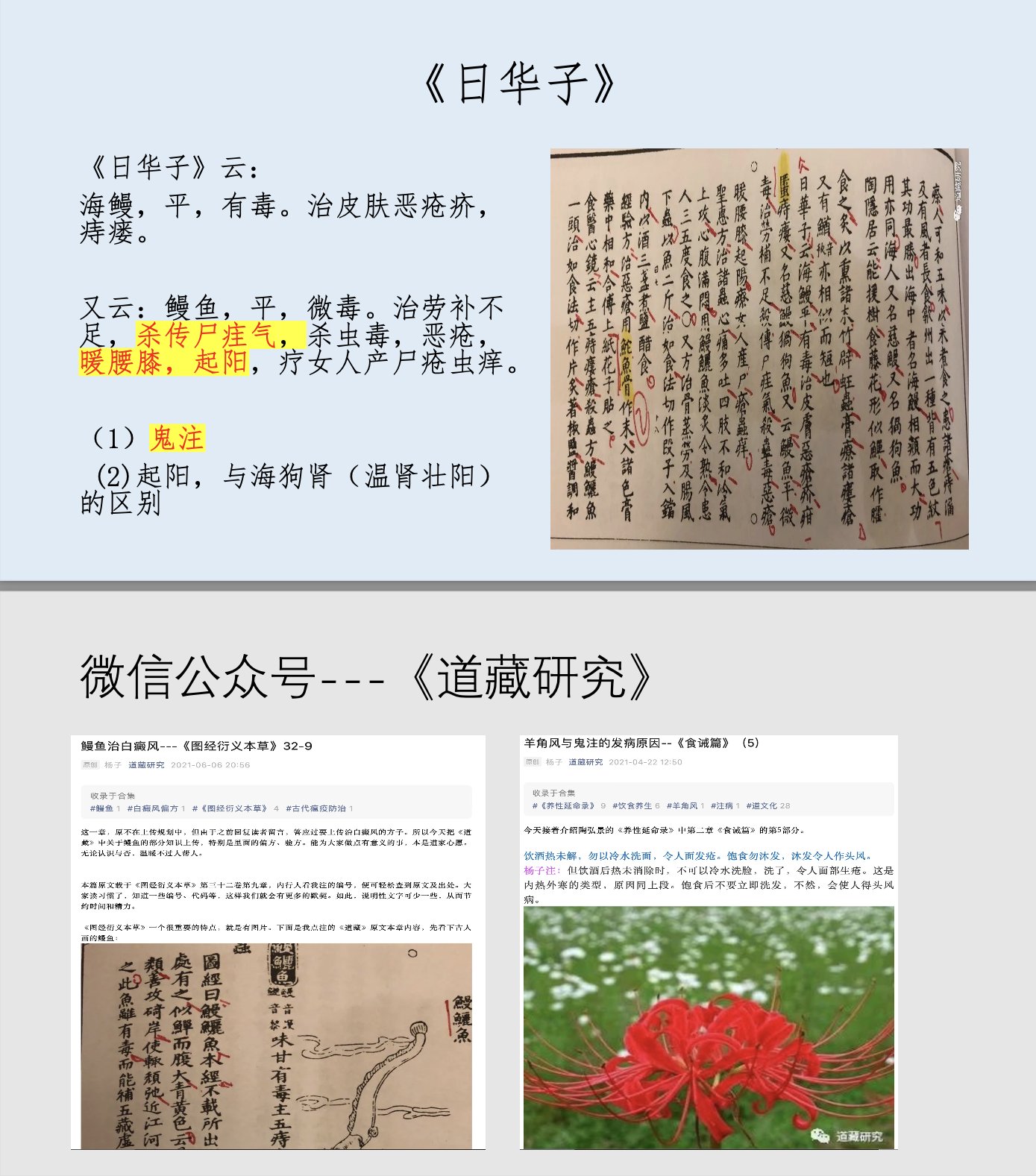
《日华子》中记载的鳗鱼可以杀一种可以灭门的传尸注气,又叫鬼注;以及鳗鱼的起阳作用。关于这些,我在本公众号之前的两篇文章中有介绍,分别是:《鳗鱼治白癜风--<图经衍义本草>》及《羊角风与鬼注的发病原因--<食诫篇>》。有兴趣可往翻看。这里不再重复。
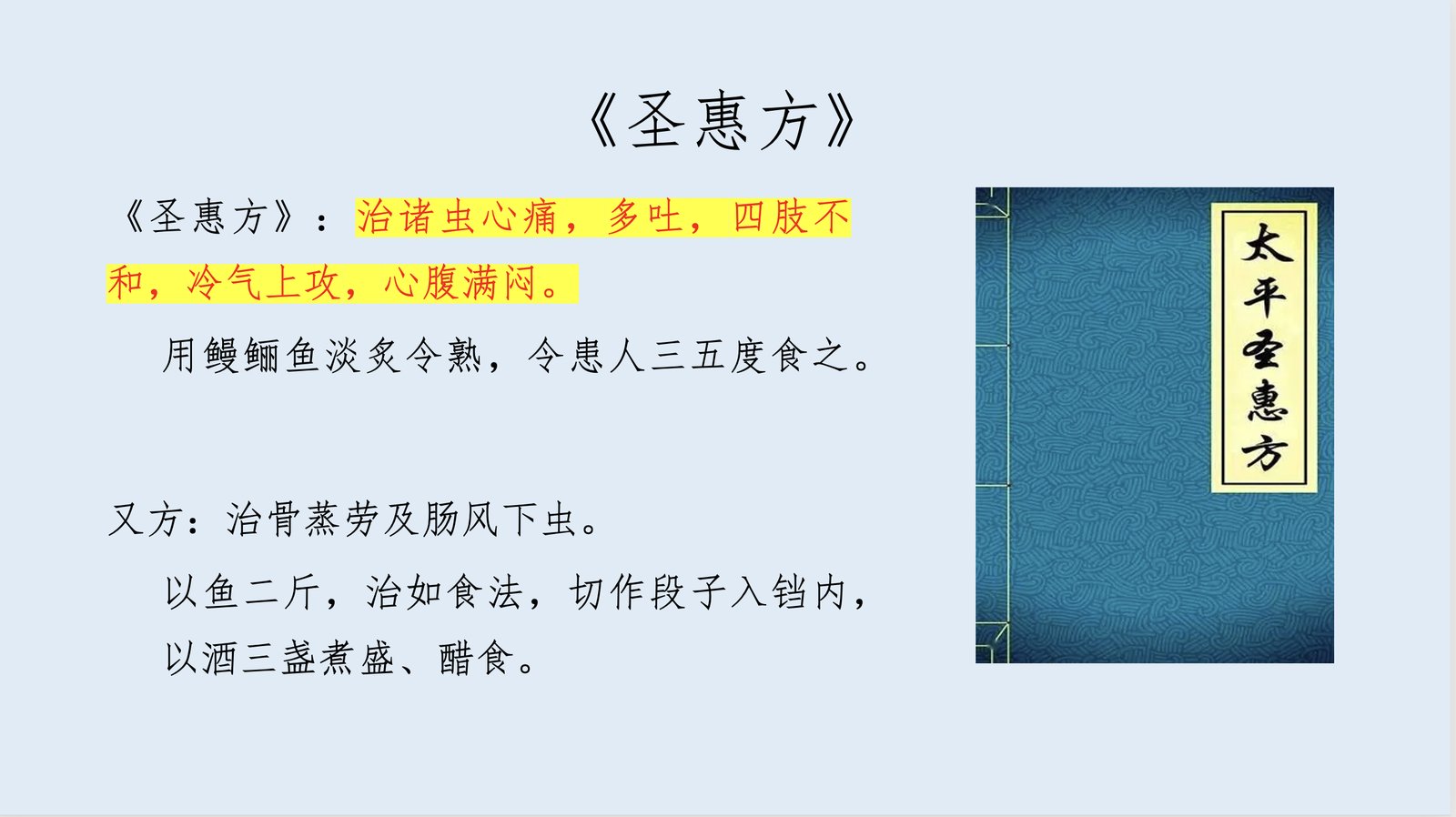
《太平圣惠方》是比较出名的药书,这里记录了诸虫心痛,多吐,心腹满闷。恰是说明了鳗鱼趋虫的原理,就是攻出,把虫子赶出体外,与鳖除虫的原理相反,一个是攻出,一个是攻入。但结果都是一样的,都达到除虫效果。
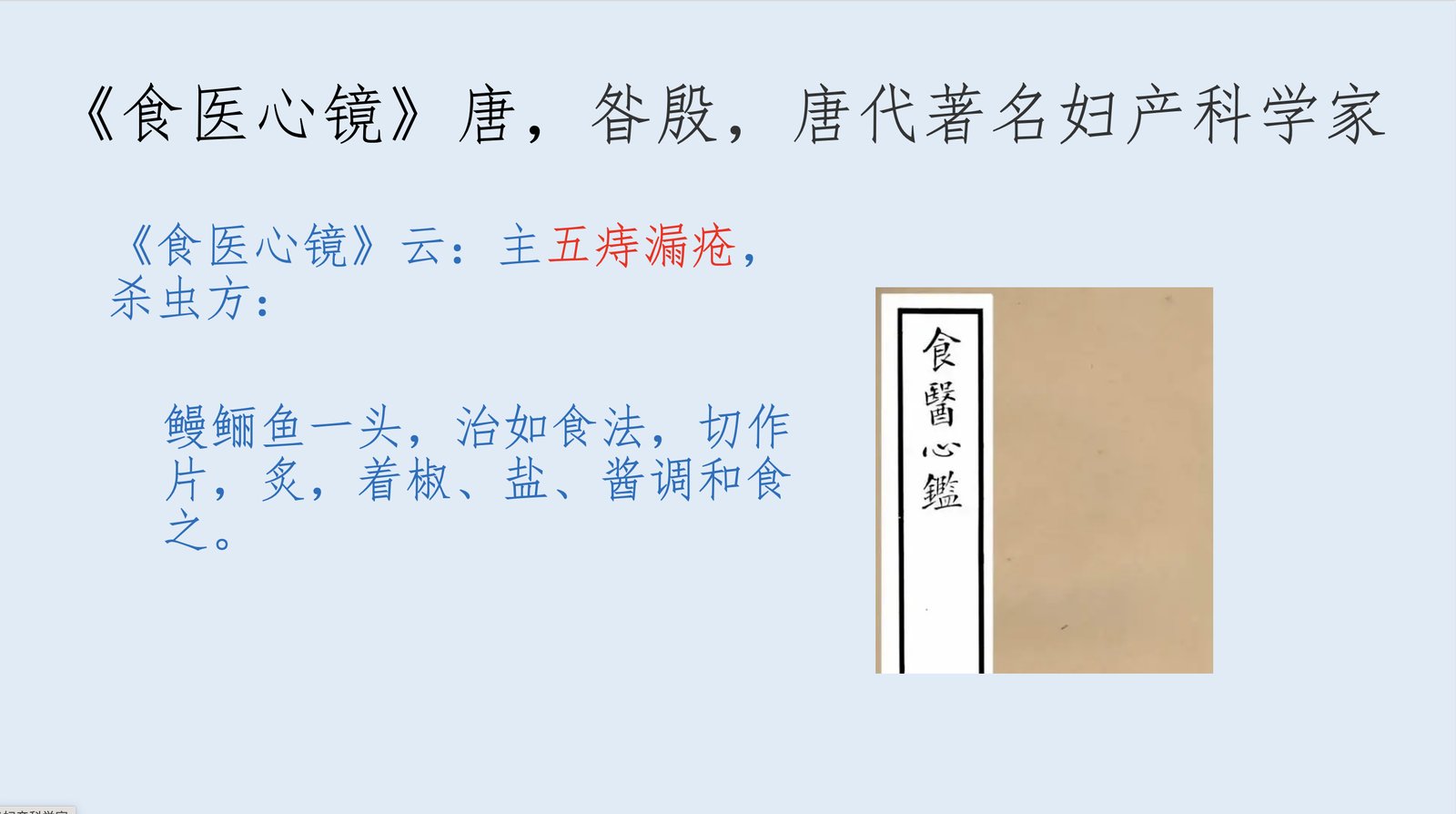
《食医心镜》是成都府的医学博士、妇产科学家昝殷写的,功效同前。只是本书到了宋朝时,改名叫《食医心鉴》。
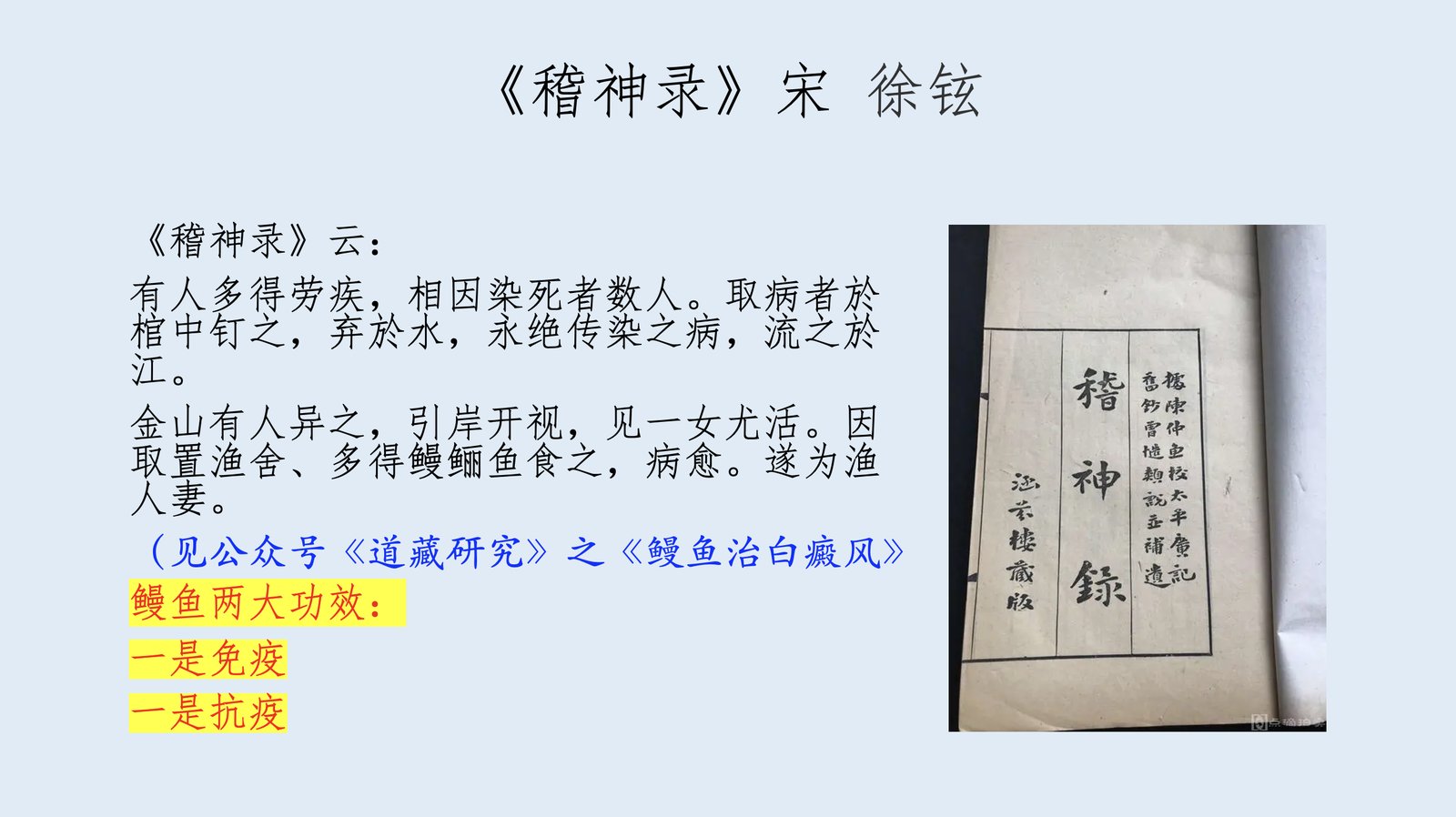
《稽神录》是一本志怪小说,但写的内容大体可信,我考证过,至少这个记录可信。李时珍把这个故事也收录进了《本草纲目》,我在之前的文章《鳗鱼治白癜风》一文中详细讲过,此处不再重复。此记录可以说明鳗鱼的免疫与抗疫功效。记录中的“金山”一地,我考证了,是现在的江苏镇江一带,那么文中这种有神奇功效的鳗鱼可能就是当地产的河鳗(江鳗)。第一次读到时,我曾怀疑是上海的金山,还以为是海鳗呢。
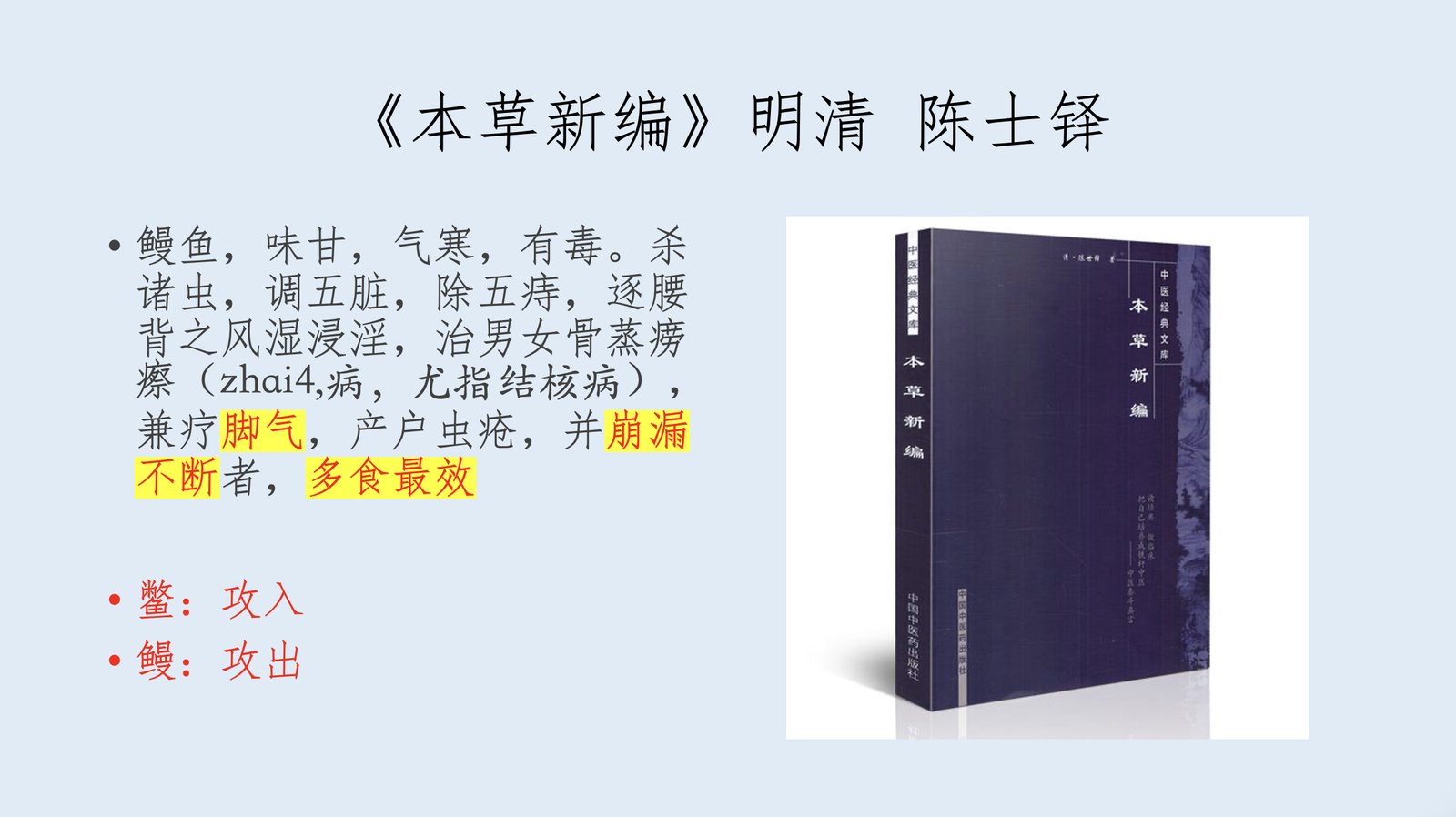
到了明清,陈士铎在《本草新编》中,又记录了鳗鱼的新功效,治妇女崩漏。本图中讲鳗鱼杀虫与鳖杀虫的区别,前面已提过。
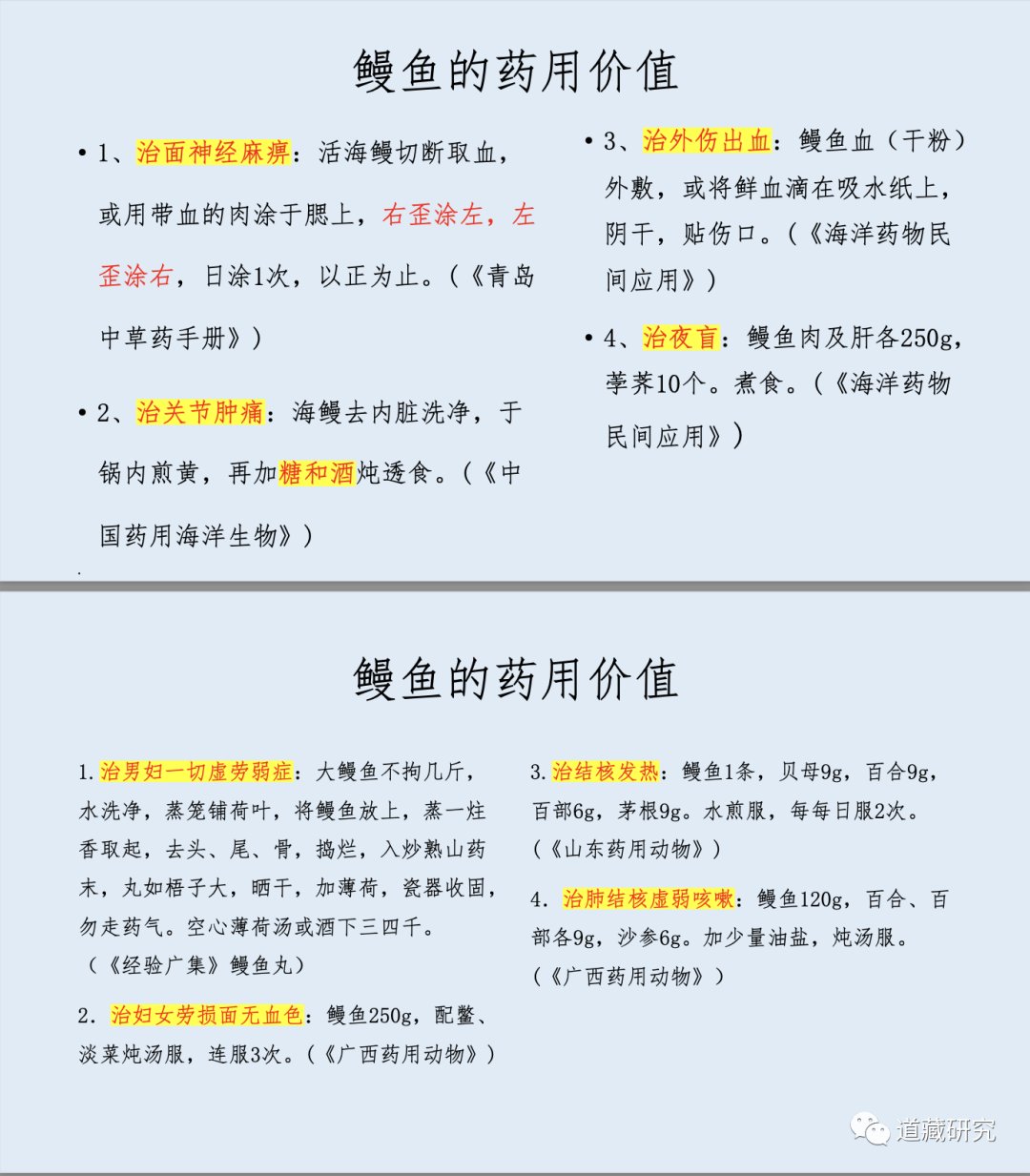
这两张图,都是食疗方。看图更明了。
至此,鳗鱼的药用已唠叨不少了。
目前,鳗鱼还主要以食用为主,而且,因为保鲜、运输、文化宣传等原因,鳗鱼还不算是国人餐桌上的常客。而且,鳗鱼的药用产业,远未开启。个人直觉,若是鳗鱼产业开始研发鳗鱼的药用价值,这将是未来10-20年的黄金产业。真的可以用清杨米写人的那样:
《都门竹枝词》清 杨米人
“家住江南烟水浔,鱼虾蚶蟹遍胡阴。
北来要作尝鲜客,一段鳗鱼一段金。”

照例,两首道情:
《陶弘景炼丹二》
欲得一粒丹,药鼎火三千;
独守仙洞口,寂寂二十年。
(注:陶弘景练丹的精神,一直激励着我。潜心道藏,直至成仙。哈哈)

《自然》
鹭岛有羽客,高居塔楼中;
终年不出户,四邻不相逢。
抚琴引飞鹤,下笔气如虹;
忘却营营事,飘然向虚空。
心如潭底月,身似岩上松;
此情何清澈,此心何从容。
天佑无为德,人喜不战功;
成败随自然,不复问穷通。
A Segment of Eel, a Segment of Gold--the Medicinal Uses of the Eel
33. A Segment of Eel, a Segment of Gold--the Medicinal Uses of the Eel
Originally published by Yang Zi, Daozang Research, 2023-10-22
All my life, my greatest wish has been that society would come to know the Daozang (Daoist Canon), this national-treasure library, and that the essence within the Daozang (Daoist Canon) might be understood and used by society, serving the health and happiness of the wider public. (That was my so-called original aspiration back then. To tell the truth, it no longer matters to me now--whoever wishes to understand it may; whoever does not has nothing to do with me. I do only what I love, for my own enjoyment; everything outside myself I no longer concern myself with, nor care about. But if someone hopes to understand something in the Daozang (Daoist Canon), I am still glad to share.)
Ten days ago I was invited to the Fuqing Eel Festival, where I gave a talk at the forum, titled "Eel Culture in the Daozang (Daoist Canon)--the Medicinal Uses of Eel." Afterwards, several messages arrived in the background of this WeChat official account saying they would like to see the slides I presented that day, so today I am posting the related medicinal-eel material as the illustrations for this piece; those who need them may help themselves.
For lack of time, that day I only briefly introduced the "medicine and food from one source" culture of the eel in the catalog. Today I will not write anything else--just say a little about how the conference itself felt, and the odds and ends of these past two days. Otherwise, to post only a batch of pictures would look rather odd.
I arrived in Fuqing on the afternoon of October 12. In the evening I went with President Liu and Director Lai to the eel association banquet. The heads of the national and provincial eel associations, and the master entrepreneurs of eel farming and processing, filled an enormous round table, talking freely of every kind of story in the eel industry.
My first feeling on entering the banquet hall was of the scene described in the immortal piece "Tengwang Ge Xu":
On the ten-day holidays, fine friends gather like clouds; welcomed from a thousand li away, distinguished company fills the seats. (Wang Bo, "Tengwang Ge Xu")
How vivid. What a scene of bustle and splendor.
And yet I could not feel excited; instead there was a quiet sadness in me. One reason is that I grow ever less fond of bustle: the more crowded the place, the lonelier I feel. Perhaps it was that the company is at present undergoing a measure of unfair treatment from certain power-wielding departments in one place. Yet I know full well this cannot be the main thing, for it was precisely out of this affair that I felt more of humanity's justice and the warmth of human feeling. After years of reading Daoist books, my heart has long been still as water. Today, the rises and falls of life, success and failure, honor and disgrace, no longer sway my heart. What, then, is the source of this desolation? I suppose it is disappointment with the general climate--with an environment for living in which no one dares speak or comment, and with the utilitarian human feelings of a utilitarian society. I begin to understand those who, at the risk of their lives, swim toward an unknown world, leaving their backs to their motherland. As if those people were soaking in water, that cold that pierces to the bone has seeped into my own heart. Short of a certain depth of despair, who would decide, at their age, to leave home behind? Because of reading ancient books, my heart no longer seems to be the fist shape it was born with; it is more like the line segment between present reality and remote antiquity, stretched long and thin, faintly aching. And so I could not help recalling another line from "Tengwang Ge Xu":
Joy spent, sorrow comes, for one knows that fullness and emptiness have their allotted numbers.
Meeting like duckweed on the water--all of them travelers in a strange land.
Wang Bo's "joy spent, sorrow comes" meant sorrow arrived only after the joy was used up; in my case the sorrow came before the joy was spent--only because my heart has long understood that "fullness and emptiness have their allotted numbers." When things go well, one must never be too pleased with oneself; better to keep some awe in the heart. When the fire blazes at its height, to hold a little pity and coolness in the heart is no bad thing. To know at all times how to govern and balance one's feelings of gain and loss is perhaps the mark of maturity. And "meeting like duckweed on the water--all of them travelers in a strange land" is truly realism itself; it writes out the inner voice of most of the people in that hall. In Fujian, Guangdong, Jiangxi, and Taiwan there is a special branch of the Han people called the Hakka, "guest families"; their ancestors were northerners who migrated south generation after generation. Arriving in these places, they entered on the guest registers (something like today's green card) and thought of themselves as guests, and so came to be called "guest families." Though I never entered on any guest register, wherever I go I always have a feeling of "sojourning," so I consider myself a new Hakka. "Meeting like duckweed on the water--all of them travelers in a strange land": that has long been my state of mind.
In the past two years I have come, very keenly, to understand the deep meaning of those six simple words of the Huainanzi: "The tree's leaves fall; the old are grieved." I read the Huainanzi when I was young too, and read this very passage; back then I even read chang (long) where I should have read zhang (the aged), understanding it to mean that once the leaves fall, the sentimental will grieve for a long time, imagining that everyone was a Lin Daiyu; I even took the two characters to be interchangeable, and thought "grieved all the year round" had more savor. But at a certain age, with no one to correct me, I began reading zhang of my own accord. It must be the effect of growing old: the aged, seeing autumn's bleakness and the leaves scattered down, feel grief. Only then does the line have its true flavor. "The young know not the wound of autumn"--that is the truth of it. A feeling of the heart can be truly understood only at a certain age, or after truly living through it. "The tree's leaves fall; the old are grieved" is the resonance and exchange between nature and those who have been through frost and wind. Yu Xin of the Northern and Southern Dynasties drew this line of the Huainanzi into his immortal piece "Kushu Fu."
Speaking of "Kushu Fu"--I believe it is a piece of fine fu writing that everyone of a certain age ought to read. Dynasty after dynasty, it has accompanied political leaders and intellectual elites through their late years, giving voice to the heartache and helplessness of the human lot. In his final years Mao Zedong was especially fond of "Kushu Fu," and thrice recited it through tears. Writing to this point, I suddenly want to introduce the piece--but that is for next time, or the essay will stray too far off course.
Experience truly is a kind of wealth--and so are the years: they will make you understand what no amount of diligent thinking could ever make clear before.
(Image caption: the image above shows the Daozang (Daoist Canon) in the bookcase at my home; it is the edition I use for research. Daoist culture divides mainly into three parts--religion, philosophy, and science; the medicinal uses of the eel belong to the traditional Chinese medicine and materia medica knowledge within the science part.)
(Image caption: the image above shows a corner of the company tea room. I grew up in a Chinese pharmacy, and my deepest memory of childhood is the herb cabinets, so I keep a set of them beside me, to return to my spiritual home at any moment.)
The dinner ran long. What I heard most was that whenever people spoke of the eel's medicinal powers, they all said, "According to folk legend, the eel does such-and-such." I longed to give them some documentary backbone for later, so they could promote their product all the better, by adding: "That is no folk legend--that is set down in plain words in the classical medical books." But perhaps again because of my practice, "do not talk over people, do not cut them off, never make them lose face, never spoil their pleasure, and do not love playing the teacher" has long been engraved in my heart. So I held my tongue. For the next day I was to show everyone the traditional Chinese medicine literature on the medicinal uses of the eel collected in the Daozang (Daoist Canon).
...
Suddenly I no longer feel like keeping this running account. Let me simply post the next day's slides.
This is the medicinal use of the eel recorded by the Daoist Tao Hongjing of the Northern and Southern Dynasties. Beyond fumigating bamboo and wooden furniture to kill insects (fumigated furniture grows no worms), it also specifies the medicinal form for treating various fistula sores: the ointment. Traditional Chinese medicine has eight classical forms: pills, powders, ointments, elixirs, wines, distillates, decoctions, and lozenges. Those traditionally prepared for convenient carrying or taking are pills, powders, ointments, and elixirs. Here Tao Hongjing writes that what treats fistula sores is the ointment form and not the others--worth mentioning, because no other book contains this specification.
This too is a record of the Northern and Southern Dynasties. Note chiefly "scrape until dry and painful": applying lightly and directly does no good.
This is the Jiujiang Powder recorded by the King of Medicine Sun Simiao (a native of Tongchuan, Shaanxi), a formula for vitiligo and for two hundred and sixty kinds of great wind. Worth noting is the method of use in treating vitiligo: take the fat of the manli eel and spread it on, first rubbing the affected place until it hurts, then applying it. Important words may be repeated: you must remember to rub until it hurts, or it will not work; a light smear on the skin has no effect. This method comes up again later--scraping with pangolin scales--but there is nothing to be done about that, for the pangolin is now a protected animal, and to protect it, it has already been struck from the materia medica. In places with the means, it could actually be farmed, for its function is irreplaceable.
This book is called Sun Zhenren Beiji Qianjin Yaofang, also known as Qianjin Yaofang, a national-treasure pharmacopoeia of Chinese history. Because the King of Medicine Sun Simiao was a Daoist, the world honored him as Sun the True Man, and so his book was named for "Sun the True Man."
This is Meng Shen, the founding father of dietary therapy for nourishing life, a native of Ruzhou in Henan and a disciple who received the true transmission from the King of Medicine Sun Simiao. In his book Shiliao Bencao he points out the methods of fumigation and eating to treat women's lower-body ailments, all manner of sores and fistulas, and li-yang wind, adding that "eating it long is very effective"--eat it regularly and it works remarkably. He even notes that it can treat damp beriberi, and effects such as fumigating and killing all kinds of worms. One glance at the image makes it all clear.
Su Song of the Song, a native of Tong'an in Quanzhou (today's Tong'an in Xiamen), was an astronomer, a scholar of astronomical machinery, and a pharmacologist. Citing the statement of the Tu Jing that the eel tonifies deficiency and exhaustion of the five zang, he also notes that the eel with five-colored markings on its back has the strongest potency, and mentions the sea eel as well.
This Tujing Yanyi Bencao is a collection of materia medica compiled by Kou Zongshi of the Song, held in the highest regard by the great names of medicine and pharmacy. Li Shizhen of the Ming rated the book extremely highly, saying of it: "It consults the facts and verifies their sense; its citations and discriminations yield many discoveries; even masters like Dongyuan and Danxi hold it in double honor." Here it says that rubbing eel oil on vitiligo a few dozen times will heal it. Clean and crisp.
This image and the one before it are from the same book; the introduction here is only more detailed. It says to rub with pangolin scales. It also presents another method of treating vitiligo, using cinnamon heart and oyster-shell powder. What must be made clear is that the "oyster" of Chinese medicine means the oyster shell, not the oyster meat. The powder ground here is oyster-shell powder.
By the Jin and Yuan periods, the bones of eels roasted in embers, used to fumigate mosquitoes, would finish them off--how interesting. New mosquito-coil material, eh. That one is fairly easy to understand; but the next image says mosquitoes can be melted into water. Though I marked it with a query symbol, I am still willing to believe it. When I have the means, I will certainly try it.
But that fumigation kills toxins and destroys insects is commonly recorded in the medical and pharmaceutical books of every school. And in modern times it has its applications too.
The production equipment at my former workplace was imported. I remember clearly that among all the customs-declaration materials there was one called the "fumigation certificate." The packaging of imported equipment being wooden, that timber is a key target of strict inspection at customs, because it may harbor parasites or other viruses. Hence the need for a "fumigation certificate," certifying that the timber used to pack that batch of equipment had undergone "fumigation" treatment and was safe and reliable. I think: should not every wooden furniture factory provide one as well? In any case, I mean to do moxibustion at home--fumigate the people, and the furniture too; then the house will surely grow no little insects. The South is damp; it is very necessary. This suddenly reminds me: during the epidemic years, whenever the building was locked down, I did indeed light moxa floss, at the time to keep the virus out of the house--it seems it benefited the furniture and the person alike. I remember watching a documentary about an old gentleman so devoted to moxibustion that he fumigated daily at home until his whole body was coal-black; at first glance you would think he had come from Africa, and he had a glossy sheen too. But he said the reason he never fell ill was keeping up the "smoking and singeing."
In China, when a person dies, the body is first laid out on a bed; this usually lasts several days. Besides the paper that covers the face of the dead, the most typical practice is burning paper at the head of the bed (it must be the head of the bed)--burning without stop. If someone comes to offer condolences, paper is lit at once; if no one comes, the relatives keeping vigil must light the paper money hour by hour. In fact this is the very best method of "fumigating to death" the corpse-transmission virus. For when a person dies and body temperature falls, the virus, being clever, will at once feel "this is no place to linger," and instinctively seek a new host. And the best escape route for the virus is out through the "seven apertures"; hence the head is where the risk is greatest. The ancients were truly clever to disguise the fumigation of viruses as the sending of paper money--what wisdom! If it were announced that this was to prevent the spread of infection, I fear no one would attend the funeral or manage the affairs of the dead. Modern people, having no culture, say the face-covering paper is superstition, that burning paper money and setting off firecrackers pollutes the air, and so on, and they have abolished the funeral culture handed down for several thousand years. And they call this innovation and reform, call it the progress of civilization. Ignorance and folly.
The author of this Puji Fang, Li Xu, was the younger brother of Emperor Chengzu of the Ming--a member of the imperial house. Writing a book of medicine, he should have had abundant references at hand, and surely had authoritative imperial physicians keeping watch beside him; how then did he come to write that burning dried eel can melt mosquitoes into water? I register my doubt--but I will not flatly deny things that lie outside the range of my own knowledge and understanding.
I suddenly thought of a smoking burial culture. There is a primitive tribe called the Dani, living in an island nation of the Pacific, Papua New Guinea. This tribe's funeral culture is most unusual: they use smoking to preserve the remains of departed ancestors, and a smoked corpse will not decay for centuries. After smoking, no insect or microorganism will ever breed in it, and it can be kept indefinitely--that stands to reason. Never mind smoking something through and through: even ordinary cured meat, smoked only on the surface, will keep a very long time without spoiling. Think it over--is this not better than making a mummy or pickling in formalin? To make a mummy you must first open the belly and cut out all the five zang and six fu, then fill it with spices and wrap it layer upon layer, smothering the very soul in the wrappings; the body is already dead, and then you make the soul suffer on top of it--my heart cannot bear it. As for soaking the body in chemical water, the scalp goes numb just thinking of it. By comparison, if one still wishes to preserve the body, this smoking method is the more dependable--like giving moxibustion to the departed, letting them smoke over the fumes; it should be the least painful way of making a dried corpse. And smoked with spices, the smell is not at all bad...
Suddenly, it seems, I have worked it out: the principle by which eel bones fumigate mosquitoes to death--perhaps they melt into water, or perhaps they are smoked into nothing; a mosquito has a small frame to begin with, and after the smoke it shrivels up and is gone. Haha. I have never done this experiment; I am simply typing here with my thoughts galloping wild, all sorts of fancies spilled across the screen to amuse you and cheer you up. With some things, listening is enough, and a look is enough; no need to take them too seriously--life is really quite simple. Neither your mission nor mine is to debate the truth of the universe. To pass the time together and spend this weekend happily is acquaintance enough.
Li Shizhen of the Ming records that the eel is not toxic, while not a few books say it is. When you meet the word "toxic" in Chinese medicine, do not be afraid: there is a saying that "every medicine is three parts poison"--Chinese medicine uses precisely poison against poison. Anything eaten to excess brings discomfort. As long as it is controllable, that is enough.
I once showed the slides to a friend, and he asked a question that nearly made me die laughing.
Friend: The material you sent says the eel can treat the five hemorrhoids--but hemorrhoids come in only three kinds: internal, external, and mixed. Where do five come from?
Fighting back laughter, I copied out the passage from the Beiji Qianjin Yaofang, as follows:
"Now the five hemorrhoids are: first, the mu (male) hemorrhoid; second, the pin (female) hemorrhoid; third, the mai (vessel) hemorrhoid; fourth, the chang (bowel) hemorrhoid; and fifth, the xue (blood) hemorrhoid." (Sun Simiao of the Tang, Beiji Qianjin Yaofang)
Chinese medicine classifies them by their differing symptoms in order to treat them with different medicines. The method of treatment differs from Western medicine, whose way is fairly simple and efficient: cut it out. Not hemorrhoids only--even the internal organs of the human body are the same: if it is diseased, cut it out.
Li Shizhen also records here eel blood for eye-clouding--the membrane that grows on the eyeball and impairs the sight. Hence too the saying that eel treats night blindness. The dietary formulas come later. I will not go on here.
Both of these images are dietary formulas; the pictures speak for themselves.
The Rihuazi records that the eel can kill a kind of corpse-transmitted zhu qi that can wipe out a whole family, also called ghost zhu; and it records the eel's yang-raising effect. On these I have written in two earlier pieces in this WeChat official account: "Eel Treats Vitiligo--Tujing Yanyi Bencao" and "The Causes of Epilepsy and Ghost Zhu--'Food Precepts.'" Those interested may look back at them. I will not repeat them here.
The Taiping Shenghui Fang is a fairly famous pharmaceutical book. Here it records heart pain from worms, constant vomiting, fullness and oppression of heart and abdomen--which precisely illustrates the eel's principle of expelling worms: to attack outward, driving the worms out of the body. It is the opposite of the turtle's principle for eliminating worms: one attacks outward, the other attacks inward. But the result is the same--both achieve the elimination of worms.
The Shiyi Xinjing was written by Zan Yin, medical scholar of Chengdu prefecture and a specialist in obstetrics and gynecology; the effects are as before. Only, by the Song the book had been renamed Shiyi Xinjian.
The Jishen Lu is a book of tales of the strange, but what it records is on the whole credible; I have checked, and at least this record is. Li Shizhen included this story in the Bencao Gangmu as well; I told it in detail in my earlier piece "Eel Treats Vitiligo," and will not repeat it here. This record can bear out the eel's powers of immunity and fighting epidemic. The place "Jinshan" in the record I have verified: it is the area of today's Zhenjiang, Jiangsu--so the marvelously effective eel in the story was probably the river eel (Yangtze eel) of that region. On first reading I suspected it was the Jinshan in Shanghai, and thought it must have been a sea eel.
By the Ming and Qing, Chen Shiduo in his Bencao Xinbian recorded a new effect of the eel: treating women's flooding and spotting. This image treats the difference between the eel's killing of worms and the turtle's, mentioned above.
Both of these images are dietary formulas; the pictures make it clearer still.
By this point I have chattered on quite a bit about the medicinal uses of the eel.
At present the eel is still mainly a food, and because of preservation, transport, cultural promotion, and the like, it hardly counts as a regular guest at the nation's tables. And the medicinal eel industry has scarcely been opened up. My personal intuition: if the eel industry begins developing the eel's medicinal value, it will be a golden industry for the coming ten to twenty years. One could truly put it as Yang Miren of the Qing wrote:
"Bamboo Branch Verses of the Capital," by Yang Miren of the Qing
"My home is by the misty waters of Jiangnan, where fish and shrimp, clams and crabs crowd every lake shore.
Coming north to be a guest tasting the fresh, a segment of eel, a segment of gold."
As usual, two Daoqing chants:
"Tao Hongjing Refines the Elixir, No. 2"
To win a single grain of elixir, three thousand fires beneath the crucible;
Alone he keeps the mouth of the immortal cave, silent through twenty years.
(Note: Tao Hongjing's spirit in refining the elixir has always spurred me on. Devote myself to the Daozang (Daoist Canon), until I become an immortal. Haha)
"Nature"
On Egret Island there dwells a Daoist recluse, lodged high in a tower;
All year they never leave their door; the neighbors on all four sides never meet them.
They play the qin and calls down flying cranes; they set brush to paper with the force of a rainbow;
Forgetting the busy scramble of affairs, they drift light as air toward the void.
Their heart is the moon at the bottom of a pool; their body, a pine upon the rock;
How limpid this feeling; how composed this heart.
Heaven blesses the de of non-action; people delight in victories won without war;
Success and failure they leave to nature, and ask no more whether they fail or thrive.