生命的特色---之孤独
7、生命的特色---之孤独
原创 杨子 道藏研究 2019-04-07

每个人的生命都各有特色。
这种特色,基本是一个生命的标签。是欢快的,悲伤的,智慧的,愚钝的等等。也许每个人在不同的年龄段有不同的特色,但贯穿生命始终的特色却大体是稳定的,这种稳定的特色基本上是一个人生命的标志。因为生命各有特色,于是这个世界变得多彩。
对我而言,生命特色可以用三个词概括:真诚、勤奋、孤独。
如果只能找一个特点的话,我想可能再没有比孤独二字更合适的词语了。孤独,几乎占居了我生命中所有的时光。在我全部的记忆中,从来没有不觉得孤独的时候。慢慢的,也就习惯了与孤独相伴,与孤独共和谐。
阅读,是孤独带给我最好的礼物。我比较传统、保守大概与我阅读的基本都是古籍有关。越读,越发现,比起古人的伟大,我们现代的那点成绩,只能叫做自大。
比如张衡。世人知道最多的是他发明了地动仪。但其实他的哲学思想也很了不起,特别是宇宙学。在宇宙有限和无限方面,他提出了相对概念,即“宇之表无极,宙之端无穷”。在天体运行方面,他对日蚀、月蚀现象进了非常科学的解释:
“故月光生于日之所照,魄生于日之所蔽,当日则光盈,就日则光尽也。”---东汉 张衡 《灵宪》
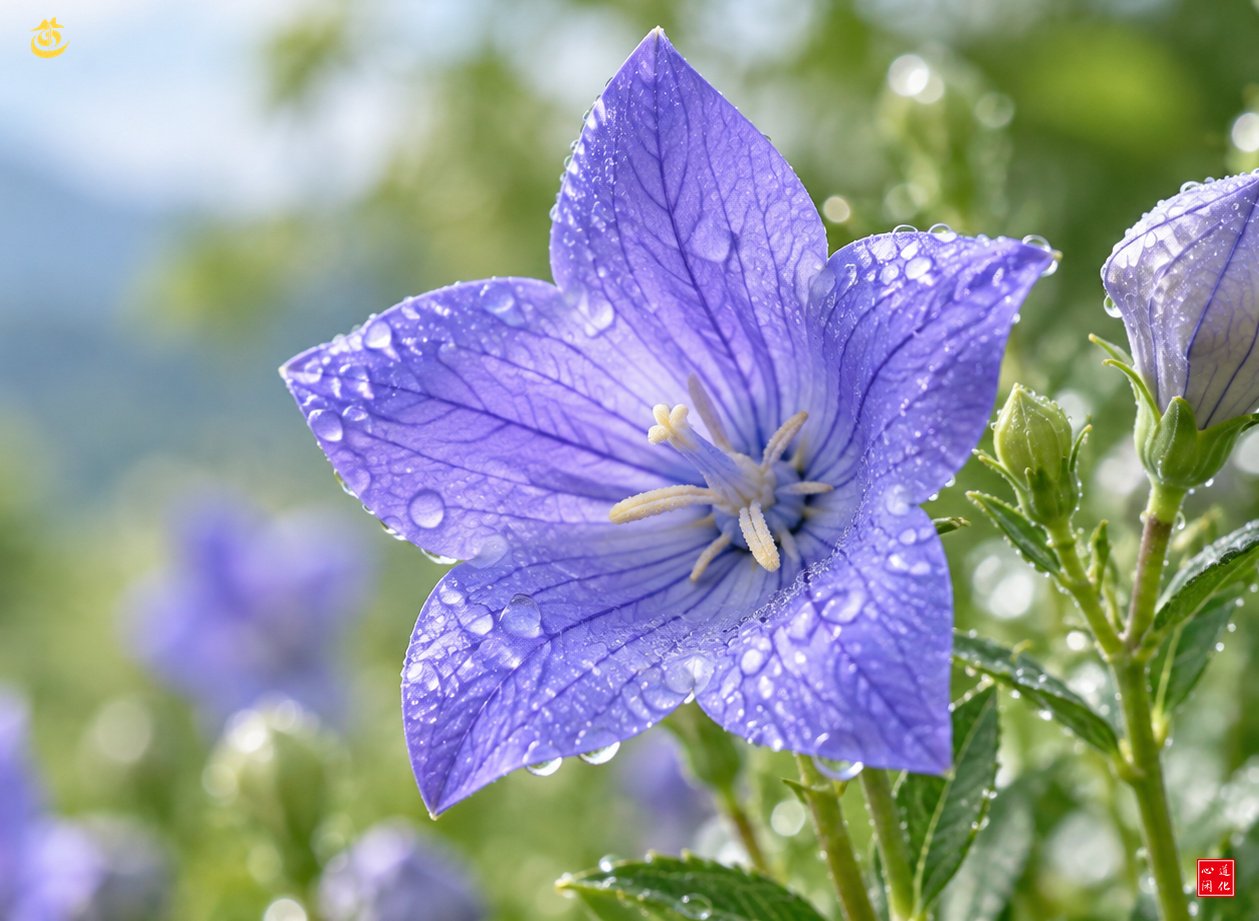
意思是月亮本身是不发光的,而是太阳光照到月亮的原因,月亮才有光的,“魄”(月蚀)的天象是由于太阳光被遮住了,当太阳光全照时就月亮光就满,当太阳光全被遮盖起来时,就没有光了。
想想当时的科学发展程度,就可以想像古人的思想深度。
明末思想家李贽,福建泉州人。写过一篇《读书乐》,让人过目难忘。
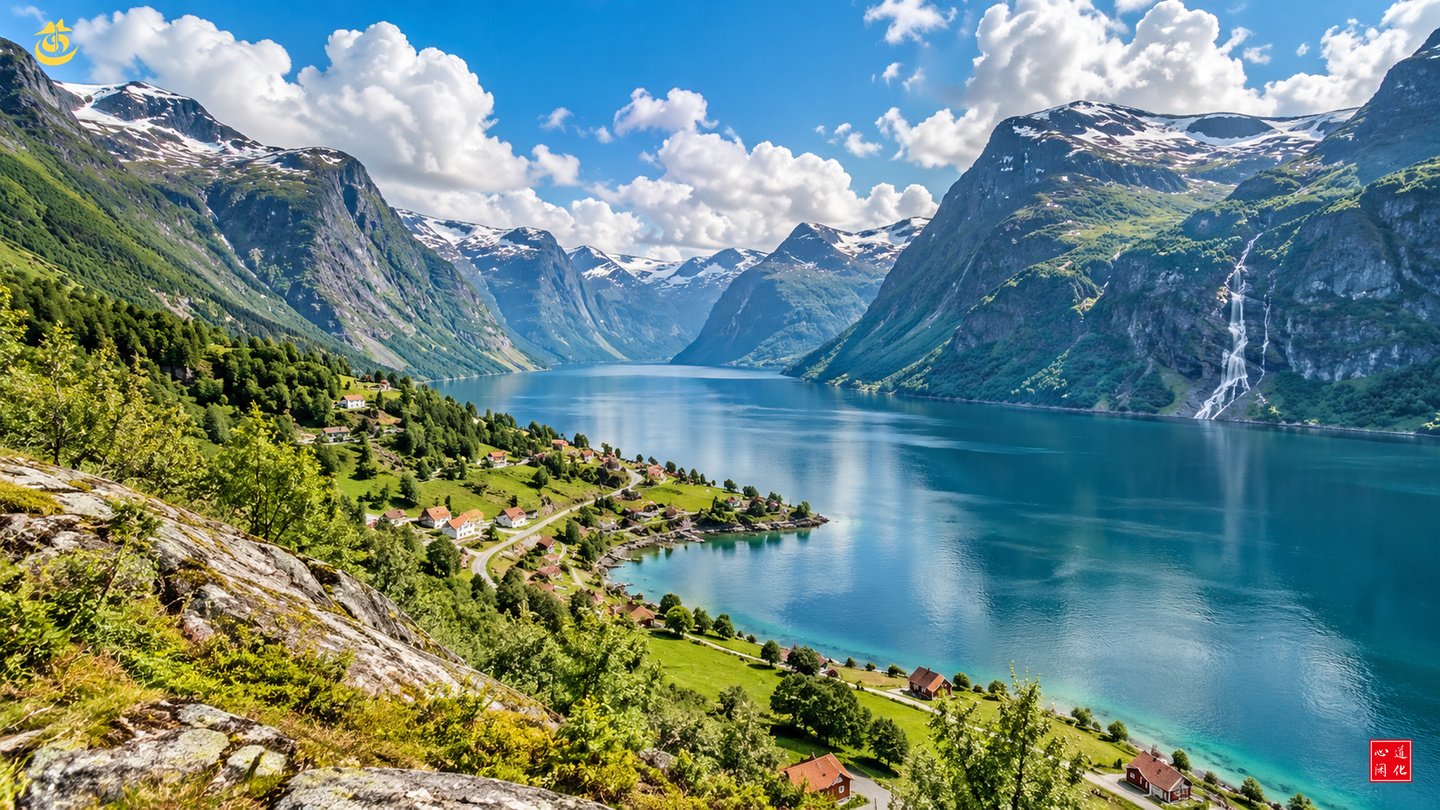
天幸生我目,虽古稀犹能视细书;天幸生我手,虽古稀犹能书细字。然此未为幸也。天幸生我性,平生不喜见俗人,故自壮至老,无有亲宾往来之扰,得以一意读书。天幸生我情,平生不爱近家人,故终老龙湖,幸免俯仰逼迫之苦,而又得以一意读书。然此亦未为幸也。天幸生我心眼,开卷便见人,便见其人终始之概。夫读书论世,古多有之,或见皮面,或见体肤,或见血脉,或见筋骨,然至骨极矣。-----李贽《读书乐》
看到“天幸我以目,虽古稀犹能视细书”这句话,说不出是什么感觉。
眼前忽然浮现出冯友兰先生晚年视力不济,还坚持述著《三松堂自序》及《中国哲学史新编》,钱穆先生晚年失明后完成了《晚学盲言》,陈寅恪先生在双目失明后口述,由助手笔记,写了百万字著作《论<再生缘>》、《柳如是别传》、《元白诗笺证稿》---忍不住想,失眠的老人都这么勤奋,我们有视力的人真的应该感到幸运。忽然又想到左丘明瞎了,给我们留下《左传》---外国盲人荷马写了《荷马史诗》---忍不住自问:难道还要等年迈眼瞎了再找人帮着读书吗?
为了能安静地读书,李贽甚至自己违心地剃度成僧人,只是为杜绝社会和家人的干扰。他说:
“其所以落发者,则因家中闲杂人等时时望我归去,又时时不远千里来迫我,以俗事强我,故我剃发以示不归,俗事亦决然不肯与理也。又此间无见识人多以异端目我,故我遂为异端以成彼竖子之名。兼此数者,陡然去发,非其心也。”李贽《与曾继泉》
他的作品多不为现代人所知,但文中却有万容。越读他的书,越能理解他的这种“不近人情”。文章中透着智慧,诗篇中透着情怀。无论是否认同他的观点,都感动他的学术精神。那种感动,超越语言。
不知何时起,我竟也成了一个不喜应酬与社交的人。倒不是说自己如何清高或自命不凡,而是随着岁月的流逝,发现很多迎来送往和热闹沟通都是无效的。在选择闭关的前几年,经常想起屈原那句:
欲变节以从俗兮,愧易初而屈志--屈原《九章 思美人》
时间久了,朋友们也都知道我这坏毛病,都理解,也就没有什么误解了。反而偶尔相见了还特别珍惜,沟通更加真诚。

尽管阅读各家宗教典籍,但我至今都没有确信人生到底还有没有来世。假如没有来世,只此一生,哪怕再长寿,日子也是很有限的,把有限的生命浪费在无限的呵呵虚礼上,心里总发毛,说不出有什么不妥,但总是感觉隐隐不安。而且,人与人之间,也不 是非得朝夕相处就幸福。最危险的关系是乍交之欢,最稳妥的关系是久处不厌。多年下来,那些不远不近,没有什么利益关系的朋友,反而可能觉得比较好相处。伤心无过相见恨晚的知已翻了脸。与人相处,不在时间多少,而是真诚的有效沟通与否。关于真诚,以后再说。
由来闹里无多识,清静不过孤寂时。
倚天看海花无数,高山流水心自知。
孤独,让人如此的自由、自在,心灵没有任何负担,不需要对任何语言负责,不需要去关照任何人的情绪,不需要去迎合任何不感兴趣的话题,只是沿着自己的思绪把一个问题思考下去,一直到遥远的未知。
人生最大的幸福,无非是找到了自己的乐趣。这种乐趣不是为了迎合别人,而是为了满足自己。
痛快的人生,应是遵循自己的天性,本真、尽情、随心的活着。
无悔的人生,应是没有浪费光阴,没有伤害别人,没有负过真诚。
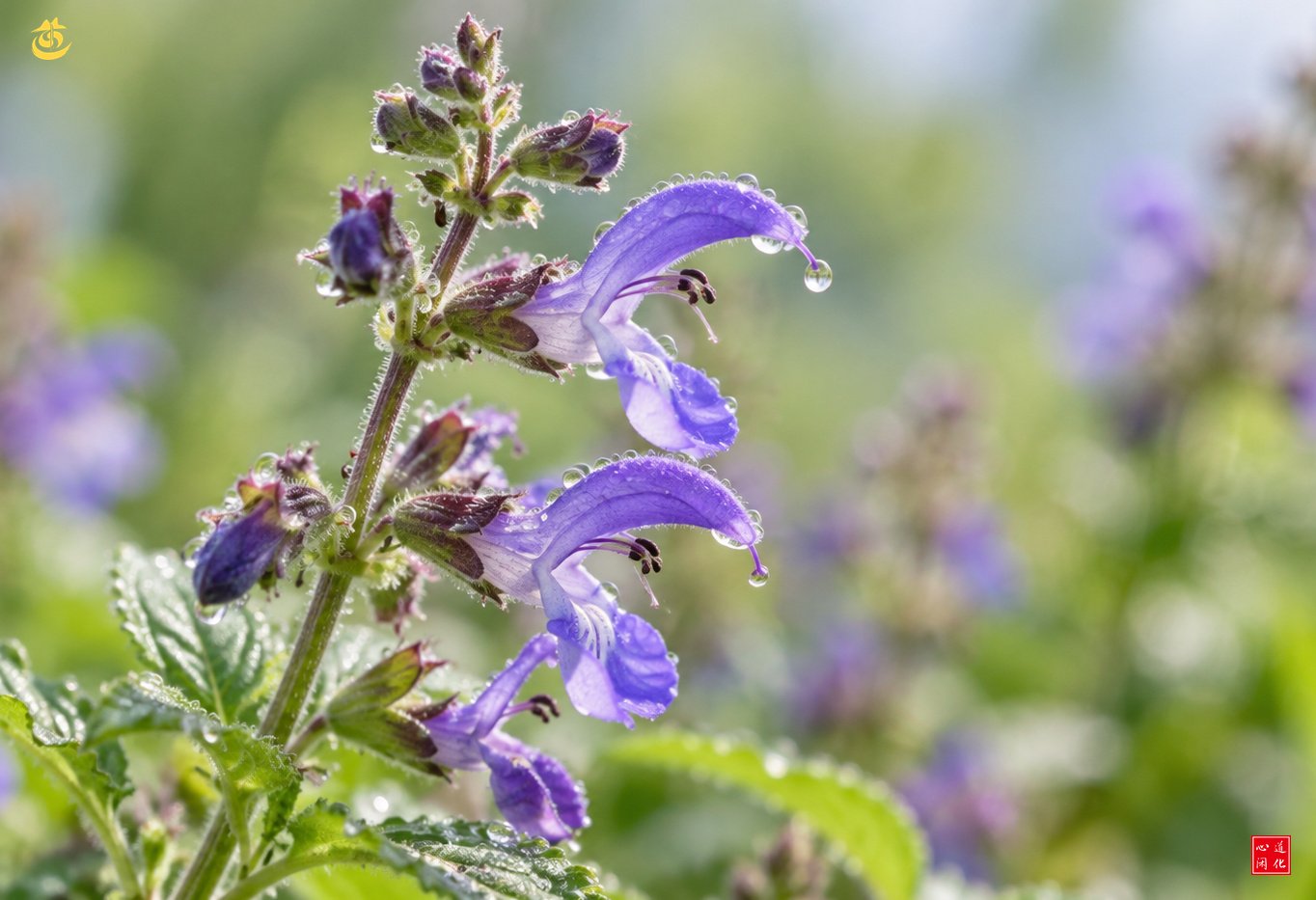
如果孤独是一种病,我倒是觉得自己是如此幸运才得了这种病,从而不愿意去医治。如果不是孤独,我可能是过着碌碌繁琐的世俗人生(当然,现在也觉得自己俗),日复一日,年复一年,变化的只是日渐老去的颜面和逐渐衰弱的躯体。而在思想上,没有任何的惊喜发现,在灵魂上没有实质性的升华,在心灵上也没有突破性拓展。
正是因为那种无边的寂寞,那种无限的孤独,让我在无助中思考生命的价值、在无奈中思考生活的意义、在绝望中思考生存的方式。
是孤独,让我与哲学结缘,与宗教同处。
是孤独,让我发现了自我,并坚定了自身的兴趣、禀赋和未来。美国思想家爱默生的几句话一直那么给人启发和力量:
“自然界中,蕴藏在一个人身上的力量是全新的,除了本人,谁也不知道自己能做些什么,而且,不经过尝试,甚至连他本人也不弄清自己有什么潜能”---
之所以要摒弃你眼中的那些陈规陋习,是因为它们会分散你的精力,浪费你的时间,模糊你的人格。----《爱默生文集》
当思绪随着道体延展到宇宙自然时,可以清晰感觉到那可以穿越障碍的自由,那种见物知本的通透,那种跨越时空的轻松,以及,那种无所拘束的自在。慢慢的,会层层提升对“天人合一”的体悟程度。学会了勇敢面对、坦然接受、欣然同意、豁然放下。渐渐的,可以看到无形的大道在宇宙间运行,并确认它的实在与永恒。正所谓:
天行有常,不为尧存,不为桀亡。---《荀子 天问》
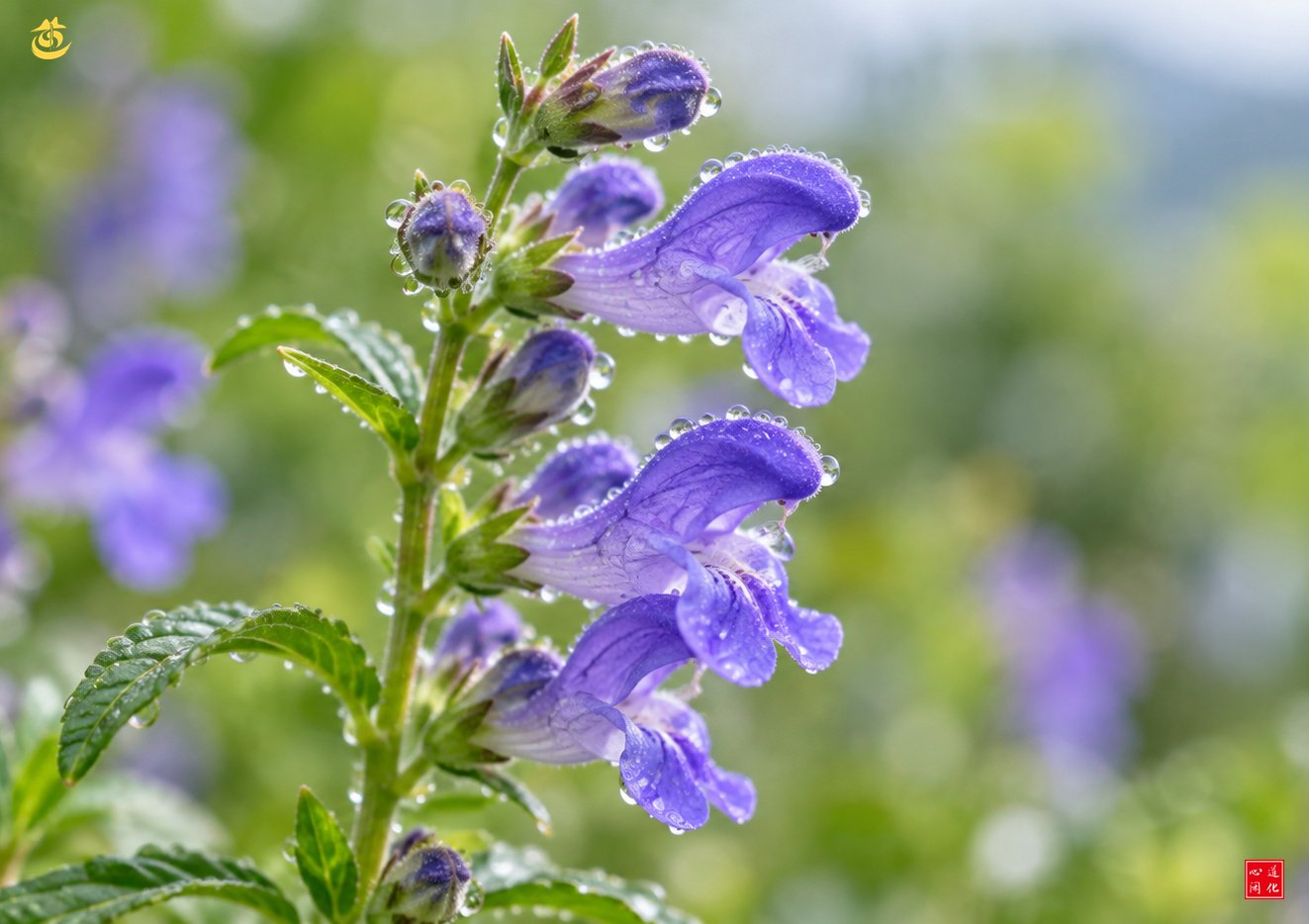
可贵的只是生命与灵魂,并不是成功与否或者是社会的评论。此时的心灵,不再渴望他人的慰籍,不再寻求外力的支撑,意志便硬朗起来,生命本身便精彩起来。就如那山间的野花,只是随心开放,只是尽情享受阳光,自在随风摆动,从不去思考是否有人来赞美它,是否有人来羞辱它,明天是否会缺水,后天是否还有阳光,甚至,会不会有牛羊来一口吞掉它。

那朵花,它只是在开放,不为谁而开,也不为谁而谢,也不为谁而喜,不为谁而忧,它只是快乐地、自由、自在地开在大自然给它安排的那个地方,不恐不忧、不惧不怕、不攀不附、不求不辱。
它不去思考世道的公平,也不去思考生命的始终。
用手轻轻触碰那朵花芯,那一刻,突然发现-----
原来,道在其中。

《南下》
沪上津门冰雪寒,南下福地为冬暖;
续续叠举风鼓浪,淡淡悠悠云挂天。
红尘洞里千万劫,几欲出关做神仙;
修行不过洗尘念,净面容易清心难。
美梦一生难求得,月到风来一瞬间;
情如脚下湖水清,心与天边浮云闲。
生死不再无形手,穷达任由他人言;
值此闭门悟大道,窗外雾掩几重山。
书中自有知己逢,世事如烟不足谈;
气吐胸中随心意,笔落人间顺自然。

《午后》
端居不出户,隔窗望青山;
午后全城息,风静云也闲。
懒懒榻前卧,倚枕意阑珊;
世间烦恼事,与我不相干。
The Traits of a Life — Solitude
23. The Traits of a Life — Solitude
Originally published by Yang Zi, Daozang Research, 2019-04-07
Every person's life has its own distinctive traits.
These traits are, more or less, the label of a life. Cheerful, sorrowful, wise, dull, and so on. Perhaps each person shows different traits at different ages, but the trait running through a life from beginning to end is broadly stable, and that stable trait is basically the signature of one's life. Because lives each have their traits, this world has become many-colored.
As for me, my life's traits can be summed up in three words: sincerity, diligence, solitude.
If I could keep only one, I suppose no word would serve better than solitude. Solitude has occupied nearly all the time of my life. In all my memory there has never been a moment when I did not feel alone. And so, slowly, I grew used to keeping company with solitude, to living in harmony with it.
Reading is the finest gift solitude has given me. That I am rather traditional and conservative probably has to do with my reading being mostly old books. The more I read, the more I see that, beside the greatness of the ancients, our modern little achievements deserve only to be called conceit.
Take Zhang Heng. What the world knows best is that he invented the seismoscope. But his philosophical thought was remarkable too—above all his cosmology. On the finitude and infinitude of the universe he put forward relative concepts, namely "beyond the bounds of space there is no limit; at the ends of time there is no limit." On the motions of the heavenly bodies he gave a very scientific explanation of solar and lunar eclipses:
"Thus the moon's light is born of where the sun shines upon it; the dark part is born of where the sun is blocked from it. Standing opposite the sun, its light is full; drawing near the sun, its light is spent." — Zhang Heng of the Eastern Han, Lingxian
The meaning: the moon itself gives off no light; it shines because the sun's light falls upon the moon. The "po" (the lunar eclipse) occurs because the sunlight is blocked; when the sunlight shines in full, the moonlight is full, and when the sunlight is wholly shut away, there is no light.
Consider the state of science in that day, and one can imagine the depth of the ancients' thinking.
Li Zhi, the late-Ming thinker, was a native of Quanzhou in Fujian. He wrote a piece called "The Joy of Reading" (Du Shu Le) that one does not easily forget.
Heaven was kind to give me eyes: though past seventy, I can still read small characters. Heaven was kind to give me hands: though past seventy, I can still write small characters. Yet this is not yet kindness. Heaven was kind to give me my nature: all my life I have disliked seeing worldly people, and so from prime to old age I have been free of the disturbance of kith and kin coming and going, and able to read with a single mind. Heaven was kind to give me my affections: all my life I have not cared to be near my family, and so I have grown old at Dragon Lake, happily spared the pain of being pressed and bowed by daily life, and again able to read with a single mind. Yet this, too, is not yet kindness. Heaven was kind to give me the mind's eye: opening a book, I see the man at once, see the whole shape of his life from beginning to end. To read books and judge the age has been common since antiquity: some see the skin, some the flesh, some the blood vessels, some the sinews and bones—but reaching the bones is already the furthest they go. — Li Zhi, "Du Shu Le"
Reading the line "Heaven was kind to give me eyes: though past seventy, I can still read small characters," I cannot say what I felt.
Before my eyes there suddenly rose Feng Youlan in his last years, his sight failing, still insisting on writing Sansongtang Zixu and Zhongguo Zhexueshi Xinbian; Qian Mu, blind in his old age, completing Wanxue Mangyan; Chen Yinke, after losing the sight of both eyes, dictating while assistants took notes, producing a million characters of scholarship—Lun Zaisheng Yuan, Liu Rushi Biezhuan, Yuan Bai Shi Jianzheng Gao—and I could not help thinking: these aged men, blind or going blind, are so diligent; we who still have our sight ought truly to count ourselves lucky. Then it suddenly occurred to me: Zuo Qiuming, blind, left us the Zuozhuan; the foreign blind man Homer wrote the Homeric epics—and I could not help asking myself: must I wait until I am old and blind before finding someone to read to me? To be able to read in quiet, Li Zhi even went against his own heart and shaved his head as a monk, simply to shut out the interference of society and family. He said:
"As for why I shaved my head: it is because the idle folk at home kept hoping I would return, and kept coming a thousand li to press me, forcing worldly affairs upon me. So I cut off my hair to show that I would not return, and worldly affairs I absolutely refused to engage with. Moreover, the people without insight here mostly regard me as a heretic, so I became a heretic, to fulfill the label those petty men had given me. For these several reasons I suddenly removed my hair—it was not my heart's wish." — Li Zhi, "Yu Zeng Jiquan"
His works are little known to moderns, yet within his writing there is room for ten thousand things. The more I read him, the better I understand this "disregard for social expectations." Wisdom shines through his prose; feeling shines through his poems. Whether or not one agrees with his views, one is moved by his scholarly spirit—a moving that goes beyond words.
I do not know when it began, but I too became a person who dislikes social engagements. Not that I consider myself lofty or exceptional; rather, as the years went by, I found that much of the meeting-and-seeing-off and the lively socializing came to nothing. In the first years of my retreat I often recalled Qu Yuan's line:
If I would bend my principles to follow the crowd, I should be ashamed to change my first heart and bow my will — Qu Yuan, Jiuzhang, "Si Meiren"
In time, my friends all came to know this bad habit of mine, understood it, and there were no more misunderstandings. On the contrary, when we did chance to meet we treasured it all the more, and our talk was more sincere.
Though I read the scriptures of every religion, to this day I have not been able to convince myself whether there is an afterlife. If there is none, if this is the only life, then however long one lives, the days are few; to squander a finite life on the endless heh-heh of empty courtesies leaves me vaguely uneasy—I cannot say what is wrong with it, but I always feel a faint disquiet. Besides, between people, constant togetherness is not what makes happiness. The most dangerous of relations is the delight of first acquaintance; the most dependable is never tiring of long companionship. Over the years, the friends who keep a certain distance, with no interests binding us, are the easiest to be with. Nothing wounds like a soulmate, met too late, turning against you. In human relations, what counts is not the hours spent but whether there is sincere and effective communication. As for sincerity—another time.
All along, in the noisy crowd one gains but little knowledge; clarity comes only in the time of solitude.
Leaning on the sky, watching the sea, flowers beyond number; high mountains, flowing water—the heart knows it for itself.
Solitude makes one so free, so at ease: the mind bears no burden, answers to no words, needs no tending of anyone's moods, no humoring of any topic that does not interest one—only following one's own thread of thought, thinking one question through, on and on, to the distant unknown.
The greatest happiness in life is nothing more than finding one's own delight. A delight taken not to please others, but to satisfy oneself.
A life of abandon is one that follows its own nature: living genuine, full-hearted, following the heart.
A life without regret is one that has wasted no time, harmed no one, betrayed no sincerity.
If solitude is an illness, then I count myself lucky to have caught it—so lucky I decline to be cured. Without solitude, mine might have been the bustling, trivial round of a worldly life (I feel worldly enough as it is, heaven knows): day upon day, year upon year, changing only in a face growing old and a body growing weak—no surprises of discovery in thought, no real ascent in soul, no breakthrough in the mind.
It was precisely that boundless loneliness, that limitless solitude, that made me, in helplessness, think about the value of life; in resignation, think about the meaning of living; in despair, think about the way of surviving.
It was solitude that bound me to philosophy and set me dwelling with religion.
It was solitude that let me discover myself and fix my interests, my gifts, and my future. A few sentences of the American thinker Emerson never cease to inspire and strengthen:
"In nature, the power stored within a person is entirely new. No one but himself knows what he can do, and without trial even he himself cannot know what potential he has"—
The reason to cast out those conventions and bad habits in your eyes is that they scatter your energy, waste your time, and blur your character. — "The Collected Works of Emerson"
When thought extends, with the body of the Dao, into the cosmos and nature, one can clearly feel that freedom which passes through every obstacle, that translucence which sees to the root of the thing, that ease which crosses time and space, that unbound ease without the least constraint. Slowly, one's grasp of the "unity of Heaven and humanity" rises layer upon layer. One learns to face things bravely, accept them calmly, consent gladly, lay them down in sudden release. Little by little, one can see the formless Great Dao moving through the universe, and confirm its reality and its permanence. As the saying goes:
"Heaven's course has its constancy: it does not live for a Yao, nor die for a Jie." — Xunzi, "Tianwen"
What is precious is only life and soul, not success or the judgment of society. At such a point the heart no longer craves others' consolation, no longer seeks support outside itself; the will grows firm, and life itself grows brilliant. Like the wildflower on the hillside: it simply opens as it pleases, simply drinks in the sunlight to the full, swaying free in the wind, never wondering whether anyone will come to praise it, whether anyone will come to mock it, whether tomorrow brings drought, whether the day after still has sun—or even whether some ox or sheep will swallow it in one bite.
That flower simply opens. It opens for no one, fades for no one, rejoices for no one, grieves for no one; it simply blooms, happy, free and at ease, in the place nature has set for it—without terror, without sorrow, without fear or dread, climbing on nothing, clinging to nothing, begging nothing, shamed by nothing.
It does not ponder the fairness of the world's way, nor the beginning and end of life.
Touch the heart of that flower lightly with a hand, and in that moment one suddenly discovers—
So the Dao was in it all along.
"Going South"
In Shanghai and Tianjin the ice and snow are cold; I go south to the blessed land for a warm winter;
wave upon wave the wind drums the sea; light and unhurried, clouds hang in the sky.
In the cave of the red dust, a thousand thousand kalpas; how often I have wished to pass the frontier pass and become an immortal;
Cultivation is nothing but washing the dust from one's thoughts; it is easy to clean the face, hard to purify the heart.
A fine dream is hard to win in a lifetime; the moon arrives, the wind comes—in a single instant;
Feeling clear as the lake at my feet; the heart idle as the drifting clouds at the sky's edge.
Life and death no longer in the invisible hand; success and failure left to others' talk;
Just now, behind closed doors, awakening to the Great Dao; outside the window, fog veils how many folds of hills.
In books one meets one's own soulmates; the world's affairs, like smoke, are not worth discussing;
Breath rises from the chest following the heart's wish; the brush falls upon the human world following nature.
"Afternoon"
Dwelling at ease, not going out the door; through the window I gaze at the green hills;
In the afternoon the whole city rests; the wind is still, and the clouds too at ease.
Lying lazy before the couch, propped on the pillow, spirits ebbing low;
The troubling affairs of the world—nothing to do with me.