《杨子重读〈太上感应篇〉:世界是如何运转的》
3、《杨子重读〈太上感应篇〉:世界是如何运转的》

写在前面
这几天,道化心闲第三批产品上线。过程中也遇到天猫平台规则隐形调整的情况,大家普遍喜欢的本草活络水,深受其苦。平台时代,谁都无奈。如实记录,记录这个时代。
做产品如此,做内容亦如此。人在一个系统中,总会感受到规则、反馈与限制。也正因如此,我重读《太上感应篇》时,突然觉得这本书不只是讲“善恶报应”,它更像是在讲:人在世界结构中如何行动,又如何被回应。
说明
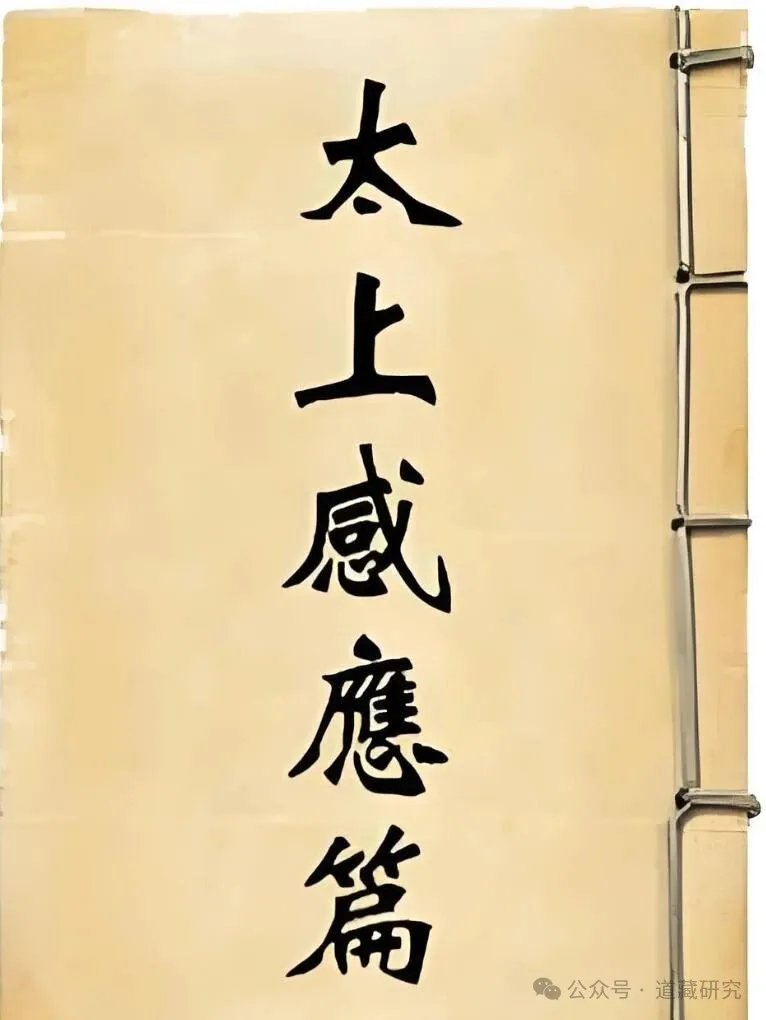
经名:《太上感应篇》。原题宋李昌龄传,宋郑清之赞。三十卷。底本出处:《正统道藏》太清部。
我们读书有一个习惯——先给它贴标签。很多人读《太上感应篇》,往往是从这样一句话开始的:
“祸福无门,惟人自召;善恶之报,如影随形。”
于是,这本书就常被贴上“劝善”、“因果”、“道德”的标签,而且是儒释道三家都奉行的经典。三十年前,读《太上感应篇》,我就是这样的印象。正因如此,这些年来,我没有再回翻这本书。甚至连当初的读书笔记都没有去整理。
时间在走,岁月会教给我们很多东西。我年轻时代诸多的刻板印象,也被时光照得泛了白。
夜里听书,再次听到陈寅恪先生的故事。我年轻时佩服陈寅恪先生的博学,后来更敬重他的风骨。但也由此想到一个问题:再好的学问,如果不能被更多人读懂,是否也是一种遗憾?《道藏》长期被误解,其中一个原因,或许正是它太难读、太少人用浅显文字介绍出来。于是我也开始反思:自己过去给某些书贴上的标签,是否也该重新打开看一看?考虑今天起开始一本一本的跟大家介绍《道藏》中的经典。按目前的进度,估计能写到我300岁,也写不完。你要是想读完《道藏》,也一起活它300岁吧。
说回《太上感应篇》。

这本书是我少有的没有给打分的书,读书笔记上只是写着:“做好人”。这样不咸不淡的评价,可能是我多年没有兴趣回翻的主要原因。
这几天假期,接着整理《道藏》的阅读笔记,决定重读这本书,看看几十年过去了,有没有新的发现。现在的我,更关心的是:如果站在《道藏》的整体结构中,这本书究竟在表达什么?它背后有没有更深一层的运行逻辑?

果然。岁月是给予的不仅是容颜的改变,还有认知的提升。我感觉自己的阅读与思考模式,在不知不觉间,与三十年前,大不相同。今天分享一下。
传统的读法,往往把《太上感应篇》当作一种行为规范:做好人,会有好报;做坏事,会有惩罚。这样的理解虽然不算错误,却把一本关于“结构与运行”的书,读成了简单的“道德劝诫”。
但如果我们换一个角度去看,会发现它更像是在说一件很朴素的事:
不是你该做什么,而是——
你做了什么,会带来什么。
换句话说,它不是在劝人,而是在描述一个世界的运行方式。
就像天气预报不会要求你带伞,但它会告诉你——
如果下雨,你不带伞,会怎样。
如果从道家的角度,再往里看一层,这本书的重点,或许并不只是在“劝人向善”,而是在试图说明一件更底层的事情——
人做的每一件事,都会在一个更大的结构中,产生回应。
换句话说,这本书可以这样读,但也可以再读一层。这,就是岁月的馈赠。
第一层结构:人不是个体,而是关系
书中一开始强调:
“忠孝。”、“非忠无君,非孝无亲。”
要是在以前,我一听到这些“忠孝”等词汇,就头疼,容易生气。现在不了,静下心来,仔细看看作者笔下的逻辑。如果用现代语言理解,忠,是人与外部秩序的连接;孝,是人与生命源头的连接。它们看似是伦理规范,实则是结构的根基。
如果用现代语言理解:
忠 → 维持组织关系
孝 → 维持生命关系
这两条,看似伦理,其实是:系统的连接点。
举个很现实的例子:
一个人如果长期——
不守承诺 (不遵守社会运行规则)
不认根源 (忘本)
那他的问题不会只停在“道德”,而会变成:
信任崩塌、关系断裂、资源流失。

放到现实世界来看,一个组织如果内部失去“忠”,团队不再信任彼此,那么再好的战略也无法执行;一个家庭如果失去“孝”,代际关系断裂,那么情感与支持系统就会崩塌。你会发现,这不是道德问题,而是结构问题。一旦连接断裂,系统自然瓦解。
我们身边,一个人如果反复失信,短时间内或许还能周转,但时间一长,机会自然会减少;一个人如果连最基本的关系都不在意,他在人际结构中也会越来越孤立。
所以这里讲的,不只是“应该这样做”,而是在说明:一个人能不能长期存在于一个系统中,取决于他有没有这些基本的连接。
所以“忠孝”的本质不是道德,而是:
“人是否还能被系统接纳。”
一个长期失信的人,最痛苦的往往不是某一次失败,而是从此不再被信任;一个被组织、家族或朋友圈层排除在外的人,也会体会到一种深层的失根感。这种失去连接的状态,正是“系统不再接纳”的表现。
第二层,它在讲“人如何不偏”。
书中说:“正己化人。”、“不彰人短,不炫己长。”
很多人理解为修养,其实这里讲的是一个很现实的现象:
人一旦开始关注别人,就已经偏离了自己,甚至慢慢引导至一个纷扰的世界里,为那些与自己无关的事所牵扰,从而失去了对自我灵魂的滋养、培育与修炼。
比如现实中:
第一种,好为人师。总喜欢指出别人问题 ,总想教导别人;常言道:“观棋不语真君子”,对别人的行为进行批点,甚至指指点点,是普通人最大的毛病,而且是劣根性的。越是有自卑过去的人,若是有了点小小的权力或影响力,一旦有机会,“好为人师”就成为一种大概率事件。
第二种,自我表现。有些人越是急着证明自己,越像滩涂上的跳跳鱼,蹦跶跶,蹦跶跶,跳得越高,越容易被人逮回去煮吃了。真正有底气的东西,反而常常是安静的。“神龙终年渊底藏”,说的正是这种智慧。
第三种,无休止吃瓜。把宝贵的生命浪费在隔屏看热闹上。我也是爱刷视频的人,甚至还经常在无聊的视频上浪费生命。生活已不易,让自己开心,有利于养生。所以不批评自己啦。这个坏毛病就不提了。(哈哈)
这几种情况,看似不同,其实是一件事:
注意力向外,结构失衡。
所以“正己”真正的含义是:
把系统的中心,拉回自己。
而书中所说的“化人”,并不是指去改变别人,而是:
当你稳定时,别人自然会靠近。“道化”的本意,就与这个本意相关。我创立这个品牌时,并没有想到要去感化身外、心外的一切,只是想通过一系列道家的产品,来表达我对道的理解。把这个过程,当成是一种自我的修行与心性磨炼。就像孟子说的:“求其放心”,就是把放逸的心,收回来,收回到自己对大道的追求上来,不要偏离了方向,不要被社会热点和舆论牵着走。而是在大道的指引下,顺应自然,遵循内心,一直向着一个目标走。
我们现在的环境,很容易让人把注意力放在别人身上——评价别人、比较别人、证明自己、显摆自己。看起来很忙,其实很容易失去重心。
而“正己”这两个字,说得很轻,却很关键。

它不是要求一个人变得完美,而是在提醒:先把自己的位置站稳。
当一个人稳定的时候,他不需要刻意去影响谁,他本身的状态就会产生影响。这也就是“化人”的另一种理解——不是去改变别人,而是别人自然会被一种稳定的状态所吸引。
第三层,是“心的方向”。
书里有一句话很有意思:“见人之得,如己之得;见人之失,如己之失。”
就是看到别人得到,就跟自己得到了一样高兴;见别人有损失,就跟自己有损失一样难过。再往下:
“乐人之善。”、“悯人之凶。”
如果只从道德看,这是高要求。很多人读到这里,但如果当成一种“方向选择”,就会容易理解得多。
如果从结构看,它在解决一个问题:
人如何摆脱“对立”。
现实中很常见:
别人好 → 心里不舒服
别人差 → 心里轻松,幸灾乐祸
这是人性,无可厚非。但这种结构的结果是:
常怀此心的人会不断进入“比较与对立系统”,而不是“自我成长系统”。
你看到别人变好时,你的第一反应是什么?
是开心,还是不舒服?
这种细微的反应,长期下来,会决定一个人的走向。
而“乐人之善”的本质是:
让自己站在“向上”的方向上。
再比如“悯人之凶”:
它并不是同情坏人、宽容坏人,而是在说:
用慈悲之心,去理解。很多“凶”,不是天生人性之恶,只是路径偏差。
就像现实中:
有人做错选择,往往不是因为本性恶,而是——
看不到,找不到更好的路。
在今天的世界里,这种差别特别明显。
同样看到别人成功,有人会焦虑,有人会嫉妒,有人会学习,有人会否定,有人会靠近。
长期下来,走出来的路完全不同。
第四层,是“关键行为”。
书中说:“济人之急”、“救人之危”、“施恩不求报”、“与人不追悔”
这些话如果放在一起看,会发现它们都指向一个共同点——关键时刻。
在现实生活中,平时的帮助,是关系;关键时刻的帮助,往往会成为转折。

在《水浒传》中,宋江,这个角色,我不是很欣赏。尤其不喜欢他在晁盖死后,把“聚义堂”的大旗砍了,改为“忠义堂”,这真是既当强盗,又立牌坊。滑稽而又荒唐。这种“又当又立”的墙头思想,既侮辱了强盗的骨气,又侮辱了忠臣的坦荡。但宋江身上有个最值得学习闪光点,就是那句逢人就说的:“我这里有几个散碎银两,兄弟拿去喝酒”。于是,他就有了江湖名号:及时雨宋江!他的梁山第一把交椅,是“散碎银两法”+“厚黑心机法”共同作用的结果。
助人最大的意义,在于及时。《庄子》中有一段:
庄周家贫,故往贷粟于监河侯。监河侯曰:“诺。我将得邑金,将贷子三百金,可乎?”
庄周忿然作色曰:“周昨来,有中道而呼者。周顾视车辙中,有鲋鱼焉。周问之曰:‘鲋鱼来!子何为者耶?’对曰:‘我,东海之波臣也。君岂有斗升之水而活我哉?’周曰:‘诺,我且南游吴越之王,激西江之水而迎子,可乎?’鲋鱼忿然作色曰:‘吾失我常与,我无所处。吾得斗升之水然活耳。君乃言此,曾不如早索我于枯鱼之肆!’”(《庄子 外物》)
大意是:
庄子家境贫寒,就去向监河侯借粮食。

监河侯说:“好!等我秋天收了租税,借给你三百金,怎么样?”
庄子一听这话,很生气,“忿然作色”,哈,哈,我非常喜欢庄子的文字,就是特别形象,“忿然”二字,活脱脱的一个人物形象就出现了。两千年后,我们依然可以看到一个生气的庄子在骂监河侯:
“我来的路上,正走着,忽然听见有呼救声。我低头一看,原来是在车辙压出的一个小水坑里,有一条鲫鱼。”
“我问:‘鲫鱼啊,你怎么会在这里?’”
“鲫鱼奄奄一息地对我说:‘我是东海里的水族之臣。现在遭了难,流落在这干涸的车辙里。您能给我一瓢水,让我活下去吗?’”
“我立刻非常慷慨地回答说:‘没问题!我现在正要往南去,游说吴国和越国的国王。到时候我引西江之水来救你,好吗?’”
“那条鲫鱼听了,气得脸色都变了,它生气地对我说:‘我现在只需要一小瓢水就能活命。你却说这么不着边际的话。不如早点到干鱼铺里找我吧!’”

帮人,最大的要义,是要及时。比如在突发事件中,有人出手相助,这种记忆是很深的,它改变的不只是当下,也会影响后续的走向。
再说“施恩不求报”。如果一件事做完,心里一直在等回报,那这件事就变成了一种交换;但如果没有这个期待,它反而会在更长的时间里产生影响。
很多看似偶然的机会,其实都来自过去某个不被计算的行为。
第五层,是“系统如何保持平衡”。
书中用大量的事实故事在说:“敬老,怀幼,恤寡,矜孤”、“推多取少”、“受辱不怨”、“受宠若惊”。
这些话看起来分散,但放在一起,会看到一个很清晰的逻辑:如何让一个结构不失衡。
现实世界中,如果强者不断占有,而弱者没有承接,系统就会越来越紧张;如果一切都只靠竞争,没有缓冲,就容易出现断裂。
比如:
对弱者没有保护
对资源没有让渡
对冲突没有缓冲
那整个结构就会越来越紧张。
“推多取少”,是一种让渡;
“受辱不怨”,是一种缓冲;
而“受宠若惊”,则是在提醒:当一切都很顺的时候,反而要多看一眼。
很多问题,不是在低谷出现的,而是在高点埋下的。而我始终相信,对弱者的同情与保护,是文明的重要标志。
第六层,是“人与万物的关系”。
书中说:“昆虫草木,犹不可伤。”读这一部分时,我顿时想到庄子说的:“天地与我并生,万物与我为一”。
它在否定一个观念——“人是唯一重要的存在”
如果万物都在“感应”之中,那么:人只是参与者,而不是主宰者。至少不是唯一的。
当我们面对环境问题、气候变化、生态失衡时,才逐渐意识到:人并不是独立存在的。人类的行为,正在不断影响整个系统,而这个系统的变化,也会反过来影响人类自身。
现实一点说:
你对环境的方式
你对生命的态度
最终也会回到你自身
从这个角度看,这句话不再是情感表达,而是一种提前数百年的认知:世界,是一个整体;人并不是中心,而是参与者。
这本书到底在说什么?

如果把整本《太上感应篇》压缩成一句话,它不是在说“做个好人”,而是在说明:人的行为与心念,始终处在一个持续反馈的系统之中。这些回应,不一定立刻出现,但会慢慢累积,进而改变一个人的命运。
“你的一切行为与心念,都会在一个更大的系统中产生反馈。”
也就是说,命运并不是被安排的,而是在每一个选择中,被不断生成。每一个人每天都因为点滴的小事,平常的言行,也不断改命。
读这本书,可以不急着相信,也不必急着否定。
更简单的方式,是在生活中慢慢去看:
你如何看别人,
你如何做选择,
你如何处理关系。
这些看起来很小的地方,时间一长,就会变成你所处的世界。
当这样去读时,《太上感应篇》就不再只是一本古书。
而更像是一面镜子。
不是世界在发生什么,而是你在参与生成什么。
我们每天在参与什么?刷什么样的视频?读什么样的书?生成什么样的思想?给社会或家人提供什么样的产品或服务?
重复一遍:
生命中重要的,不是世界在发生什么,而是你在参与生成什么。
Yang Zi Re-Reads theTreatise of the Exalted One on Response and Retribution: How the World Works
Foreword

These past few days, the third batch of Daohua Living products went live. During this process, we encountered another quiet adjustment to Tmall's platform rules. Our popular Refresh Herbal Water has been especially affected. In the platform era, everyone feels helpless at times. I’m documenting truthfully, recording this era.
Making products is like this, and so is creating content. As individuals within a system, we always encounter rules, feedback, and limitations. It is precisely for this reason that when I re-read theTreatise of the Exalted One on Response and Retribution, it suddenly struck me that this book isn’t just about “good and evil retribution.” It seems more like it’s describing: how people act within the world's structure, and how they are responded to.
Explanation
Scripture Title:Treatise of the Exalted One on Response and Retribution. Attributed to Li Changling of the Song Dynasty, with commentary by Zheng Qingzhi. Thirty volumes. Source text preserved in the Zhengtong Daoist Canon, Taiqing Section.
We have a habit when reading – we first put a label on it.
When many people read theTreatise of the Exalted One on Response and Retribution, they often start with this sentence:
“Good fortune and calamity have no gate; they are only summoned by the person themselves. The retribution for good and evil follows like a shadow.”

Thus, this book is often labeled as “encouraging good,” “karma,” or “morality” – a classic revered by Confucianism, Buddhism, and Taoism alike. Thirty years ago, that was my impression when I first read it. For this reason, over the years, I haven't revisited this book. I haven’t even organized my old reading notes.
Time passes, and the years teach us many things. The rigid impressions of my youth have been bleached pale by time.
Listening to a book at night, I once again heard the story of Mr. Chen Yinke. In my youth, I admired Mr. Chen’s erudition; later, I came to respect his moral integrity even more. But it also led me to ponder: if excellent scholarship cannot be understood by more people, is that not also a regret? TheDaoist Canon has long been misunderstood, partly because it is so difficult to read, and too few people introduce it in simple language. So I began to reflect: should I also reopen those books I labeled in the past?

Back to theTreatise of the Exalted One on Response and Retribution.
This is one of the few books I never rated. My reading notes only say: “Be a good person.” This bland evaluation is probably the main reason I had no interest in revisiting it for many years.
During these holidays, I continued organizing my reading notes on theDaoist Canon and decided to re-read this book to see if, after decades, I might discover new things. Now, I am more concerned with: Within the overall structure of the Daoist Canon, what is this book really expressing? Is there a deeper underlying logic behind it?

Indeed. Time gives not only changes in appearance but also improvements in cognition. I feel my reading and thinking patterns have, imperceptibly, changed greatly from thirty years ago. I’d like to share this today.
The traditional way of reading often treats theTreatise as a code of conduct: be a good person, get good rewards; do bad things, get punished. While not incorrect, this understanding reduces a book about “structure and operation” to simple “moral exhortation.”

But if we change our perspective, it seems more like it’s saying something very plain:
It’s not about what youshould do, but rather –
What you do determines what will follow.
In other words, it’s not persuading people, but describing the way the world operates.
Just as a weather forecast doesn’t tell you to bring an umbrella, but it tells you –
If it rains and you don’t bring an umbrella, this is what will happen.
From a Taoist perspective, digging deeper, the focus of this book might not just be “encouraging people to do good,” but trying to explain something even more fundamental –

Every action a person takes will generate a response within a larger structure.
In other words, you can read the book this way, but you can also read it another layer deeper. This is the gift of time.
The First Layer of Structure: Humans Are Not Individuals, But Relationships
The book begins by emphasizing:
“Loyalty and filial piety.” “Without loyalty, no ruler; without filial piety, no parents.”

In the past, hearing words like “loyalty” and “filial piety” would give me a headache and easily make me angry. Not anymore. Now I calm down and carefully examine the logic within the author’s writing. If understood in modern language, loyalty is the connection between a person and external order; filial piety is the connection to the source of life. They may seem like ethical norms, but they are actually the foundation of structure.
Understood in modern language:

Loyalty → Maintains organizational relationships
Filial piety → Maintains life-source relationships
These two, seemingly ethical, are actually:
The connection points of the system
For a very realistic example:
If a person, over a long time –
Breaks promises (doesn’t abide by societal rules)
Denies their roots (forgets their origins)
Then their problem won’t stop at “morality”; it will become:
Broken trust, severed relationships, lost resources.
Looking at the real world: if an organization internally loses “loyalty” and team members no longer trust each other, then no matter how good the strategy, it cannot be executed. If a family loses “filial piety” and intergenerational relationships break, then emotional and support systems collapse. You’ll find this isn’t a moral problem, but a structural one. Once connections break, the system naturally disintegrates.

Consider people around us: if a person repeatedly breaks their word, they might get by in the short term, but over time, opportunities will naturally diminish. If a person doesn’t care even about basic relationships, they will become increasingly isolated within their interpersonal structures.
So, this isn’t just about “ought to act this way,” but is explaining: Whether a person can exist within a system for a long time depends on whether they have these fundamental connections.

Thus, the essence of “loyalty and filial piety” isn’t morality, but:
“Whether a person can still be accepted by the system.”

For a person who chronically breaks trust, the most painful thing is often not a specific failure, but never being trusted again. Someone excluded from their organization, family, or social circle will also experience a deep sense of rootlessness. This state of lost connection is precisely the manifestation of “the system no longer accepting” them.
The Second Layer: How a Person Remains Unbiased
The book says:
“Correct yourself and transform others.” “Do not expose others’ shortcomings, do not boast of your own strengths.”

Many interpret this as self-cultivation, but here it describes a very real phenomenon:
Once a person starts focusing on others, they have already deviated from themselves, gradually drawn into a world of distractions, entangled by matters unrelated to themselves, thus losing the nourishment, cultivation, and refinement of their own soul.
For example, in reality:
First, the love of being a mentor. Always pointing out others’ problems, always wanting to teach others. As the saying goes: “A true gentleman watches a chess game without speaking.” Critiquing and even nitpicking others’ behavior is a common human flaw, even a deep-rooted one. Those with a past of insecurity, once they gain a little power or influence, are highly likely to become “mentors” when given the chance.

Second, self-promotion. The more some people rush to prove themselves, the more they resemble mudskipper fish on tidal flats – jumping and flopping around. The higher they jump, the easier they are caught and cooked. Things with true substance are often quiet. “The divine dragon hides deep in the abyss” – this speaks to that wisdom.
Third, endless kibitzing. Wasting precious life watching online dramas from a distance. I also love scrolling through videos, even wasting time on mindless ones. Enough said (haha).

These situations, seemingly different, all come down to one thing:
Attention directed outward, structural imbalance.
Therefore, the true meaning of “correcting yourself” is:
Bring the system’s center back to yourself.
And the “transforming others” mentioned in the book doesn’t mean changing others, but:
When you are stable, others will naturally draw near.
The essence of “Daohua” (Tao Transformation) relates to this original meaning. When I founded this brand, I didn’t intend to transform everything outside the mind or body; I simply wanted to express my understanding of the Tao through a series of Taoist products. I regard this process as a form of self-cultivation and mental tempering. Just as Mencius said: “Seek the lost heart” – bring back the wandering mind, bring it back to your own pursuit of the great Tao, don’t deviate from the direction, don’t be led by social trends and public opinion. Instead, under the guidance of the Tao, follow nature, follow your heart, and steadily move towards a single goal.

Our current environment easily makes people focus their attention on others – judging others, comparing with others, proving themselves, showing off. It looks busy, but it’s easy to lose one’s center.
Yet the words “correct yourself” are spoken lightly, but are crucial.
They don’t demand a person become perfect; they remind them: first, secure your own position.
When a person is stable, they don’t need to deliberately influence anyone; their very state will have an impact. This is another way to understand “transforming others” – not changing others, but others being naturally attracted to a stable state.

The Third Layer: The Direction of the Heart
The book has an interesting sentence:
“Seeing others gain, as if you had gained yourself; seeing others lose, as if you had lost yourself.”

That is, seeing others get something brings you joy as if you got it yourself; seeing others suffer loss brings you sorrow as if you lost something yourself. It continues:
“Rejoice in the goodness of others.” “Compassionate towards the misfortune of others.”
If seen only from a moral perspective, this is a high demand. Many readers might think so, but if understood as a “directional choice,” it becomes much easier to grasp.
Viewed structurally, it addresses this problem:

How a person can break free from “opposition.”
In reality, it’s very common:
·Others do well → Feel uncomfortable inside
·Others do poorly → Feel relieved, even schadenfreude
This is human nature, and not entirely blameworthy. But the result of this structure is:
Those who habitually harbor such thoughts constantly enter a “system of comparison and opposition,” rather than a “system of self-growth.”
When you see someone else improving, what is your first reaction?
Joy, or discomfort?
Over time, this subtle reaction will determine a person’s trajectory.
The essence of “rejoicing in the goodness of others” is:
Positioning yourself on an “upward” trajectory.
Consider “compassion for others’ misfortune”:
It doesn’t mean sympathizing with bad people or condoning evil, but rather:
Understanding with a compassionate heart. Much “misfortune” is not innate human evil, but a deviation in path.
As in reality:
When people make wrong choices, it’s often not because they are inherently evil, but because they –
Cannot see, cannot find, a better path.
This difference is particularly evident in today’s world.
Facing the same success in others, some feel anxious, some jealous, some learn, some reject, some draw closer. Over the long term, the paths they walk turn out completely different.
The Fourth Layer: Key Actions
The book says:
“Help others in urgent need.” “Rescue others from peril.” “Give favors without expecting return.” “Give to others without regret.”
If we look at these together, they all point to a common element –critical moments.
In real life, regular help maintains relationships; help at a critical moment often becomes a turning point.
In theWater Margin, the character Song Jiang – I don’t particularly admire him. I especially dislike how, after Chao Gai’s death, he cut down the “Hall of Righteous Gathering” banner and replaced it with “Hall of Loyalty and Duty.” This seems both ridiculous and absurd – acting as a bandit while erecting a monument to virtue. This fence-sitting mentality of “wanting it both ways” insults both the integrity of a bandit and the openness of a loyal minister. However, Song Jiang has one most commendable quality, captured in his oft-repeated line to acquaintances: “Here are some scattered silver pieces; take them, brother, and buy some wine.” Thus, he earned the nickname “Song Jiang, the Timely Rain.” His position atop Liangshan Marsh was the result of the combined effect of “scattered silver pieces” and “thick-skinned, dark-hearted scheming.”

The greatest significance of helping lies intimeliness. In Zhuangzi, there is a passage:
Zhuangzi’s family was poor, so he went to borrow grain from the Marquis of Jianhe. The Marquis said, “Certainly. When I receive my tax revenues from the fief, I will lend you three hundred gold pieces. Is that acceptable?”
Zhuangzi‘s anger showed in his face, and he said, “Yesterday, when I was coming here, I heard a voice calling out in the middle of the road. I looked around and saw a carp in the wheel rut left by a cart. I asked it, ‘Carp, what are you doing here?’ It replied, ‘I am an official of the Eastern Sea. Do you perhaps have a dipper or a gallon of water to keep me alive?’ I said, ‘Very well, I am about to go south to see the kings of Wu and Yue. I will stir up the waters of the Western River and welcome you. Is that acceptable?’ The carp’s anger showed in its face, and it said, ‘I have lost my normal element. I have nowhere to go. I could live with just a dipper or a pint of water. To speak like this is to say you’d rather find me in the dried fish shop!’” (Zhuangzi, “External Things”)
The gist is:

Help, most importantly, must be timely. For example, when someone lends a hand during an emergency, that memory runs deep. It changes not only the present moment but also subsequent trajectories.
Regarding “giving without expecting return”: If you do something and keep waiting for repayment, then the act becomes an exchange. But without that expectation, it can have an impact over a much longer period.
Many seemingly coincidental opportunities actually originate from some past action done without calculation.

The Fifth Layer: How the System Maintains Balance
The book uses numerous factual stories to explain:
“Respect the elderly, cherish the young, comfort widows, pity orphans,” “Yield more and take less,” “Bear insult without resentment,” “Be alarmed by favor received.”

These statements seem scattered, but seen together, they reveal a clear logic:how to prevent a structure from becoming unbalanced.
In the real world, if the strong continuously take without the weak receiving support, the system becomes increasingly tense. If everything relies solely on competition without buffers, fractures easily occur.
For instance:
No protection for the weak
No concession of resources
No buffer for conflicts
Then the entire structure grows increasingly tense.

“Yield more and take less” is a form of concession.
“Bear insult without resentment” is a form of buffering.
“Be alarmed by favor received” is a reminder: when everything is going smoothly, you should take an even closer look.
Many problems don’t appear during low points; they are planted during high points.
The Sixth Layer: The Relationship Between Humans and All Things
The book says:
“Even insects, plants, and trees, one should not harm.”

Reading this part, I suddenly thought of Zhuangzi’s saying: “Heaven and Earth were born together with me, and all things are one with me.”
This negates the notion – “Humans are the only important existence.”
If all things are within this “response and induction,” then: Humans are merely participants, not masters.
When facing environmental issues, climate change, ecological imbalance, we gradually realize: humans do not exist independently. Human actions continuously affect the entire system, and the system’s changes, in turn, affect humans themselves.
Realistically speaking:

Your attitude towards the environment
Your attitude towards life
Will ultimately return to yourself.
From this perspective, this sentence is no longer just an emotional expression, but a cognition ahead of its time by centuries:The world is a whole; humans are not the center, but participants.
What Is This Book Really Saying?
If we compress the entireTreatise of the Exalted One on Response and Retribution into one sentence, it is not “be a good person,” but rather:

Human actions and thoughts always exist within a continuously feedback-oriented system. These responses may not appear immediately, but they accumulate slowly, thereby changing a person’s destiny.
“All your actions and thoughts generate feedback within a larger system.”
That is to say, destiny is not something arranged, but is continuously generated through each choice. Every day, through trivial matters and ordinary words and deeds, everyone is constantly reshaping their fate.
You don’t need to immediately believe or reject this book.
An easier approach is to observe it in daily life:
How you see others,
How you make choices,
How you handle relationships.
These seemingly small things, over time, become the world you inhabit.

When read this way, theTreatise of the Exalted One on Response and Retribution is no longer just an ancient book.
It becomes more like a mirror.
It’s not about what the world is happening, but about what you are participating in generating.
What are we participating in generating daily? What videos do we scroll? What books do we read? What thoughts do we generate? What products or services do we provide to society or our families?
To repeat:
The crucial thing in life is not what the world is happening, but what you are participating in generating.
Yang Zi Re-reads Taishang Ganying Pian: How the World Works
6. Yang Zi Re-reads Taishang Ganying Pian: How the World Works
Foreword
These past few days, the third batch of Daohua Xinxian products went live. In the process we again ran into a quiet adjustment of Tmall's platform rules; our much-loved Refresh Herbal Water has suffered bitterly from it. In the platform era, everyone is helpless. I record it truthfully — recording this era.
Making products is like this, and so is making content. Living inside a system, one always feels rules, feedback, and constraints. Precisely for that reason, when I re-read Taishang Ganying Pian, it suddenly struck me that this book is not only about "good and evil retribution"; it reads more like a book about how people act within the world's structure, and how they are answered.
Explanation
Scripture title: Taishang Ganying Pian. Originally attributed to Li Changling of the Song as transmitter, with eulogies by Zheng Qingzhi of the Song. Thirty juan. Base edition source: the Zhengtong Daozang (Daoist Canon), Taiqing division.
We have a habit when reading — first we stick a label on the book. Many people come to Taishang Ganying Pian starting from this one line:
"Calamity and fortune have no gate; people alone summon them. The recompense of good and evil follows like a shadow."
And so the book gets labeled "encouraging goodness," "karma," "morality" — a classic revered by all three teachings, Confucian, Buddhist, and Daoist. Thirty years ago, when I read Taishang Ganying Pian, that was exactly my impression. Which is why, all these years, I never went back to it. I never even organized my reading notes from back then.
Time moves on, and the years teach us many things. The many rigid impressions of my younger days have been bleached pale by time.
Listening to a book at night, I once again heard the story of Mr. Chen Yinke. When I was young I admired Mr. Chen's vast learning; later I respected his moral backbone even more. But it also set me thinking about a question: if the finest scholarship cannot be read and understood by more people, is that not itself a kind of regret? The Daozang (Daoist Canon) has long been misunderstood, and one reason, perhaps, is precisely that it is too hard to read, and too few people have introduced it in plain language. So I began to reflect: those labels I once stuck on certain books — should they not be reopened and looked at again? I am thinking of starting today to introduce the classics of the Daozang (Daoist Canon) to you, one by one. At my current pace, I estimate that even writing to the age of 300 I would not finish. If you want to finish reading the Daozang (Daoist Canon), live to 300 along with me.
Back to Taishang Ganying Pian.
This is one of the few books I never gave a score; my reading notes say only: "Be a good person." A wishy-washy verdict like that is probably the main reason I had no interest in going back to it for so many years.
Over these holidays, continuing to organize my reading notes on the Daozang (Daoist Canon), I decided to re-read this book and see whether, decades on, there is anything new to find. What I care about more now is: seen from within the overall structure of the Daozang (Daoist Canon), what is this book really saying? Is there a deeper logic of operation behind it?
Sure enough. What the years give is not only a changed face but a raised understanding. I feel that my mode of reading and thinking has, without my noticing, become utterly different from thirty years ago. Let me share it today.
The traditional reading treats Taishang Ganying Pian as a code of conduct: be good and you will be rewarded; do bad and you will be punished. Not wrong, exactly — but it reads a book about "structure and operation" as a simple "moral exhortation."
But if we look from another angle, we find it is more like saying something very plain:
It is not what you ought to do, but rather — / what you do, and what it brings.
In other words, it is not urging people on; it is describing the way a world runs.
Just as a weather forecast does not order you to carry an umbrella, but tells you — / if it rains and you go without one, here is what happens.
If we look one layer deeper from the Daoist angle, the point of this book is perhaps not only "urging people toward goodness"; it is trying to state something more foundational —
Every deed a person does will meet with a response within a larger structure.
In other words, you can read the book this way, but you can also read it one layer deeper. And that is the gift of the years.
The first layer of structure: a person is not an individual, but a set of relationships
At the start the book stresses:
"Loyalty and filial piety." "Without loyalty there is no ruler; without filial piety, no parents."
In the old days, the moment I heard words like "loyalty" and "filial piety" my head ached and my temper rose. Not anymore. Now I settle down and look closely at the logic under the author's pen. Understood in modern language: loyalty is a person's connection to external order; filial piety is a person's connection to the source of life. They look like ethical norms, but they are in fact the foundations of a structure.
Understood in modern language:
Loyalty → maintains organizational relationships
Filial piety → maintains life-source relationships
These two, which look like ethics, are in fact: the connection points of a system.
A very down-to-earth example:
If a person, over the long run —
keeps breaking promises (does not abide by the rules by which society runs)
denies their own roots (forgets where they came from)
then their trouble will not stop at "morality"; it will turn into:
collapsed trust, severed relationships, drained resources.
Seen in the real world: when an organization loses "loyalty" within and the team no longer trusts itself, no strategy, however fine, can be executed; when a family loses "filial piety" and the tie between generations snaps, its emotional and support systems collapse. You will notice this is not a moral problem but a structural one. Once the connections break, the system falls apart of itself.
Around us, someone who breaks faith again and again may keep juggling along for a while, but given time the opportunities naturally thin out; someone who cares not even for the most basic relationships will grow more and more isolated within the structure of their human ties.
So what is being said here is not merely "you should act this way"; it is stating: whether a person can last long inside a system depends on whether they have these basic connections.
So the essence of "loyalty and filial piety" is not morality, but: / "whether a person can still be accepted by the system."
For a person long false to their word, the worst pain is usually not any single failure but never being trusted again; a person shut out of an organization, a family, or a circle of friends also tastes a deep sense of being uprooted. That state of lost connection is precisely what "the system no longer accepting" looks like.
The second layer is about "how a person keeps from tilting".
The book says: "Rectify yourself and transform others." "Do not parade others' shortcomings; do not flaunt your own strengths."
Many people take this as self-cultivation, but what it describes is a very worldly phenomenon:
The moment a person starts watching others, they have already drifted off their own course; they are slowly led into a world of clamor, snagged by affairs that are none of their business, and so lose the nourishing, the tending, and the refining of their own soul.
For instance, in real life:
The first kind: loving to play the teacher. Always delighted to point out other people's problems, always itching to instruct them. As the common saying goes, "a true gentleman watches the chess game in silence." Criticizing other people's conduct, even pointing fingers at it, is the ordinary person's greatest fault, and a deep-rooted one at that. The more insecure a person's past, the likelier that, given a scrap of power or influence and half a chance, "loving to play the teacher" becomes a high-probability event.
The second kind: self-display. The harder some people rush to prove themselves, the more they resemble the mudskippers on the tidal flats — hop, hop, hop; the higher they jump, the more easily someone catches them and takes them home to boil. What has true inner substance is usually quiet. "The divine dragon lies hidden in the deep of the abyss all its years" — that is precisely this wisdom.
The third kind: endlessly following gossip and online drama — squandering a precious life on watching the fun through a screen. I am a video-scroller myself, and I too often waste life on pointless clips. Life is hard enough already; making yourself happy is good for nourishing life. So no self-criticism from me. We shall not speak of this bad habit. (haha)
These several cases look different, but they are one thing: / attention turned outward, structure out of balance.
So the true meaning of "rectifying yourself" is: / pulling the center of the system back to yourself.
And the book's "transforming others" does not mean going about changing other people, but: / when you are stable, others draw near of themselves. The original intent of "Daohua" is bound up with this very meaning. When I founded this brand, I never thought of moving and converting everything outside the body and outside the heart; I only wanted, through a series of Daoist products, to give voice to my understanding of the Dao — and to treat the whole process as a self-cultivation, a tempering of the heart's nature. Just as Mencius said, "seek the lost heart": gather in the heart that has strayed, bring it back to your own pursuit of the great Dao; do not drift off course, do not let social hot topics and public opinion lead you by the nose. Rather, under the guidance of the great Dao, follow nature, follow your inner heart, and keep walking toward the one goal.
Our present environment makes it very easy to put one's attention on others — judging them, comparing with them, proving oneself, showing oneself off. It looks busy, but one very easily loses one's center of gravity.
And those two characters, "rectify yourself," are spoken very lightly, yet they are crucial.
They do not demand that a person become perfect; they remind: first stand firm in your own place.
When a person is stable, they need not deliberately influence anyone; their very state exerts an influence. This is another reading of "transforming others" — not going out to change people, but people being drawn of themselves to a stable state.
The third layer is "the direction of the heart".
The book has a most interesting line: "See another's gain as your own gain; see another's loss as your own loss."
That is: seeing another gain, be as glad as if you had gained; seeing another lose, grieve as if you had lost. And further on:
"Delight in others' goodness." "Pity others' misfortune."
Seen only through morals, these are demanding standards — that is how many readers take them. But taken as a "choice of direction," they become far easier to understand.
Seen structurally, they are solving one problem: / how a person gets free of "opposition".
Very common in real life:
Others do well → discomfort inside
Others do badly → ease inside, gloating over it
This is human nature, and nothing to be censured. But the upshot of this structure is: / those who always carry such a heart keep entering the "system of comparison and opposition," not the "system of self-growth."
When you see someone else getting better, what is your first reaction?
Gladness — or discomfort?
This tiny reaction, over the long run, decides the direction a person takes.
And the essence of "delighting in others' goodness" is: / setting yourself on the "upward" side.
Take again "pitying others' misfortune":
It is not sympathizing with bad people or indulging bad people; it says: / understand, with a heart of mercy. Much of what is "misfortunate" is not inborn human evil, only a wrong turning of the path.
As in real life:
When people make the wrong choice, it is often not because their nature is evil, but because — / they cannot see it, cannot find a better road.
In today's world this difference shows itself with particular clarity.
Watching the same success in another, one person grows anxious, one grows jealous, one learns, one negates, one draws close.
Over the long run, the roads they walk come out utterly different.
The fourth layer is "key behavior".
The book says: "relieve others in their urgency," "rescue others in their peril," "bestow kindness without seeking repayment," "give to others without regretting it"
Set these sayings side by side and you find they all point to one common thing — the critical moment.
In real life, everyday help sustains a relationship; help at the critical moment often becomes the turning point.
In Shuihu Zhuan, Song Jiang is a character I do not much admire. I especially dislike how, after Chao Gai's death, he cut down the banner of the "Hall of Gathering Righteousness" and renamed it the "Hall of Loyalty and Righteousness" — playing the bandit while raising the memorial arch of virtue. Comic and absurd. That fence-straddling, want-it-both-ways thinking insults the backbone of the bandit and the openness of the loyal minister alike. Yet Song Jiang has one shining point most worth learning: that line he told everyone he met — "I have a few odd bits of silver here; take them, brother, and go drink." And so he got his name in the rivers and lakes: Song Jiang the Timely Rain! His seat at the head of Liangshan was the joint product of the "odd-bits-of-silver method" plus the "thick-face black-heart method".
The greatest meaning of helping lies in its timeliness. Zhuangzi has a passage:
Zhuang Zhou's household was poor, so he went to borrow grain from the Marquis of Jianhe. The Marquis said: "Very well. When I have collected the rents of my fief, I shall lend you three hundred in gold — will that do?"
Zhuang Zhou flushed with anger and said: "On my way here yesterday, I heard a voice calling from the middle of the road. I looked, and there in the wheel-rut was a crucian carp. I asked it: 'Crucian carp, come! What are you doing here?' It replied: 'I am a wave-subject of the Eastern Sea. Sir, could you by chance have a dou or a sheng of water to keep me alive?' I said: 'Very well — I am just now going south to visit the kings of Wu and Yue; I will stir up the waters of the Western River and come to meet you. Will that do?' The crucian carp flushed with anger and said: 'I have lost my constant element; I have nowhere to be. With a dou or a sheng of water I could live, that is all. Yet you say this — you would do better to look for me early in the dried-fish shop!'" (Zhuangzi, "Wai Wu")
The gist is:
Zhuangzi's family was poor, so he went to the Marquis of Jianhe to borrow grain.
The Marquis of Jianhe said: "Good! When I have gathered my taxes in autumn, I will lend you three hundred in gold — how about it?"
At these words Zhuangzi got very angry — "flushed with anger." Ha, ha. I dearly love Zhuangzi's writing; it is so vivid. With those two characters, "flushed with anger," a whole living figure springs up before us. Two thousand years on, we can still see an angry Zhuangzi scolding the Marquis of Jianhe:
"On my way here, as I was walking along, I suddenly heard a cry for help. I looked down, and there in a little puddle pressed out by the wheel-rut was a crucian carp."
"I asked: 'Crucian carp, how did you come to be here?'"
"The crucian carp, at its last breath, said to me: 'I am a subject of the water-tribe of the Eastern Sea. Disaster has struck, and I am stranded in this dried-up wheel-rut. Could you give me a ladle of water to keep me alive?'"
"At once, most generously, I replied: 'No problem! I am presently heading south to persuade the kings of Wu and Yue. When the time comes I will channel the waters of the Western River to rescue you — will that do?'"
"Hearing this, the crucian carp's whole face changed with rage, and it said to me: 'All I need this instant is one small ladle of water to stay alive, yet you talk such unmoored nonsense. Better to go to the dried-fish shop and look for me there sooner!'"
To help someone: the greatest essential is to be in time. When someone reaches out in a sudden emergency, the memory of it goes deep; it changes not only that moment but the road after it.
Now, "bestowing kindness without seeking repayment." If, after a deed is done, the heart goes on waiting for the return, the deed has become an exchange; but without that expectation, it will instead work its influence over a much longer stretch of time.
Many chances that look like coincidence in fact come from some past act done without calculation.
The fifth layer is "how the system keeps its balance".
With a great mass of true stories the book says: "Honor the old, cherish the young, give thought to the widowed, have pity on the orphaned," "yield the more and take the less," "bear insult without resentment," "feel alarm at being favored."
These sayings look scattered, but set together they show a very clear logic: how to keep a structure from tipping over.
In the real world, if the strong keep taking and the weak receive nothing, the system grows tenser and tenser; if everything rests on competition alone with no buffer, breaks easily appear.
For instance:
no protection for the weak
no yielding of resources
no buffer against conflict
then the whole structure grows more and more strained.
"Yield the more, take the less" is a yielding; / "bear insult without resentment" is a buffer; / and "feel alarm at being favored" is a reminder: when everything is going smoothly, that is just when you should take another look.
Many problems do not break out in the trough; they are sown at the crest. And I have always believed that compassion and protection for the weak is an important mark of civilization.
The sixth layer is "the relation between humans and the ten thousand things".
The book says: "Even insects and grasses and trees must not be harmed." Reading this part, I instantly thought of what Zhuangzi said: "Heaven and earth were born together with me; the ten thousand things and I are one."
It is negating one notion — "that humans are the only existence that matters"
If all things stand within "response and echo," then: humans are only participants, not masters — at the very least, not the only ones.
Only as we face environmental problems, climate change, ecological imbalance, do we slowly wake to it: humans do not stand alone. Human acts keep working upon the whole system, and the system's changes, in turn, work back upon humans themselves.
To put it plainly:
the way you treat the environment
the attitude you hold toward life
will in the end come back to you yourself
Seen from this angle, the sentence is no longer an outpouring of feeling but a cognition hundreds of years ahead of its time: the world is one whole; humans are not its center, but participants.
What, in the end, is this book saying?
Compress the whole of Taishang Ganying Pian into one sentence and it is not saying "be a good person"; it is stating that human acts and thoughts stand always within a system of unceasing feedback. The responses may not appear at once, but they gather little by little, and so remake a person's fate.
"Every act and every thought of yours will call forth feedback within a larger system."
Which is to say, fate is not something laid out in advance; it is generated without cease in every choice. Day by day, through the small droplets of ordinary deeds and everyday words, every one of us keeps rewriting our own fate.
You need not rush to believe this book, nor rush to deny it.
The simpler way is to watch it slowly, in the living of your life:
How you look at others, / how you make your choices, / how you handle your relationships.
These seemingly small places, given time, become the very world you live in.
Read this way, Taishang Ganying Pian is no longer merely an old book.
It becomes more like a mirror.
It is not about what is happening in the world, but about what you are taking part in generating.
What are we taking part in each day? What videos do we scroll through? What books do we read? What thoughts do we generate? What products or services do we offer to society or to our families?
Once more:
What matters in life is not what is happening in the world, but what you are taking part in generating.
Yang Zi Re-Reads the Treatise of the Exalted One on Response and Retribution: How the World Works
Foreword
These past few days, the third batch of Daohua Xinxian products went live. During this process, we encountered another quiet adjustment to Tmall's platform rules. Our popular Refresh Herbal Water has been especially affected. In the platform era, everyone feels helpless at times. I'm documenting truthfully, recording this era.
Making products is like this, and so is creating content. As individuals within a system, we always encounter rules, feedback, and limitations. It is precisely for this reason that when I re-read the Treatise of the Exalted One on Response and Retribution, it suddenly struck me that this book isn't just about "good and evil retribution." It seems more like it's describing: how people act within the world's structure, and how they are responded to.
Explanation
Scripture Title: Treatise of the Exalted One on Response and Retribution. Attributed to Li Changling of the Song Dynasty, with commentary by Zheng Qingzhi. Thirty volumes. Source text preserved in the Zhengtong Daoist Canon, Taiqing Section.
We have a habit when reading – we first put a label on it.
When many people read the Treatise of the Exalted One on Response and Retribution, they often start with this sentence:
"Good fortune and calamity have no gate; they are only summoned by the person themselves. The retribution for good and evil follows like a shadow."
Thus, this book is often labeled as "encouraging good," "karma," or "morality" – a classic revered by Confucianism, Buddhism, and Taoism alike. Thirty years ago, that was my impression when I first read it. For this reason, over the years, I haven't revisited this book. I haven't even organized my old reading notes.
Time passes, and the years teach us many things. The rigid impressions of my youth have been bleached pale by time.
Listening to a book at night, I once again heard the story of Mr. Chen Yinke. In my youth, I admired Mr. Chen's erudition; later, I came to respect his moral integrity even more. But it also led me to ponder: if excellent scholarship cannot be understood by more people, is that not also a regret? The Daoist Canon has long been misunderstood, partly because it is so difficult to read, and too few people introduce it in simple language. So I began to reflect: should I also reopen those books I labeled in the past?
Back to the Treatise of the Exalted One on Response and Retribution.
This is one of the few books I never rated. My reading notes only say: "Be a good person." This bland evaluation is probably the main reason I had no interest in revisiting it for many years.
During these holidays, I continued organizing my reading notes on the Daoist Canon and decided to re-read this book to see if, after decades, I might discover new things. Now, I am more concerned with: Within the overall structure of the Daoist Canon, what is this book really expressing? Is there a deeper underlying logic behind it?
Indeed. Time gives not only changes in appearance but also improvements in cognition. I feel my reading and thinking patterns have, imperceptibly, changed greatly from thirty years ago. I'd like to share this today.
The traditional way of reading often treats the Treatise as a code of conduct: be a good person, get good rewards; do bad things, get punished. While not incorrect, this understanding reduces a book about "structure and operation" to simple "moral exhortation."
But if we change our perspective, it seems more like it's saying something very plain:
It's not about what you should do, but rather – / What you do determines what will follow.
In other words, it's not persuading people, but describing the way the world operates.
Just as a weather forecast doesn't tell you to bring an umbrella, but it tells you – / If it rains and you don't bring an umbrella, this is what will happen.
From a Taoist perspective, digging deeper, the focus of this book might not just be "encouraging people to do good," but trying to explain something even more fundamental –
Every action a person takes will generate a response within a larger structure.
In other words, you can read the book this way, but you can also read it another layer deeper. This is the gift of time.
The First Layer of Structure: Humans Are Not Individuals, But Relationships
The book begins by emphasizing:
"Loyalty and filial piety." "Without loyalty, no ruler; without filial piety, no parents."
In the past, hearing words like "loyalty" and "filial piety" would give me a headache and easily make me angry. Not anymore. Now I calm down and carefully examine the logic within the author's writing. If understood in modern language, loyalty is the connection between a person and external order; filial piety is the connection to the source of life. They may seem like ethical norms, but they are actually the foundation of structure.
Understood in modern language:
Loyalty → Maintains organizational relationships
Filial piety → Maintains life-source relationships
These two, seemingly ethical, are actually:
The connection points of the system
For a very realistic example:
If a person, over a long time –
Breaks promises (doesn't abide by societal rules)
Denies their roots (forgets their origins)
Then their problem won't stop at "morality"; it will become:
Broken trust, severed relationships, lost resources.
Looking at the real world: if an organization internally loses "loyalty" and team members no longer trust each other, then no matter how good the strategy, it cannot be executed. If a family loses "filial piety" and intergenerational relationships break, then emotional and support systems collapse. You'll find this isn't a moral problem, but a structural one. Once connections break, the system naturally disintegrates.
Consider people around us: if a person repeatedly breaks their word, they might get by in the short term, but over time, opportunities will naturally diminish. If a person doesn't care even about basic relationships, they will become increasingly isolated within their interpersonal structures.
So, this isn't just about "ought to act this way," but is explaining: Whether a person can exist within a system for a long time depends on whether they have these fundamental connections.
Thus, the essence of "loyalty and filial piety" isn't morality, but:
"Whether a person can still be accepted by the system."
For a person who chronically breaks trust, the most painful thing is often not a specific failure, but never being trusted again. Someone excluded from their organization, family, or social circle will also experience a deep sense of rootlessness. This state of lost connection is precisely the manifestation of "the system no longer accepting" them.
The Second Layer: How a Person Remains Unbiased
The book says:
"Correct yourself and transform others." "Do not expose others' shortcomings, do not boast of your own strengths."
Many interpret this as self-cultivation, but here it describes a very real phenomenon:
Once a person starts focusing on others, they have already deviated from themselves, gradually drawn into a world of distractions, entangled by matters unrelated to themselves, thus losing the nourishment, cultivation, and refinement of their own soul.
For example, in reality:
First, the love of being a mentor. Always pointing out others' problems, always wanting to teach others. As the saying goes: "A true gentleman watches a chess game without speaking." Critiquing and even nitpicking others' behavior is a common human flaw, even a deep-rooted one. Those with a past of insecurity, once they gain a little power or influence, are highly likely to become "mentors" when given the chance.
Second, self-promotion. The more some people rush to prove themselves, the more they resemble mudskipper fish on tidal flats – jumping and flopping around. The higher they jump, the easier they are caught and cooked. Things with true substance are often quiet. "The divine dragon hides deep in the abyss" – this speaks to that wisdom.
Third, endless kibitzing. Wasting precious life watching online dramas from a distance. I also love scrolling through videos, even wasting time on mindless ones. Enough said (haha).
These situations, seemingly different, all come down to one thing:
Attention directed outward, structural imbalance.
Therefore, the true meaning of "correcting yourself" is:
Bring the system's center back to yourself.
And the "transforming others" mentioned in the book doesn't mean changing others, but:
When you are stable, others will naturally draw near.
The essence of "Daohua" (Tao Transformation) relates to this original meaning. When I founded this brand, I didn't intend to transform everything outside the mind or body; I simply wanted to express my understanding of the Tao through a series of Taoist products. I regard this process as a form of self-cultivation and mental tempering. Just as Mencius said: "Seek the lost heart" – bring back the wandering mind, bring it back to your own pursuit of the great Tao, don't deviate from the direction, don't be led by social trends and public opinion. Instead, under the guidance of the Tao, follow nature, follow your heart, and steadily move towards a single goal.
Our current environment easily makes people focus their attention on others – judging others, comparing with others, proving themselves, showing off. It looks busy, but it's easy to lose one's center.
Yet the words "correct yourself" are spoken lightly, but are crucial.
They don't demand a person become perfect; they remind them: first, secure your own position.
When a person is stable, they don't need to deliberately influence anyone; their very state will have an impact. This is another way to understand "transforming others" – not changing others, but others being naturally attracted to a stable state.
The Third Layer: The Direction of the Heart
The book has an interesting sentence:
"Seeing others gain, as if you had gained yourself; seeing others lose, as if you had lost yourself."
That is, seeing others get something brings you joy as if you got it yourself; seeing others suffer loss brings you sorrow as if you lost something yourself. It continues:
"Rejoice in the goodness of others." "Compassionate towards the misfortune of others."
If seen only from a moral perspective, this is a high demand. Many readers might think so, but if understood as a "directional choice," it becomes much easier to grasp.
Viewed structurally, it addresses this problem:
How a person can break free from "opposition."
In reality, it's very common:
·Others do well → Feel uncomfortable inside
·Others do poorly → Feel relieved, even schadenfreude
This is human nature, and not entirely blameworthy. But the result of this structure is:
Those who habitually harbor such thoughts constantly enter a "system of comparison and opposition," rather than a "system of self-growth."
When you see someone else improving, what is your first reaction? / Joy, or discomfort?
Over time, this subtle reaction will determine a person's trajectory.
The essence of "rejoicing in the goodness of others" is:
Positioning yourself on an "upward" trajectory.
Consider "compassion for others' misfortune":
It doesn't mean sympathizing with bad people or condoning evil, but rather:
Understanding with a compassionate heart. Much "misfortune" is not innate human evil, but a deviation in path.
As in reality:
When people make wrong choices, it's often not because they are inherently evil, but because they – / Cannot see, cannot find, a better path.
This difference is particularly evident in today's world.
Facing the same success in others, some feel anxious, some jealous, some learn, some reject, some draw closer. Over the long term, the paths they walk turn out completely different.
The Fourth Layer: Key Actions
The book says:
"Help others in urgent need." "Rescue others from peril." "Give favors without expecting return." "Give to others without regret."
If we look at these together, they all point to a common element –critical moments.
In real life, regular help maintains relationships; help at a critical moment often becomes a turning point.
In the Water Margin, the character Song Jiang – I don't particularly admire him. I especially dislike how, after Chao Gai's death, he cut down the "Hall of Righteous Gathering" banner and replaced it with "Hall of Loyalty and Duty." This seems both ridiculous and absurd – acting as a bandit while erecting a monument to virtue. This fence-sitting mentality of "wanting it both ways" insults both the integrity of a bandit and the openness of a loyal minister. However, Song Jiang has one most commendable quality, captured in his oft-repeated line to acquaintances: "Here are some scattered silver pieces; take them, brother, and buy some wine." Thus, he earned the nickname "Song Jiang, the Timely Rain." His position atop Liangshan Marsh was the result of the combined effect of "scattered silver pieces" and "thick-skinned, dark-hearted scheming."
The greatest significance of helping lies in timeliness. In Zhuangzi, there is a passage:
Zhuangzi's family was poor, so he went to borrow grain from the Marquis of Jianhe. The Marquis said, "Certainly. When I receive my tax revenues from the fief, I will lend you three hundred gold pieces. Is that acceptable?" / Zhuangzi's anger showed in his face, and he said, "Yesterday, when I was coming here, I heard a voice calling out in the middle of the road. I looked around and saw a carp in the wheel rut left by a cart. I asked it, 'Carp, what are you doing here?' It replied, 'I am an official of the Eastern Sea. Do you perhaps have a dou or a sheng of water to keep me alive?' I said, 'Very well, I am about to go south to see the kings of Wu and Yue. I will stir up the waters of the Western River and welcome you. Is that acceptable?' The carp's anger showed in its face, and it said, 'I have lost my normal element. I have nowhere to go. I could live with just a dou or a sheng of water. Rather than saying that, you might as well look for me in the dried-fish shop!'" (Zhuangzi, "External Things")
The gist is:
Help, most importantly, must be timely. For example, when someone lends a hand during an emergency, that memory runs deep. It changes not only the present moment but also subsequent trajectories.
Regarding "giving without expecting return": If you do something and keep waiting for repayment, then the act becomes an exchange. But without that expectation, it can have an impact over a much longer period.
Many seemingly coincidental opportunities actually originate from some past action done without calculation.
The Fifth Layer: How the System Maintains Balance
The book uses numerous factual stories to explain:
"Respect the elderly, cherish the young, comfort widows, pity orphans," "Yield more and take less," "Bear insult without resentment," "Be alarmed by favor received."
These statements seem scattered, but seen together, they reveal a clear logic: how to prevent a structure from becoming unbalanced.
In the real world, if the strong continuously take without the weak receiving support, the system becomes increasingly tense. If everything relies solely on competition without buffers, fractures easily occur.
For instance:
No protection for the weak
No concession of resources
No buffer for conflicts
Then the entire structure grows increasingly tense.
"Yield more and take less" is a form of concession. / "Bear insult without resentment" is a form of buffering. / "Be alarmed by favor received" is a reminder: when everything is going smoothly, you should take an even closer look.
Many problems don't appear during low points; they are planted during high points.
The Sixth Layer: The Relationship Between Humans and All Things
The book says:
"Even insects, plants, and trees, one should not harm."
Reading this part, I suddenly thought of Zhuangzi's saying: "Heaven and Earth were born together with me, and all things are one with me."
This negates the notion – "Humans are the only important existence."
If all things are within this "response and induction," then: Humans are merely participants, not masters.
When facing environmental issues, climate change, ecological imbalance, we gradually realize: humans do not exist independently. Human actions continuously affect the entire system, and the system's changes, in turn, affect humans themselves.
Realistically speaking:
Your attitude towards the environment / Your attitude towards life / Will ultimately return to yourself.
From this perspective, this sentence is no longer just an emotional expression, but a cognition ahead of its time by centuries: The world is a whole; humans are not the center, but participants.
What Is This Book Really Saying?
If we compress the entire Treatise of the Exalted One on Response and Retribution into one sentence, it is not "be a good person," but rather:
Human actions and thoughts always exist within a continuously feedback-oriented system. These responses may not appear immediately, but they accumulate slowly, thereby changing a person's destiny.
"All your actions and thoughts generate feedback within a larger system."
That is to say, destiny is not something arranged, but is continuously generated through each choice. Every day, through trivial matters and ordinary words and deeds, everyone is constantly reshaping their fate.
You don't need to immediately believe or reject this book.
An easier approach is to observe it in daily life:
How you see others, / How you make choices, / How you handle relationships.
These seemingly small things, over time, become the world you inhabit.
When read this way, the Treatise of the Exalted One on Response and Retribution is no longer just an ancient book.
It becomes more like a mirror.
It's not about what is happening in the world, but about what you are participating in generating.
What are we participating in generating daily? What videos do we scroll? What books do we read? What thoughts do we generate? What products or services do we provide to society or our families?
To repeat:
The crucial thing in life is not what is happening in the world, but what you are participating in generating.