列子的宇宙发生论
10、列子的宇宙发生论
原创 杨子 道藏研究 2020-08-16
后台不时的有网友留言,说想看到我翻译的《道藏》。今儿,统一回应。《道藏》内容庞杂繁多,二十多年过去,我穷尽了一切可能的时间,只是粗粗翻了一遍,真正下了功夫去背诵和反复精读的,也只是其中的极少部分。由于以前发过道家宇宙发生论的相关内容(包括鹖冠子、文子、亢仓子等),今天就同一话题从《列子》中的相关章节中节选发送。如以往,蓝色字体(或楷体)为原文,黑色字体为我的个人理解,红色字体为重点提示。不喜欢古文的同修可略过蓝色字,直奔现代文,但请记得,原文才是经典,用白话解释后就不一定准确。
列子,姓列,名御寇,战国时期郑国人(现在河南郑州),道家的代表人物之一,《列子》又名《冲虚真经》,是道教的四子真经之一。也有不少人问读道家书从哪里来开始,如果是初学者,从《道德经》和四子真经开始是比较适合的,即:
《老子》---《道德真经》
《文子》----《通玄真经》
《庄子》----《南华真经》
《列子》----《冲虚真经》
《庚桑子》---《洞灵真经》
天瑞第一
子列子居郑圃,四十年人无识者。国君卿大夫眎之,犹众庶也。
子列子,翻译成现代文就是“列子先生”。子,是古代读书人对老师的尊称,如孔子、曾子、庄子、墨子、韩非子等等。列子住在郑国的圃田(现在的河南省郑州),四十年没人知道他。古代高人一般都是这样的,几十年不为人知,一辈子不为社会认知和理解,他们生活在自己的精神世界里,安贫乐道,自由自在。国君、士大夫等那些上层社会的人看待列子,就跟老百姓一样。古籍记载的列子瘦不拉几的,一风可以刮起来,庄子说列子“御风而行,泠然善也”(《庄子 逍遥游》),列子驾着风飞行是什么样子,现也在只能凭想像了。
国不足,将嫁于卫。弟子曰:"先生往无反期,弟子敢有所谒;先生将何以教?先生不闻壶丘子林之言乎?"子列子笑曰:"壶子何言哉?虽然,夫子尝语伯昏瞀人,吾侧闻之,试以告女。
“国不足”,就是郑国发生饥荒,粮食不够吃了,“将嫁于卫”,列子要到卫国去了。他的弟子问他说:“先生这么一去,没有归期。弟子冒昧地请教您一下,可有什么教给我们的吗?您的老师壶丘子林的理论是什么呢?”这个弟子极聪明的,看着列子要走,赶紧求真经。问列子可有什么可说的,如果列子没有什么可说的,那么把师爷说的传给我们也行啊。这是很有智慧的求教方法。老师可以说自己肚子里没有什么话要说,说自己不懂也行。但不能说自己的老师没有任何东西传给你吧。
然而,列子不吃这一套。他说:“壶丘子林哪里说过什么呢?”,但想想又补充了一下,“尽管他没直接传授我什么理论,但是老师曾和伯昏瞀人有段对话,我在旁边听到了,现在就告诉你们吧”。这是列子的谦虚,也是他的智慧。
其言曰:有生不生,有化不化。---阴阳尔,四时尔,不生者疑独,不化者往复。往复其际不可终,疑独其道不可穷。
列子引述他的老师壶丘子林的话,把这个世界进行划分,那就是简单的二分法,其一是恒物(道),其二是从物(万物)。(恒物和从物是我根据列子的意思给取的现代名)。恒物,就是独立的,永恒的,生成他物而不为他物所支配,有绝对的含义。从物,就是依从的,暂时的,由恒物所生成,并受道的规律支配的存在。如果这么表达太抽象,那么我们可以再简单通俗点表达,即:宇宙间一切可以分为两部分:妈妈和孩子(注:这个妈妈就最究竟的,有绝对意义上的妈妈,不是外婆生的那个妈妈,而是无形的,是个绝对概念)。这个妈妈就是道,道是恒物,永恒不变,有先天性,“先天地生”,在天地生成之前就存在了,又有绝对意义,“为天地根”,还有永恒性和动态往复性,“独立而不改,周行而不怠”(老子,《道德经》)。相对于大道母亲的另一种存在,就是孩子---万物。“道生一,一生二,二生三,三生万物”,归根综述,就是“道生万物”,这里道又是无形无状的,那些有形有状的叫做万物,“有形者生于无形”。
列子这一思想与老子思想相同,道家思想说来说去,就是这么简单,有些误入歧途的修道者往往喜欢把事情搞得玄妙高深,总说些让人听不懂的话,以显得自己很厉害似的,每次看到一些故弄玄虚的人用专业术语胡说八道,愚弄世人,或为吸引眼球,或为征得愚者的膜拜,总感觉有说不出的荒唐和悲凉。老子在讲道时,一句话就说明白了,“大道至简”,结果这一个“道”字,我们说了几千年,还是搞不明白,历朝历代,不知有多少人借此糊弄人,也不知有多少人被糊弄,“日用而不知”也是世人对道的常态。从这方面讲,某些专业的道士或是从事道学专业研究员是有一定的职业责任的。因为他们违背了老子初衷,把简单的问题复杂化了。
---
子列子曰:"昔者圣人因阴阳以统天地。夫有形者生于无形,则天地安从生?
这一段是列子的宇宙生成论核心思想。列子先说道家主张的两个相对的宇宙力量:阴与阳。阴阳两个力量来统摄天地。有白天,就有晚上;有冷,就有热;有上,就有下;等等,两种力量相互作用,相互推轮,主导着天地的运行。
在宇宙的所有存在中,一切有形的存在,都是由无形的东西产生出来的。在这一点上,列子的观点与老子高度一致,也是他重复老子的观点。老子说“天下万物生于有,有生于无”。接下来,列子发问:
“则天地安从生?”
既然天地间的万物这样的情况,即,万物从有产生,有从无产生,那么,天地宇宙是怎么产生的呢?这是人类对宇宙的思考和疑问?当然,列子这是一种哲学层面的思考和提问。在中国,这叫“参天地”式提问。这种提问如何强烈一些就是质问。比如:屈原。屈原在被贬的路上,心情很郁闷,在山洞里看到了古人留下的石刻壁画,受到启发,开始发问,一连串向上天提了172个问题,来表达他内心的困惑,其中包括一些对宇宙自然的思考:
遂古之初,谁传道之?(远古之初,是谁先传道的?)
上下未形,何由考之?(天地未形成之前,由什么去考证呢?)
冥昭瞢闇,谁能极之?(混沌一片,谁能穷其本源呢?)
冯翼惟象,何以识之?(鸿蒙未开,是如何去认知的呢?)
明明闇闇,惟时何为?(昼明夜暗,时间是如何区分的?)
阴阳三合,何本何化?(阴阴合和,哪里是本源?又是如何化生的?)(《楚辞 天问》)
这些提问其实是屈原对上天的质问,但由于古人特别崇敬自然,不敢讲是对天的质问,于是屈原那首诗叫《天问》,而不是《问天》。(汉 刘向语)
我在《屈原赋》开篇说:
禁室高阁,天问几何?
良知所致,神灵知我。
就源于对天象的神秘感,下笔时内心充满着对宇宙和大自然的敬畏。
岔个话题。屈原的作品,人们最熟悉的是《离骚》,那是郁闷文学的经典,愤青之作。从道家角度来看,《天问》是最能提高人的思考意识,苦闷的屈原想不出来为什么命运会如此不公,于是各种胡思乱想,开始向苍天发问。文献资料显示他是总结了原墙壁上本来有的文字,不是原创,但我觉得就算是他整理别人的作品也很了不起,不然我们就看不到当时人们对于宇宙自然的思考了。关于《天问》,后人褒贬不一。百年以内来说,胡适对其评价是最负面的,他说:
“《天问》文理不通,见解卑陋,全无文学价值,我们可以断定此篇为后人杂凑起来的”。(胡适《谈楚辞》)
胡适显然比较武断,怎么他觉得好的文章都是屈原写的,觉得不好的就后人拼凑的。这是名人过度自信的通病。其实很多大文豪、大诗人写的文章或诗作,有相当一部分很一般,少数精典的文章或诗词,足以让他们成为大师。学术上讲话,跟法庭一样,讲证据。很多名人因胡说八道成名,也因胡说八道毁誉。而且这段话说明,他没有读懂《天问》,这一点也不奇怪,因为他与“僧道无缘”,他排斥佛和道,这决定了他不可能通透中国哲学。所以胡适写《中国哲学史大纲》,只写了上半部分,后面写不去了,梁漱溟先生认为是因为“他对佛教找不见门径,对佛教的禅宗就更无法动笔”,就是说他不通佛理。而他的学术对手章太炎的弟子黄侃在中央大学的课堂上说“昔日谢灵运为秘书监,今日胡适可谓著作监矣。”嘲笑胡适《中国哲学史大纲》是太监著作,没下半部。
名人遭打击,多是过誉的原因。如果一人个的学术水平配不上的名声和地位时,挨打是大概率事件。胡适是个典型的例子。其实他本身的涵养素质非常不错,学术方法也很实用,尤其是他极力推崇追求自由的精神,在当时的中国乃至现在,都不过时。但他的名气太大了,他的学术能力配不起他得到的名誉了,就有了过誉之嫌。过度的赞美造成的结果就是捧杀,无论有意还是无意,都是极有杀伤的。所以,没人捧,没人赞,也不一定是坏事。
相比之下,鲁迅先生对《天问》的评价相对中肯:
“怀疑自遂古之初,直至百物之琐末,放言无惮,为前人所不敢言”(鲁迅《摩罗诗力说》)
鲁迅对屈原的疑问精神还是给予肯定的。
但愿名人说话多些谨慎。不然后果可能很严重。
当初,孔子的弟子季路问孔子关于死亡的事情,
曰:“敢问死”。曰:“未知生,焉知死?”(《论语 先进篇》)
孔子自己不知道死的问题,其实这没什么。谁也不是象黄帝一样“生而神灵,弱而能言”(司马迁《史记》),不知道不是错,可以学习,可以组织讨论啊,可能是孔子太积极入世的了,顾不上想那些务虚的话题,于是批了那弟子一句“连生的问题还没搞懂,怎么能知道死的事呢?”,这句话和另一句“敬鬼神而远之”,就把后世儒家思想在哲学的道路上结了扎,划上了句号。所以历代儒生极尽平生所有思维,都在“生”的问题上挣扎,很难有思想上的超脱和升华。从学术上讲,儒学顶多算得上伦理学,不能称得上严格意义上的哲学,更谈不上高端。所以,尽管孔子学院遍天下,西方哲学一直不给儒家哲学一个体面的哲学肯定,是有其根据的。
我们现在依然还有不少家长和导师,在通过所谓的务实教育限制孩子和学生的思维,“考试成绩上不去,胡想八想那些没有答案的问题!”
这个世上,没有比阉割思想更让可怕的教育模式了。
故曰:有太易,有太初,有太始,有太素。太易者,未见气也:太初者,气之始也;太始者,形之始也;太素者,质之始也。
接下来,列子讲了宇宙生成的过程,可以分为以下四个阶段:太初、太易、太始、太素。各阶段的状态如下表:
阶段 太初 太易 太始 太素
特点 未见气 气之始 形之始 质之始
由上表可以看出,宇宙的形成是沿着“气---形---质”三个要素产生的顺序展开的。开始是没有气,没气之前叫太初;然后是有了气,叫太易;然后有了形状,叫太始;最后有了质,叫太素。
气形质具而未相离,故曰浑沦。浑沦者,言万物相浑沦而未相离也。视之不见,听之不闻,循之不得,故曰易也。
在气、形、质三个要素没有分离之前,叫浑沦。浑沦的意思,就是宇宙万物都浑在一起,没有分离开的状态。老子说:“视之不见,名曰夷;听之不闻,名曰希;搏之不得,名曰微”,讲的是道的幽微,看不见的状态叫夷,听不到的状态叫希,摸不到的状态叫微,这在三个特征合在一起,就是大道的形态,老子称这个状态为“恍惚”。
《道德经》之所以是经典中的经典,除了老子的道论博大精深,还因为其文字的精妙绝伦。道家的语言有多美,精读《老子》和《庄子》即可体味。而且最好不要有翻译,去读原文,一下子不懂没关系,反复读,当你突然明白老子可能的意思时,那种思想的升华是超越的。人特别烦恼、不得解脱时,去读读《庄子》,无论多大的坎,没有过不去的,那种豁达和逍遥,是境界上质的变化。不知道别人有什么感受,我读道家书,顾及一下淑女形象,不能拍案叫绝,但有时真的在半夜更忍不住会“手之舞之,足之蹈之”那样的疯癫和陶醉。读书之乐,尽在无可描述中。
回到宇宙的“恍惚”和“混沦”状态,老子对这个状态的形容是很妙的,“其上不徼,其下不昧,绳绳不可名”,上面不明,下面不暗,模模糊糊,朦朦胧胧,懵懵懂懂,这是宇宙的“太初”状态。这种最初的状态虽然看不到、听到不、摸不着,但是我们知道它的存在,这种朦胧和模糊,是一种最原始、最纯真的美好,心可以穿越时空去感知到,这种虚无飘渺是中国哲学的最高境界,中国人有个很形象的词汇来形容,叫形而上。思想引领一切,特别是情感,中国人的情感也跟思想一样的微妙。人们最珍视的最美好的情感,多是最初的心动,其实对方也没说什么,彼此也没做什么,就是感觉到了一种不同寻常的心电感应,只有心可以感知到那种那种激动。《金瓶梅》中有首艳词《折桂令》 ,形容两情心初动、似是而非的朦胧状态,很有趣:
我见他斜戴花枝,朱唇上不抹胭脂,似抹胭脂。前日相逢,似有私情,未见私情。欲见许,何曾见许!似推辞,本是不推辞。---(明 兰陵笑笑生 《金瓶梅》)
凡是不知道如何判断是否爱一个人,这段描述可当可一个判断指标。这样的忽明忽暗、半推半就、左右不是、坐卧不安的内心活动,就是中国人的相思病,差不多可以为对方付出生命的程度了。但换了西方人就无法理解,西方人如果不直白地说出“I love you”,对方就不会明白或确信。这是东西方文化的重大差异。中国人情感的含蓄,源于思想的含蓄。觉得说直通透明了,就没什么味道了。沈复在《浮生六记》中讲了他的太太陈芸把另一个女人塞到他怀里的情景:
芸笑挽素云置余怀,曰:“请君摸索畅怀。”余笑曰:“卿非解人,摸索在有意无意间耳,拥而狂探,田舍郎之所为也。”
芸笑着挽起素云推到我的怀里说:“请摸索,畅怀开心吧!”我笑着说:“你这就不善解人意了吧,摸索是在有意和无意之间,拥抱着疯狂探摸,那只是田家农夫所为呢!”
“有意和无意之间”的那种似真非真,似有非有的模糊,以及半推半就的羞涩和尴尬,才是中国人最动心的美好。林语堂先生读过《浮生六记》,对作者的太太大加赞赏,他说:
“芸,我想,是中国文学上一个最可爱的女人。”
两情相悦的那种纯真,是虚无的,但更是实在的美好。所以人们说最终生难忘的情感是初恋,是有道理的。无论是思想上还是情感上,中国人最注重的心灵的感应,内心的温暖。正所谓:
苦莫苦于远别离,乐莫乐于心相知。
只可惜,现代社会的婚配模式已成了条件婚姻,而不是感觉至上。男女在相亲的首次见面之前就掂量掂量过了非感情条件,比如房子、车子、存款等等。条件婚姻里有多少一见衷情和倾心相思,不得而知。
宇宙的本初状态,与情感的本初状态一样,模糊而美好。
列子说的与老子的观点一样,“视之不见,听之不闻,循之不得”,看也看不见,听也听不到,找也找不到,所以叫作“易”。中国哲学思想,是以“易”为基础的,一切都源于“易”,中国人把《易经》视为万经之首,视为哲学的根,是有道理的。
易无形埒(lie4,边界),易变而为一,一变而为七,七变而为九。九变者,穷也,乃复变而为一。一者,形变之始也。清轻者上为天,浊重者下为地,冲和气者为人;故天地含精,万物化生。"
易是无形无边的那种最初的虚无状态,易最大的特点就是“变易”,《易经》讲的就是变化规律。怎么变呢?列子认为,易先是从浑沦状态变为一,一变为七,七变为九。在中国文化中,九是最大的数字了,个位数中,没有比九更大的了,所以,变到九就是极限,就复变为一,中国人常说的九九归一,就是这个意思。易是无形无状的,刚开始变为一,这个一,就是形变的开始,开始有形状了,先是分为清浊两种形态,清轻的上升为天,重的浊的下沉为地,二者相互冲和化生为人。中国人一直奉天为父,地为母,认为天地含精,化生出万物。在读道家书的前十来年,我一直觉得这种说法很玄虚,没有什么科学道理,但随着时间的增加,对很多事物的观察和思考,我开始理解并体悟这一说法的科学内涵和哲学高度。
《道藏》中的宇宙论,以往我断续发过一些,如庄子、列子、杨朱、文子、亢仓子等等,宇宙论虽各有微别,但大意不差,基本都是阴阳两种力量的结果,甚至高深一些的,加一个系数,道家称为“情”,或阴阳合和。
最初看《道藏》的那几年,我觉得中国的宇宙生成论比西方的“大爆炸”理论还玄乎。无论西方的科学界如何证明宇宙的诞生是由于大爆炸,以及全世界有多少学者奉若真理,我都始终不能完全信服这一理论是绝对的正确。每次整理宇宙生成论的读书笔记时,各种资料汇集起来,西方的神话、宗教中神创造了宇宙和生命,或是中国的盘古开天地创造了世界什么的,我都觉得有一种灵异的超脱感和想像空间。我不知道宇宙到底是怎么产生的,但实在无法彻底确认是什么东西爆炸了才生出了一切。每次看到这个理论被吹捧,我都有两个画面感:
一个是传统爆米花开锅时的镜头,爆米花师傅把烧到极热的丹鼎炉,放进一个圆柱形的桶里,后面拖着长长的麻袋,用脚一踩,“嘭!”地一声,玉米香顿时弥散在空气中,一切的美好就出现了。
大爆炸理论给我的另一个画面则是《西游记》中孙悟空的出世,“轰!”,石头炸裂开了,一只猴子横空出世。每次这么想像时,我就掩口而笑。
多年以来,我比较认可哲学家罗素说的那句话:科学之上是哲学,哲学之上是宗教。这是西方世界普遍的理念。我们这个时代似乎有些奇怪,不管什么东西,只要一说是科学的,就不加思索地膜拜为真理;同时认为哲学是虚无飘渺无用的学科,可学可不学,懂几句马列词汇就自以为可以包打天下,感觉自己像哲学家一样,到处指点年轻人这个那个,而且讲话都一个套路,跟新闻联播似的,连词汇都整齐化一,批评人没有一点新鲜和创意,因为是领导,又不得不听,特别是体制内的单位,某些领导实在需要读点马列以外的哲学书了。唯物,唯物,看看这个社会都给你们唯成啥样了,能不能稍微唯点心,照顾一下自己和下一代的心灵?人人都说这个社会存在严重的问题,就是不去反思一下我们的主流价值观。每当遇到有人端着架子跟我讲如何树立唯物主义的世界观和方法论,教育我如何分清主要矛盾和次要矛盾等等,我都象孙悟空听到唐僧念紧箍咒一样,要崩溃,脑子时只有一个词汇:“boring”,同时会下意识地把捂着嘴,可能为了阻止自己不小心去争论,也可能是怕牙齿笑掉了。
我们还有一个特点,就是把宗教与封建迷信划等号,特别是自己老祖宗留下来的本土宗教(比如道教),不鄙视本民族的唯一宗教就显得不够科学似的。这一观念,历史会慢慢纠正的,但需要至少两三代人的努力,甚至更久。
子列子曰:"天地无全功,圣人无全能,万物无全用。
这一段是子列子比较具体详细地讲道的“无为而无不为”。在道家哲学里,道的功能有些象西方的上帝,是全能的,无所不能。道与上帝的区别是,上帝是积极有为的,在西方信仰中是拟人化的,是有形有状的,他把自己的儿子送到人间,卑贱的生在了马槽里,与普通人没有两样,所以人们可以有直观的想像,这种信仰相对比较踏实。而中国的道,虽然功能与上帝一样,但却是无形无状的,想象能力稍微弱一点的人,都无法感觉道的存在,于是就有了“日用而不知”,道时刻在发挥着作用,而人们却不知道。就如每个中国人都是信仰道一样,但人们并不知道,很多人说自己没有信仰。道的伟大也正在于此,不居功。列子讲述道的“无为之能”,他认为天地、圣人、万物虽然很强大,都有各自的职能,除了道之外,都不是全能的,“天地无全功,圣人无全能,万物无全用”,天地没有全面的功效,圣人也不是全能的,任何事物都没有完全的功用。大家各司其职而已。
“故天职生覆,地职形载,圣职教化,物职所宜”,天的职责就是覆育生灵,地的职责就是承载万物,而圣人的职责则教化社会,万物的职责就是遵循各自的天性而发挥作用。“然则天有所短,地有所长,圣有所否,物有所通”。天、地、人、万物都不是完美无缺的,天有所短,地有所长,圣人也不尽完美,他们的职能不能互换,各有各的功能。
但这几个要素都同时遵循道的支配,都有两种力量在相互作用。老子说“大道至简”,说起来十分简单,天地之道,无非阴阳,圣人的教化,无非仁义,万物的特性,无非是柔刚。大家各司其职,不出其位,就是不越位。在足球运动中,越位就会被裁判吹口哨。在人们相处的社会中,越位也是极严重的事。你看那些仕途上平步青云的人,陪领导走路,步伐积极,但尺寸把握得相当好,迈出的步子绝不会超过领导的脚尖,总是前脚差半步,后脚差半步,量过似的,精准的很。做事有主见,但决不越位去作领导的主。这些人都是深谙官场玄妙哲学的。大自然的不越位,是无心的,人们效法自然,是有心的。学得像了,就自然而然的得外界之力了。学不像的就自取其辱了。拍马屁拍到马蹄儿上的例子比比皆是。
无论是生命、形体、声音、颜色、味道等等,这些有形的东西,只要它们存在,就有产生它们的无形的东西存在。就算它们不存了,那些产生它们的无形的东西,也是存在的。这就讲道的无形,以及,道的无所不为。打个比方,就像是人的肉体和灵魂。肉体在,灵魂在;肉体不在了,灵魂也在。无论生死,灵魂都在,只是我们看不到摸不着。大道也这样的,一个东西只要存在,它的“道”就存在,等它哪一天不存在了,它的“道”依然存在。

冯友兰先曾以理学继承人的心境,发展了理学,他写的《新理学》中,打比方说,自行车的“理”,无论自行车是否存在,它的“理”都存在。我反复读反复看,理学家说的“理”,本质是就是“道”。朱熹讲学了一辈子,给他的形而上理论取名“道”或“理”,他的继承者,为了与道划清界线,于是只说朱熹那一套叫“理学”,不叫道学,同时开始攻击道家、佛家为异端。这是中国哲学史上的奇葩事。
宋儒及后世理学家这种对其他学派别的指责一直持续到大清灭亡。后来马列来了,正式登基成为官方哲学,儒释道法墨等各家就都不语了,乖乖的沉默了百年。真是外来的“和尚”好念经啊!不仅和尚法师、基督教的牧师、马恩列思等等,说出来的的似乎都是圣经,都是经典,唯有老祖宗说的,太老、太土、太不科学。这些现象,民国时期的部分有西学基础又社会影响力的学者多少有历史责任,比如当年的愤青梁启超,其愤情达到癫狂状态时,是极其有才的,写的文章有排山倒海之势,比如《新民说 论进步》,影响了一批新民主主义革命的热血青年,成为了那个时代的弄潮儿。为了推翻那个旧体制,他们也真是拼了。他对民族宗教曾说过这样的话:
中国历史上居然有道教这样的东西,实在是很羞耻的事。
胡适也自认为是继承了朱理遗风的家教,他说:
我小时跟四叔念朱子的《小学》,就是理学的遗风;四叔家和我的大门上都贴着“僧道无缘”的条子,也就是理学家庭的招牌。(《胡适自述》)
回到清末民国。那个时代,部分中国人对本民族的一切,真是恨透了。一切都是西洋的好。而那一批人,也是最后一代有影响力的知识分子了。一如台湾历史学家(外交家)蒋廷黻所言,说他们这一代人是影响中国的最后一代知识分子。从目前情况,他说对了。那一代人之后,知识分子对中国人影响力越来越小了。影响中国的不再是读书人,而是:政客、商人、艺人,甚至是外国人。
“故有生者,有生生者;有形者,有形形者;有声者,有声声者;---皆无为之职也。”
这一段说的还是道与万物的关系,即恒物与从物的关系,妈妈与孩子的关系。大意就是万物摸得着看得见,而生出万物的道不可见;万物有生又灭,而道没有生灭,道是永恒的存在,无形无状,无声无相,但无所不能,这就是道的无为。这是道家学说的核心,无论哪一篇经典,万种说法不离其宗,比如道教经典《常清静经》开篇所述:
大道无形,生育天地;大道无情,运行日月;大道无名,长养万物;吾不知其名,强名曰道。(《太上老君说常清静经》)
按道家说来,唯有宇宙的原生力量道是全能的,这种全能就体现在道的“无为之职”,顺应一切自然本性,无为而无不为,道是如何的了不起呢?列子用了一段非常精彩而又优美的排比句来形容,因为列子文笔太好了,气势如虹,加上意思又很直白,我就不再翻译和解说,直接引用,百读不厌的一段文字,说明道的功用:
能阴能阳,能柔能刚,能短能长,能圆能方,能生能死,能暑能凉,能浮能沉,能宫能商,能出能没,能玄能黄,能甘能苦,能羶能香。无知也,无能也,而无不知也,而无不能也。
道真的是无能,而无所不能;无知,而无所不知。这种境界,只有亲历者方能体会吧。
---太长了,只能先节选到这里了。
照例,发两首道情,送给你:
《月光无语万年明》
园里花香院外风 ,室内道人世外情;
中山之酒醉人众,一醉千日不复醒。
花事无非开与落,月色不过阴与晴;
举世歌舞升平时,无人不是醉梦中。
趋功名者醉于朝,逐利禄者醉于亭;
乐当下者醉声色,忧千古者醉于情。
渊底潜龙随自性,天上白云任人评;
狂风怒吼瞬间过,月光无语万年明。
向来好花易早谢,自古善人不长生;
凄雨冷风四时有,明霞可爱转眼空。
从心到心天地远,玄途悠悠有鹤影;
仙家一剂清凉散,忘却辛苦与索萦。
高楼静坐守大道,沉情道藏少逢迎;
闻君也是孤寂心,影影绰绰恨隔屏。
YZ.2020.1.29
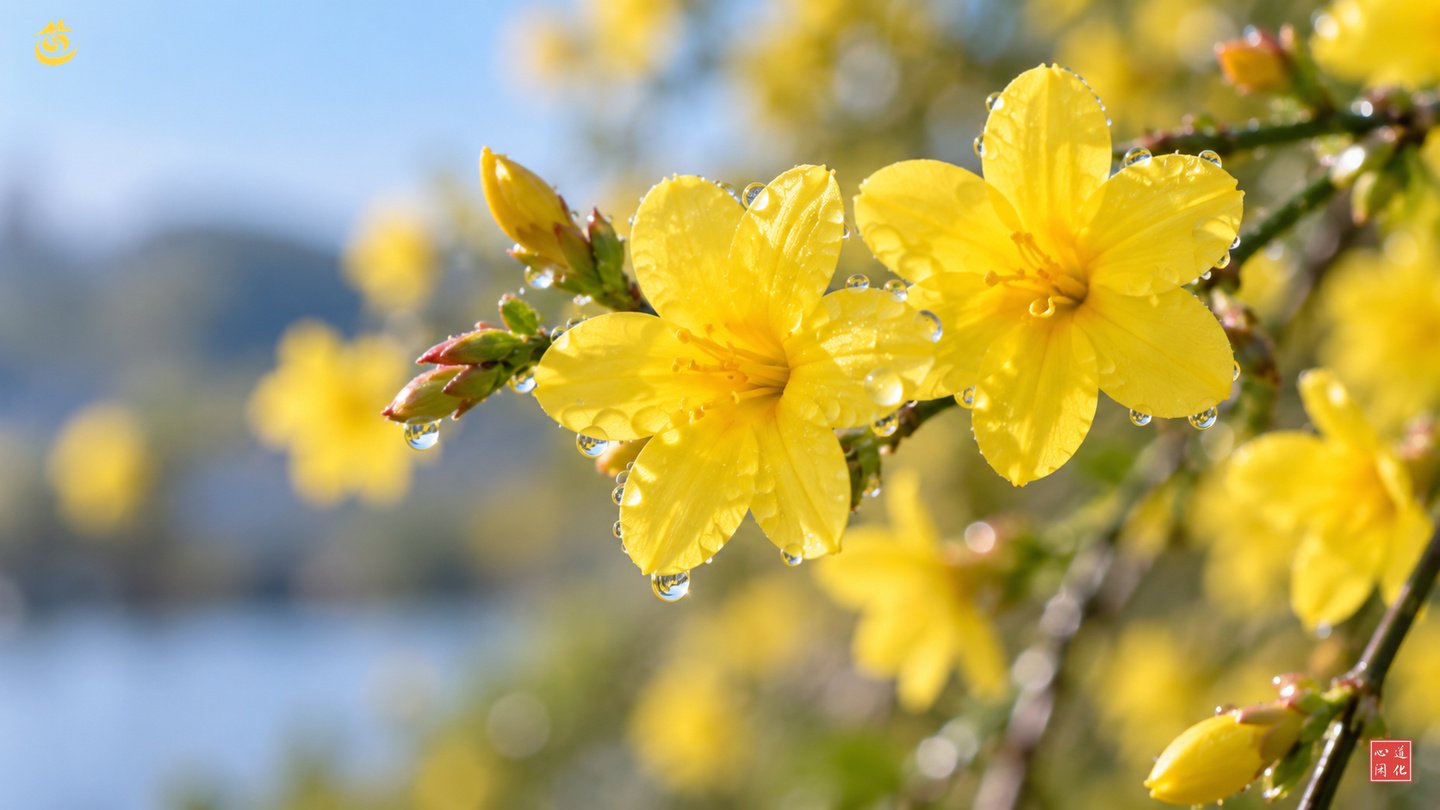
《自然》
谁人时间比谁少,五十亿人一块表;
朝露晶莹暮无影,昨日少年今日老。
未懂竹马弄青梅,蓦地青春远去了;
隔窗静坐想花容,惯看斜风卷阵鸟。
红花已先黄叶去,唯有青山依旧好;
逍遥之道无秘方,只是此心无机巧。
YZ.2020.7.24
Liezi's Cosmogony
13. Liezi's Cosmogony
Originally published by Yang Zi, Daozang Yanjiu, 2020-08-16
Now and then a reader leaves a message in the back office asking to see my translations of the Daozang (Daoist Canon). Today I answer uniformly. The Daozang (Daoist Canon) is vast and miscellaneous; over twenty years and more I have used up every hour I could possibly find, and have only skimmed through it once; the parts I truly took pains to memorize and to read repeatedly and closely are only a very small fraction. Since I have posted related content on the Daoist cosmogony before (Heguanzi, Wenzi, Kangcangzi, and the like), today, on the same topic, I send an excerpt from the relevant chapters of the Liezi. As usual, the blue type (or kai script) is the original text; the black type is my personal understanding; the red type is key reminders. Fellow practitioners who dislike classical Chinese may skip the blue characters and go straight to the modern Chinese — but please remember, only the original text is the classic; once explained in the vernacular it is not necessarily accurate.
Liezi, surnamed Lie, given name Yukou, was a man of the state of Zheng of the Warring States period (today's Zhengzhou, Henan), one of the representative figures of the Daoist school. The Liezi, also known as the Chongxu Zhenjing, is one of the Daoist Four True Scriptures of the Four Masters. Quite a few people ask where to begin reading the Daoist books; for the beginner it is fairly suitable to start from the Daodejing and the Four True Scriptures of the Four Masters, namely:
Laozi — Daode Zhenjing
Wenzi — Tongxuan Zhenjing
Zhuangzi — Nanhua Zhenjing
Liezi — Chongxu Zhenjing
Gengsangzi — Dongling Zhenjing
Tian Rui, Part One
Master Liezi lived in Putian of Zheng, and for forty years no one knew him. The ruler of the state, the high ministers and grand masters looked upon him just as upon the common crowd.
"Master Liezi," rendered into the modern tongue, is "Mr. Liezi." Zi was the respectful title scholars of old used for a teacher, as in Kongzi, Zengzi, Zhuangzi, Mozi, Han Feizi, and so on. Liezi lived in Putian of the state of Zheng (today's Zhengzhou, Henan), and for forty years no one knew him. The lofty men of old were generally like this: unknown for decades, unappreciated and ununderstood by society all their lives, living in the world of their own spirit, at peace in poverty and joyful in the Dao, free and unfettered. The ruler of the state, the ministers and grandees — the upper classes — looked upon Liezi just as upon the common folk. The ancient records have it that Liezi was a scrawny stick of a man whom a gust of wind could blow away; Zhuangzi said of Liezi that "he rode the wind and went his way, light and skillful" (Zhuangzi, "Xiaoyao You"). What Liezi driving the wind looked like, we today can only imagine.
The state was short of food, and he was about to move to Wei. His disciples said: "Master, you go with no date of return; may your disciples venture a request — what will you use to teach us? Has the Master not heard the words of Huqiu Zilin?" Master Liezi said with a smile: "What has Master Hu ever said? Even so, my master once spoke with Bohun Maoren, and I heard it at the side; let me try telling it to you.
"The state was short of food" means a famine had struck Zheng and there was not enough to eat; "about to move to Wei" means Liezi was going to the state of Wei. His disciples asked him: "Master, on this journey there is no date of return. We disciples venture to ask you: have you nothing to teach us? What, after all, is your master Huqiu Zilin's doctrine?" This disciple was extremely clever: seeing Liezi about to leave, he made haste to beg for the true scripture. He asked whether Liezi had anything to say; if Liezi had nothing to say, then let what the master's master had said be passed on to them as well. This is a very wise way of asking instruction. A teacher may say there is nothing in his belly to say, may say he does not understand; but he cannot say that his own master transmitted nothing to him.
Liezi, however, would have none of it. He said: "Where has Huqiu Zilin ever said anything at all?" But, thinking it over, he added a little: "Though he transmitted no doctrine to me directly, my master once had an exchange with Bohun Maoren, and I overheard it at the side — now I shall tell it to you." This is Liezi's humility, and it is also his wisdom.
His words were: there is that which is born and that which is unborn; there is that which is transformed and that which remains untransformed. --- It is yin and yang, it is the four seasons; that which is not born stands alone, enduring; that which does not transform goes and comes again. The going and coming at their edges can never be brought to an end; the standing-alone of its way can never be exhausted.
Liezi, quoting his master Huqiu Zilin, divides this world — a simple dichotomy: the one is the Constant (hengwu), the other the Dependent (congwu). (Hengwu and congwu are modern names I have coined, following Liezi's meaning.) The Constant is what is independent and eternal, generating other things without being governed by them — it carries an absolute sense. The Dependent is what is dependent and temporary, generated by the Constant and ruled by the laws of the Dao. If that is too abstract to express, we can put it more simply and plainly: everything in the universe can be divided into two parts — mother and children. (Note: this mother is the ultimate one, a mother in the absolute sense — not the mother born of a grandmother, but a formless mother, an absolute concept.) This mother is the Dao. The Dao is the Constant: eternally unchanging, of inborn prior existence — "born before heaven and earth" — existing before heaven and earth were formed; absolute in meaning too — "the root of heaven and earth"; and eternal and dynamically reciprocal — "independent and unchanging, revolving without pause" (Laozi, Daodejing). The other kind of existence over against the great mother Dao is the children — the ten thousand things. "The Dao gives birth to One; One gives birth to Two; Two gives birth to Three; Three gives birth to the ten thousand things" — in the last reckoning, this is "the Dao gives birth to the ten thousand things." Here again the Dao is formless and shapeless; those with form and shape are called the ten thousand things — "that which has form is born from that which has no form."
This thought of Liezi is the same as Laozi's. The Daoist school, say what you will, is just this simple. Those seekers who have strayed onto the wrong path love to make things abstruse and lofty, forever saying things nobody can understand, as if to seem very formidable. Whenever I see people playing at mystery, talking nonsense in technical jargon to fool the world — whether to catch the eye or to win the worship of fools — I feel an inexpressible absurdity and desolation. When Laozi spoke of the Dao, one sentence made it plain: "the great Dao is utterly simple." Yet over this one word, Dao, we have talked for several thousand years and still do not understand it; dynasty after dynasty, who knows how many have used it to bamboozle, and how many have been bamboozled. "Using it daily without knowing it" is the ordinary relation of the world to the Dao. In this respect, certain professional Daoists, or researchers engaged in the study of Daoism, bear a certain professional responsibility — for they have gone against Laozi's original intent and complicated simple questions.
---
Master Liezi said: "Of old the sages took yin and yang to unite and govern heaven and earth. That which has form is born from the formless — whence then were heaven and earth born?
This passage is the core of Liezi's cosmogony. Liezi first names the two opposing cosmic forces of the Daoist school: yin and yang. The two forces of yin and yang unite and hold heaven and earth. Where there is day there is night; where there is cold there is heat; where there is up there is down — and so on: the two forces act upon each other, push each other round, and govern the workings of heaven and earth.
Of all that exists in the universe, every existence with form is produced from something formless. On this point Liezi's view is highly consonant with Laozi's — it is Laozi's view repeated. Laozi said: "The ten thousand things under heaven are born from being; being is born from nonbeing." Next, Liezi asks:
"Whence then were heaven and earth born?"
Since the ten thousand things of heaven and earth are so — things born from being, being born from nonbeing — then how were heaven and earth, how was the universe, produced? This is humankind's pondering and questioning of the universe? Of course, with Liezi this is thinking and questioning at the philosophical level. In China this is called "participating with heaven and earth" questioning. Carried to a stronger pitch, such questioning becomes a calling-to-account. Take Qu Yuan. On the road of his banishment, heartsore and stifled, he saw in a cave the carved inscriptions and murals left by the ancients; inspired, he began to ask, and in one long string he posed 172 questions to heaven above, to pour out the confusion in his heart, among them some ponderings on the universe and nature: / At the remotest origin, who transmitted the tale? (In the remotest beginning, who first passed on the Dao?)
Above and below not yet formed, by what is it to be traced? (Before heaven and earth took form, by what could one examine it?)
Dark and bright wrapped in gloom, who could exhaust it? (All one chaos and murk — who could fathom its source?)
Vast winging, image alone — how is it to be known? (The primal mist unopened — how was it to be apprehended?)
Bright, bright; dark, dark — how were these periods distinguished? (Day bright, night dark — how is time divided?)
Yin and yang thrice conjoined — which is the root, which the transformation? (Yin and yang joined in harmony — where is the origin? And how does it transform and beget?) (Chuci, Tian Wen)
These questions were in fact Qu Yuan's calling-to-account of heaven; but because the ancients so revered nature, none dared call it a calling-to-account of heaven, and so Qu Yuan's poem is called Tian Wen and not Wen Tian. (A saying of Liu Xiang of the Han)
In the opening of my Quyuan Fu I said:
In the forbidden chamber, the high tower — how many questions were put to heaven?
What conscience exacted, the spirits know me.
It came of the mystery of the celestial signs; as I set brush to paper, my heart was full of awe for the universe and for nature.
A digression. Of Qu Yuan's works, the one people know best is the Li Sao, the classic of heartsore literature, the work of an angry young man. From the Daoist point of view, the Tian Wen is the one that most lifts a person's power of thought. The stifled Qu Yuan could not work out why fate should be so unjust, and so, in all sorts of wild imaginings, he began to question the blue heavens. The documents show that he gathered up inscriptions that were already there upon the wall — not an original creation; but I feel that even his ordering of other people's work is remarkable, else we would never see the thinking of that age about the universe and nature. On the Tian Wen, later opinions have always divided. Within the last hundred years, Hu Shi's assessment of it is the most negative. He said:
"The Tian Wen is incoherent in sense, low in insight, and wholly without literary value; we may conclude that this piece was patched together by later hands." (Hu Shi, Tan Chuci)
Hu Shi is plainly rather arbitrary: whatever he thinks good is Qu Yuan's, and whatever he thinks bad is patched together by later hands. This is the common ailment of famous men's overconfidence. In fact a fair part of what the great writers and great poets wrote is quite ordinary; a few classic essays or poems are enough to make them masters. In scholarship, as in a court of law, one speaks by evidence. Many celebrities made their names by talking nonsense, and by talking nonsense had their names ruined too. And this remark shows that he never understood the Tian Wen — which is not strange, for he had "no affinity with monks and Daoists": he rejected the Buddha and the Dao, and that decided that he could never see through to the bottom of Chinese philosophy. That is why, when Hu Shi wrote his Zhongguo Zhexue Shi Gangyao, he wrote only the first half and could get no further. Mr. Liang Shuming held it was because "he could find no way into Buddhism, and as for the Chan school of Buddhism he could not even set pen to paper" — that is, that he did not understand the principles of Buddhism. And Huang Kan, a disciple of his scholarly rival Zhang Taiyan, said in the classroom of Central University: "Of old Xie Lingyun was Director of the Palace Library; today Hu Shi may be called a 'Director of Composition.'" — mocking Hu Shi's Zhongguo Zhexue Shi Gangyao as a eunuch's work, missing its lower half.
When famous men take a blow, it is mostly because of overpraise. When a person's scholarship cannot match the fame and position, a beating is the probable event. Hu Shi is a typical example. His own cultivation and quality are in fact very fine, and his scholarly method is quite practical; above all, his ardent championing of the spirit of liberty is out of date neither in the China of his time nor now. But his name was too great: his scholarly powers could not bear the honors he had received, and so came the suspicion of overpraise. The result of excessive praise is death by lauding — intentional or not, it is enormously destructive. So having no one to laud you, no one to praise you, is not necessarily a bad thing.
By comparison, Mr. Lu Xun's assessment of the Tian Wen is relatively fair:
"Doubting from the remotest origin down to the smallest trivia of the hundred things, speaking without dread of what none before him had dared to say." (Lu Xun, Moluo Shili Shuo)
Lu Xun still gave his affirmation to Qu Yuan's spirit of doubt.
Would that famous people spoke with a little more caution. Otherwise the consequences can be serious. / Back then, Jilu, a disciple of Confucius, asked Confucius about death, / saying: "May I ask about death?" He said: "Not yet understanding life, how could you understand death?" (Analects, "Xianjin")
That Confucius himself did not know the matter of death — really, it is nothing. No one but the Yellow Emperor was "born with numinous power, able to speak while yet in swaddling clothes" (Sima Qian, Shiji). Not knowing is no fault; one can study, one can organize a discussion. Perhaps Confucius was too actively engaged with this world to spare a thought for questions so unpractical, and so he snapped at that disciple: "When you have not yet sorted out the question of life, how can you know the matter of death?" This one sentence, with the other — "revere ghosts and spirits, but keep them at a distance" — tied off the later Confucian school's road in philosophy and set a period at the end of it. So the Confucians of every dynasty, exhausting all the thinking of their lives, struggled over the question of "life," and could rarely achieve any transcendence or sublimation of thought. Speaking academically, Confucian learning can at most pass for ethics; it cannot be called philosophy in the strict sense, let alone high philosophy. So although Confucius Institutes stand all over the world, Western philosophy has never granted Confucian philosophy a decent philosophical recognition — and it has its grounds.
Even now we have plenty of parents and teachers who, through so-called practical education, fence in the thinking of children and students: "When the exam scores will not rise — indulging in wild thoughts about questions that have no answers!"
In this world there is no more dreadful mode of education than the castration of thought.
Hence it is said: there was Taiyi, there was Taichu, there was Taishi, there was Taisu. Taiyi is when qi was not yet to be seen; Taichu is the beginning of qi; Taishi is the beginning of form; Taisu is the beginning of substance.
Next, Liezi tells of the process by which the universe was generated, which can be divided into the following four stages: Taichu, Taiyi, Taishi, Taisu. The state of each stage is as in the table below:
Stage | Taichu | Taiyi | Taishi | Taisu
Characteristic | qi not yet seen | the beginning of qi | the beginning of form | the beginning of substance
From the table above one can see that the formation of the universe unfolds along the order of production of the three factors qi, form, and substance. At the start there was no qi; before qi, it was called Taichu; then there was qi, and it was called Taiyi; then there was shape, called Taishi; finally there was substance, called Taisu.
When qi, form, and substance were all present but not yet separated from one another, it was called hunlun. Hunlun means that the ten thousand things of the universe were all mingled together and not yet separated. Look at it and it cannot be seen; listen to it and it cannot be heard; feel for it and it cannot be got; hence it is called Yi.
Before the three factors qi, form, and substance had separated, it was called hunlun. The meaning of hunlun is the state in which all the things of the universe are mingled together, not yet separated. Laozi said: "look at it and it is not seen — it is called yi; listen to it and it is not heard — it is called xi; feel for it and it is not grasped — it is called wei" — what he speaks of is the subtlety of the Dao: the state that cannot be seen is called yi, the state that cannot be heard is called xi, the state that cannot be touched is called wei. These three characteristics joined together are the form of the great Dao; Laozi called this state "huanghu," dim and indistinct.
The reason the Daodejing is the classic of classics is, besides the breadth and depth of Laozi's doctrine of the Dao, the consummate fineness of its language. How beautiful the Daoist language is — read the Laozi and the Zhuangzi closely and you will taste it. And best of all without a translation: go to the original. Not understanding at once is all right; read it again and again, and when you suddenly grasp what Laozi probably meant, the sublimation of thought is transcendent. When one is sorely vexed and cannot get free, go read the Zhuangzi: whatever the obstacle, there is nothing that cannot be got past; that open-heartedness and free roaming are a qualitative change of level. I do not know what others feel, but when I read the Daoist books — preserving, mind you, the dignity of a lady, so that I cannot slap the table and cry "Bravo!" — there are nights when I truly cannot help such madness and intoxication as "the hands dancing and the feet stamping." The joy of reading lies wholly in what cannot be described.
Coming back to the universe's "huanghu" and "hunlun" state — Laozi's description of this state is a marvel: "above it is not bright, below it is not dark; on and on, it cannot be named." Above, not bright; below, not dark; blurry and hazy, dim and muddled — this is the universe's "Taichu" state. Though this earliest state cannot be seen, cannot be heard, cannot be touched, we know it exists; this blurred haze is a most primal, most innocent beauty, which the heart can traverse time and space to perceive. This ethereal emptiness is the highest state of Chinese philosophy, for which the Chinese have a wonderfully concrete word: the metaphysical. Thought leads everything, feeling above all, and the feelings of the Chinese are as subtle as their thought. The most treasured, most beautiful feeling of people is mostly the first stirring of the heart: the other person has really said nothing, and the two have really done nothing, and yet one senses an unaccustomed telepathy of hearts — only the heart can feel that kind of stir. In the Jin Ping Mei there is an amorous lyric, "Zhegui Ling", describing the dim, half-real state of love's first stirring — great fun:
I see her with flowers worn aslant upon her hair; on her crimson lips no rouge is put on, and yet it seems that rouge is put on. The other day we met: there seemed some secret liking, and yet no secret liking was seen. I wished for her consent — yet when had she ever given it? She seems to put him off, but is putting no one off at all. --- (Ming, Lanling Xiaoxiao Sheng, Jin Ping Mei)
Whenever you cannot tell whether you love someone, this description can serve as a measure. This flickering half-light, this half-yielding, half-refusing, this neither-right-nor-left, this restless sitting and lying — that is the Chinese lovesickness, at pretty nearly the point of giving one's life for the other. But a Westerner could not understand it: a Westerner, unless it is said outright, "I love you," will not understand or be convinced. This is a great difference between East and West. The reserve of Chinese feeling comes from the reserve of Chinese thought: said too plain and transparent, it loses its savor. Shen Fu, in his Fusheng Liuji, tells of his wife Chen Yun pushing another woman into his arms:
Yun laughingly took Suyun's arm and set her in my lap, saying: "Please, feel away, and be merry." I said with a laugh: "You are no reader of hearts — feeling about must lie between intention and non-intention; to clasp and probe wildly is the doing of a farmyard lout."
Yun laughingly took Suyun's arm, pushed her into my lap, and said: "Please, feel about, and enjoy yourself!" I said with a laugh: "You are no reader of hearts. Feeling about lies between intention and non-intention; to embrace and explore wildly is the doing of a farmyard lout!"
That "between intention and non-intention" kind of half-real, half-imaginary vagueness, both there and not there, together with the shy awkwardness of half-yielding, half-refusing — that is the Chinese heart's most stirring beauty. Mr. Lin Yutang, having read the Fusheng Liuji, praised the author's wife without stint; he said:
"Yun, I think, is the most lovable woman in Chinese literature."
The pure innocence of two hearts delighting in each other is intangible — and yet it is real, solid beauty. So when people say the feeling one can never forget for a lifetime is one's first love, there is reason in it. In thought as in feeling, what the Chinese prize most is the communion of hearts, the warmth within. As the saying goes:
No bitterness is bitterer than parting far away; no joy is happier than hearts that know each other.
The pity is that the marriage pattern of modern society has become marriage by conditions, not the supremacy of feeling. Before the first meeting of a blind date, the man and woman have already weighed the non-romantic conditions — house, car, savings, and so on. How much love at first sight, how much longing of hearts, there can be inside a marriage of conditions, nobody knows.
The universe's primal state, like the primal state of feeling, is blurred and beautiful.
What Liezi says is the same as Laozi's view: "look and it is not seen; listen and it is not heard; feel for it and it is not got." See it, and it cannot be seen; hear it, and it cannot be heard; seek it, and it cannot be found — therefore it is called Yi. Chinese philosophical thought takes Yi as its base; everything issues from Yi. It is with reason that the Chinese regard the Yijing as the first of all classics, the root of philosophy.
Yi is formless and without bounds (lie4: boundary); Yi through its changes became One; One changed and became Seven; Seven changed and became Nine. Nine changes — the limit; and then it turned and changed again into One. One is the beginning of the change of form. The clear and light rose up to become heaven; the turbid and heavy sank down to become earth; the blending, harmonious qi became man; thus heaven and earth held the essence within them, and the ten thousand things were born and transformed."
Yi is that earliest state of the void, formless and without bounds; the greatest character of Yi is "change" — what the Yijing speaks of is the law of change. How does it change? Liezi holds that Yi first changed from the hunlun state into One; One changed into Seven; Seven changed into Nine. In Chinese culture Nine is the greatest number — among single digits there is none greater — so to change as far as Nine is the limit, and it turns back and changes into One: what the Chinese often say, "nine nines return to one," is just this. Yi is formless and shapeless; when it first changed into One, this One was the beginning of the change of form — shape began. First it divided into the two forms, clear and turbid: the clear and light rose up as heaven, the heavy and turbid sank down as earth, and the two blended and harmonized and begat man. The Chinese have always honored heaven as father and earth as mother, holding that heaven and earth held the essence within them and transformed and begat the ten thousand things. For the first ten years and more of reading the Daoist books, I always thought this talk very abstruse and without any scientific sense; but as the years went by, with the observation and pondering of many things, I came to understand and realize the scientific content and the philosophical height of this statement.
As for the cosmologies in the Daozang (Daoist Canon), I have posted some at intervals before — Zhuangzi, Liezi, Yang Zhu, Wenzi, Kangcangzi, and so on. The cosmologies differ in small ways, but the general sense does not stray: all are basically the result of the two forces yin and yang; and the somewhat deeper ones add a coefficient, which the Daoists call qing, feeling — or the harmonious blending of yin and yang.
In those first years of reading the Daozang (Daoist Canon), I felt that China's cosmogony was even more far-fetched than the Western "big bang" theory. However the Western scientific world may prove that the universe was born of a big bang, and however many scholars the world over revere it as truth, I have never been able to become fully persuaded that this theory is absolutely correct. Whenever I put my reading notes on the cosmogonies in order and the materials pile up — Western myths, religions in which a god created the universe and life, or Chinese tales of Pangu cleaving heaven and earth and creating the world — I always feel a kind of eerie transcendence and room for imagination. I do not know how the universe was actually produced; I simply cannot bring myself to accept entirely that it was the explosion of something-or-other that gave birth to everything. Whenever I see this theory being exalted, two images come to me:
One is the scene of old-style popcorn coming out of the pot: the popcorn man takes the dan-ding furnace, heated to the extreme, and puts it into a cylindrical drum, with a long sack trailing behind; one stamp of the foot — Bang! — and the fragrance of corn at once fills the air, and all the loveliness of the world appears.
The other image the big bang theory gives me is the birth of Sun Wukong in the Xiyou Ji — Boom! — the stone splits open, and out of the world's void comes a monkey. Every time I imagine this, I cover my mouth and laugh.
For many years I have rather approved of what the philosopher Russell said: above science is philosophy, and above philosophy is religion. That is the general notion of the Western world. Our own age seems somewhat odd: whatever the thing may be, if it is said to be scientific, it is worshipped unreflectingly as truth; meanwhile philosophy is thought an ethereal, useless discipline — study it or not, either way — and having mastered a few Marxist-Leninist terms one fancies oneself a match for all under heaven, feeling like a philosopher, everywhere instructing the young in this and that, all speaking from the same script, like the evening news broadcast, even the vocabulary uniform; there is nothing at all fresh or creative in their criticism of people. Being leaders, one has to listen anyway — especially inside the system: certain leaders truly need to read a little philosophy beyond Marx and Lenin. Materialism, materialism — look what this society has been "materialized" into for you: could you not "idealize" just a little, and show some care for the souls of yourselves and the next generation? Everyone says this society has serious problems, yet no one goes to reflect on our mainstream values. Whenever I meet someone putting on airs and lecturing me on how to establish a materialist worldview and methodology, educating me on how to distinguish principal from secondary contradictions and so on, I am on the edge of collapse, like Sun Wukong hearing the Tang monk recite the tightening-fillet spell; only one word surfaces in my head: "boring"; and at the same time I unconsciously clap my hand over my mouth — perhaps to stop myself from arguing by accident, perhaps for fear of laughing my teeth off.
We have another peculiarity: we set religion on a par with feudal superstition — above all the native religion our own ancestors left behind (Daoism, for example): it is as if not despising our nation's only religion were insufficiently scientific. This notion history will slowly correct, but it will take the effort of at least two or three generations, perhaps longer.
Master Liezi said: "Heaven and earth have not the whole of merit; the sage has not the whole of power; the ten thousand things have not the whole of use.
In this passage Master Liezi sets out, rather concretely and in detail, the Dao's "non-action, and nothing left undone." In Daoist philosophy the function of the Dao is somewhat like the God of the West — omnipotent, all-able. The difference between the Dao and God is that God is active and interventionist, personalized in Western belief, with form and shape: he sent his own son into the world, born lowly in a manger, no different from ordinary people — so people can form a direct image, and such faith is comparatively solid. The Chinese Dao, though its function is the same as God's, is formless and shapeless: anyone whose powers of imagination run a little weak cannot feel the Dao's existence — hence "using it daily without knowing it": the Dao works every moment, yet people do not know it — just as every Chinese person believes in the Dao without knowing it; many say they have no faith. And herein lies the greatness of the Dao: it claims no credit. Liezi describes the Dao's "power of non-action": heaven and earth, the sage, and the ten thousand things, though all very mighty, each with its own function — none but the Dao is omnipotent. "Heaven and earth have not the whole of merit; the sage has not the whole of power; the ten thousand things have not the whole of use": heaven and earth have not universal efficacy, the sage is not omnipotent, and no thing has complete function. Each keeps its own office, that is all.
"Hence the office of heaven is to beget and cover; the office of earth is to give form and bear; the office of the sage is to teach and transform; the office of things is to be what is fitting for them." The office of heaven is to beget and shelter the living; the office of earth is to bear the ten thousand things; the office of the sage is to teach and transform society; the office of the ten thousand things is to act according to their several natures. "Yet heaven has its shortcomings and earth its strengths; the sage has what he cannot, and things have what they run through." Heaven, earth, man, and the ten thousand things are none of them perfect and complete: heaven has its shortcomings, earth its strengths; even the sage is not wholly perfect. Their functions cannot be exchanged — each has its own function.
But all these several factors obey together the governance of the Dao, and in each of them two forces interact. Laozi says "the great Dao is utterly simple": put plainly — the way of heaven and earth is nothing but yin and yang; the sage's teaching nothing but humaneness and righteousness; the character of the ten thousand things nothing but soft and hard. Each keeps to its own office and does not leave its place — that is, no going out of position. In football, go offside and the referee blows his whistle. In the society where people live together, going out of position is likewise an extremely serious matter. Look at those whose official careers rise cloud-high: walking beside the leader, their step is eager, but the measure is kept with great nicety — the foot put out will never pass the leader's toe; always half a step short with the front foot, half a step short with the back, as if measured — precise as can be. In doing things they have views of their own, but they would never step out of position to make decisions in the leader's place. Such people are past masters of the abstruse philosophy of officialdom. Nature's not-going-out-of-position is without intent; people imitating nature do it with intent. Imitate it well, and the strength of the outside world comes of itself; imitate it badly, and one invites one's own humiliation. Examples of patting the horse and getting the hoof are everywhere.
Whether life, form, sound, color, or flavor — all these things with form: wherever they exist, there exists the formless something that produces them. Even when they no longer exist, the formless something that produced them still exists. This speaks of the formlessness of the Dao, and of the Dao's leaving nothing undone. To put it by analogy: it is like a person's body and soul. The body is, and the soul is; the body is no more, and the soul still is. Soul is, whatever the life or death — only we cannot see or touch it. So it is with the great Dao: a thing exists, and its "Dao" exists; and on the day the thing exists no more, its "Dao" still exists.
Mr. Feng Youlan, in the spirit of an heir of the li school, once developed that school; in his book Xin Lixue he gave an analogy: the li of the bicycle exists whether the bicycle exists or not. I read it again and again, and the li the li scholars speak of is in essence just the Dao. Zhu Xi lectured all his life, and named his metaphysical theory Dao or li; his successors, to draw a clear boundary with the Dao, would say only that Zhu Xi's system was called li-xue, the study of li, and not Dao-xue, the study of the Dao — and at the same time began to attack the Daoist and Buddhist schools as heresy. It is one of the strange flowers in the history of Chinese philosophy.
This sort of denunciation of other schools by the Song Confucians and the li scholars of later ages went on until the Great Qing fell. Then Marxism-Leninism arrived and was formally enthroned as the official philosophy, and the Confucians, Buddhists, Daoists, Legalists, Mohists — all fell silent, meekly holding their peace for a hundred years. Truly, "a monk from outside chants the sutras best!" Not only monks and Dharma masters and Christian pastors, but Marx, Engels, Lenin, and Stalin as well — whatever they say seems to be holy writ, all of it scripture; only what our own ancestors said is too old, too rustic, too unscientific. For these phenomena, a few scholars of the Republican era who had a grounding in Western learning and social influence bear some historical responsibility — for instance the angry young man of those days, Liang Qichao. When his indignation reached the pitch of madness he was enormously gifted: his essays rolled forward with the force of mountains and seas — Xinmin Shuo, "On Progress," for instance — and influenced a cohort of hot-blooded youth of the New Democratic Revolution, who became the wave-riders of that age. To bring down the old system they truly gave it their all. Of the national religion he once said:
"That in Chinese history there should ever have been such a thing as Daoism is truly a most shameful affair."
Hu Shi, for his part, believed he had inherited the family teaching of the Zhu-li tradition; he said:
"When I was small I studied Zhu Xi's Xiaoxue with my fourth uncle — that was a leftover of the li school; on the gates of my fourth uncle's house and of my own were pasted strips reading 'no affinity with monks and Daoists' — the signboard of a li-school family." (Hu Shi Zishu)
Back to the late Qing and the Republican era. In that age, a portion of the Chinese truly loathed everything of their own nation. Everything Western was better. And that cohort was also the last generation of influential intellectuals. As the Taiwan historian (and diplomat) Jiang Tingfu said, theirs was the last generation of intellectuals to influence China. From how things now stand, he was right. After that generation, the influence of intellectuals upon the Chinese grew less and less. Those who influence China are no longer men of letters, but: politicians, merchants, entertainers — even foreigners.
"Therefore there is that which lives, and that which gives life to the living; that which has form, and that which forms the formed; that which sounds, and that which sounds the sounding; --- all these are the offices of non-action."
What this passage speaks of is still the relation of the Dao and the ten thousand things — the relation of the Constant and the Dependent, of mother and children. The broad sense is that the ten thousand things can be touched and seen, while the Dao that begets them cannot be seen; the ten thousand things are born and perish, while the Dao has no birth or death: the Dao is the eternal existence — formless and shapeless, soundless and signless, yet all-able. This is the non-action of the Dao. This is the core of the Daoist teaching: whatever the classic, ten thousand statements do not stray from this root. As the Daoist classic Chang Qingjing Jing says at its opening:
The great Dao has no form; it gave birth to heaven and earth; the great Dao has no feeling; it sets the sun and moon in motion; the great Dao has no name; it rears and sustains the ten thousand things; I do not know its name; compelled, I name it Dao. (Taishang Laojun Shuo Chang Qingjing Jing)
By the Daoist account, only the universe's primal power, the Dao, is omnipotent; and this omnipotence is manifested in the Dao's "office of non-action": according with every natural bent, non-action and yet nothing left undone. How remarkable, then, is the Dao? Liezi uses a passage of parallel clauses, brilliant and beautiful, to describe it — for Liezi's prose is too good, sweeping like a rainbow, and the sense is plain enough besides, so I shall neither translate nor explain, but quote it straight out. A passage one never tires of reading, showing the function of the Dao:
It can be yin and can be yang; it can be soft and can be hard; it can be short and can be long; it can be round and can be square; it can give life and can give death; can make heat and make cool; can make float and make sink; can sound the gong note and the shang note; can come out and go under; can be dark and be yellow; can be sweet and be bitter; can be rank and be fragrant. It knows nothing and can do nothing — and there is nothing it does not know, nothing it cannot do.
The Dao truly can do nothing, and nothing it cannot do; knows nothing, and nothing it does not know. This realm — only one who has lived it, I suppose, can taste it.
---It is too long; the excerpt must stop here for now.
As usual, I send you two Daoqing chants:
"Moonlight Says Nothing, Shining Ten Thousand Years"
Flowers fragrant in the garden, wind beyond the wall; the Daoist within the room, feeling beyond the world;
The wine of Zhongshan has made the crowd drunk — one drunkenness lasts a thousand days without waking.
The affair of flowers is nothing but bloom and fall; the moon's color nothing but cloud and clear;
When the whole world sings and dances in peace, there is no one not drunk in the dream.
Those who chase merit and fame are drunk at court; those who run after profit and emolument are drunk in the pavilion;
Those who enjoy the present are drunk on sound and beauty; those who grieve for a thousand ages are drunk on feeling.
The hidden dragon at the bottom of the deep follows its own nature; the white clouds in the sky let the world judge them;
The wild wind roars and passes in an instant; the moonlight, saying nothing, shines ten thousand years.
Fine flowers, they say, wilt soonest; good men, they say, do not live long;
Chilly rains and cold winds are with us through the four seasons; the lovely bright clouds are empty in a blink.
From heart to heart heaven and earth are far; on the long dark road a crane's shadow comes and goes;
One cooling powder from the household of the immortals, and toil and clinging are both forgot.
Sitting still in the high tower, keeping to the great Dao; sunk deep in the Daozang (Daoist Canon), few are the welcomes I pay;
I hear your heart too is a lonely one; dim and faint, we mourn the screen between us.
YZ.2020.1.29
"Nature"
Whose hours run shorter than whose? Five billion people, one watch among them;
The morning dew glistens; by evening it is gone; yesterday's boy is old today.
Not yet knowing the bamboo horse toying with green plums — and suddenly youth is gone forever;
Sitting quiet behind the window, thinking of the flower-face; watching, long used to it, the slanting wind roll its flocks of birds.
The red flowers have gone before the yellow leaves; only the green hills are still as good as ever;
The way of free roaming has no secret formula: it is only that this heart has no scheme in it.
YZ.2020.7.24