子虚无有说道玄(《周易》谦卦)
1、子虚无有说道玄(《周易》谦卦)
原创 杨子 道藏研究 2021-09-21

(说明:给新关注的朋友一点提示,本公众号文中楷体为古文,不习惯读古文的可直接跳过楷体字,一般都有翻译或过度处理,略过,不影响理解。)
掐指一算,该更新公众号了。
前几天上传了一篇日记,记录了我在石竹山的道教学院讲《传统养生学》的过程。第一次近距离接触专业道士们。年轻的小道士们很可爱,颠覆了以往那些低端电视剧中被埋汰的道士形象。上课和沟通过程很开心,也很有趣。于是想跟您介绍一下孩子们的良善和优秀,以及道门的风雅、纯朴和清静。但尝试多次文章一直传不上来,原因不明。班长说可能是因为图片上有道士们着装的原因吧。于是就算了。先不发了。一位朋友知道我在石竹山,问:“祈梦去了?”我说:“不是,此地无梦”。才知道,原来那是祈梦的地方。
时逢中秋,疫情原因,大家都窝居在家,各行其事。这样地一动不动,本是我的日常,所以也没什么不适应。照常地看书、弹琴、看云、静坐、发呆(存思)。
逢年过节,我喜欢做一些传统中医或道家美食。中医养生最讲时令,什么时节吃什么最合适,都有讲究,以前的文中,特别是在注译孙思邈、陶弘景、葛洪等人的著作时有多次介绍过,不再重复。道家养生,在辟谷法中提到过一些食品。

今年又做了一个传统食品,就是神仙胡麻饼。这是个传统的道家辟谷用食品。胡麻,就是芝麻。陶弘景说:“八谷之中,惟此为良,仙家作饭饵之,断谷长生”。而在《神农本草经》中的记载芝麻主治“伤中虚羸,补五内、益气力、长肌肉、填精益髓”。
另,葛洪对芝麻也有研究,他说芝麻“耐风湿,补衰老”。(葛洪《抱朴子》)
以及,李时珍也记载:“胡麻取油,以白者为胜,服食以黑者为良”( 李时珍《本草纲目》)
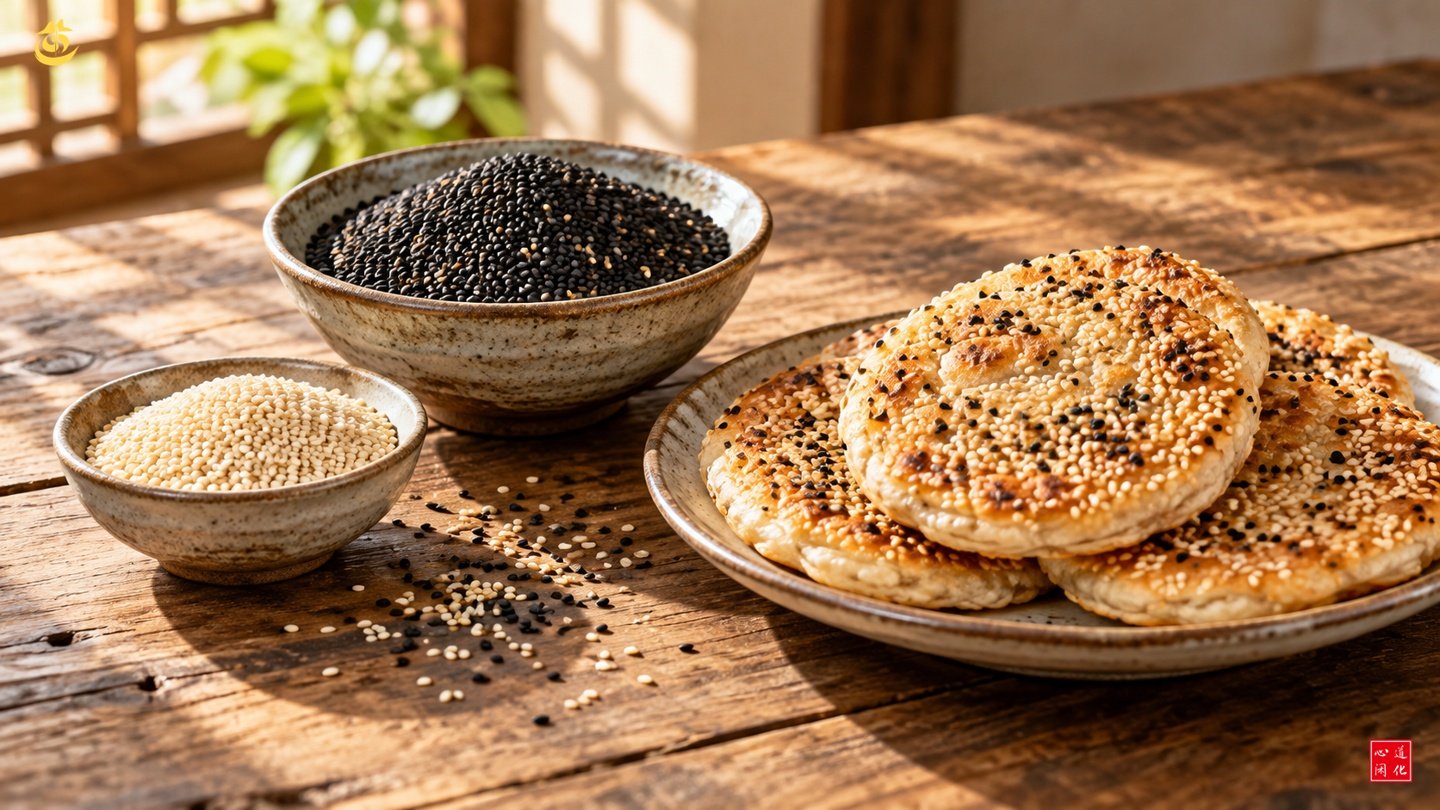
这说明,芝麻在古代是被当成药物来用的。据说常服芝麻可成仙。所以,芝麻是道门辟谷的重要材料之一。在《道藏》的辟谷文献中,黄精、茯苓、蜂蜜、芝麻等等,都是高频原材料。
芝麻有白色和黑色之分。如果需要补肾或乌发的,可用黑芝麻。中医理论,黑色入肾经,所以芝麻主治头晕耳鸣、腰膝酸软、须发早白等。同时,我们经常用的芝麻油,有“润肠”作用,即可以用来减肥,但肠胃不好、腹泻的人不宜多服。另外,芝麻油中,以豫东一带的“小磨香油”为上品,纯手工制作的最好,现在不知道还能不能买得到。我现在从网上买的拌凉菜用的“香油”就不香,总也吃不出小时候的味道来。
关于芝麻的食用与药用,美食家苏东坡研究的比较多。他还专门为胡麻饼作赋---《服胡麻饼赋》,很有趣。
苏轼养生最早用的并不是芝麻,而是单味茯苓。有一次他做梦,梦到道士告诉他“茯苓燥,当杂胡麻食之”,说茯苓太干了,要跟胡麻一起服用才好。于是他就问什么是胡麻?道士言:“脂麻是也”。于是他又去读《本草》等等,考证一番,确信胡麻、脂麻、油麻等等,统统指的是芝麻。因为《本草》中说芝麻“性与茯苓相宜”,他感觉到这个梦非比寻常,于是照着梦中道士方法开始服用。正好他弟弟苏辙刚好写了一篇《服茯苓赋》给他看,于是他就写了一篇《服胡麻赋》相和。
(注:苏轼的父亲苏洵给他们兄弟请的启蒙老师张易简是一位道士,所以他们都有较深的道缘,兄弟俩的文章也有超凡、飘逸之神韵,都是与道家思想有关。而且他们也都热衷道门的各种养生方法)

要我说,古人生活的真有情趣,吃什么都写出来,便是文化。想想我们现在,各种山珍海味,大吃大喝,除了个个吃成大肚腩,没见谁为哪一道美食赋上一首,以感恩万物的康养之情。所以有时我会感慨,我们的时代确实是在发展,但谈不上有质的进步。时代的进步,重要思想的进步,灵魂的升华、心量的扩大和境界的提高。
看一下苏轼的《服胡麻赋》:
我梦羽人,颀而长兮。惠而告我,药之良兮。(注:我梦到一个高个子道士,承蒙他告诉我好的药材啊)
乔松千尺,老不僵兮。流膏入土,龟蛇藏兮。得而食之,寿莫量兮。(注:天哪,服食茯苓居然可以“寿莫量兮”)
……然后他写芝麻的功效:
补填骨髓,流发肤兮。是身如云,我何居兮。长生不死,道之余兮。
(注:芝麻能滋润肠胃,填补骨髓,毛发皮肤都更有光泽。身体可以轻快如云,不知身居何处。这种长生不死之药,就长在路边)
哈哈,我自小是爱吃芝麻的,难怪我的头发黑,皮肤相比同龄人要好些。(呵呵)
由于之前文中提过我做“神仙胡麻饼”,有人留言问此饼的配方,我答应了有机会上传。今天就此分享给大家。
由于同事们本来自南北各地,我就做了各种口味的神仙饼,完胜一切月饼!配方及图片如下:
一味是椒盐味的:面粉、芝麻(想要饼好看点的用白芝麻,需要补肾的可用黑色的)、盐、小茴、五香粉、八角粉、千里香等;
一味是酥脆的,只是用鸡蛋和面,加点白糖。香料不必。这比较适合南方口味。
一味是中药口味的。那就根据体质灵活加减中药粉了。如果不懂中药的就不要自己乱加。实在想加,就用一些药食同源的中药才相对安全。比如需要升阳气的,可加些肉桂粉,需要美白皮肤的可加点白芷粉等等。方子不一。
这些看着卖相不太好的神仙胡麻饼,我前后忙乎了几天。不过大家说特别好吃,我格外的开心。
今年因疫情原因,只能很小范围的博饼。也有一位同事带了孩子来。小男孩子很帅,小手开局:一秀。然后大家轮着来,都是小奖,大奖迟迟不出来,于是现场就无法出现情绪高潮。
于是我就做郑重状教小朋友一个口诀:
天灵灵!地灵灵!太上老君急急如律令!

小朋友极聪明,一听就会了。只是他不好意思当众念叨。一局完了,小孩子自己离开会议室,到办公区自己在外面练习去了,一遍一遍地念口诀,一边念一边掷骰子。我们在会议室边吃边聊,听到小孩子在外面自言自语,都笑起来。还是孩子时代好啊!换了一个大人,一个人讲话,非被当成疯子不可。小孩子就显得可爱。可见,一个年龄段,就应该有一个年龄段的表现。这才是自然之道。
我提议大家再开一局。还是由小宝宝先开局。小朋友刚练过,念着口诀掷骰子。哗啦一下,状元插金花!大家一派欢呼!这才是过节嘛。
因为我在场,总是象老奶奶一样,唠叨他们吃垃圾食品,油炸食品、小龙虾、厚厚奶油的蛋糕、还有奶茶及各种加了色素和添加剂的饮料等等,我的天,这或许就是年轻的标志吧。我说:“就你们这饮料,给我一百块,让我喝下去,我也做不到”,同事们都笑,不辩,但该怎么喝还怎么喝。我在的话,大家不自在,于是先回去了。孩子们爱热闹,我爱清静,这下两相各宜。
回去,就想起闺蜜这几天来了厦门。她随领导来视察疫情,但我们彼此不能相见,连地主之谊也不能尽,就想派人去送我做的神仙饼,跟朋友显摆下我的厨艺。没想到管控严格,送也不能够。于是只在她忙完后煲电话粥,彼此看着同一片天,同一湾海,不能相见,却天南地北地闲聊到深夜。再次体味到,人生有一种相处,叫不必相见。

挂掉电话,睡意全无。拉开落地窗帘,满城灯光温柔,静谧安然。平躺,想用胎息法催眠,但又懒,不想用力气。于是改用《黄庭经》中的“内景存思法”来跟内脏诸神对话,问问它们是否都好。过节了嘛。
忽又想起前两年过中秋,我分别写了中秋道情发到了公众号,分别是:
2019年的中秋。原文如下:
李白曾说“举杯邀明月,对影成三人”,他和自己的影子、月亮加起来,一共三个人。我没有李白那么孤单,咱过中秋,有五个人,比他多了两个朋友,一个叫子虚,一个叫乌有。道情诗为:
《中秋》
时逢中秋夜,子虚来我家;
翻经正繁忙,乌有代端茶。
举杯邀明月,对影五仙霞;
腹中三万卷,从此不比花 。
莲子有心苦,花椒无意麻;
心上曾长茧,心上曾结痂。
孤中无虚意,静中有生涯;
灵魂自出窍,躯壳应繁华。
去年中秋,月亮还是比子虚和乌有来得早。
于是我又写道:
《中秋2》
又逢中秋夜,人在花下走;
天上一轮月,月下三杯酒。
一杯敬子虚,一杯敬乌有;
一杯满盈盈,彻夜为君留。
今年的中秋,打算怎么过的呢?明天再说吧。月亮升起来没有?子虚来了没?乌有来了没?我还要不要再邀请他们再一起过中秋?或再为他们写首道情?……
想着想着,渐渐意识模糊起来。
忽然,感觉到客厅的门开了,两个人走进来。我第一反应是,怎么没听到输入门禁密码的声音门就开了呢?在这个城市,没人知道我的密码呀!强盗高科技破解?楼下的保安呢?不是说这里有最好的保卫系统吗?物业费贼贵贼贵的,公摊费也高得离谱,过节怎么不加强保卫?怎么回事?想起来瞧瞧怎么回事,身子又很倦,动不了。看着两个影子直进卧室来。
我有点诧异。问道:“你们是谁?来做什么?我家里什么也没有,只有外面书柜那些书,是我最宝贝的财产。想拿都拿去吧,对面小房间的床下,有打包袋,自己随便拿,走时把门给我带上。”
一人说:你是神仙姐姐吧?我就是子虚,这位是乌有。
我吓一跳,想坐起来,但动不了。说:“子虚、乌有,在我们的文化中是不存在的,本是世人虚幻,我也是看了司马相如的《子虚赋》之后,才写着玩玩的,从未当真。你们从何而来?欲往何处?”
子虚:本无来处,亦无去处。感念你年年写道情记得我们,所以今年在月圆之前来看看你,以尽玄门虚无之情。
杨子:原来如此啊。那何时离去?
乌有:月圆之时
杨子:月圆之时,只是可以忽略不计的极微小、极微小的一瞬间,如何来得及?
子虚:看你还是俗人,总是操心自己无法操心的事。好好享受长长久久的月缺人生,何必思考那个绝对的状态。
杨子:从不爱多操心自己身心之外的事。
乌有:你今年可卜卦了?
杨子:闻说“知易者不卜”,懂《易经》的人从不占卜。我虽不懂《易》,但也不占卜。
乌有:咦?谦虚可不是你的特色吧。你一惯主张“良知”、“真诚”和“真性情”,为何自己却不说实话了?世人行诸事,乾坤必有知。你今天就卜卦了,为何不承认?
我不觉惭愧汗下。小时候一直接受的是“科学”教育,对于鬼神和占卜之说还有偏见,我是把《易经》和《道德经》一起当哲学书读的。小时候对星象学、堪舆学等等认知少,也曾人云亦云地认为算命、风水等都是“封建迷信”,后来渐渐体悟到《易经》中的科学是现代科学家远未破解的秘密。而人的命运、人生的奥秘、哲学的终极思考,似乎都在我们被打为封建迷信的那个虚无世界里。这样想着,就又沉入了思考。于是不语。这是真正的“灵魂出窍享清静,空留躯壳应繁华。”
子虚:你不是很健谈吗?无论是公众号里,还是课堂上,唠唠叨叨,没完没了,这会子,怎么不说了?
我心里嘀咕,这两家伙到底是谁呀?这个楼,层层保安,处处摄像头,戒备森严,他们怎么进来的,而且对我的情况还很了解,还自称是我笔下的虚幻人物。难道是鬼不成?是不是我沉溺于《道藏》太久,真的已成仙?
于是问道:“你们是神仙还是小鬼?”
乌有:修道之人,你哪儿那么多的分别心?你说说鬼和神有什么区别?

杨子:听说神仙住在天宫,小鬼住在地狱。行善的人是神命,做恶的人是鬼命。有神命的人会有福报,作恶的人会有恶报,甚至断子绝孙,而且会在地狱下油锅,受尽折磨,那些他在人间欺凌过的人都会找他算账。
子虚:人死之后,天上有个审判庭,在人死后会作出判决,决定此人的灵魂是上天宫还是下地狱,对此,你可相信?
杨子:深信不疑!而且我已规划十好几年了,想写本神话小说《天庭开审》,就是说说人死之后,灵魂要去哪里的故事,一个人的灵魂如何接受上天、大道最公正的审判。本来嘛,探索虚无,是道文化的精髓之一,也是人类的终极命题。
乌有:审判灵魂?有意思。就是“人死如灯灭”的观念,才让很多人生前肆无忌惮,无恶不作。你们那边如何对待已入土的人?
杨子:我们看人,生前没有绝对定论,直到断气,才会有“盖棺定论”之说。但也掺杂很多主观因素,只因心中对死者的情感不同。一般讲,三代表神,四代表鬼。于是在上坟祭奠方面也是有区别的。人在“呜呼哀哉”之后,传统的定位是“神三鬼四”,如果我们觉得一个人生前行善多多,就在叠纸钱时三张一捏;如果那个人生前刻薄寡恩,就叠成四张纸钱一捏……
子虚:哈哈哈,神为三,鬼为四。那人呢?人为什么?
杨子:不三不四呗。
子虚、乌有:哈哈哈……
我也忍不住笑起来。忽然想起两位客人还站着。于是说;“你们坐吧,坐在窗边看夜景,待会你们走时帮我拉上窗帘,关好门。我在培养睡眠情绪,要闭着眼睛跟你们聊。”
子虚:你刚才为什么沉默了很久,我很好奇,快说说,快说说。
杨子:我没有不讲话,只是刚才突然汗下,一时觉得奇怪。要知道,我自幼体寒之人,无论多热的天,从不出汗。热得脸红头痛,都不出汗的。刚才居然出汗,所以纳闷,走神了。
子虚:那很正常。岂不闻:“夫服药求汗,或有弗获;而愧情一集,涣然流离。(嵇康《养生论》)”,嵇康说的就是你这样的人吧。适当出汗对身体有益,但不会出汗的人,就算是服发汗药,也不一定出得来汗。五代十国的花蕊夫人,不会出汗,御医都给她服双倍的麻黄都没用。那是个冬暖夏凉的体质,万里挑一呢。象这样的人,吃药也不会出汗的,只有一种情况会出汗,那就是“愧情一集,涣然流离”,一旦心生惭愧,就会大汗淋漓。所以这样的人,说不了谎话。你出汗,说明你说谎了。
杨子:我从不说谎。因为我天生不聪明,说谎简单,圆谎太难,讲一句谎话要用十句谎话去周全。我说话从来是“竹筒倒豆子”,不知何时就透了实情,无地自容。还是实话实说的好。对了,你说的那个花蕊夫人,是写道情诗“好把身心清净处,角冠霞帔事希夷”那位吗?
乌有:别转移话题。世人的世故,就是遇到难题会“顾左右而言他”,好听一点叫城府深,不好听点,叫圆滑。这样的人鬼精鬼精的,最是爱耍小聪明,这样的人在利害面前,通常也最是无情。
杨子:冤枉啊!我是红尘最多情的人,我是红尘最重情的人,也是红尘中把真诚当成信仰的人。而且,自小读《道德经》的,“守拙”就已溶入到我的基因里了,我一直把聪明当成负面品质,唯恐自己变聪明呢。你这么说我,当心报应哈。
子虚:那你到底卜卦了没有?
杨子:没有。只是早上随手翻了一会《周易》看着玩玩,复习复习。我平时站在书柜边翻着玩,不一定拿出哪本书呢,不算是正式占卜吧。至少没这个意识。前一分钟翻到的卦,与后一分翻到的卦,都不一样,你说说看,到底哪个卦才算是今天的运气?
乌有:今天翻到了什么卦?
杨子:谦卦。
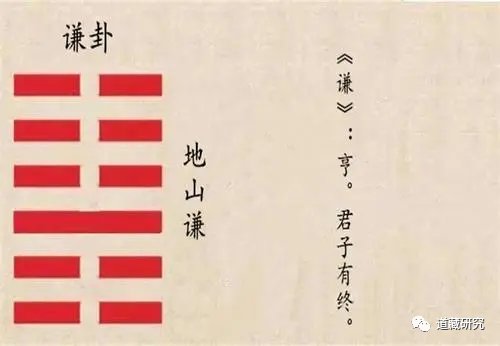
乌有:好运气!你要转运了。
杨子:不奢望。我只是埋头读经,潜心修行,只求心静,不问前程。我对生活早已没有抱怨。知足无忧。我与人生的种种苦难和红尘的世态炎凉早已讲和了。没什么牵挂,没什么烦恼,从没负过人,从来良知做事,真诚待人,也不欠谁,不畏惧什么,没有房贷,更没有很多房子在手上,担心未来房价下跌……
子虚:与骗过你的人、伤过你的人、负过你的人,统统讲和了?要说实话,要是人家得罪你,你怎么办?
我脱口而出:若是谁把我得罪,画个圈圈诅咒他!
于是三人哈哈大笑起来。我能清晰地感觉到身下的床垫弹簧在上下震动,象是启动了“胎息”功一样的,上下起伏。
子虚:你这就是简单无忧的神仙生活。真性情的人,活得心不累。难怪你占得六十四卦中最好的卦,会有善终的。
杨子:借你吉言,我可没想那么多。只是觉得这大概是上天提示我还有个大毛病:清高、孤傲。所以才给了我这个谦卦吧。上天示意我得学谦虚。
子虚:虽然不曾来造访你,但你一直视我们为知己,我们对你也是如影随行。总体看,看你还算谦虚的嘛。
杨子:假象!那是表面的,是后天教育出的一点点低调罢了。内心自知,先天骨子里傲得很。被生活打得鼻青脸肿,但从未断过骨头,更没软过骨头。这种傲让我吃尽苦头。反思无数次,改不了。正所谓江山易改,秉性难移啊。

子虚:人不可有傲气,但不能没有傲骨!这是你的心里话吧。所以你改不了。但此卦确实不错啊。“谦:亨。君子有终。”谦卦象征着谦虚,故而亨通。只要君子保持谦虚的美德,就会有最好的结局。
杨子:这可能是“谦谦君子”最早的出处吧。小时候的语文课本上学过“谦受益,满招损”,后来读书才知道我们几乎所有的智慧语言都是古人的,这句话也不例外,原文是:“满招损,谦受益”(《尚书·大禹谟》)
乌有:为什么这个卦象叫谦卦?
杨子:此为重卦。两个三画卦组成,上面为坤卦(☷),坤为地;下面为艮卦(☶),艮为山。我们正常情况是,地在下,山在上。而此卦的组成,却是山在下,地在上。借以说明山本高耸却甘愿处下,这便是“谦”,是君子的美德。《道德经》中,老子反反复复地强调“处下”的智慧,人如此,国亦如此,所谓的“大国者下流”,以及 “大国以下小国,乃取大国;小国以下大国,乃取大国”,说的就是这样的道理。大国对小国谦下,就会得到小国的信任和归附;小国对大国谦下,就会得到大国的护佑和支持。而在社会上,那些具有“处下”智慧的人,便是真正的“谦谦君子”,都有善终。
乌有:你用《道德经》解《易》,倒是方便的。这倒也是一种解法。那你是如何理解本卦《彖》辞中说的“天道下济光明,地道卑而上行”?举个例子吧。
杨子:“天道”,是自上而下的给予光明、温暖和雨露的,比如太阳之光、月亮之光、雨、雪等等,它们遵行的都是天道。而“地道”,则是屈尊向上求的,比如树、藤萝等向阳的植物,它们根植大地,却向往阳光。当然,人也是。内心越卑微,越喜欢仰望社会地位高的人,比如追星、拜权现象等;地位越低下,越有向上爬的欲望。这无所谓对错,也无关道德,人性使然。很正常。所以,人遵行的,是“地道”,而不是“天道”。我们说一个人“很地道”,就是褒义词,说明此人符合了人的本性。如果说一个人“不地道”,说明他不是人,是畜生。
乌有:人有遵行“天道”的吗?
杨子:有啊。圣人遵行天道,他们所有言行都是在给予和布施。比如智者老子、智者释迦牟尼、智者耶稣、智者孔子等,他们主要是“法布施”,而老子和释迦牟尼、耶稣又是智者中的智者,因为他们反对尊圣人、拜偶像,让信者具有天然的自信心和尊严感。社会上还有很多慈善家,也是遵行天道,对于不如他们的人,主动性、发自内心地给予温暖和帮助,而不是被强迫捐赠。这与以上的圣人并没有实质区别。另外也有一种行“天道”的,但不是他们的本意,所以他们自称“替天行道”,但那不能算是慈善。因为性质不同。
乌有:那算是作恶吗?
杨子:也不能算是作恶吧,都是迫不得已。奔个活命,是人的本能。
乌有:都你死我活的地步了,还不分善恶吗?
杨子:到了那个地步,就成了政治。政治本无对错,只有输赢。谈这些无趣,换个话题吧。
子虚:那么地上所有的万物存在,都普遍遵行“地道”吗?
杨子:也不尽然。比如,水。水在地上,遵行的却是天道。《道德经》中,道家最崇尚的是水,所谓“上善若水。水利万物而不争,处众人之所恶,故及于道”。老子认为最大的善,就是如水的品质。水对万物有利,但从来不会去争什么,而且,大家都不愿意去的低洼之处,水会去,所以老子说水就是最接近道的品质。
乌有:这么说水遵行的是“天道”,人遵行的是“地道”?
杨子:是的。所以我们才说“人往高处走,水往低处流”,这无所谓对错,本性使然。
子虚:这是“天道”与“地道”。那么“人道”呢?
杨子:此卦象辞中并未直接提及。但《道德经》中,老子有精辟的论述:“天之道,损有余而补不足;人之道,损不足而奉有余”。
乌有:此话怎讲?
杨子:老子认为“天道”就是把多余的消减一些去弥补不足的。本卦《象》辞中说的“君子以裒(pou2)多益寡,称物平施”说的就是这个意思,用现代话就是“均贫富”,鼓励富人多行善。
子虚:那如果他们不愿意呢?
乌有:有些国家是对高收入人群抽重税以平衡社会,也这是“替天行道”吧。要不然,社会贫富分化过于严重,会动摇国基,产生颠覆性风险。
子虚:“天道”如此,那么“人道”呢?老子怎么讲?
杨子:老子说“人之道则不然,损不足以奉有余”。搜刮穷人去补贴富人,才是造成贫富差距的真实原因。这样的事,天不会做,只有人才会干这种事。所以老子说这是“人之道”。
乌有:都是穷人拎着礼品去巴结富人。富人的钱哪来的?穷人是怎么穷的?
杨子:不要谈这些。你们走吧,我要睡觉了。一直遵行自然之道,顺应天地应合的规律,日升而作,日落而息。好好吃饭,好好睡觉,就是最好的养生。《道藏》太多,我读不完,所以准备活130岁呢,可不能等到年老了再保养,那时就晚啦,现在就要好好睡觉。
子虚:你好自律啊!可是本卦《象》辞中说的:“谦谦君子”,卑以自牧也。谦卑的人,会自己管理自己,自己约束自己,清静自守,便是自律。
杨子:我是没人管,自己放牧自己,走哪算哪,说哪是哪,这不叫自我管理,这叫“随心”。孟子说:“求其放心”,把自己放逸的心给收回来。我就不是这样的,我是把我的心到处放飞,随便去哪里,宇宙大得很,不要回来才好。心飞了,最好把我这个俗人凡身也带走,我可不学孟子,我是“尽放此心”,把心撒到外太空去,那边才是无穷的无穷,精妙的精妙,实在是令人神往啊。
子虚:这叫更高境界的“自律”。
杨子:别给我戴高帽子。谁给我戴高帽子,我脑子立即出现“捧杀”这个词儿。还是随心最好。
子虚:随心,即是道场。
杨子:极是!极是!人这一生啊,最理想的状态,当是:凭虚御风,生不知其所止;遗世独立,终羽化而登仙。
子虚:看到你床头一直在播放古籍,夜夜听,你闻道是靠耳朵的吗?
杨子:靠耳朵只是基本功,真正悟道,光靠耳朵可不行。文子说:“上学以神听,中学以心听,下学以耳听。”(文子《通玄真经》)靠耳朵听,是最下等的修道方式。
乌有:可以说具体点吗?
杨子:文子认为“以耳听者,学在皮肤,以心听者,学在肌肉,以神听者,学在骨髓。”(《文子·道德》),用耳朵听的学问,只是表面浮识而已;想要悟真道,得用心去聆听体悟;如果想要修得神仙,非得全神贯注不可,用神魂去体悟,才可能得真道。
子虚:如此,我们就不打扰了。回头再聊。
杨子:谢谢你们。我一向不信鬼神,以为虚幻的人物都是自己瞎编的,只是我闲来玩弄笔墨,没想到你们真是有血有肉的存在。我忽然理解了庄子的困惑,到底是自己做梦变成了蝴蝶呢?还是蝴蝶做梦变成了庄子呢?而此刻,是我在做梦呢?还是怎么回事呢?你们本是虚构的,连蝴蝶还不如,蝴蝶还有实体呢,我见过蝴蝶的,世人都见过的。可是,除了那个神经叨叨的司马相如,有谁见过你们?
子虚:你不是一惯相信“虚制实”吗?“瞽者善听,聋者善视。绝利一源,用师十倍。三返昼夜,用师万倍”(《阴符经》)瞎子的听力是最好的,聋子的视力最好的。上天夺去你一个好处,会在别的地方十倍地还给你。而能静心悟到这一点的,潜志静心,就真正的可以“用师万倍”,你常年不出门,不应酬,静静地坐在这半云端的塔楼里,难道没体会吗?

杨子:我最相信“虚无”的力量,虚无的博大、无伤和永恒,胜过世间一切有形存在。看似我在红尘折腾,但内心几乎与世隔绝。一直活在《道藏》的精彩世界里。
乌有:你是真累了,说话都不利索了。我们走了。明儿早上醒来,把我们俩的故事再发公众号哈。前两年都发了,我们都习惯了,今年不能中断。
我想起身相送,身子沉得很,怎么也动不了。转眼人不见了。见鬼了?见神了?不行,我得起来把这些记下来。免得明天早上醒来不记得了,于是伸手向枕边摸索铅笔,千斤重一样,拿不起来。
……
早上醒来的时候,手里还握着笔,摘下眼罩,天已大亮。枕边的笔记本上,空白的。昨夜的这些,是梦是幻?还是真有人来过?赶紧起身去检查所有的门,还是从里面上的锁,即使有人知道密码也打不开的。打开门,走廊里一片寂静。无人。
管他呢,今天好好过节。
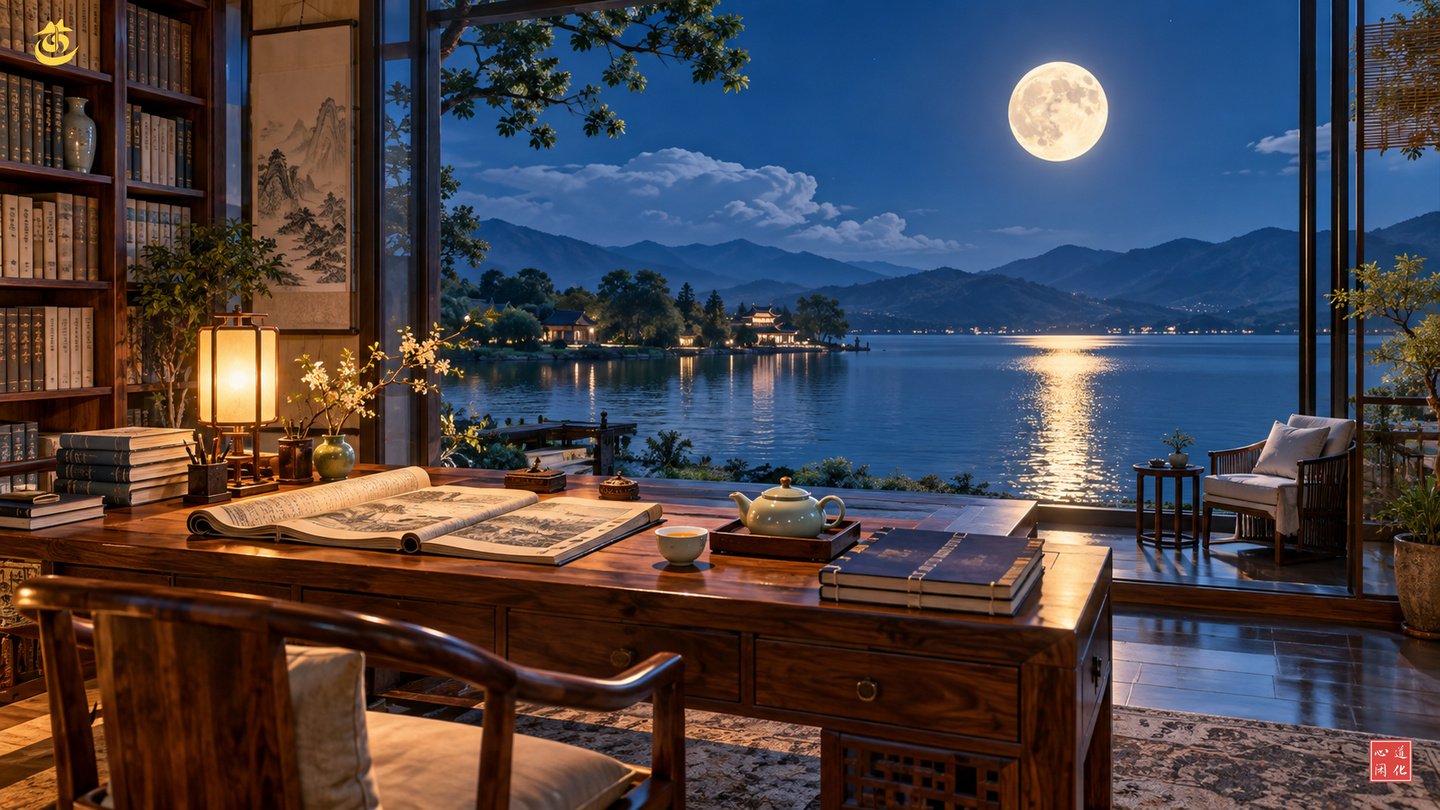
照例,两首道情,送给你:
《道门闲》
料得此生不成才,阴差阳错道门来;
酿得一款长生酒,打得一手神仙牌。

《子虚乌有说道玄》
秋来故人相见难,月夜独思卧窗前;
情似流水天难止,心念嫦娥居广寒。
人言吴刚识大道,空伐桂树五千年;
天若有情天亦老,月若无恨月恒圆。
我欲扶琴遥寄君,七弦未动意已传;
世间何景最凄凉,倚门人老风烛残。
富贵荣华若晨露,虚名浮利一缕烟;
常羡古人悟大道,古今风月本同天。
芳园半亩自世外,流水一湾是桃源;
俯仰百变识风云,物情两忘心已安。
夜半高楼残梦里,子虚乌有说道玄;
邀为座上青云客,就此与君共神仙。
YZ.2021.9.21
Zixu and Wuyou Talk the Mystery of the Dao (the Qian Hexagram of the Zhouyi)
1. Zixu and Wuyou Talk the Mystery of the Dao (the Qian Hexagram of the Zhouyi)
Originally published by Yang Zi, Daozang Yanjiu, 2021-09-21
(A note for friends newly following: in this WeChat official account, the passages in Kai-style type are classical Chinese. If you are not used to reading classical Chinese, you can simply skip the Kai-style passages; there is generally a translation or some smoothing, and skipping them will not affect your understanding.)
Counting on my fingers, it is time to update the official account.
A few days ago I uploaded a diary entry recording how I came to lecture on "Traditional Nourishing of Life" at the Daoist academy on Shizhu Mountain. It was my first close contact with professional Daoists. The young Daoist novices were adorable, and they overturned the image of Daoists run down in those low-grade TV dramas. Teaching and talking with them was a delight, and great fun. So I wanted to introduce to you the kindness and excellence of the children, and the elegance, simplicity, and tranquility of the Dao gate. But after many attempts the article simply would not upload, for reasons unknown. The class monitor said it might be because of the pictures showing the Daoists in their robes. So I let it go; I will not post it for now. A friend who knew I was at Shizhu Mountain asked, "Gone to pray for a dream?" I said, "No, this place has no dreams." Only then did I learn that it is a place for dream-praying.
The Mid-Autumn Festival came round; because of the epidemic, everyone was holed up at home, each doing their own thing. Being thus motionless is my daily routine anyway, so I had no discomfort at all. As usual: reading, playing the qin, watching clouds, sitting in stillness, zoning out (visualization).
At festivals I like to make traditional Chinese-medicine or Daoist delicacies. Chinese medicine lays the greatest store by the season: what is best eaten at what time is all a matter of rule. I have introduced this many times in earlier essays, especially when annotating and translating the works of Sun Simiao, Tao Hongjing, Ge Hong, and others, so I will not repeat it. Daoist nourishing of life has touched on some foods in the grain-avoidance methods.
This year I made another traditional food: the immortal's hu ma cake. This is a traditional Daoist food for grain avoidance. Hu ma is sesame. Tao Hongjing said: "Of the eight grains, this alone is good; the immortals make it into food and eat it, abstain from grain, and live long." And in the Shennong Bencao Jing, sesame is recorded as chiefly treating "internal injury and emaciation, replenishing the five inner organs, boosting qi and strength, growing muscle, and filling essence and marrow."
Also, Ge Hong studied sesame as well; he said sesame "withstands wind and damp, and repairs aging." (Ge Hong, Baopuzi)
And Li Shizhen also recorded: "For pressing sesame oil, the white seed is best; for eating, the black seed is good." (Li Shizhen, Bencao Gangmu)
This shows that in ancient times sesame was used as a medicine. It is said that eating sesame constantly can make one an immortal. So sesame is one of the important materials for grain avoidance in the Dao gate. In the grain-avoidance literature of the Daozang (Daoist Canon), solomonseal, poria, honey, sesame, and so on are all high-frequency ingredients.
Sesame comes in white and black. If you need to boost the kidneys or blacken the hair, use black sesame. In Chinese medical theory, the color black enters the kidney meridian, so sesame chiefly treats dizziness and ringing in the ears, sore waist and weak knees, early whitening of the hair, and the like. Meanwhile, the sesame oil we often use has a "moistening of the intestines" effect, that is, it can be used for slimming; but people with weak stomachs or diarrhea should not take much of it. Also, among sesame oils, the "small-mill fragrant oil" of the Yudong region is top grade, and pure handmade is best of all; I do not know whether it can still be bought. The "fragrant oil" I now buy online for dressing cold dishes is not fragrant at all, and never tastes the way it did when I was little.
On the eating and the medicinal use of sesame, the gourmet Su Dongpo did a good deal of research. He even wrote a fu especially for the sesame cake--"Fu on Taking Sesame Cakes"--which is great fun.
Su Shi's earliest aid to nourishing life was not sesame but single-ingredient poria. Once he dreamed that a Daoist told him "poria is dry; it should be eaten mixed with hu ma," meaning that poria is too dry and must be taken together with hu ma to be good. So he asked what hu ma was. The Daoist said: "Zhima is it." So he went off to read the Bencao and the like, checked things over, and satisfied himself that hu ma, zhima, youma, and so on all refer to sesame. Because the Bencao says sesame "in nature suits poria," he felt this dream was no ordinary thing, and so he began taking it by the Daoist's method in the dream. It happened that just then his younger brother Su Zhe had written a "Fu on Taking Poria" for him to see, so he wrote a "Fu on Taking Sesame" to answer it.
(Note: Zhang Yijian, the first teacher Su Shi's father Su Xun engaged for the brothers, was a Daoist, so both brothers had a deep affinity with the Dao; the transcendent, untrammeled spirit of their writing is all connected with Daoist thought. And both of them were keen on the various nourishing-of-life methods of the Dao gate.)
To my mind, the ancients truly lived with relish: whatever they ate, they wrote it out, and that is culture. Think of us now, with every delicacy of mountain and sea, eating and drinking to excess: apart from everyone growing a big belly, I have not seen anyone compose a single piece for any dish, in gratitude for the nourishing kindness of all things. So sometimes I sigh that our era is indeed developing, but it can hardly be called progress in quality. The progress of an era lies above all in the progress of thought, in the sublimation of the soul, the enlarging of the heart, and the raising of one's plane.
Take a look at Su Shi's "Fu on Taking Sesame":
I dreamed of a feathered man, tall and slender; he kindly told me of the medicine's excellence. (Note: I dreamed of a tall Daoist; thanks to him I was told of a good medicine)
A lofty pine a thousand feet tall, old yet not stiff; their flowing sap enters the earth, where tortoise and snake lie hidden; find it and eat it, and the lifespan cannot be measured. (Note: heavens, taking poria can actually bring "a lifespan beyond measuring")
......Then he wrote of the effects of sesame:
It fills and replenishes the marrow, makes hair and skin flow with luster; this body becomes like a cloud--where then do I dwell? Long life without death: the surplus of the Dao.
(Note: Sesame can moisten the intestines and stomach and fill in the marrow; hair and skin both gain luster. The body can grow light as a cloud, not knowing where it resides. And this medicine of deathless long life grows right at the roadside)
Haha. I have loved eating sesame since I was small--no wonder my hair is black and my skin is a bit better than my age-mates'. (Heh.)
Since an earlier essay mentioned my making "immortal sesame cakes," someone left a message asking for the recipe, and I promised to post it when I had the chance. Today I share it with everyone.
Since my colleagues come from north and south and everywhere, I made immortal cakes of various flavors, beating all mooncakes without exception! The recipes and pictures follow:
One kind is salt-and-pepper flavor: flour, sesame (use white sesame if you want the cakes to look nicer, black if you need to boost the kidneys), salt, fennel seed, five-spice powder, star-anise powder, qianlixiang, and so on;
One kind is crisp, made only with egg kneaded into the dough plus a little white sugar. No spices needed. This suits southern tastes better.
One kind is Chinese-medicine flavor. There you add or subtract medicine powders flexibly according to constitution. If you do not understand Chinese medicine, do not go adding things on your own. If you really want to add, use only medicines that are food and medicine at once--that is comparatively safe. For example, those who need to raise yang qi can add some cinnamon powder; those who want whiter skin can add a little baizhi (angelica) powder, and so on. The recipes vary.
I was busy several days over these immortal sesame cakes that do not look much. But everyone said they were especially delicious, and I was extra happy.
This year, because of the epidemic, we could only play bo bing (the Mid-Autumn dice game) in a very small circle. A colleague brought her child along too. The little boy was very cute: his small hand opened the round and threw a yi xiu (the lowest prize). Then everyone took turns; all small prizes, and the big prize would not come out, so no emotional climax could rise at the scene.
So I put on a solemn face and taught the little one a magic formula:
Heaven be numinous! Earth be numinous! Taishang Laojun, swiftly, swiftly, as the law commands!
The little one was extremely clever and had it after one hearing. He was only too shy to recite it in public. When a round was over, the child left the meeting room by himself and went out to the office area to practice on his own, reciting the formula over and over, throwing the dice as he recited. We in the meeting room ate and chatted, and hearing the child muttering outside, we all burst out laughing. How good it is to be a child! With a grown-up, talking alone like that, he would surely be taken for a madman. With a child it just looks adorable. You can see that each age of life should have the manner of that age. That is the way of nature.
I proposed we open another round, again with the little one going first. Fresh from practice, the child threw the dice while reciting the formula. With a rattle--zhuangyuan crowned with golden flowers, the top throw! A chorus of cheering! Now that is a festival.
Because I am around, always like an old granny nagging them about junk food: fried food, crayfish, cakes with thick cream, plus milk tea and drinks of every color and additive--my God, perhaps that is the mark of being young. I said: "With drinks like yours, give me a hundred yuan to drink one down and I could not do it." The colleagues all laughed, did not argue, and went on drinking what they drank. With me there everyone felt ill at ease, so I went back first. The children love the bustle and I love the quiet: thus both sides suited each other.
On the way back, I remembered that my best friend had come to Xiamen these days. She had come with her leaders to inspect the epidemic situation, but we could not meet, and I could not even do the honors of a host, so I thought of sending someone over with the immortal cakes I had made, to show off my cooking to my friend. Who knew the controls were so strict that even sending was impossible. So after she finished her busy day we had a long, meandering phone call, each of us looking at the same sky, the same bay, unable to meet, yet chatting idly from one end of the world to the other deep into the night. Once again I tasted it: in life there is a way of being together that needs no meeting.
Hanging up, I was wide awake. I drew back the floor-to-ceiling curtains; the city's lights were gentle, silent and secure. I lay flat and tried to lull myself to sleep with embryonic breathing, but I was lazy and did not want to spend the effort. So I switched to the "inner-landscape visualization method" of the Huangting Jing, to converse with the gods of my inner organs and ask whether they were all well. It was a festival, after all.
Suddenly I remembered that in the previous two Mid-Autumns I had written Mid-Autumn Daoqing chants and posted them to the official account, namely:
The Mid-Autumn of 2019. The original text follows:
Li Bai once said, "I raise my cup and invite the bright moon; with my shadow we make three"--himself, his shadow, and the moon, three in all. I am not as lonely as Li Bai: at our Mid-Autumn there were five of us, two friends more than he. One is called Zixu, one Wuyou. The Daoqing chant poem:
"Mid-Autumn"
Mid-Autumn night has come round; Zixu comes to my home;
I am busy leafing the scriptures; Wuyou serves the tea in my place.
I raise my cup to invite the bright moon; with our shadows, five immortals in the glow;
Thirty thousand scrolls in the belly; from now on, no more envying the flowers.
The lotus seed has a heart, and it is bitter; the Sichuan pepper has no intent, and it numbs;
Callus once grew on the heart; scab once formed on the heart.
In solitude there is no false meaning; in stillness there is a livelihood;
The soul slips out on its own; the shell answers the world's splendor.
Last Mid-Autumn, the moon still arrived earlier than Zixu and Wuyou.
So I wrote again:
"Mid-Autumn 2"
Mid-Autumn night has come again; someone walks beneath the flowers;
One round moon in the sky; three cups of wine beneath the moon.
One cup to honor Zixu, one cup to honor Wuyou;
One cup brimming full, kept for you the whole night through.
And this Mid-Autumn--how do I plan to spend it? That can wait till tomorrow. Has the moon risen? Has Zixu come? Has Wuyou come? Should I invite them again to pass Mid-Autumn together? Or write another Daoqing chant for them? ...
Thinking and thinking, my consciousness gradually blurred.
Suddenly I sensed the living-room door open and two people walk in. My first reaction was: how did the door open without my hearing the entry code being keyed? In this city nobody knows my code! Burglars with high-tech cracking? Where is the guard downstairs? Was this not supposed to be the best security system? The property fees are sky-high, the shared-area charges outrageously dear; on a festival why was security not tightened? What is going on? I wanted to get up and see, but my body was so weary it would not move. I watched two shadows come straight into the bedroom.
I was a little startled. I asked: "Who are you? What have you come for? There is nothing in my home; only those books in the outer bookcase are my most treasured possessions. If you want them, take them. Under the bed in the small room opposite there are packing bags--help yourselves. When you leave, pull the door shut for me."
One said: Are you the immortal elder sister? I am Zixu, and this is Wuyou.
I gave a start and tried to sit up, but could not move. I said: "Zixu and Wuyou, in our culture, do not exist; they are of the world's illusion. I only began writing them for fun after reading Sima Xiangru's 'Zixu Fu'; I never took it seriously. Where do you come from? Where are you going?"
Zixu: We have no origin, and no destination. Moved that you remember us in your Daoqing chants year after year, we have come this year, before the moon is full, to see you, to fulfill the sentiment of emptiness between friends of the mysterious gate.
Yang Zi: So that is how it is. When will you leave?
Wuyou: When the moon is full.
Yang Zi: The moment of the full moon is a tiny, tiny instant, so small it can be ignored--how will there be time?
Zixu: You are still a worldling, always fretting over things beyond your control. Enjoy well your long, long life under the waxing and waning moon; why ponder that absolute state?
Yang Zi: I have never cared to fret over matters outside my own body and mind.
Wuyou: Have you cast hexagrams this year?
Yang Zi: I have heard that "those who know the Yi do not divine"; people who understand the Yijing never divine. Though I do not understand the Yi, I do not divine either.
Wuyou: Eh? Modesty is not exactly your signature trait. You have always championed "conscience," "sincerity," and "true feeling"; why are you yourself not telling the truth? Whatever people do, heaven and earth surely know. You did cast a hexagram today--why not admit it?
I could not help sweating with shame. As a child I was raised on "science" education, and I still held prejudices against talk of ghosts, gods, and divination; I read the Yijing and the Daodejing together as philosophy books. When I was little I knew little of astrology, geomancy, and the like, and had echoed others in calling fortune-telling and fengshui "feudal superstition"; later I slowly came to realize that the science within the Yijing is a secret modern scientists are far from cracking. And the destiny of human beings, the mystery of human life, the ultimate questions of philosophy, all seem to lie in that world of emptiness we branded feudal superstition. Thinking thus, I sank back into thought and said nothing. This is the true "soul slips out to enjoy the quiet, and only the empty shell answers the splendor."
Zixu: Are you not quite the talker? In the official account and in the classroom alike, you rattle on and on without end--and now, this moment, why so silent?
I muttered in my heart: who on earth are these two? This building has guards on every floor, cameras everywhere, security at its tightest. How did they get in? And they know my situation well, and claim to be the illusory figures of my own pen. Could they be ghosts? Could it be that, steeped too long in the Daozang (Daoist Canon), I have really become an immortal?
So I asked: "Are you immortals or little ghosts?"
Wuyou: You who cultivate the Dao--why so much discriminating mind? Tell me, what is the difference between a ghost and a god?
Yang Zi: I have heard that immortals live in the heavenly palace and little ghosts live in hell. Those who do good have a god's destiny; those who do evil have a ghost's destiny. People of god-destiny will have blessed recompense; evildoers will have evil recompense, even to the extinction of their line; and they will be fried in boiling oil in hell, suffering every torment, and all those they bullied in the human world will come to settle accounts with them.
Zixu: After a person dies, there is a court of judgment in heaven that rules after death, deciding whether that person's soul ascends to the heavenly palace or descends to hell. Do you believe this?
Yang Zi: I believe it without doubt! And I have been planning it for ten-odd years: to write a mythic novel, "The Trial at the Celestial Court," to tell the story of where the soul goes after death, how a person's soul receives the most just judgment of heaven and of the Great Dao. After all, exploring emptiness is one of the essences of Dao culture, and one of humanity's ultimate questions.
Wuyou: Judging souls? Interesting. It is precisely the notion that "at death a man goes out like a lamp" that lets many people act without scruple in life, doing every evil. How does your side treat those already in the earth?
Yang Zi: With us, no absolute verdict on a person is reached while they live; only when breath stops is there talk of "the verdict at the closing of the coffin." But many subjective factors get mixed in, only because feelings toward the dead differ. Generally speaking, three stands for the god and four for the ghost. So even in grave-side offerings there is a difference. Once a person has "alas, passed away," the traditional ranking is "gods three, ghosts four": if we feel someone did much good in life, we fold the paper money pinching three sheets at a time; if that person was mean and ungenerous in life, we fold the paper money four sheets to a pinch...
Zixu: Hahaha--gods are three, ghosts are four. And people? What number are people?
Yang Zi: Neither three nor four, of course — busan busi, meaning “dubious” or “improper.”
Zixu and Wuyou: Hahaha...
I could not help laughing too. Suddenly I remembered the two guests were still standing. So I said: "Sit down, won't you--sit by the window and watch the night view; when you leave, draw the curtains for me and shut the door well. I am cultivating the mood for sleep and will chat with you with my eyes closed."
Zixu: Why were you silent so long just now? I am curious--tell me, tell me.
Yang Zi: I was not not-talking; I just suddenly broke into a sweat a moment ago and found it strange. You should know I am cold-bodied by nature; however hot the day, I never sweat. Hot to the point of red face and aching head, still no sweat. Just now I actually sweated, so I was puzzled and my mind wandered.
Zixu: That is quite normal. Have you not heard: "In taking medicine to seek sweat, some never get it; but the moment the feeling of shame gathers, it streams away freely." (Ji Kang, Yangsheng Lun) Ji Kang was speaking of people like you. Moderate sweating does the body good, but people who cannot sweat will not necessarily sweat even if they take sweat-inducing medicine. Lady Huarui of the Five Dynasties and Ten Kingdoms could not sweat; the imperial physicians gave her a double dose of mahuang and it did no good. Hers was a constitution warm in winter and cool in summer--one in ten thousand. People like this will not sweat from medicine; there is only one case in which they sweat: "the moment the feeling of shame gathers, it streams away freely." The instant the heart gives rise to shame, the sweat pours. So such people cannot tell lies. Your sweating means you told a lie.
Yang Zi: I never lie. Because I was born not clever: lying is simple, keeping a lie consistent is too hard--one lie must be propped up with ten more. My speech has always been "beans poured from a bamboo tube"; before I know it the truth leaks out, and I am mortified. Better to speak plain truth. By the way, this Lady Huarui you speak of--is she the one who wrote the Daoqing chant lines "best to give body and mind a place of purity, donning the horned cap and rosy cape to serve Xiyi"?
Wuyou: Do not change the subject. The world's people's worldly wisdom is to "look left and right and talk of something else" when they meet a hard question; put nicely, it is called deep reserves; put not nicely, slippery. Such people are cunning as ghosts, love playing the clever little trick most, and before matters of profit and loss they are usually the most heartless.
Yang Zi: What an injustice! I am the most feeling person in the red dust, the person who prizes feeling most in the red dust, and the person in the red dust who takes sincerity as a creed. Moreover, raised from childhood on the Daodejing, "keeping to the plain" has long since dissolved into my genes; I have always counted cleverness a negative quality and feared nothing so much as becoming clever. Speak of me like that and mind your recompense, ha.
Zixu: So did you divine a hexagram or not?
Yang Zi: No. I only flipped through the Zhouyi a while this morning for fun, as review. I usually stand by the bookcase flipping through whatever comes to hand; it cannot count as formal divination--at least I had no such intent. The hexagram I turned to a minute before and the one a minute after are not the same; tell me, which hexagram counts as today's luck?
Wuyou: What hexagram did you turn to today?
Yang Zi: The Qian hexagram--Modesty.
Wuyou: Good luck! Your luck is about to turn.
Yang Zi: I do not presume to hope. I only bury my head in the scriptures and cultivate in quiet, seeking only stillness of heart, asking nothing of what lies ahead. Long ago I stopped complaining about life. Content and free of care. I have long since made peace with every suffering of life and with the hot and cold ways of the red dust. Nothing to hold, nothing to fret over; never wronged anyone, always acting by conscience, treating people with sincerity; I owe no one, fear nothing, carry no mortgage--nor a pile of houses on hand to worry about prices falling...
Zixu: At peace with all who cheated you, hurt you, wronged you? Tell the truth now: if someone truly gave you offense, what would you do?
I blurted out: If anyone gives me offense, I will draw a circle and curse him!
And the three of us burst out laughing. I could clearly feel the mattress springs beneath me jolting up and down, as if the practice of "embryonic breathing" had been set going, rising and falling.
Zixu: This is precisely the simple, carefree life of the immortals. People of true feeling live without tiring the heart. No wonder you cast the best of the sixty-four hexagrams: you will have a good end.
Yang Zi: I borrow your kind words; I had not thought that far. I only feel this is probably heaven hinting that I still have one great fault: aloofness and pride. That is why it gave me this Qian hexagram. Heaven is signaling me to learn humility.
Zixu: Though we have never come to visit you, you have always counted us confidants, and we have shadowed you all along. On the whole, we would say you do count as humble.
Yang Zi: False appearance! That is the surface--a little low-key drilled in by later education. In my heart I know: inborn, I am proud to the bone. Beaten black and blue by life, but never a bone broken, never a bone softened. This pride has eaten me full of bitterness. I have reflected on it countless times and cannot change it. As the saying goes, rivers and mountains are easy to change, but a nature is hard to move.
Zixu: A person may not have the swagger of pride, but must not lack the bones of pride! Those are your heart's own words, are they not? So you cannot change. And this hexagram is truly a fine one. "Qian: success. The noble one brings things to a good conclusion." The Qian hexagram symbolizes humility, and therefore success. As long as the noble one keeps the virtue of humility, there will be the best of endings.
Yang Zi: This may be the earliest source of "the humble gentleman." In childhood Chinese class we learned "humility brings benefit; fullness invites loss"; only later, reading on my own, did I learn that nearly all our words of wisdom belong to the ancients, and this one is no exception. The original text is: "Fullness invites loss; humility brings benefit." (Shangshu, "Dayu Mo")
Wuyou: Why is this hexagram image called the Qian hexagram?
Yang Zi: It is a doubled hexagram, made of two three-line trigrams: above is the Kun trigram (☷), Kun being earth; below is the Gen trigram (☶), Gen being mountain. Normally earth is below and mountain above. But this hexagram is composed with mountain below and earth above, to show that the mountain, though towering by nature, willingly takes the lower place: this is "qian," humility, the virtue of the noble one. In the Daodejing, Laozi stresses the wisdom of "taking the lower place" again and again--for persons so, for states also so: the so-called "a great state is a low-lying stream," and "the great state, by taking the lower place toward the small state, wins the great state; the small state, by taking the lower place toward the great state, wins the great state" speak of just this principle. When a great state is humble toward small states, it gains their trust and allegiance; when a small state is humble toward a great one, it gains its shelter and support. And in society, those who possess the wisdom of "taking the lower place" are the true "humble gentlemen," and all come to good ends.
Wuyou: Using the Daodejing to interpret the Yi is convenient for you. That is one way of reading, to be sure. Then how do you understand what the Tuan commentary of this hexagram says, "The way of heaven descends to give light; the way of earth lies low yet rises upward"? Give an example.
Yang Zi: "The way of heaven" gives light, warmth, rain, and dew from above downward--the light of the sun, the light of the moon, rain, snow, and so on; all of these follow the way of heaven. And "the way of earth" humbles itself and seeks upward: trees, wisteria, and other sun-facing plants are rooted in the earth yet yearn toward the light. People too, of course. The humbler the heart, the more it loves to gaze up at those of high social standing--star-chasing, worship of power, and the like; the lower the position, the stronger the urge to climb. There is no right or wrong in this, nothing to do with morals: it is human nature. Quite normal. So what people follow is "the way of earth," not "the way of heaven." When we say a person is "very didao," that is a word of praise, meaning the person accords with human nature; to say someone is "not didao" means he is not human but a beast.
Wuyou: Are there people who follow "the way of heaven"?
Yang Zi: There are. The sages follow the way of heaven: all their words and acts are giving and bestowing. Think of the wise Laozi, the wise Shakyamuni, the wise Jesus, the wise Confucius: they mainly practiced "bestowing of the dharma"; and Laozi, Shakyamuni, and Jesus are the wise among the wise, because they opposed the worshiping of sages and idols, and gave their believers inborn confidence and a sense of dignity. There are also many philanthropists in society who follow the way of heaven: toward those below them they give warmth and help on their own initiative, from the heart, not under forced donation. There is no essential difference between them and the sages above. There is also another kind that walks "the way of heaven," but not by their true intent, so they call themselves "enacting the Dao on heaven's behalf"; that cannot count as charity, for the nature is different.
Wuyou: Does that count as doing evil?
Yang Zi: It can hardly be called evil either; all of it is necessity. Scraping a living is human instinct.
Wuyou: At the point of you-or-me life and death, still no dividing good and evil?
Yang Zi: At that point it has become politics. Politics has no right or wrong, only winning and losing. Talk of this is no fun; change the subject.
Zixu: Then do all the myriad things upon the earth universally follow "the way of earth"?
Yang Zi: Not entirely. Take water. Water is on earth, yet it follows the way of heaven. In the Daodejing, what the Daoist school most honors is water, in the words "the highest good is like water. Water benefits the myriad things and does not contend; it dwells in the places the crowd disdains, and so is close to the Dao." Laozi held the greatest good to be the quality of water. Water benefits all things yet never contends for anything; moreover, it goes to the low places everyone is unwilling to go; so Laozi said the quality of water is what comes closest to the Dao.
Wuyou: So water follows "the way of heaven," and people follow "the way of earth"?
Yang Zi: Yes. That is why we say "people climb toward the heights; water flows toward the low places." There is no right or wrong in it; nature is thus.
Zixu: Those are "the way of heaven" and "the way of earth." Then "the way of humans"?
Yang Zi: The image text of this hexagram does not mention it directly. But in the Daodejing, Laozi has a lapidary passage: "The way of heaven takes from what has surplus to mend what lacks; the way of humans takes from what lacks to offer up to what has surplus."
Wuyou: What does that mean?
Yang Zi: Laozi held that "the way of heaven" is to pare down some of the surplus and make good the deficit. What the Xiang commentary of this hexagram says, "the noble one takes from what is abundant to benefit what is scarce, weighing things and bestowing evenly," speaks of just this; in modern words, "equalizing rich and poor," encouraging the rich to do more good.
Zixu: And if they are unwilling?
Wuyou: Some countries levy heavy taxes on high earners to balance society; that too is "enacting the Dao on heaven's behalf," is it not? Otherwise, when the split between rich and poor grows too extreme, it shakes the foundation of the state and produces the risk of upheaval.
Zixu: So much for "the way of heaven." Then "the way of humans"? What does Laozi say?
Yang Zi: Laozi says, "The way of humans is otherwise: it takes from what lacks to serve what has surplus." Skimming the poor to subsidize the rich is the real cause of the wealth gap. Such a thing heaven would never do; only humans can do such a thing. So Laozi called it "the way of humans."
Wuyou: It is always the poor carrying gifts to curry favor with the rich. Where does the rich man's money come from? How do the poor grow poor?
Yang Zi: Let us not speak of this. You two go now; I am going to sleep. I have always followed the way of nature, according with the rhythm of heaven and earth, rising with the sun and resting at sunset. Eating well and sleeping well is the best nourishing of life. The Daozang (Daoist Canon) is too vast for me to ever finish reading, so I plan to live to a hundred and thirty; I cannot wait until old age to begin tending myself--that would be too late. I must sleep well now.
Zixu: How self-disciplined you are! But as the Xiang commentary of this hexagram says: "The humble gentleman," herding himself in lowliness. The humble person manages himself, restrains himself, keeps quiet and holds to himself: that is self-discipline.
Yang Zi: In my case no one herds me; I herd myself, wandering where I will, saying whatever comes--that is not self-management, that is "following the heart." Mencius said, "seek back the heart you let stray," meaning to gather back the heart let loose. I am not like that: I let my heart fly loose everywhere, anywhere it pleases; the universe is vast--best if it never comes back. When the heart flies off, ideally it takes this worldling body of mine along. I will not study Mencius; I "let loose this heart entirely," scattering my heart into outer space, where lies the infinite of infinities, the subtle of subtleties. It truly fills one with longing.
Zixu: This is called self-discipline of a higher order.
Yang Zi: Do not pin a tall hat on me. Whoever does, the word "praise-kill" springs to mind at once. Following the heart is still best.
Zixu: Following the heart--that itself is the field of practice.
Yang Zi: Exactly! Exactly! The most ideal state of a human life should be this: ride the wind upon the void, alive and not knowing where it halts; stand apart from the world, leaving it behind, and at last feather into wings and mount as an immortal.
Zixu: I see ancient books playing by your bedside all the while, listened to night after night. Do you take in the Dao through your ears?
Yang Zi: The ear is only the foundation; truly to awaken to the Dao, the ear alone will not do. Wenzi said: "The highest learning listens with the spirit; middle learning listens with the heart; lowest learning listens with the ears." (Wenzi, Tongxuan Zhenjing) Listening with the ears is the lowest manner of cultivating the Dao.
Wuyou: Can you say it more concretely?
Yang Zi: Wenzi held that "for the ear-listener, learning stays in the skin; for the heart-listener, learning reaches the muscle; for the spirit-listener, learning enters the marrow." (Wenzi, "Daode") Learning heard with the ears is only surface, floating knowledge; to awaken to the true Dao, you must listen and take it in with the heart; and if you would cultivate into an immortal, nothing short of whole-spirit concentration will do--comprehending with the spirit-soul--before the true Dao can be attained.
Zixu: In that case, we shall disturb you no longer. We will talk again later.
Yang Zi: Thank you both. I have never believed in ghosts or gods; I took illusory figures to be my own idle inventions, my playing with the brush. I never imagined you were beings of real flesh and blood. I suddenly understand Zhuangzi's puzzlement: was it he dreaming himself a butterfly, or the butterfly dreaming itself Zhuangzi? And this moment--is it I who am dreaming, or what is going on? You are inventions by nature, not even the equal of a butterfly; a butterfly at least has substance; I have seen butterflies, everyone in the world has seen them. But apart from that scatterbrained Sima Xiangru, who has ever seen you?
Zixu: Do you not always believe that "the empty governs the solid"? "The blind hear well; the deaf see well. Cut off gain at its one source, and your force is tenfold; thrice return through day and night, and your force is ten-thousandfold." (Yinfu Jing) The blind have the best hearing; the deaf the best sight. When heaven takes one advantage from you, it repays you tenfold somewhere else. And whoever can quiet the heart and awaken to this point--with buried intent and still heart--can truly "have force ten-thousandfold." You go out not at all for years, no social round, sitting quiet in this tower half in the clouds--have you not tasted it?
Yang Zi: I believe most in the power of "emptiness": the vastness, the harmlessness, and the eternity of emptiness surpass every formed existence in this world. I seem to be bustling about in the red dust, but inwardly I am all but cut off from the world, living always in the splendid world of the Daozang (Daoist Canon).
Wuyou: You really are worn out; your speech is losing its thread. We are going. When you wake tomorrow morning, post the story of us two to the official account, ha. The last two years you have posted it; we are used to it now; this year must not break the run.
I wanted to rise and see them out, but my body was heavy as a thousand jin and would not move. In a blink they were gone. Ghosts? Gods? No matter--I must get up and write this down, lest I wake tomorrow morning and remember nothing. So I reached to grope by the pillow for the pencil, heavy as a thousand jin; I could not lift it.
......
When I woke in the morning, the pen was still in my hand; I took off the eye mask and daylight had already filled the room. The notebook by the pillow was blank. Last night--dream? illusion? or did someone truly come? I hurried up to check all the doors: still locked from the inside, impossible to open even by one who knew the code. I opened the door; the corridor was silent. No one. Never mind; today I will enjoy the festival well.
As usual, two Daoqing chants, for you:
"Leisure in the Dao Gate"
Likely this life will come to nothing; by cross-fate and blunder I came to the Dao gate;
I have brewed a vintage of long-life wine; I play a deft hand of immortal cards.
"Zixu and Wuyou Talk the Mystery of the Dao"
When autumn comes, old friends are hard to meet; alone at the window on a moonlit night I lie and think;
Feeling like flowing water, hard for heaven to stop; my heart dwells on Chang'e in the Guanghan Palace of Vast Cold.
People say Wu Gang knows the Great Dao, felling the cassia tree in vain five thousand years;
If heaven had feeling, heaven too would age; if the moon bore no grudge, the moon would be forever round.
I would stroke the qin and send it far to you; before the seven strings move, the meaning is already conveyed;
What scene in this world is most desolate? One grown old leaning at the gate, a candle of wind-blown stub.
Riches, honor, glory, and splendor are like morning dew; empty fame and floating profit, one wisp of smoke;
I always envy the ancients who woke to the Great Dao; past and present, wind and moon share one sky.
Half an acre of fragrant garden is a world apart; one bend of flowing water is the Peach Blossom Spring;
Looking up and down through a hundred changes, I read the wind and clouds; things and feeling both forgotten, the heart is at peace.
In a half dream at midnight in the high tower, Zixu and Wuyou talk the mystery of the Dao;
I invite them as honored guests upon the cloud-seat, and here with you share the state of the immortals.
YZ.2021.9.21