《彭祖摄生养性论》
3、《彭祖摄生养性论》
原创 杨子 道藏研究 2021-04-10
先回答后台的好奇提问,问我这么多年是怎么翻译《道藏》的,以及一篇公众号文章产生的过程。现在详细回复。大家所看到的公众号文章每篇文章翻译之前都先点注、断句、通译、顺稿、校对、排版、插图,才上传上传。当然,小时候背过比较多的古文帮大忙了。如果没有小时候的功底,做不了这个事情。
成文大致:
1 转版:《道藏》原文是影印纸质版的,繁体、古文、竖排。通过电脑处理转成横版、简体。在这一过程中,会不可避免地出现错转、漏转,所以转版后的电子文档肯定是不靠谱的,不能直接翻译。有人跟我说可网上搜索简体版的,这是外行话。稍微有点常识的人都知道,网上能搜索的道家及道教经书,只是《道藏》的九牛一毛,《道藏》绝大部分精华还在纸质版的状态,网上能看到的零星片断,也多是错误百出。我非常赞同季羡林先生的观点,学术引用,就一定是要找到原文。不能引用转文,转几次就失真了。以讹传讹,是学术大忌。
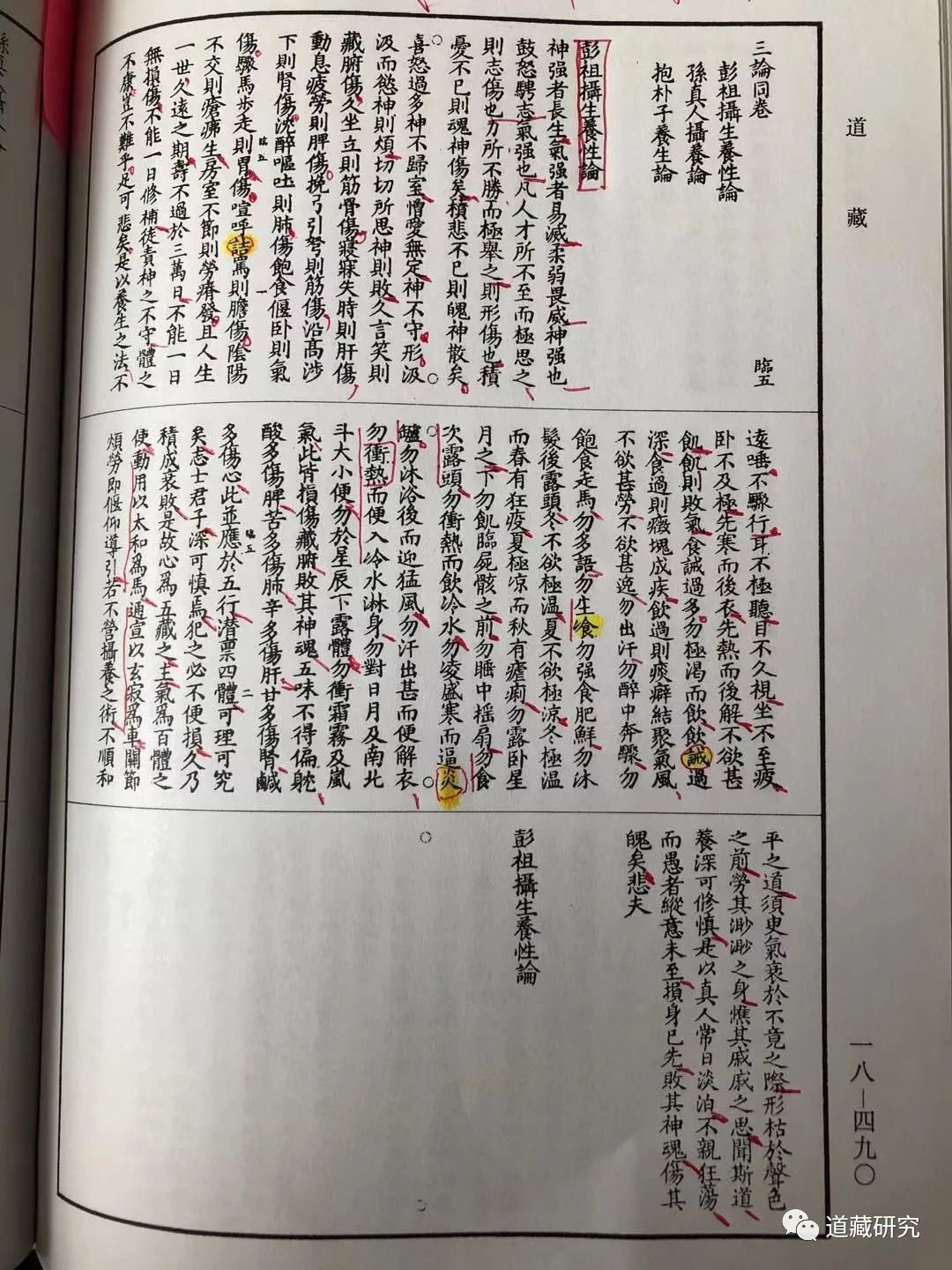
2点注、校正:由于古籍都没有标点符号,所以要先对纸质版的繁体原文点注、断句,把转版(横版的电子版本)与原版(竖版的影印纸版),逐字逐句的对照阅读,并对电子版的文档同步校对那些转错的字。这个需要特别细心,只能逐字逐句的对照阅读,没有捷径。早些年点注时,断句出错的比较多,所以我用铅笔点,错了就用橡皮擦掉重新点。渐渐的习惯了古人的行文习惯,现在直接用圆柱笔点读、断句了。下图为我点注原文的手迹,也可以明显的看得出,也有点错的地方。
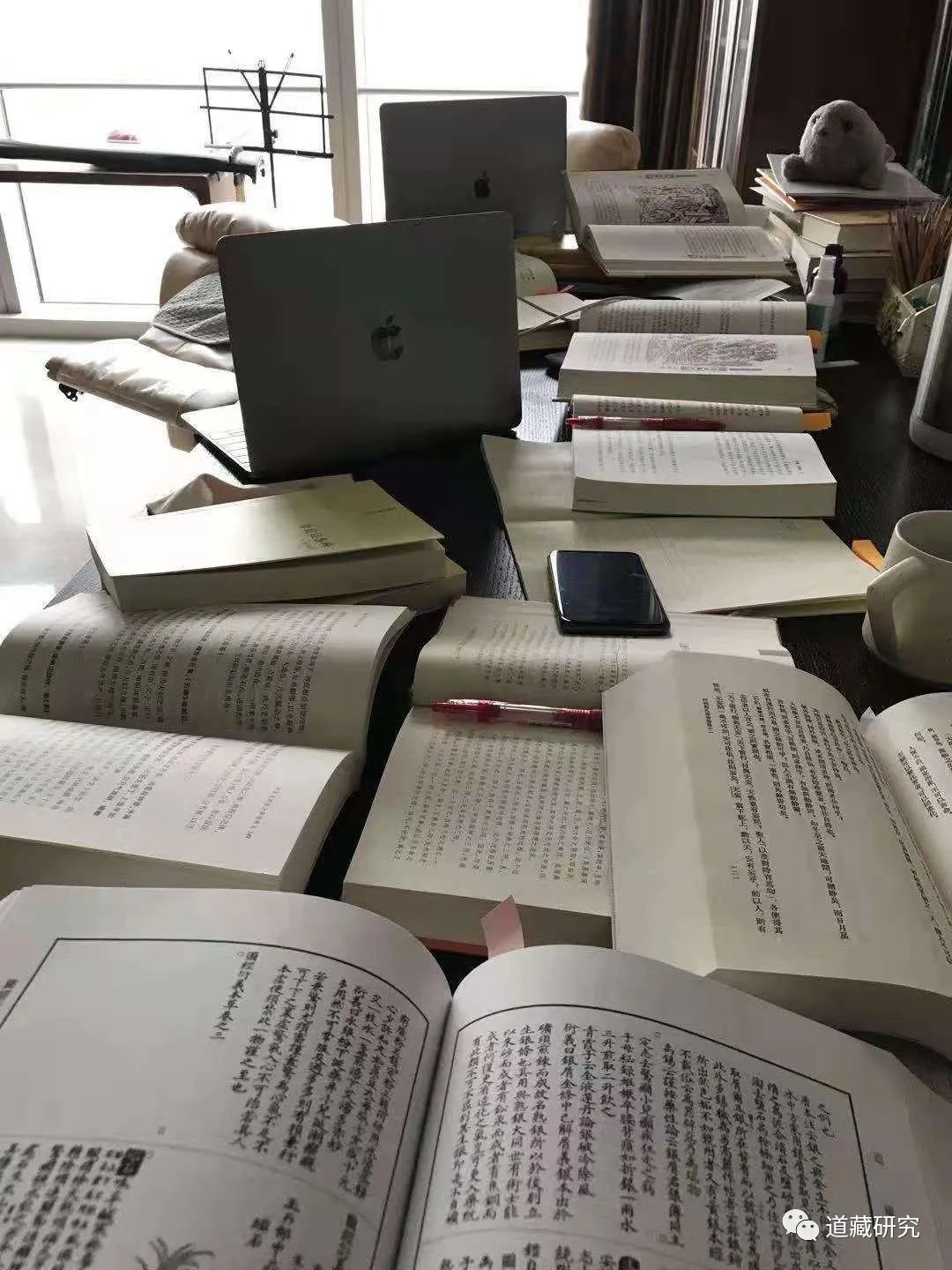
3 汇总互参文献:《道藏》中的文章,除了《道德经》、《庄子》、《列子》、《抱朴子》、《周易参同契》、《悟真篇》等少数家喻户晓的经典,市面上有翻译本之外,几千卷的《道藏》原文,还都停留在繁体、竖排、古文的状态,没有现代文的翻译。我翻译时,也只能借助不同朝代、不同作者的同类文章,相互参考,反复推敲。所以,汇总互参文献是很重要的准备工作。这道“工序”最是需要精力和桌面空间。需要精力,是因为需要哪些文献资料,脑子里需要进行排列筛选,有时需要各种检索和翻腾。我的书柜都是自己整理,就这个原因,怕乱了顺序无从查询。需要空间,主要是需要书桌很大,各种文献摊开,桌子小了是很受拘束的。我最喜欢的摆放方式,就是四周靠墙面全是书柜,中间放一个书桌。在上海、天津生活时,大致这么摆列的。桌上堆满了乱七大八遭的书,保洁员小王特别专业,她能很迅速地把各种零乱处理停当。但她知道不能动我的资料,如果要擦桌面,也是各种东西原地放着,可以归置整齐,但不能挪动地方。厦门的书,没那么多了,因为现在大量的书籍都是电子产品了。但我依然喜欢纸质书。边读边圈圈点点、写写划划。读电子书速度太快,哗啦哗啦就过去了,很快,但读后印象不深。跟刷视频一样,基本上就是消耗生命。下图是我翻译《道藏》时的一般状态。
4 注释与翻译:阅读原文,同步阅读互参文献,琢磨作者原意,努力地通顺文字,尽量保持原文原意。
5编辑与上传:根据内容,标注不同颜色的字体以方便读者阅读及快速获取核心内容。把原文标注为蓝色字体以供不习惯古文的读者跳过,也供喜欢古文的读者参考,前附说明,后附道情,排版、上传公众号、插图、再排版,并经过反复浏览修改、查找错别字,再选择“群发”,专送“关注本公众号”的微信用户。
以上。
今天介绍《彭祖摄生养性论》,又名《摄生养性论》。底本出处:《正统道藏》洞神部方法类。
由于本文作者不着姓名,又无从考证。只能借着时空,诚心向这位了不起的作者表达敬意!前辈神仙人物,后世之人在此致谢了!
总体看,《彭祖摄生养性论》文字表达比较简单,非常接近现代文了,行文通畅,组句优美,译成白话文,读起来反而没有原有的美感了。所以,今天就暂时只发部分简单注释。
高中以上古文功底的人都可看懂。建议朗读,一是练气,主要是读出声就更能理解文字之美。花五分钟,读上三遍,也都能顺出彭祖真意;读十遍以上,可为养生专业人士;百遍以上,可得真人的养生秘要,长寿可期。
如果实在读不懂,也不要紧,我后续会发《彭祖传》、《彭祖导引法》等彭祖系列。也会发本文的白话全文。
先不要怕古文,读上三遍试试。人人都能懂。
《彭祖摄生养性论》
神强者长生,气强者易灭。柔弱畏威,神强也。鼓怒骋志,气强也。
(简注:道家示弱。真正内心强大的人都温和;气胜逞强,求死之道)
凡人才所不至而极思之,则志伤也。力所不胜而极举之,则形伤也。积忧不已,则魂神伤矣。积悲不已,则魄神散矣。喜怒过多,神不归室。憎爱无定,神不守形。汲汲而欲神则烦,切切所思神则败。(简注:要做力所能及的事可为,则为;不可为,不可强为。思虑过度,最是伤人。情绪不稳,魂魄不守。)
久言笑则藏腑伤,久坐立则筋骨伤。寝寐失时则肝伤,动息疲劳则脾伤,挽弓引弩则筋伤,沿高涉下则肾伤,沉醉呕吐则肺伤,饱食偃卧则气伤,骤马步走则胃伤,喧呼诘骂则胆伤。阴阳不交则疮痍生,房室不节则劳瘠发。
注:本段讲五脏六腑都是怎么受伤的,久说笑会伤脏腑;久坐会伤筋骨,失眠最是伤肝,过度劳累伤脾,强使力往往伤筋,从高走往下急走伤肾,沉醉至吐则会伤肺,饱食后就躺着不动伤气,骑快马或疾步走会伤胃,大声喧哗或破口骂人会伤胆,阴阳不交会患疮痍,房事不节制会引发身体劳枯虚弱。)
且人生一世,久远之期,寿不过於三万日。不能一日无损伤,不能一日修补,徒责神之不守,体之不康。岂不难乎!足可悲矣。
简注:人生短暂,一辈子也就是三万天的日子。没有一天不受损伤的……要长寿,就不要伤害自己
是以养生之法,不远唾,不骤行。耳不极听,目不久视,坐不至疲,卧不及极,先寒而后衣,先热而后解。不欲甚饥,饥则败气。食诫过多,勿极渴而饮,饮诫过深。食过则症块成疾,饮过则痰癖结聚气风。不欲甚劳,不欲甚逸。勿出汗,勿醉中奔骤,勿饱食走马,勿多语,勿生食,勿强食肥鲜,勿沐发后露头。
简注:衣食住行中的养生要点,喜欢生猛海鲜的请注意,古时候,江河湖海的水质比现在强多了,都不生吃水产品,何况现在的水质。我看过一些资料,有些疾病只有沿海才有,内地没有。这与海鲜有关系。特别是重金属污染后的水域,古人说“勿生食,勿强食肥鲜”,是有道理的。
冬不欲极温,夏不欲极冻。冬极温而春有狂疫,夏极冻而秋有疟痢。勿露外星月之下,勿饥临尸骸之前,勿睡中摇扇,勿食次露头,勿冲热而饮冷水,勿凌盛寒而逼炎炉,勿沐浴后而迎猛风,勿汗出甚而便解衣,勿冲热而便入冷水淋身,勿对日月及南北斗大小便,勿於星辰下露体,勿冲霜雾及岚气。此皆损伤脏腑,败其神魂。
注:春夏秋冬、日常行为的养生禁忌。有几条非常重要,得强调一下。冬天不要让身体太温暖,夏天不要让身体太寒凉。冬天如果太温暖,到了春天会有瘟疫发生,夏天如果身受了寒凉,到了秋天就会疟疾、秋季腹泄。说到秋季腹泄,特别是小儿秋季腹泄,我们家有个验方。我二哥根据祖方重新调制的。贴孩子脚底的涌泉穴,不用打针吃药。我写过这个方子的故事。有点长。以后择机上传。
不要刚冲过热水澡或从太阳地里回来就马上饮冷水,不要在极度寒冷后马上靠近火炉取暖。这一点东北人最有经验了。救冻僵的人,都是先拿雪在皮肤上擦,先擦出知觉,让身体慢慢自已升温。如果马上给烤火取暖,就坏事了。这都是古人的经验,很有用。
也不要沐浴后猛吹风。因为皮肤毛孔都张着的。
这里要特别强调洗头后不要吹冷风!!夏天洗头后吹电风扇子,中风面瘫难免。“古之人不我欺也”,古人不会欺骗我们的。古人写东西都是负责的,他们写建议怎么做,都是成功经验;如果说是禁忌之事,一定是有惨痛的经历。所以,不要逞能去试验湿发猛吹头,千万不要试这一条。我初中时,夏天,有一位同学来到学校哭,说她妈妈洗完头,湿着头发,躺在地上的小凉席上午睡,吹着电风扇子,很凉快。醒来后发现嘴歪眼斜,整个脸全变形了。
本段中的还有一些忌讳多是培养对大自然敬畏之心及行为检点、端庄。不必太叫真。前天本公众号的小编之一看到了我的点注原文的手稿照片,说原文其实非常容易懂。为了显摆他真的读懂了,还发了一个问题:冲着日月及南北斗大小便会有什么后果?我秒回:断小鸡!他发了个捂脸笑的表情,于是不再切磋了)
五味不得偏耽,酸多伤脾,苦多伤肺,辛多伤肝,甘多伤肾,咸多伤心。此并应於五行,潜禀四体,可理可究矣。志士君子,深可慎焉。犯之必不便损,久乃积成衰败。
简注:五味过度伤五脏,过度偏爱某一种食品,可能意味着对应的内脏受伤。
是故心为五藏之主,气为百体之使,动用以太和为马,通宣以玄寂为车,关节烦劳即偃仰导引。若不营摄养之术,不顺和平之道,须臾气衰於不竟之际,形枯於声色之前。劳其渺渺之身,憔其戚戚之思。
简注:人要不生病,只要气血通畅,导引行气很重要。
闻斯道,养深可修慎。是以真人常日淡泊,不亲狂荡,而愚者纵意未至,损身已先,败其神魂,伤其魄矣。悲夫!
简注:不听彭祖言,吃亏在眼前。
彭祖摄生养性论竟(本文完)
照例,两首道情送给你:
有一天晚上散步,捡到一根树枝,又顺手摘了几片野生毛毛草叶和几枝不知名的花。回来后虽已很晚,但忽然兴致勃勃地插起花来。可能是背景音乐的原因,或是夜深灯光的原因,顿时觉得清雅满室,乐趣芬芳。于是提笔:
《插花》
我有瓶一只,花枝交错插;
朝看孤枝傲,暮看苞欲发。
花开虽浅淡,素洁透高雅;
一花一影坐,轻烟起香茶。
玄门自有三分香,不与世人比奢华。
YZ.2021.3.19
2021年3月30日,和泉州人大李主任、统战部、宗教局领导等一行,考察仙公山。途经摩崖石刻“一到清心”,由于“清”字明显是人为缺笔,我好奇相问。杜山长介绍说他们怀疑是当时郑成功因不服清朝,去台湾后返回家乡招募兵勇反清复明时留下的笔迹。又至山顶道观,见仙公山龙虎地形图,尤是惊叹大自然神来之笔。是为记。
《仙公山》
仲春闲游仙公山,青山接云云接天;
此间风水隐传奇,卧虎藏龙必有仙。
缺笔清心谁人留,疑说成功念台湾;
山高不闻尘中事,微风清茶说道玄。
YZ.2021.3.30
中医真是博大的文化,看病必要先找病根。有人说西医是扬汤止沸,治的是症;中医是釜底抽薪,治的是病。颇有道理,也很形象。这也是我佩服中医文化的原因之一(更信服中医的大系统调整理论,全面解决身体阴阳平衡)。比如,发炎之症。西医一看,是炎症,开消炎药,打消炎针,管用,很快病就好了。中医就不一样,在你脉搏上摸半天,问长问短,从饮食、睡眠、环境、情绪等等,问个没完没了。还要患者难为情地伸出舌头来看看舌胎。如此一番,判断这是哪一种炎症,寒凉温热,属于哪一种。找到发病的原因。再开药。专业上,这叫“辨证论治”。再絮絮叨叨,嘱咐再三,注意不要生气,不要受湿寒邪气,不要这不要那等等,杜绝病根,防止再次发病。细想来,中医很是有情。
看书有倦时,偶尔翻小视频消遣。看到一位老中医给女患者号脉,边把脉边苦口婆心道:“小姑娘啊,我送你两句古人的诗,你听明白了,想通了,病根就除了,人自然就好了。这世上啊,无情、变心多是男子,女人多情总是落得一身伤痛。你听好了:
花红易衰似郎意,
水流无限似侬愁。
看后,忽然想起东风与花儿的故事。风一来,花就开。花开则风无影。这样的故事年年上演,古来如此。提笔打油:
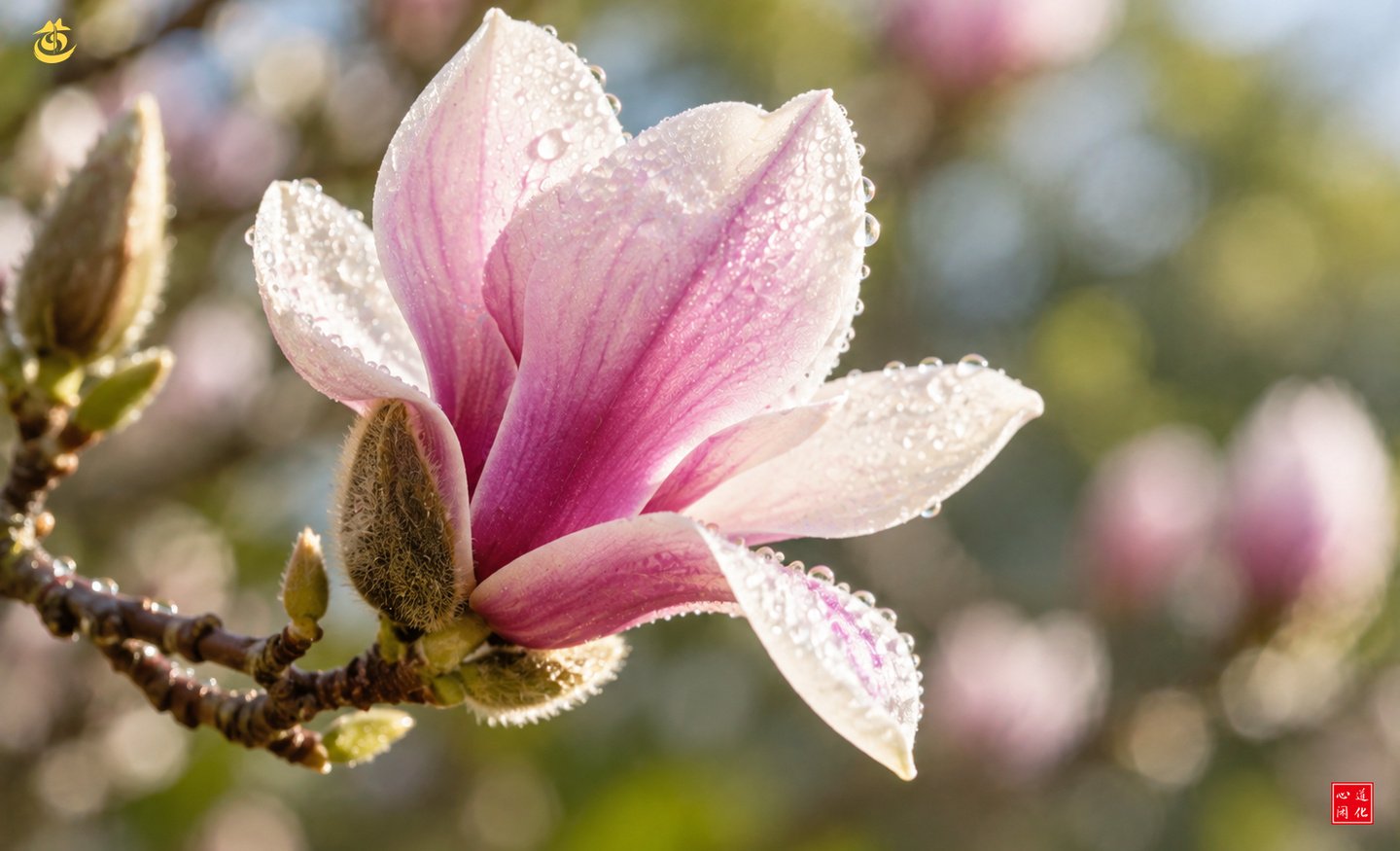
《东风歌》
花枝年年恋东风,只道东风情有终;
若将无心当有意,百花伤事无人听。
YZ.2021.3.21
Pengzu Shesheng Yangxing Lun
8. Pengzu Shesheng Yangxing Lun
Originally published by Yang Zi, Daozang Research, 2021-04-10
First, to answer a curious question from messages sent to the account: people ask how I have been translating the Daozang (Daoist Canon) all these years, and how an article on the WeChat official account comes into being. Now a detailed reply. For every article you see on the account, I first punctuate and divide the original into sentences, translate it in full, smooth the draft, proofread it, lay it out, and add illustrations before uploading it. Of course, having memorized a fair amount of classical Chinese as a child helped enormously. Without that childhood grounding, I could not do this work.
The rough process of producing an article:
1 Conversion: the original Daozang (Daoist Canon) text is a photocopied paper edition, in traditional characters, classical Chinese, and vertical columns. It is converted by computer into horizontal, simplified characters. In that process, wrong conversions and dropped characters are unavoidable, so the converted electronic document is certainly not reliable and cannot be translated from directly. Someone told me I could just search for a simplified-character edition online; that is the talk of an outsider. Anyone with a little common sense knows that the texts of Daoist philosophy and religion one can search for online are only a tiny fraction of the Daozang; the great bulk of the finest material of the Daozang (Daoist Canon) is still in paper form, and the scattered fragments visible online are mostly riddled with errors. I agree very much with Mr. Ji Xianlin's view: for scholarly quotation one must find the original text. One cannot quote a transcribed text; after a few transmissions it loses its truth. Passing on errors unchecked is a great taboo in scholarship.
2 Punctuation and correction: since ancient books have no punctuation, one must first punctuate and divide the sentences of the traditional-character paper original, reading the converted version (the horizontal electronic edition) against the original (the vertical photocopied paper edition) word by word and sentence by sentence, and at the same time correct the wrongly converted characters in the electronic document. This calls for particular care; there is no short cut but to read the two against each other word by word and sentence by sentence. In the early years, when I punctuated, I made many wrong sentence breaks, so I used a pencil, and when I erred I rubbed it out with an eraser and punctuated again. Gradually I grew used to the writing habits of the ancients, and now I punctuate and mark the breaks directly with a ballpoint pen. The picture below is a sample of my handwritten punctuation on the original; you can also plainly see places where I got it wrong.
3 Collecting cross-reference texts: among the writings in the Daozang (Daoist Canon), only a few household classics--the Daodejing, Zhuangzi, Liezi, Baopuzi, Zhouyi Cantong Qi, Wuzhen Pian, and the like--have translated editions on the market; the original texts of the several thousand scrolls of the Daozang (Daoist Canon) remain in traditional characters, vertical columns, and classical Chinese, with no translation into modern Chinese. When I translate, I can only draw on similar writings by authors of different dynasties, cross-referencing them and weighing them again and again. So collecting cross-reference texts is very important preparatory work. This "stage" costs the most energy and the most desk space. It costs energy because I have to arrange and sift in my head which reference materials are needed, and at times it takes all sorts of searching and rummaging. I arrange all my own bookcases myself, for just this reason: I am afraid that if the order were disturbed I would have no way to find things. It needs space mainly because the desk must be very large, with all sorts of reference works spread out; a small desk is very confining. My favorite arrangement is bookcases along all four walls and a single desk in the middle. When I lived in Shanghai and in Tianjin, I laid things out more or less this way. The desk was piled with books in a glorious mess. Xiao Wang, the cleaner, was especially professional; she could swiftly set every sort of clutter to rights. But she knew she must not touch my materials; if she had to wipe the desk, everything stayed where it was--she could tidy things up but could not move them. In Xiamen there are not so many books, because nowadays a great many books are electronic. But I still love paper books, reading while circling and dotting, writing and marking. Reading an e-book is too fast; it goes by in a rush, quickly, but leaves little impression afterward. It is like scrolling videos: basically it consumes life. The picture below shows my usual state when translating the Daozang (Daoist Canon).
4 Annotation and translation: read the original text, read the cross-reference texts alongside it, ponder the author's intended meaning, work hard to make the wording flow, and keep the original meaning as far as possible.
5 Editing and uploading: according to the content, mark the type in different colors so readers can read easily and quickly grasp the core material. Mark the original text in blue so readers unused to classical Chinese can skip it, and so readers who like classical Chinese can consult it; put an explanation in front, append a Daoqing chant at the back, lay it out, upload it to the WeChat official account, add illustrations, lay it out again, and after repeated browsing and revising, hunting for wrong characters, then choose "mass send," delivered only to the WeChat users who "follow this account."
That is all.
Today I introduce Pengzu Shesheng Yangxing Lun, also known as Shesheng Yangxing Lun. Source of the base text: the Zhengtong Daozang, Dongshen Bu, Fangfa Lei.
Since the author of this text left no name, and there is no way to verify it, I can only borrow this moment in time and space to sincerely express my respect to this remarkable author! A predecessor, a figure among immortals; a person of a later age gives thanks here!
On the whole, the wording of Pengzu Shesheng Yangxing Lun is fairly simple, very close to modern Chinese; the writing flows and the sentences are beautifully built, so rendered into vernacular Chinese it would actually lose the beauty of the original. So for today I will post only a few simple annotations.
Anyone with a grounding in classical Chinese at high-school level or above can understand it. I suggest reading aloud: first, it trains the qi; mainly, reading it out loud lets you understand the beauty of the words all the better. Spend five minutes, read it three times, and you too can draw out Pengzu's true meaning; read it more than ten times and you can count as a professional in nourishing life; more than a hundred times and you may obtain a perfected master's secret essentials of nourishing life, and a long life may be expected.
If you really cannot understand it, that is all right too; I will later post Pengzu Zhuan, Pengzu Daoyin Fa, and the rest of the Pengzu series. I will also post a full vernacular version of this text.
First, do not be afraid of classical Chinese; try reading it three times. Everyone can understand it.
Pengzu Shesheng Yangxing Lun
When the spirit is strong, life is long; when qi is strong, one is easily destroyed. Being soft and weak and standing in awe of authority is spirit being strong. Letting anger swell and giving one's ambitions free rein is qi being strong.
(Brief note: Daoists show weakness. People who are truly strong inside are gentle; when qi wins out and one flaunts strength, that is the road to death.)
When ordinary people reach with their utmost thought at things their talent cannot reach, the will is harmed. When they lift with all their strength what their strength cannot bear, the form is harmed. When accumulated worry does not cease, the hun spirit is harmed. When accumulated grief does not cease, the po spirit scatters. When joy and anger are excessive, the spirit does not return to its chamber. When hatred and love are unfixed, the spirit does not keep to the form. Anxious, grasping desire makes the spirit fretful; earnest, fixed brooding makes the spirit fail. (Brief note: do what lies within your strength; if a thing can be done, do it; if not, do not force it. Overthinking is what injures a person most. When the emotions are unsteady, hun and po do not keep their place.)
Talking and laughing too long harms the zang and fu; sitting and standing too long harms the sinews and bones. Sleeping at untimely hours harms the liver; laboring to exhaustion in movement and rest harms the spleen; drawing the bow and stretching the crossbow harms the sinews; going up high and down low harms the kidneys; drunken vomiting harms the lungs; lying down right after a full meal harms the qi; galloping a horse or walking fast harms the stomach; shouting and reviling harms the gallbladder. When yin and yang do not join, sores and ulcers arise; when the bedchamber is not restrained, wasting and emaciation break out.
Note: this passage explains how each of the five zang and six fu organs gets injured. Long talking and laughing harms the zang and fu; long sitting harms the sinews and bones; losing sleep most of all harms the liver; overwork harms the spleen; forcing one's strength often harms the sinews; hurrying downhill from a height harms the kidneys; getting drunk to the point of vomiting harms the lungs; lying still after a full meal harms the qi; riding a fast horse or walking briskly harms the stomach; loud clamor or cursing people out harms the gallbladder; when yin and yang do not join one develops sores; and lack of restraint in bedchamber affairs brings on a worn, wasted, weak body.)
Moreover, a person lives one generation in the world; over the long stretch, the span of life is no more than thirty thousand days. Not a day passes without injury, yet people fail to repair the damage day by day and simply blame the spirit for not keeping watch and the body for not being sound. Is that not difficult! It is pitiable indeed.
Brief note: life is short; a whole lifetime is only about thirty thousand days. Not a day passes without injury ... if you want long life, do not harm yourself.
Therefore, in the method of nourishing life, do not spit far, do not walk abruptly. Let the ears not listen to the utmost, the eyes not gaze for long; do not sit until weary, do not lie down to the extreme. Put on clothes before the cold comes, and loosen them before the heat comes. Do not wish to be very hungry, for hunger ruins the qi; in eating, guard against too much. Do not wait until extreme thirst to drink, and in drinking guard against too deep a draught. Overeating forms lumps and brings illness; overdrinking binds phlegm and stagnation into qi-wind. Do not wish to be very weary, do not wish to be very idle. Do not sweat; do not dash about while drunk; do not ride a horse on a full stomach; do not talk too much; do not eat raw food; do not force down rich and fresh delicacies; do not bare the head after washing the hair.
Brief note: the key points of nourishing life in clothing, food, dwelling, and movement. Those who like raw and lively seafood, take note: in ancient times the water of rivers, lakes, and seas was far better than it is now, and still people did not eat aquatic products raw--how much less so with today's water quality. I have read material saying that some diseases exist only along the coast and not inland. This has to do with seafood. Especially in waters polluted by heavy metals, the ancients' words "do not eat raw food, do not force down rich and fresh delicacies" make good sense.
In winter do not wish to be extremely warm, in summer do not wish to be extremely cold. If winter is extremely warm, there will be raging epidemics in spring; if summer is extremely cold, there will be malaria and dysentery in autumn. Do not expose yourself out under the stars and moon; do not approach a corpse while hungry; do not wave a fan while sleeping; do not bare the head during a meal; do not drink cold water right after being heated; do not press close to a blazing stove straight out of severe cold; do not face a fierce wind just after bathing; do not loosen the clothes when sweating heavily; do not go straight into cold water to rinse the body while heated; do not relieve yourself facing the sun, moon, or Northern and Southern Dipper; do not expose the body beneath the stars; do not face frost, fog, or mountain mist. All of these injure the zang and fu and ruin the spirit and hun.
Note: prohibitions of nourishing life for spring, summer, autumn, winter and for daily conduct. A few are very important and need stressing. In winter do not let the body be too warm; in summer do not let the body be too cold. If winter is too warm, epidemics will break out in spring; if the body takes a chill in summer, there will be malaria and autumn diarrhea in autumn. Speaking of autumn diarrhea, especially autumn diarrhea in small children, our family has a traditional family remedy. My second elder brother reworked it from an ancestral formula. It is applied to the Yongquan acupoint on the sole of the child's foot; no injections, no medicine. I have written the story of this prescription. It is rather long. I will upload it when the chance comes.)
Do not drink cold water right after a hot shower or coming back out of the sun, and do not warm yourself by the stove immediately after extreme cold. People from the Northeast know this best. When rescuing someone frozen stiff, they first rub the skin with snow to bring back feeling, letting the body warm up slowly by itself. If you put them by the fire to warm up at once, it goes badly. These are the experiences of the ancients, and very useful.
And do not let a fierce wind blow on you just after bathing, because the pores of the skin are all open.
Here I must especially stress: do not let cold wind blow on the head after washing it!! In summer, washing the hair and then sitting under an electric fan makes a stroke and facial paralysis hard to avoid. "The ancients did not deceive me." The ancients would not deceive us. When the ancients wrote things, they were responsible: when they wrote advice to do something, it came from successful experience; if they called something a prohibition, it was certain that a painful experience lay behind it. So do not try to show off by testing wet hair under a strong blast of wind--never, ever try this one. When I was in junior high school, one summer, a classmate came to school crying. She said her mother had washed her hair and, with it still wet, lain down on a little cool mat on the floor for a nap under the electric fan, very cool and comfortable. When she woke up, her mouth was crooked and her eyes askew; her whole face was deformed.
Some of the other taboos in this passage are mostly about cultivating reverence for great nature and about decent, dignified conduct; no need to be too literal about them. The day before yesterday, one of the young editors of this WeChat official account saw the photo of my handwritten punctuation on the original and said the original was actually very easy to understand. To show off that he really had understood it, he also sent a question: what happens if you relieve yourself facing the sun, moon, and Northern and Southern Dipper? I shot back at once: Your little chick gets chopped! He sent an emoji laughing with its face covered, and so we stopped comparing notes.)
The five flavors must not be favored one-sidedly: too much sour harms the spleen, too much bitter harms the lungs, too much pungent harms the liver, too much sweet harms the kidneys, too much salty harms the heart. These all correspond to the five phases, are latent endowments in the four limbs, and can be reasoned out and investigated. Men of purpose and gentlemen should be deeply cautious here. Offending against them will not necessarily cause immediate loss, but over time it accumulates into decline and ruin.
Brief note: excess of the five flavors harms the five zang; an excessive liking for one particular food may mean that the corresponding internal organ has been injured.
Therefore the heart is the master of the five zang, qi is the envoy of the hundred body parts; in movement one uses great harmony as one's horse, in free circulation one uses mysterious stillness as one's carriage; when the joints are vexed and weary, one lies down and rises for daoyin. If one does not manage the arts of nourishment and does not follow the way of peace and harmony, in an instant qi declines before the task is finished and the form withers before sights and sounds. It wears out this tiny body and harries these anxious thoughts.
Brief note: if a person is not to fall ill, all that is needed is for qi and blood to flow freely; daoyin and moving the qi are very important.
Having heard this way, one should cultivate depth and be careful in practice. Therefore the true person is always plain and unattached, and does not go near wild dissipation, whereas the fool lets his impulses run before they arrive, and his body is already damaged first, his spirit and hun ruined, his po wounded. How sad!
Brief note: if you do not listen to Pengzu's words, you will suffer for it right before your eyes.
Pengzu Shesheng Yangxing Lun ends (the text is complete)
As usual, two Daoqing chants for you:
One evening on a walk I picked up a branch, and on a whim plucked a few leaves of wild fuzzy grass and a few sprays of nameless flowers. By the time I got back it was already late, but suddenly I was in high spirits and set about arranging the flowers. Perhaps it was the background music, or the lamplight late at night, but all at once the room seemed filled with quiet elegance and the delight was fragrant. So I took up the pen:
"Arranging Flowers"
I have a single vase, flower branches crossed and inserted;
At dawn I watch a lone branch proud, at dusk I watch buds about to open.
The flowers bloom though faint and pale, pure and clean through to high elegance;
One flower, one shadow, I sit; light smoke rises from fragrant tea.
The Mysterious Gate has its own share of fragrance, and does not compare its splendor with the world.
YZ.2021.3.19
On March 30, 2021, together with Director Li of the Quanzhou People's Congress and leaders of the United Front Work Department and the Religious Affairs Bureau, I visited Xiangong Mountain. Passing the cliff inscription "Arrive and the Heart Is Clear," I noticed that the character "clear" was clearly missing a stroke on purpose, and asked about it out of curiosity. Du, the mountain's head, explained that they suspected it was left by Zheng Chenggong, who refused to submit to the Qing and, after going to Taiwan, returned to his hometown to recruit soldiers to restore the Ming and oppose the Qing. At the Daoist temple on the summit I saw the dragon-and-tiger terrain map of Xiangong Mountain and was especially struck by nature's divine brushwork. This is recorded here.
"Xiangong Mountain"
In mid-spring I idly wander Xiangong Mountain, green hills meet cloud and cloud meets sky;
The feng shui here hides a legend; where the tiger crouches and the dragon hides there must be immortals.
Who left "clear heart" with its missing stroke? They say it was Chenggong thinking of Taiwan;
The mountain is high and hears nothing of the dusty world; a faint breeze, clear tea, and talk of the Dao's mystery.
YZ.2021.3.30
Chinese medicine is truly a vast culture; to treat an illness one must first find its root. Some say Western medicine is trying to stop a pot from boiling by ladling out its water--it treats the symptom; Chinese medicine is pulling the firewood from under the pot--it treats the disease. There is a good deal of truth in that, and it is vivid too. This is one of the reasons I admire the culture of Chinese medicine (and I put even more trust in its theory of adjusting the great system, resolving the balance of yin and yang in the body as a whole). Take inflammation. Western medicine takes one look, sees inflammation, prescribes anti-inflammatories, gives an anti-inflammatory injection; it works, and the illness is soon gone. Chinese medicine is different: it feels your pulse for the longest time, asks after everything--diet, sleep, surroundings, emotions, and so on, on and on without end--and even has the patient awkwardly stick out the tongue so it can look at the coating. Only after all that does it judge which kind of inflammation this is, cold or cool, warm or hot, which category it belongs to. It finds the cause of the illness, and only then prescribes. In professional terms this is called "pattern differentiation and treatment." Then it nags on and on, urging again and again: do not get angry, do not take in damp, cold, or pathogenic qi, do not do this, do not do that, cutting off the root of the disease to keep it from coming back. When you think about it, Chinese medicine is full of feeling.
When I tire of reading, I occasionally scroll short videos for amusement. I saw an old Chinese physician taking a woman patient's pulse, and as he felt it he earnestly said: "Young lady, let me give you two lines of an ancient poem. Once you understand them and think them through, the root of your illness will be gone and you will naturally get well. In this world, it is mostly men who are heartless and change their hearts, while women, being full of feeling, always end up with a body full of hurt. Listen well:
The red flower fades as easily as a man's affection,
The flowing water is endless as my sorrow.
After watching, I suddenly thought of the story of the east wind and the flowers. When the wind comes, the flowers open; once the flowers open, the wind leaves no trace. Such a story is staged year after year, and has been so since ancient times. So I took up the pen for a doggerel verse:
"Song of the East Wind"
Year after year the flowering branch loves the east wind, believing only that the east wind's affection would remain faithful to the end;
If indifference is mistaken for affection, the hundred flowers' hurts go unheard by anyone.
YZ.2021.3.21