辟谷与养生
1、辟谷与养生
原创 杨子 道藏研究 2020-07-22
新冠病毒,是今年全球的最大关切。已经并正在改变着世界格局。而在对抗新的未知病毒的过程中,无论是非典还是新冠,中医和本草的表现都可以用惊艳来描述。传染病在人类历史上,一直存在,在中国也是一样,几乎历朝历代都有发生,中医称之为:瘟疫。
瘟疫给人类带来的灾难之深重,史有记载。比如天花,曾让罗马帝国衰落、致使阿兹特克帝国消失、导致印加文明消失等等。世界上那些古代的文明如今天保存最完好的,中国是排在前列的。为什么中华文明一直没有断脉?中医和本草,功不可没。这一次疫情要持续多久,我们还不知道,但新年以来,人们对中医和道家养生的重视达到了前所未的高度。中医的药、针、砭、灸、按跷、导引等传统的治疗方法开始重新被人们推崇;一些道家的外丹、内丹、辟谷、胎息等养生方法也都在民间悄然兴起。
以前曾写过一篇《过午不食》的文章,主要与佛教的斋戒相关。今儿,说说道家的辟谷。因为但凡知道我研究道家文化的人,见面不是问辟谷,就是问风水或算命,甚至祝由术。
目前为止,我还没有真正意义上辟谷过,或者是不曾刻意去饿肚子。我信奉自然的生存方式,想吃就吃,想睡就睡,别跟自己的器官过不去。只是不过食。过食对人身体的伤害比断食还严重。所谓“病从众口入”,绝非虚言。我对外宣称的“过午不食”,的最主要的目的是为了,可免除了绝大部分的应酬,从而可以把自己下午到晚上的时间完整地用于阅读《道藏》。而随着年龄的增加,发现这真是一个不错的选择。一如我之前所写的体悟:
食少,病少;
话少,祸少;
事少,忧少;
情少,伤少;

辟谷,是道家养生、道教修仙的一种方法。直观地说,就是不吃五谷杂粮,甚至是庄子说的:
“不食五谷,吸风饮露”,这样的人不但不憔悴,还是“肌肤若冰雪,淖约若处子”的神仙状态(《庄子·逍遥游》),真是不觉间让人神而往之。

辟谷到底对身体健康好不好?众说纷纭。我的观点是:看个人情况。不赞同的可以不理,有兴趣的可以试试。但不可强求,不能强行去饿肚子,更不能强烈建议身体不适合的人去刻意辟谷。
辟谷是一种自然而然的选择。确切的说,是人体器官的诉求。随着年龄增长,人们会发现吃的越来越少了,甚至可以少一顿了,或是没有饥饿感了。如果是年龄原因,就不必去吃什么开胃药,因为你的身体不需要大量的营养了。我曾听一位朋友说:
“我妈妈90多岁了。”
我的第一反应是,“那是高寿啊,有福的老太太!”
他却遗憾地说:“唉,妈妈年轻时受了不少苦,很不易。现在有条件想给妈妈吃好的了,老人家吃不下了,只吃一口就饱了,而且还吃的很素”,说着还很心疼,很不甘---
这是孝子之心。让人尊重。也可以理解。
凡是有这种情况的孝子们其实可以安心一些,正是因为少食、简食、素食,才让老人们长寿的。肥甘厚味,真的不利于消化。老人的器官在慢慢老化,运化能力慢慢减弱,吃点素淡的,是肠胃自己的选择。各种外界的信息可能会误导我们,比如营养大师建议吃什么山珍海味、虫草人参,或是相关专家推荐的保健品等等,都不一定适合自己的身体。而我们的器官,最不会欺骗我们,它们会自然而然地选择最适合自己的食品。
中国人辟谷的学说可追溯到先秦甚至更早。

“食肉者勇敢而悍,食谷者智慧而巧,食气者神明而寿,不食者不死而神。”(《大戴礼记·易本命》)
这段话现在读来也是令人信服的。大意是:
食肉者勇敢而悍(比如草原人,历史书上总是说匈奴人如何彪悍)
食谷者智慧而巧(比如汉人,哈哈)
食气者神明而寿(比如道家人,呵呵)
不食者不死而神(比如神仙---)
幼儿园或小学里观察一下,爱吃肉的孩子通常相对强壮些。但统计数字表明那并不意味着必然的智商领先。
不同的年龄段,我们的器官对食物有不同的选择。

尊重内脏的需求,就是最好的养生。不必刻意吃什么。我们有一个认知上的误区,尊重内脏的需求,就是尊重舌头的需求。其实舌头喜欢的,与内脏需要的,不是一个概念。
我上海的邻居,很友善的一家人。邻里间情感很深。曾帮我照看过孩子,我一直念恩,每次回上海或出差路过,都会去他们家看看,感觉很亲。这两年,不敢去了。因为他们家老爷子癌症过世了,去了忍不住会回忆过去欢乐的邻里温暖。但回忆确实让人伤感。我经常难以忘记他们家老爷子生前最后一段日子的情形:
他被确诊癌症后,全家无比痛苦,过意不去。于是一边化疗,一边大补。每天各种煲汤、炖肉,大补特特,什么贵吃什么---
后来医生说病情恶化的太快了,是因为他们补反了。
老人很快走了。
与他们的友善同样不能忘记的,就是他生命最后一段旅程的误补对健康的恶化。
世卫组织说:
1/3的癌症可预防
1/3的癌症可治愈
1/3的癌症可通过调养延长寿命
而我听到的另一权威说法则是癌症的死因:
只有1/3的癌症患者是死于疾病本身;而另外1/3是死于过度医疗;还有1/3是死于恐惧心理,吓死的。
曾有一位癌症患者,是一位朋友的亲戚。说求医无门。最后到山里找了位道人。道人建议他们辟谷疗法。理论大致是:把癌细胞饿死。

于是他们全家有人支持,有人反对,一家人争论不休。朋友来问我道书是怎么说的,辟谷到底能不能杀死癌细胞。
我不是医生,亦不是辟谷专家。不好置评。但可以谈谈自己对辟谷的原理及“饿死癌细胞”理论的理解。
辟谷对于养生的作用,首先是清理体内杂尘浊物,排净五脏内的油腻及因营养过盛而滋生的有害微生物等健康隐患。唐代诗人白居易描述为“休粮清肠”。
“仪客白皙上仙郎,方寸清虚内道场。
两翼化生因服药,三尸饿死为休粮。”
但人不吃东西,体内的各种微生物会停止吃东西吗?
不会。

各种微生物及细胞还是们会一刻也不停地吃,。像象是极度饥荒下的人类一样,没有食物供应,人们饿到极致,会出现“人相食”的现象。细胞也是一样,它们会自相斗争,弱肉强食。强势的细胞会吃掉弱势的细胞,这是人体这个小宇宙系统内的自然选择。于是强壮的群体获胜,弱势被消灭。于是辟谷的人最明显的变化有两个:
先是体重下降,后是健康容颜。
因为体内那些懒惰肥腻的细胞被生命力强的细胞给干掉了,或是细胞内部在自我净化与重生。这在西方科学界被称为"自噬"(autophagy)。这个词汇是比利时化学家克里斯汀·德·迪夫在1963年首次发现的,英文中的自噬是一个涉及到细胞自身结构通过溶酶体机制分解,机体细胞自我再生的过程。自噬autophagy来源于希腊语,"auto"(意思是“自己”) ,"phagein"(意思是“吃”),就是自己吃自己。
科学家发现自噬可以摧毁细菌和病毒。它是一个细胞自我分解和回收的过程,这一过程为机体提供能量,并为细胞更新再生提供材料。同时,细胞利用自噬清除那些受损的蛋白质和细胞器(organelles)以抗击机体老化的负面影响,帮助细胞自我修复,"重新启动",从而提升健康,达到减肥、延寿以及显得更年轻的目的。
这就是为什么有人会用辟谷进行减肥和美容的原理。

辟谷到了现代,有了新名字,叫“间歇性断食”,很多人不明就理,觉得说辟谷就很愚昧,不科学。说“间歇性断食”就很科学,很时尚,很高端,甚至出现了16/8断食法(即,一天中只集中在8小时内进食,其他16小时禁食)、20/4断食法等等。其实原理与辟谷一回事。
当中国人在大批自己的文明不科学时,聪明的日本人总是能左右逢源地弯道超车。他们怎么做呢?
他们求证。
举个典型的例子,可以说明日本人是如何对待辟谷的。

日本科学家大隅良典(Yoshinori Ohsumi)对辟谷的原理进行了研究和求证,证明了辟谷的科学性,而大隅良典也因"对细胞自噬机制的发现"获得了2016年度的诺贝尔奖。
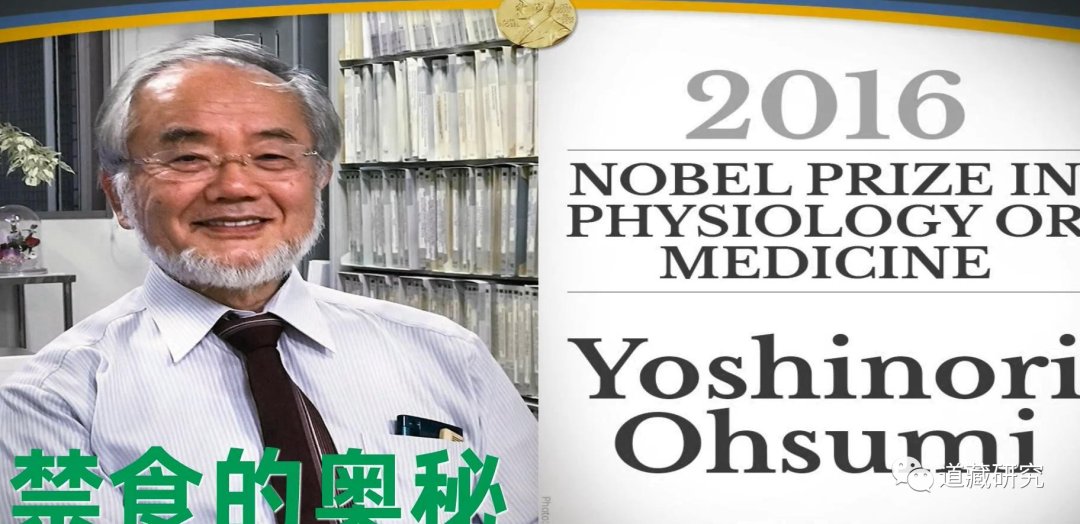
看到这个消息,我心里百感交集。这就是用科学去证实辟谷,用现代科学方法去证实(或证伪)古人流传的养生方法。
我曾写过一篇文章,讲到中国目前唯一的诺贝尔医学奖获得者屠呦呦从《道藏》中发现了青蒿素的提取方法(低温提取),从而拯救全球无数的生命。(详见本公众号“《道藏》与大国文化”)
屠呦呦是从《道藏》中晋代道士葛仙翁(葛洪)的《肘后备急方》中受到启发的。每次看到国人把道教及道教典籍视若封建迷信,各种影视剧无底线地妖魔化道教文化时,不是悲从中来,而是痛从心生。
我对道家哲学信仰坚定,对包括道教在内的所有宗教文化尊重有加,时刻敬畏,是有原因的,也是有依据的。因为我泡在《道藏》中太久了。尽管这其间也穿插着对西方哲学的阅读和体悟。对民族文化的热爱和信仰,不是对西方文化的无知和排斥。而是基于多年的对比阅读和生活体会。外国人鲜有推崇中国传统文化的,不是他们不认可,而是他们缺少了解。不要说外国人,就是国人,随着白话文、简化字的普及,越来越少的人能读懂我们的传统典籍了。白话文推行只是近百年的事,而中国几千年的文明都是用文言文书写和记录的。所以看到文言文就本能地觉得麻烦和排斥的人,是很难理解我们的民族文化基因的,甚至对本民族的文化符号都概念模糊。

对于自己不了解的东西,还是有些敬畏之心,比较好。慎批老祖宗流传下来的种种,特别是流传了几千年的东西,免得被后人笑话。五四时期,一批热血青年对民族文化进行过严厉的反省和批判,甚至要消灭汉字、消灭中医等等,消灭这消灭那,百年过后,一切安好。文革时期,又一批热血青年,打倒这个,打倒那个,到头来,除了浪费了自己的青春年华,那些被打倒的“牛鬼蛇神”又都平反了,恢复政策后,过得比以前更有待遇。实在是历史闹剧。
以近百年中医历程为例:
清末,西方的坚船利炮打开了国门。随之跟进的文化渗透就是洋教。传教士传教的一个重要方式,与中国的本土宗教—道教相似,是通过给人治病宣传信仰的。“古之初为道者,莫不兼修医术,以救近祸焉”(《抱朴子·内篇杂篇》)
比较早的西医诊所,是在广东,传教士看眼疾免费,手术后复明,实在神奇。五四前后,中国一批接受了西学教育的人开始全面宣传西学,否定传统。当然,在北大、清华等高校也同时掀起了“整理国故”的学术热潮,那一次运动,造就了一批中国近百年来学术基础最扎实的国学大师。后来,那一批学者多数去了台湾。此后,无论是大陆还是台湾,都没有再达到过民国学术那样的学术思想高度和自由程度。直到现在,都没有。民国时的学术开放和思想自由,在中国历史上,堪比春秋时期的百家争鸣。所以,历史会永远怀念北大校长蔡元培的“兼容并包、思想自由”的理念。国家动荡(或不统一)会造成苍生浩劫,但不全是一无是处。最大的好处就是人们可以有一个以上的思想和观点。比如春秋战国时期、南北朝时期、清末民初时期。一旦大一统,就只有一个声音说话了,于是思想也就失去的本有的活力。当然,中国是一个特例。主要原因不是因为国家统一,而是因为集权的文化造成的。世界上统一的国家多了,至今还有文字狱的国家不多了。

而在名流界,一些社会活动家,对西学的推崇达到了膜拜的程度。举例:比如康有为。在康的死因中有多种说法,其中,其中一种就是说他晚年深信西医的器官移植术,并在德国医生诊所做了睾丸移植手术,换了年轻公猿的器官,开始确实体能恢复了不少,但很快身体发生了排异,第二年死去。坊间有传他至死不说西医不好,因为宣传西学是他们那他们批人一生所致力之事。(注:这一说话是不是属实,我没有考证过,只是从网络上摘录。或许是康有为在教课书的形象与真实的历史形象,在人品、人格等方面出入太大,有人埋汰他,也是有可能的。从我阅读过的一些民国书籍中可知,真正的有水平的人,基本都鄙视他,包括他的学生梁启超)
胡适也曾是反对中医的,但由于他“消渴症”(即糖尿病)是靠本草黄芪给治好的,所以也慢慢转了态度。民国时期这样的例子很多。无论是学界还是政界。当时中医和中药与这个民族的命运一样,曾面临过生存存亡问题。
1931年“教育漏列中医案”是轰动一时的大事件,即不再官办中医学校。中医面临后续无人的危机。于是自那时起,中医的父传子、师带徒的民间传承成了保存、保护中医和中药最扎实的方式。而国民政府内部也是出现了两派,一是保,一是灭。以立法院的院长孙科(孙中山的儿子)为代表的一派,主张给中医一条路,另一派是以汪精卫代表的消灭中医派。二者相争不下,双方都曾以辞职相威胁。

后,汪精卫的岳母得了痢疾,汪精卫时任行政院院长,请了很多西医治不好。他太太陈碧君根本不理睬汪精卫反对中医,请了名中医施今墨给她妈看病。结果那位低调的施今墨医生少见地讲了满口:
两副药止泻,五副药正常饮食,十副药痊愈。
结果所言不虚。从此汪精卫不语。
回到辟谷与健康。
辟谷可以治病吗?
个人目前的理解是,当身体相对强壮时,即疾病未发之时,可以根据自身情况,适当辟谷。若是已发病,特别是病到了一定的程度,就不要辟谷了。因为当身体好的时候,健康细胞处于强势,辟谷的话,强势的健康细胞可以“吃掉”那些不健康的弱势生物群体,从而达到自净自愈的效果。如果已是病发起来了,体内的“坏细胞”占了优势,成了强势,如果没有足够的营养供给,它们会把处于劣势的健康细胞干掉,结果会加重病情。
总体讲,辟谷是属于形骸层面的养生。道家养生最推崇的其实是精神层面的养生。如果精神压抑、心理压力大,对身体的伤害才是最大的。
精神之于形骸,犹国之有君也。
清虚静泰,少私寡欲。知名位之伤德,---识厚味之害性,故弃而弗顾,非贪而后抑也。外物以累心不存,神气以醇泊独著,旷然无忧患,寂然无思虑。又守之以一,养之以和,和理日济,同乎大顺。(嵇康《养生论》)
总之,少思少想,简餐素食,不为外物累心,静守内心的清静,就是最好的养生。
太长了,不写了,传几首过去写的道情吧:
《不相负》
青山静贮吐香雾,灯光引至太虚处。
夜如何其夜漫漫,心与大道不相负。
YZ.2019.2.20
《守道》
三百余年修道人,潜修静待道逢春;
愿君莫笑此情痴,痴心守道有几人。
YZ.2019.4.24
《无事身》
道家修行即修真,岁月流年貌常新;
起身即是三清路,静坐神交五岳神。
作别繁华山中去,知君已却凡尘心;
道藏典籍多灵药,了无牵挂即养神。
逐名世道无名客,多事时节无事身;
遥听晨钟暮鼓响,只能催得奔波人。
YZ.2019.4.24
《追思故友》
海沉天上月,山托日下云;
索居熬疫情,对窗常思君。
名高权盛时,宾客群复群;
蛟龙出海日,巨浪卷风云。
交友带侠气,做人存素心;
觥筹显豪迈,好酒亦伤身。
旦夕退幕后,势去难再春;
平生多仗义,几人言报恩?
红颜不知处,兄弟攀高门;
权去亲也淡,庭前秋草深。
偶有语音至,倍觉校友亲;
相约鹭岛见,海边看浮云。
人老心先老,病魔突入侵;
乍然闻君去,令我恨断魂。
YZ.2020.2.27

《寒心》
远观山色花似锦,近看疏草不成茵;
温暖不过亲相聚,寒心最是至亲人。
YZ.2019.9.23

《思乡》
此身漂南地,常思居北方;
家乡雪满地,闽越叶未黄。
海鲜列满席,不比面食香;
梦中归故里,先入读书堂。
YZ.2019.12.2

《山雨欲来》
海风催浪动天根,滚滚黑云压城昏;
已断鸿雁初起势,更惊游子失意魂。
不比长安双泪下,箱底空压百折裙;
鱼游千里思故渊,鹿鸣长空念旧林。
他乡易见根基浅,真诚难抵城府深;
倾尽此心终相负,人心相隔九重门。
YZ.2019.12.1

《提笔赠君满屏春》
一轮新月一床琴,千卷藏书千年魂;
绿绮最是多情物,轻抹慢捻待文君。
文字难尽心底愁,丹青素描望高云;
遥相牵挂无所言,提笔赠君满屏春。
YZ.2019.4.1
Grain Avoidance and Nourishing Life
21. Grain Avoidance and Nourishing Life
Originally published by Yang Zi, Daozang Research, 2020-07-22
The novel coronavirus is the world's greatest concern this year. It has already changed, and is still changing, the world order. And in the fight against a new and unknown virus, whether SARS or COVID-19, the performance of Chinese medicine and the Chinese materia medica can only be described as stunning. Infectious diseases have existed throughout human history, and in China it is the same: they broke out in almost every dynasty. Chinese medicine calls them wenyi, epidemic pestilence.
How deep a disaster pestilence has brought upon humanity is on the historical record. Smallpox, for instance, let the Roman Empire decline, made the Aztec Empire vanish, wiped out the Inca civilization, and so on. Among the ancient civilizations of the world that are best preserved today, China stands near the front. Why has Chinese civilization never broken its lineage? Chinese medicine and the materia medica deserve great credit. How long this epidemic will last, we do not yet know, but since the new year people's regard for Chinese medicine and Daoist nourishing life has reached a height never seen before. The traditional treatments of Chinese medicine--medicines, needles, bian stones, moxibustion, anqiao massage, daoyin--have begun to be esteemed again; and some Daoist methods of nourishing life--outer alchemy, inner alchemy, grain avoidance (bigu), embryonic breathing--have all been quietly rising among the people.
I once wrote a piece, "Not Eating After Noon," which dealt mainly with the Buddhist fast. Today let me speak of the Daoist grain avoidance. Because everyone who knows I study Daoist culture, on meeting me, asks either about bigu or about fengshui or fortune-telling, or even the zhuyou healing arts.
So far I have never done grain avoidance in the true sense; or rather, I have never deliberately gone hungry. I believe in a natural way of living: eat when you want to eat, sleep when you want to sleep, and do not pick a quarrel with your own organs. I simply do not overeat. Overeating does the body more harm than fasting does. The saying "illness enters through the mouth" is no empty phrase. The chief purpose of the "not eating after noon" I declare to the outside world is that it spares me the great bulk of social engagements, so that I can spend my afternoon and evening wholly on reading the Daozang (Daoist Canon). And as age increases, I find this is truly a good choice. Just as in the insight I wrote before:
Eat little, and there is less illness;
Speak little, and there is less misfortune;
Do little, and there is less worry;
Feel little, and there is less hurt;
Grain avoidance (bigu) is a method of Daoist nourishing life and of Daoist transcendence. Put plainly: not eating the five grains and mixed cereals--even what Zhuangzi spoke of:
"They do not eat the five grains; they suck in the wind and drink the dew." Such people are not only not haggard; they are in the immortal state of "skin like ice and snow, supple and shy as a maiden" (Zhuangzi, "Xiaoyao You"), and before one knows it one longs for it.
Is grain avoidance good for the health or not? Opinions are divided. My view: it depends on the person. If you disagree, you may ignore it; if you are interested, you may try it. But it must not be forced. One must not forcibly starve oneself, and still less strongly urge someone whose body is unsuited to it to deliberately practice bigu.
Grain avoidance is a natural and spontaneous choice. To put it precisely, it is the demand of the body's organs. As people grow older they find they are eating less and less, can even do without a meal, or no longer feel hunger. If it is a matter of age, there is no need to take appetite medicine, because your body no longer needs a large amount of nourishment. I once heard a friend say:
"My mother is over ninety."
My first reaction was, "That is a great age--what a blessed old lady!"
But he said with regret: "Ai, my mother suffered a great deal when she was young; it was very hard for her. Now that we have the means to give her good food, the old lady cannot get it down; one mouthful and she is full, and she eats very plainly." As he spoke he was still sore at heart, still unwilling---
This is a filial son's heart. It commands respect. And it can be understood.
Filial sons in this situation can really set their minds somewhat at ease: it is precisely eating little, eating simply, eating vegetarian that has let the old live so long. Rich, fatty, heavy flavors truly do not help digestion. The old person's organs are slowly aging, their power of transformation slowly waning, and to eat a little plainly and lightly is the stomach's and intestines' own choice. All kinds of outside information may mislead us: the nutrition masters urging mountain delicacies and sea flavors, cordyceps and ginseng, or the health products recommended by one expert or another--none of these necessarily suit one's own body. Our organs, on the other hand, are the least likely to deceive us; they will naturally and of themselves choose the food that suits them best.
The Chinese doctrine of grain avoidance can be traced back to the pre-Qin era, or even earlier.
"Those who eat flesh are brave and fierce; those who eat grain are wise and skillful; those who eat qi are spirit-illumined and long-lived; those who eat nothing are deathless and divine." (Dadai Liji, "Yi Benming")
Even read today, this passage is convincing. The general meaning:
Those who eat flesh are brave and fierce (for instance the steppe peoples; the history books always tell how fierce the Xiongnu were)
Those who eat grain are wise and skillful (for instance the Han Chinese, hahaha)
Those who eat qi are spirit-illumined and long-lived (for instance the Daoists, hehe)
Those who eat nothing are deathless and divine (for instance the immortals---)
Observe in a kindergarten or an elementary school: the children who love meat are usually relatively sturdy. But the statistics show that does not mean a guaranteed lead in IQ.
At different ages, our organs make different choices of food.
To respect the needs of the inner organs is the best nourishing of life. There is no need to deliberately eat any particular thing. We have a blind spot in our understanding: that respecting the needs of the organs is the same as respecting the demands of the tongue. In fact, what the tongue likes and what the organs need are not one concept.
My neighbors in Shanghai, a very kind family. The feeling between us neighbors ran deep. They once helped look after my child, and I have always remembered the kindness; every time I return to Shanghai or pass through on a business trip I go to see them, and it feels very close. These last two years I have not dared to go. Because the old master of the family passed away of cancer, and going there I cannot help recalling the happy warmth of the old neighborly days. But memories truly make one sad. I can never forget the scene of the old master's last stretch of life:
After he was diagnosed with cancer, the whole family was in grief past bearing and felt deeply guilty. So they gave him chemotherapy and intensive tonics at the same time. Every day, soups of every kind, stewed meats, tonic upon tonic--whatever was expensive, that was what he ate---
Later the doctor said the illness worsened so quickly because their tonifying diet had backfired.
The old man was soon gone.
No less unforgettable than their kindness is how the mistaken tonics of his final journey worsened his health.
The World Health Organization says:
1/3 of cancers are preventable
1/3 of cancers are curable
For 1/3 of cancer patients, life can be prolonged through recuperative care
And another authoritative account I have heard gives the causes of death in cancer:
Only 1/3 of cancer patients die of the disease itself; another 1/3 die of over-treatment; and a further 1/3 die of fear--scared to death.
There was once a cancer patient, a relative of a friend. He said there was no door left to seek treatment. In the end he went into the mountains to find a Daoist. The Daoist recommended grain-avoidance therapy. The theory, roughly: starve the cancer cells to death.
So the family split, some for and some against, and they argued without end. My friend came to ask me what the Daoist books say--can grain avoidance really kill off cancer cells?
I am not a doctor, nor an expert on grain avoidance. It is not for me to judge. But I can speak of my own understanding of the principle of bigu and of the "starve the cancer cells" theory.
The effect of grain avoidance in nourishing life, first of all, is to cleanse the body's dust and turbid matter, to purge the five zang of grease and of the harmful microbes bred by excess nourishment and other such hidden dangers to health. The Tang poet Bai Juyi described it as "resting from grain and clearing the gut."
"A fair and stately young immortal of the highest rank; within the square inch, clear emptiness, an inner shrine of the Dao.
The two wings take form because he has taken the elixir; the three corpses starve to death because he has rested from grain."
But if a person stops eating, will the various microbes in the body stop eating?
No.
The various microbes and cells will still eat without stopping for a moment. Like humankind in an extreme famine: with no food coming, when people are starved to the last extremity, the phenomenon of "people eating people" appears. It is the same with cells: they fight among themselves, the strong prey on the weak. The strong cells eat the weak ones; this is natural selection within the little cosmic system of the human body. So the strong populations win and the weak are eliminated. Thus the person who practices grain avoidance shows two most obvious changes:
First the weight falls, then a healthy complexion appears.
Because those lazy, greasy cells inside have been done away with by cells of strong vitality, or else the cells are cleansing and rebirthing themselves within. In Western science this is called "autophagy." The word was first discovered by the Belgian chemist Christian de Duve in 1963. In English, autophagy is a process in which the cell's own structures are broken down through the lysosome mechanism and the body's cells regenerate themselves. Autophagy comes from the Greek: "auto" (meaning "self") and "phagein" (meaning "to eat")--that is, the self eating the self.
Scientists have found that autophagy can destroy bacteria and viruses. It is a process in which the cell breaks itself down and recycles itself; the process provides the body with energy and furnishes material for the cells' renewal and regeneration. At the same time, cells use autophagy to clear away those damaged proteins and organelles, to fight the negative effects of the body's aging, helping cells repair themselves and "reboot," thereby improving health and achieving weight loss, longer life, and looking younger.
This is the principle behind why some people use grain avoidance to lose weight and beautify.
Grain avoidance, come to modern times, has a new name: "intermittent fasting." Many people, not knowing the story, feel that to speak of bigu is benighted and unscientific, while to speak of "intermittent fasting" is very scientific, very fashionable, very high-end; there have even appeared the 16/8 fasting method (that is, eating only within eight hours of the day and fasting the other sixteen), the 20/4 method, and so on. In fact the principle is one and the same with bigu.
While the Chinese were loudly denouncing their own civilization as unscientific, the clever Japanese can always gain on both flanks and overtake on the curve. What do they do?
They verify.
A typical example can show how the Japanese treat grain avoidance.
The Japanese scientist Yoshinori Ohsumi researched and verified the principle of grain avoidance, proving its scientific character, and Yoshinori Ohsumi likewise won the 2016 Nobel Prize for "the discovery of the mechanisms of cell autophagy."
Seeing this news, I had a hundred feelings at once. This is using science to confirm grain avoidance: using the methods of modern science to confirm (or refute) the methods of nourishing life handed down from the ancients.
I once wrote an article telling how Tu Youyou, at present China's only winner of the Nobel Prize in medicine, found in the Daozang (Daoist Canon) the method of extracting artemisinin (low-temperature extraction), thereby saving countless lives across the world. (For details, see the piece in this WeChat official account, "The Daozang (Daoist Canon) and the Culture of a Great Nation.")
Tu Youyou was inspired by the Zhouhou Beiji Fang of the Jin Daoist Master Ge the Immortal (Ge Hong) in the Daozang (Daoist Canon). Every time I see my countrymen regard Daoism and its scriptures as feudal superstition, and every kind of film and TV show demonize Daoist culture without any bottom line, it is not sorrow that rises from my heart, but pain.
My firm faith in Daoist philosophy, and my abundant respect--standing in awe at every moment--for all religious culture including Daoism, has its reasons, and its grounds. Because I have been steeped in the Daozang (Daoist Canon) too long, though the while was interspersed with reading and reflection on Western philosophy. Love and faith in the national culture is not ignorance of and rejection of Western culture; it rests on years of comparative reading and on life experience. Foreigners rarely esteem traditional Chinese culture: not because they do not recognize it, but because they lack acquaintance with it. And not only foreigners: among the Chinese themselves, with the spread of the vernacular and the simplified characters, fewer and fewer people can read our traditional classics. The vernacular has been in force for barely a hundred years, while China's several thousand years of civilization were written and recorded in classical Chinese. So people who instinctively find the classical language troublesome and push it away can hardly understand the cultural genes of our nation; they are vague even about our own nation's cultural symbols.
Toward what one does not understand, it is better to hold a certain awe. Be cautious in denouncing what the ancestors handed down, especially what has been handed down for several thousand years, or you will be laughed at by those who come after. In the May Fourth period, a crowd of hot-blooded youth subjected the national culture to harsh reflection and criticism, even wanting to abolish the Chinese characters, abolish Chinese medicine, and so on--abolish this and abolish that. A hundred years later, all is well. In the Cultural Revolution, another crowd of hot-blooded youth knocked down this one and knocked down that one; in the end, besides wasting their own youth, the "ox ghosts and snake spirits" they had knocked down were all rehabilitated, and once the policies were restored they fared even better than before. Truly a farce of history.
Take the course of Chinese medicine over the last hundred years as an example:
In the late Qing, the Western ships of iron and cannon pried open the nation's gates. What followed close behind was cultural penetration: the Western religion. An important method of the missionaries' preaching, like China's native religion, Daoism, was to spread the faith by healing the sick. "In ancient times those who first practiced the Dao all cultivated the medical arts as well, to rescue themselves from near calamity" (Baopuzi, "Neipian Za")
One of the earlier Western clinics was in Guangdong, where the missionaries treated eye disease free of charge; after surgery the patients regained their sight--truly marvelous. Around the May Fourth period, a group of Chinese who had received a Western education began to propagate Western learning across the board and to negate tradition. Of course, at Peking University, Tsinghua, and the other institutions there also arose the scholarly fervor of "reorganizing the national heritage," and that movement produced a cohort of the most solidly grounded masters of national learning of the last hundred years of China. Later, most of that cohort of scholars went to Taiwan. Afterward, whether on the mainland or in Taiwan, the scholarly height and freedom of the Republican era were never reached again. To this day they have not. The scholarly openness and freedom of thought of the Republican years, in Chinese history, may stand comparison with the contention of the hundred schools in the Spring and Autumn period. So history will forever cherish the ideal of Cai Yuanpei, president of Peking University: "all-embracing inclusiveness and freedom of thought." A nation in turmoil (or not unified) brings catastrophe upon the common people, but it is not wholly without merit: the greatest merit is that people may have more than one thought and one opinion--for instance the Spring and Autumn and Warring States period, the Northern and Southern Dynasties, the late Qing and early Republic. Once the realm is grandly unified, only one voice speaks, and so thought loses its native vitality. Of course, China is a special case: the main cause is not national unification, but a culture of concentrated power. There are many unified nations in the world; nations that to this day still have a literary inquisition are not many.
And in the world of celebrities, certain social activists esteemed Western learning to the point of worship. For example: Kang Youwei. There are several accounts of Kang's death, one of which says that in his last years he believed deeply in the Western art of organ transplantation and had a testicle transplant at a German doctor's clinic, taking the organ of a young male ape. At first his strength indeed recovered somewhat, but soon his body rejected it, and he died the next year. The story goes that to his death he would not say Western medicine was bad, because promoting Western learning was the cause to which they, that crowd, had devoted their lives. (Note: I have not verified whether this account is true; I only excerpted it from the internet. Perhaps because the image of Kang Youwei in the textbooks and his true historical image differ too greatly in character and integrity, some people ran him down--that too is possible. From the Republican-era books I have read I know that those of real learning almost all despised him, including his own student Liang Qichao)
Hu Shi also once opposed Chinese medicine, but because his "wasting-thirst disorder" (that is, diabetes) was cured by the materia medica herb huangqi, his attitude slowly turned. In the Republican period such examples were many, in the scholarly world and the political world alike. At the time, Chinese medicine and Chinese medicinals, like the fate of this nation, once faced a question of survival.
The 1931 "education omitted Chinese medicine" case was an event that shook the times: the state would no longer run schools of Chinese medicine. The medicine faced a crisis with no one to carry it on. So from that time forward, the father-to-son and master-to-disciple transmission among the people became the most solid way of preserving and protecting Chinese medicine and the materia medica. And within the Nationalist government two factions appeared as well, one to preserve, one to destroy. The faction headed by Sun Ke (Sun Yat-sen's son), president of the Legislative Yuan, held that Chinese medicine should be given a road; the other, the abolish-Chinese-medicine faction, was represented by Wang Jingwei. The two contended without resolution, and both sides threatened resignation.
Later, Wang Jingwei's mother-in-law took dysentery. Wang Jingwei, then president of the Executive Yuan, engaged many Western doctors, and none could cure her. His wife Chen Bijun paid no regard at all to Wang Jingwei's opposition to Chinese medicine and engaged the famous physician of Chinese medicine Shi Jinmo to see her mother. And that normally retiring Dr. Shi Jinmo, rarely for him, made an unusually confident promise:
Two doses to stop the dysentery, five doses for a normal diet, ten doses for a cure.
The words proved true. From then on, Wang Jingwei said no more.
Back to grain avoidance and health.
Can grain avoidance cure illness?
My present personal understanding is: when the body is relatively strong--that is, before illness has broken out--one may, according to one's own condition, practice grain avoidance in moderation. If the illness has already broken out, and especially if it has reached a certain degree, one should not. Because when the body is well, the healthy cells are in the strong position, and with grain avoidance the strong healthy cells can "eat up" those unhealthy, weaker living populations, and so achieve the effect of self-cleansing and self-healing. But if the illness has already arisen, and the "bad cells" within have gained the advantage and become the strong ones, then without sufficient supply of nourishment they will do away with the healthy cells in the weaker position, and the result will be to aggravate the illness.
On the whole, grain avoidance belongs to nourishing life on the level of the body. What Daoist nourishing life esteems most is nourishing life on the level of the spirit. If the spirit is repressed and psychological pressure is great, that does the body the greatest harm of all.
The spirit stands to the body as a ruler stands to a state.
In clear emptiness, stillness, and calm, with little selfishness and few desires: knowing that fame and position wound de---recognizing that rich flavors harm the nature, one casts them off without a backward look, not curbing them after craving them. External things that burden the heart are not kept; the spirit-qi, in pure quiet, shines forth alone; open and clear, without sorrow or care; still, without thought or worry. Then hold it with the One, nourish it with harmony; harmony and order daily succeed, until one is together with the Great Compliance. (Ji Kang, Yangsheng Lun)
In short: think less, ponder less, eat simply and vegetarian, do not let external things burden the heart, and quietly keep the stillness within--that is the best nourishing of life.
This has grown too long; I shall write no more. Let me pass on a few Daoqing chants written in the past:
"Never Failing Each Other"
The green hills lie still and breathe fragrant mist; lamplight leads to the place of the Great Void.
How goes the night? The night is long, long; the heart and the great Dao never fail each other.
YZ.2019.2.20
"Keeping the Dao"
A cultivator of the Dao these three hundred years and more, hidden in practice, quietly awaiting the Dao's meeting its spring;
Pray do not laugh at such devotion as this--how many are there who keep the Dao with a single heart?
YZ.2019.4.24
"A Body Free of Affairs"
Daoist practice is the practice of truth; the flowing years pass and the face stays ever new;
To rise from bed is to walk the road of the Three Pure Ones; sitting still, the spirit communes with the gods of the Five Peaks.
Bidding farewell to splendor, you go into the mountains; I know your heart has already shed the dusty world;
The classics of the Daozang (Daoist Canon) hold many a miracle drug; to be free of every tie is itself to nourish the spirit.
In a world that hunts fame, a guest without a name; in a season of much business, a body free of affairs;
From far off you hear the morning bell and evening drum sound; they only hasten the runners of the world.
YZ.2019.4.24
"In Memory of an Old Friend"
The sea swallows the moon of heaven; the mountain bears up the clouds beneath the sun;
In lone dwelling I endure the epidemic; facing the window I often think of you.
In the days of high name and great power, guests came in company upon company;
The day the jiao dragon issued from the sea, giant waves rolled up the wind and the clouds.
In friendship you carried a knight's spirit; in being human you kept a plain heart;
Over the wine cups you showed your boldness; good wine also harmed your body.
In a morning and evening you stepped behind the curtain; once the power goes, spring does not come again;
All your life you stood much for justice; how few ever spoke of repaying your kindness?
Where now is the beloved of those years? The brothers climb the gates of the great;
When power goes, even affection among kin fades; before the courtyard the autumn grass grows deep.
Now and then a voice message comes, and I feel my old schoolmate all the dearer;
We promised to meet on Egret Island and watch the floating clouds by the sea.
A man grows old first in the heart; the demon of illness suddenly invades;
The sudden news that you are gone makes my grief break my soul.
YZ.2020.2.27
"A Chilled Heart"
From afar, the mountain colors, flowers like brocade; up close, sparse grass that makes no carpet;
No warmth like the gathering of kin; nothing chills the heart like one's nearest kin.
YZ.2019.9.23
"Longing for Home"
This body drifts in the southern land; my thoughts keep dwelling in the north;
In my hometown the snow lies deep on the ground; in Min and Yue the leaves have not yet yellowed.
Seafood is ranged over the whole table--yet it is not so fragrant as wheaten food;
In dream I return to my old home, and first enter the hall where I studied.
YZ.2019.12.2
"Before the Mountain Storm"
The sea wind hurries the waves and stirs the root of heaven; rolling black clouds weigh the city into dusk;
The wild geese's first rising is already cut short; worse, it startles the wanderer's disheartened soul.
Not like the two tears fallen at Chang'an; at the bottom of the trunk, pressed in vain, the hundred-pleated skirt;
The fish swims a thousand li and longs for its old pool; the deer cries in the long sky and misses its old forest.
In a strange land, shallow roots are easily seen; true feeling can hardly stand against deep scheming;
I poured out this whole heart, and was failed at last; between human hearts stand ninefold gates.
YZ.2019.12.1
"Taking Up the Brush to Send You a Screenful of Spring"
One new moon, one qin; a thousand scrolls of books, a thousand-year soul;
The Lüqi is the most feeling of things; lightly swept, slowly plucked, waiting for its Wenjun.
Words cannot exhaust the sorrow at the bottom of the heart; in ink and rough sketch I gaze at the high clouds;
Thinking of each other from afar, with nothing to say, I take up the brush and send you a screenful of spring.
YZ.2019.4.1