疫情与酒
3、疫情与酒
原创 杨子 道藏研究 2021-01-01

新的一年开始了。
过去的一年,人类为疫情惊魂,尽管科学如此发达,世界各国的科学家们没日没夜地奋战,至今,远不能说已经控制住了那个肉眼看不到的渺小冠状生物,甚至十分安全有效的疫苗还没有正式开始保护大多数人。
中国的抗疫,短期内,表面上看,似乎亮瞎了世界的眼。尽管这样根本无法建立真正的群体免疫。不建立群体免疫,就不能说战胜了病毒,看样子,路还很长。未来如何难预测,是福是祸心自知。
如同人类历史反复发生的瘟疫一样,很多群种和文明衰于疫情,甚至灭于瘟疫。然而,中华文明一直延续几千年,经久存活,中医和中草药,功不可没。也就是2020年,人们几乎看不到“中医黑”们高谈阔论灭中医了。“中医黑”也在忙着提高免疫力了。于是人们幽默地感慨:“权力、财力、学历、能力,统统干不过免疫力”。
在中医及道家文献中,多次提到了瘟疫与酒的关系。一个理论是酒可以预防瘟疫。比如清代有书记载,瘟疫发生时人们可以用酒或姜蒜来防疫:
凡遇瘟疫盛行之时,若出门走东过西,须饮酒几盅,然后出门,回家之时亦当饮酒几盅,然后可食别样物件,自然气壮,绝不染瘟疫。但不可致醉。如不能饮酒者,出入可食姜蒜,或将蒜塞在鼻内亦可。甚妙([清]《经验神方》)
宋代王安石的一首诗,中学教材里有选录:
《元日》 王安石
爆竹声中一岁除,春风送暖入屠苏;
千门万户曈曈日,总把新桃换旧符。

这里说的屠苏,就是屠苏酒,是一种药酒。在当时又称为“岁酒”,过年时家家都喝这个酒,为了防止冬春季节易发的瘟疫。

再如,古代有一种药酒,由椒花和柏叶炮制而成的,有消疾疫的功效,人们就叫它“辟恶酒”,大年初一饮之可以消辟恶气,防治冬春季的瘟疫。还有一首诗专门描述这个酒的功效和配方:

《正旦蒙赵王赉酒》
[北周]庾信
“正旦辟恶酒,新年长命杯。
柏叶随铭至,椒花逐颂来。
这首诗的作者,真是值得一提,是南北朝时期文学集大成者,他的赋写的超级棒。其中他的《枯树赋》是最有名的,由人叹树,以树喻人,感动古今。毛泽东生前特别喜欢他这篇赋,尤其是到了晚年,更是多次含泪吟诵庾信这篇赋。我以后会专篇介绍这庾信和他的这篇赋。
去年,疫情的原因,我在养生酒方面花了不少时间和心力。以前在北方时,冬天冷,会泡酒送朋友们保养身体。来南方后,就没玩过酒了。疫情开始,需求催生了这一业余爱好的重启。加上服用后的朋友说效果好,更让我受到鼓励无法停下来,而且越捣鼓越起劲。养生最是道家。自古以来的道家人都致力于研究如何尽可能延长寿命。
华佗,第一个提出了气血畅通可以让人少生病,从而可以长寿的观点。他的“五禽戏”本质是就是导引术。酒,有舒经活血、温通发散的功效,古人原是作为药的。后来,某些中药的炮制就干脆就是“酒制”,或“以酒为使”,来引导诸药迅速凑效。聪明的古人,利用酒的“走窜”作用,把中药、食物中的五谷精微等等,往全身运送。中国的医家、道家在养生酒方面做出了大量的实践,于是就有了药酒的炮制文化。
中医说“酒为百药之长”,因为酒具有善行药势而快速将药物送达脏腑、四肢百骸的功能。将药物泡于酒中,送达全身的速度是汤剂的4-5倍。药借酒力、酒助药势,二者合力,效果倍增。由于其配制方便、药性稳定、安全有效,并且可以防治疾病、延年益寿。于是,药酒成为中国人自古以来特有的养生产品,也是历代帝王强身健体的养生必备,坊间民家也多有配制,只是民间没有那么讲究。
刚才提到汤剂,顺便说一点常识。有些人喝中药汤剂,嫌苦,喝药后就使劲喝开水,这其实是不太可取的方法,因为药的效用还没有送到全身各处,就随着尿液强制排出,来不及生效。还有熬药的一些方法,不泡发直接上火、一直武火煎煮、甚至还有人用铁锅等金属容器煎药---等等,唉!常听人说“中药是很安全,副作用少,但效果慢呀”,其实,中药疗效相对慢的原因多是不会熬药,也不会服药。因为今天主要说药酒,就不讲怎么煎药了。
酒虽为“百药之长”,但在药酒中的地位,却被定位为“使”药。中药的配伍讲究“君、臣、佐、使”。一般而言,“君、臣、佐、使”有三种含义:
一种是按本草的性能分,主养命的本草被称为君药,主养性的本草被称为臣药,主冶病的本草被称为佐使药:

“上药一百二十种为君,主养命;中药一百二十种为臣,主养性;下药一百二十五种为佐使,主治病;用药须合君臣佐使。”(《神农本草经》)
从这种定位上来看,中国人对保命养性的养生重视程度很高,要重于治病。这就是中医的“治未病”文化,防疫比治病要重要。知道这一理论的人很多,但践行的人很少。年轻时无节制地胡吃海喝、拼酒拼蛮劲儿、露肚脐暴关节、一次又一次的人工流产等等,无底线地糟蹋自己的身子,造成免疫力越来越差,这些人都是不懂健康的宝贵,不知道“未病”时的预防,等有一天突然发病,才后悔不已。然后又不讲章法地猛吃保健品,特别是人参、虫草,价格被炒上天,不过一棵草而已,都有替代品的,不懂乱用,危险大矣。人参大补元气,但如果体质不适合或补过头,就起反作用,但人们还是坚持补个没完。所以人们说:“人参杀人无过,砒霜救命无功”。
“君、臣、佐、使”的另一层意思则是指在一剂中药中的本草比重,哪一味药最为主要,就被尊为“君药”,服务于“君药”的就是“臣药”,然后依次分工命名,本说法源自《黄帝内经》:“主药之谓君,佐君之谓臣,应臣之谓使。”(《素问·至真要大论》)
清代的医学家吴仪洛先生对此进行过详细的解释:“主病者,对症之要药也,故谓之君。君者味数少而分量重,赖之以为主也。佐君以为臣,味数稍多,分量稍轻,所以匡君之不迨也。应臣者谓之使,数可出入,而分量更轻,所以备通行向导之使也。此则君臣佐使之义也。”

在药酒当中,酒为有机溶剂,可以很好地把本草中的功效“抓”出来,因其“走窜”的本领强,又可将药性迅速地送达全身各处,所以中医将其定义为“使”药。
除了引导功能之外,使药还有调和作用,在中医本草中,最著名的调和药就是甘草,一般中医开方子,最后一味药基本上都会加上甘草,起到调和诸药的作用。甘草虽然是作为使药,但其重要性却不容忽视,所以人们常拿它和朝廷上国老的作用相比,故有说法:“朝中国老,药中甘草”。
“君、臣、佐、使”的第三种含义,则是我们更深厚的道医文化---“四象平衡”。人体是一个整体的平衡结构的,中药组方要达到的效果就是使各种本草合理配伍,以使其合力达到最佳,并适合于人体的前后、左右、内外、上下的整体均衡,使人在服药后不会感觉到不适,中药的副作用小,其奥妙就在于此。这是我们传统的“中道”文化精髓。
---
上述内容似乎专业术语太多了,文章难免枯燥。人们太忙了,没有完整的时间静下心来去从文字中获取信息。甚至有朋友认为,仅划拉屏幕看视频获取的信息就已经可以让我们学富五车了。故,尽量不写专业的了。呵呵。

说到阅读和信息获取,忍不住想岔个话题。人们喜欢通过短频快速的视觉刺激去获取信息(其实我也喜欢),虽然是被动阅读,一闪而过,划拉屏幕感觉很畅快,有愉悦感。而阅读文字需要动脑子的,思考以及辨别信息的真伪,都似乎是不时尚的,跟不上我们对速度的诉求。因为思考和辨别太需要逻辑了,缺少哲学基础的人很少有完整的逻辑体系,于是阅读就会觉得累,“懒得想”,就是不想去思考。现在这个时代,人们习惯了接受一种主流的价值观,或大众的价值观,比如称商人为“爹”(“某爸爸”等等),叫戏子为爷(“某爷”等等),只要大家都这么叫了,自己家里的爸爸和爷爷也没意见,于是全社会都这么称呼,而不觉得羞耻,甚至不会觉得异样。没权力很丢脸,没钱很没面子,而没文化,从不觉得丢人。中国几千年的历史中,这是这个时代特别有的现象。而这背后深层的原因是,媒体和某些缺少格局和良知的公知利用新媒体剥夺了人们思考的权力和能力。
人们习惯了快速的标题阅读、图片阅读,甚至是被动的短视频阅读,而不会深度思考或去辨别信息的真伪及价值。当我们的舌头失去辨别味觉的能力时,我们会很着急,一定要看医生。但我们的大脑失去辨别信息的能力时,却浑然不觉。这就是流言诽语盛行的原因。加上新技术的应用,谣言制造者可以P图、P声音,还可以行云流水一样的嫁接各种素材,于是,从理论上讲,只要利益需要,任何想要发布的信息都可以人为地制造出来。如果没有道德和伦理的底线约束,这些科技可能是人类的灾难。只有具有逻辑推理和辨别是非能力的人,才可能不被蒙蔽,才可能是未来的赢家。因为很多人会在假信息的引导下,一步步成为媒体(或个别所谓名人)的脑残粉,从而越来越盲从,越来越愚蠢。这些人现在已占据人口不小的比例,真是不知如何表述这种遗憾。

人们为了事业有成,为了不孤独,要成为“合群”的人,于是不得不去加入一个群体。历史经验表明,群体的力量是强大的,但群体的智慧却并不会因为群体的扩大而增加。法国有一本关于大众心理研究的专著,心理学家弗洛伊德对此书极其推崇,说它是“一本当之无愧的名著,他极为精致地描述了集体心态”,文中说:
“只有身处群体之中,这些傻瓜、低能儿和心怀妒忌的人,才能够摆脱自己卑微无能的感觉。”([法]古斯塔夫 勒庞《乌合之众》P44)
“群体是如此遥远地离背离了他们存在的依据,以至于让我们对这个世界上所发生的事情,再也无法坚守自己的判断能力。”(《乌合之众》P16)

“群体能够消灭个人的独立意识、独立思考的能力。事实上,早在他们的独立意识丧失之前,他们的思想与感情已经被群体所同化”。(《乌合之众》P17)
近几个月,某些民粹主义者开始误导和利用一些缺少信息辨别常识的民众,不断地对国外的疫情幸灾乐祸。甚至特别喜欢夸大国外的感染数据,再对比一下我们的感染数据,于是产生一种天朝上国的优越感,借以说明我们体制的不可比拟,还觉得这就是民族自信。更可笑的是,还有些“先天下之忧而忧”的吃瓜群众甚至替西方国家的命运担心不已,他们不操心自己的业绩,不操心自己孩子的成绩,成天为外国人、为全世界的生命安全操碎了心。只要是对西方形象不利的信息,管他真的假的,迅速积极地大肆传播。民众哪里知道,夸大疫情的感染数据,是西方一些政客先想出来的损招儿,人家为什么不隐瞒数据?因为不敢;因为没必要;更因为,感染数字越大,或许将来算总账的筹码越大。尽管病源始自哪个国家或哪个地区还没有绝对的定论,但大规模爆发始自中国,并快速地传遍全球,这是不争的事实。西方有些政客已经在图谋通过疫情从中国捞便宜了,我们还在帮助他们夸大数据。那些喜欢看西方感染数据加大的同胞啊,这一笔历史如何书写,想过吗???喜欢看到别的国家疫情失控的人,对后果过脑子了吗?

也就前几天吧,网络上“伦敦大逃亡”、“超市货架被抢购一空”等文章又成了人们疯传的热点,一时间人心惶惶。因为娃儿在伦敦,天津的邻居因为牵挂孩子忍不住来信息(邻居照顾我娃长大,所以她一直疼孩子如己出),说她囤有“某某”中成药,要给娃儿寄去些。我也就去跟孩子确认下疫情严重程度和恐怖指数,以及咱要不要也逃离伦敦,再问娃儿还能不能买到食品日用。孩子哈哈大笑说:
“妈,人家是放假回老家过圣诞节呢!相当于咱们的春运,咱们过年不也是囤积很多食物吗?”
哦---瞧我这个智商,瞧咱这逻辑能力,瞧咱这文化常识。呵呵。
---
扯远了。
接着说养生酒。
这几天在装酒,体力活儿。养生酒的炮制已进行到了第81方。由于还没有完全自动化,过滤是最耗体力的一道工序,我基本无法胜任,每次装完酒都要休整好长一段时间才能康复。为了更好地萃取出本草的性能,有些中药是打粉后泡的,所以如果过滤不干净,服用时容易涩喉咙,阴虚体质的人还可能上火。因为目前这款酒主是针对阳虚体质的人,根据本草的功效,主要具有温补脾肾,调养五脏,延缓衰老,提高免疫力的功效。
我本身是阳虚体质,肢寒畏冷,手脚冰凉是多年的症状,以前从没当回事,但随着年龄的增加,发现身体平衡的重要性。加上很多中医典籍,以及《道藏》中有大量的案例证明了药酒对养生保命的正面作用,于是,我就开始了按照古人的方法泡酒,专业上称为“遵古炮制”。渐渐地发现,这是读书、写作之余最好的体力调剂。很有趣儿,感觉自己顿时回到了古代的“化学家”。
中国最早的化学家全是道士,他们起火炼丹,其实就是对物质性能的实验。我们这个民族最引以为傲的四大发明,其中三项就与道教或道家有密切关系。比如火药,就是道士清虚子炼丹时发明出来的“附产品”,印刷术源自南北朝时期道家的雕版印刷,而中国最早的指南针理论则建立在阴阳五行学说基础上。

服用过我养生酒的人大多对效果非常认可,特别是阳虚体质的朋友。刚开始,一个普遍的反应就是觉得“中药味重了点儿”, 这是客气的说法。关系不错的朋友索性直接抱怨道:效果绝对有,但是,苦!”。疫情原因,人们对养生酒的需求量快速上升,但想让喝惯了茅台的舌头,对养生酒的口味给个赞,这可难坏了我。于是,我一直致力于微调配方,希望能在保证效果的前提下,尽可能地容易入口。这一过程是不容易的,但是我乐在其中。一眨眼,就过去了一年。
最近花了几天时间,刚过滤好一批,用的是0.1um的滤蕊,色彩明显亮了不少,口味也果然好些。正准备过了节按需发出,但今儿一大早就收到服过此酒的朋友来信:
“酒不用完全滤清的。记得有一次听一位在日本做中药研究的博士说,他们把中药的药渣去掉后,中药的有效性反而下降了”。
真是哭笑不得。

忽然发现已唠叨了很多。大过年的,就这样吧。隐约觉得打字多可以练习五指,可以活150岁。哈哈。
照例,两首道情,祝隔屏的你新年快乐!吉祥满怀!
《长生酒》
我有长生酒,原方出神仙;
本草天上来,琼液自酒泉。
修合讲四时,炮制合自然;
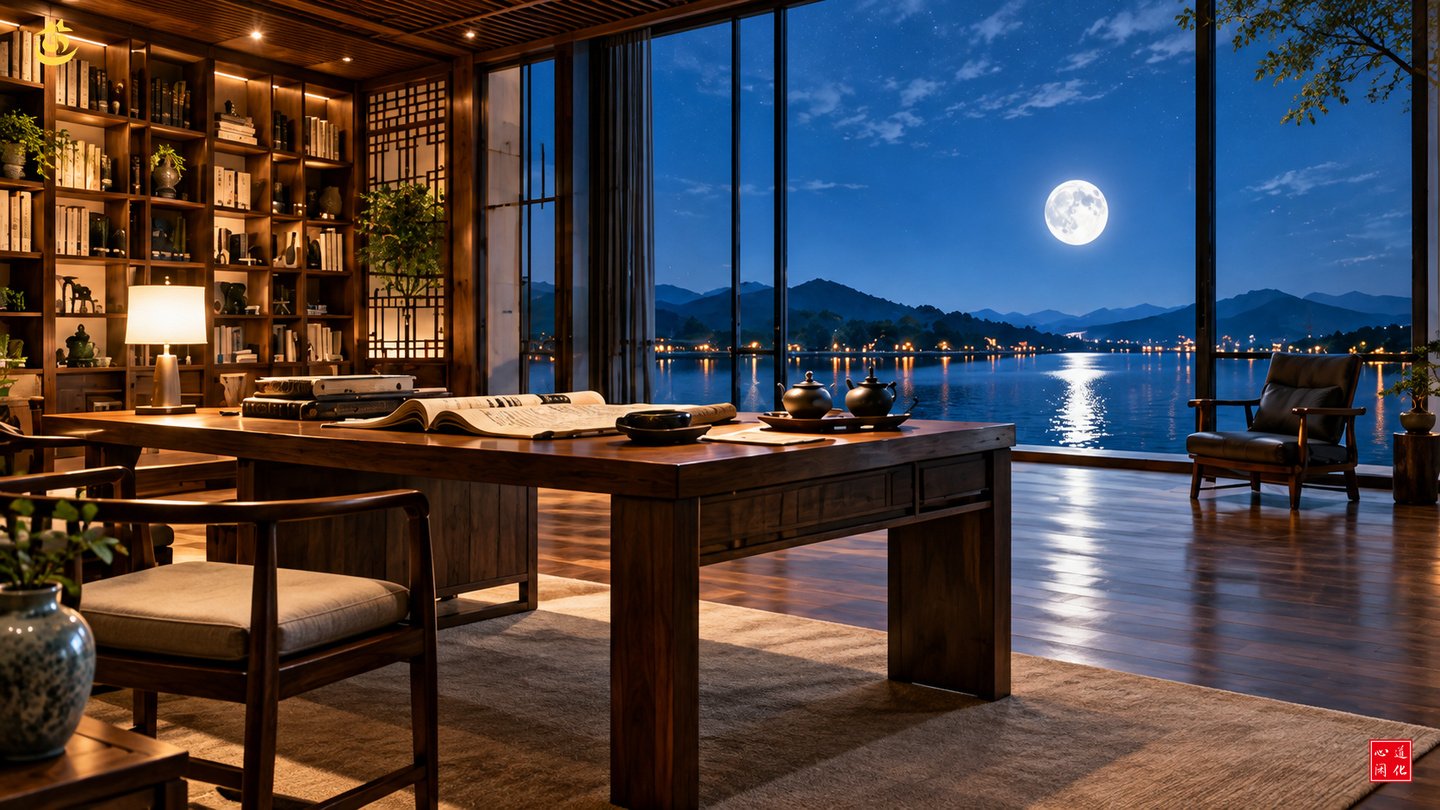
斟酒当月下,清果满素盘 。
一樽齐生死,饮食愈香甜;
二两温五脏,六腑尽合欢。
三杯通大道,夜夜好睡眠;
酒中有仙草,从容汇苦甜。
登高风望远,目及无人烟;
好酒如大道,下愚不相传。
得我液丹者,鹤发亦童颜;
生为自在人,飞升列仙班。
酒中自有逍遥草,令君俯仰笑人间;
劝君饮我长生酒,酒中自有日月天。
YZ.2020.11.1

《玄门赋》
杏林门庭女,好道爱神仙;
起地三香阁,自比武陵源;
从此谢红尘,幽居山林间;
湖边弄碧水,心与清波闲。
提笔写道情,清风入七弦;
自酿长生酒,佳配还阳丹。
玄门三五友,谈笑过青山;
楼头聚青霭,宽裙动紫烟。
莫谓修仙难,凡心志不坚;
世无天路遥,唯有道心远。
YZ.2020.10.8
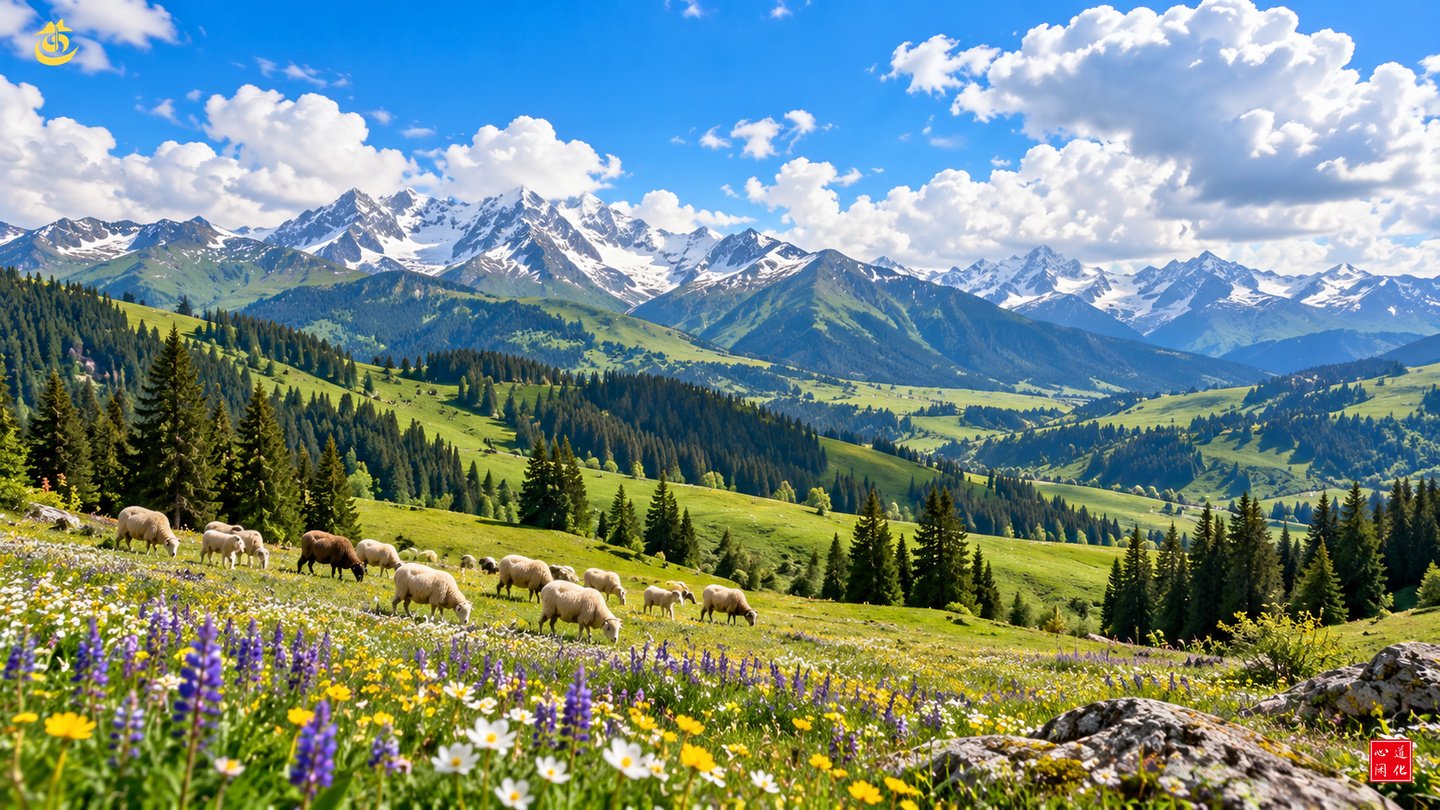
《回春酒》
少年本已远,岁月损朱颜;
生猛当年事,幽幽浮眼前。
饮我长生酒,又见春风还;
晨起归本性,重回桃李间。
起桨荡轻舟,湖上绕青山;
向晚夕阳下,从容一片天。
The Pandemic and Wine
36. The Pandemic and Wine
Originally published by Yang Zi, Daozang Research, 2021-01-01
The new year has begun.
In the past year, humanity has been terrified by the pandemic. Despite how advanced science is, and though scientists the world over have battled day and night, even now we are far from being able to say we have that tiny, invisible, corona-shaped creature under control; a safe and effective vaccine has not even officially begun protecting most people.
China's fight against the epidemic, in the short term and on the surface, seems to have blinded the world with its brilliance. Yet this in no way builds true herd immunity. Without herd immunity, one cannot claim victory over the virus; the road, it seems, is still long. The future is hard to predict; whether it brings fortune or calamity, the heart knows.
As with the plagues that have recurred throughout human history, many peoples and civilizations have declined in epidemics, even perished in them. Yet Chinese civilization has continued unbroken for several thousand years, surviving on and on, and Chinese medicine and Chinese herbal medicine deserve much of the credit. It was in 2020, too, that people could hardly find the "Chinese-medicine skeptics" holding forth on wiping out Chinese medicine. The skeptics were busy too, boosting their own immunity. So people sighed with humor: "Power, money, credentials, capability--none of them can beat immunity."
In Chinese medical and Daoist literature, the relationship between epidemics and wine comes up again and again. One theory is that wine can prevent plague. For example, a book of the Qing records that when an epidemic was raging, people could use wine, or ginger and garlic, to protect themselves:
Whenever an epidemic is rampant, if you must go out and about, drink a few cups of wine before leaving the house; on returning home likewise drink a few cups before eating anything else, and your qi will naturally be strong, and you will never catch the epidemic. But you must not drink to drunkenness. Those who cannot drink may, going in and out, eat ginger and garlic, or stuff garlic in the nostrils; both work very well. (Jingyan Shenfang, of the Qing)
A poem by Wang Anshi of the Song, included in middle-school textbooks:
"New Year's Day," by Wang Anshi
Amid the crack of firecrackers the old year passes; the spring wind brings warmth into the tusu wine;
As the sun shines bright on a thousand gates and ten thousand households, new peach charms are always put up to replace the old.
The tusu here is tusu wine, a medicinal wine. In those days it was also called "the wine of the year"; at New Year every household drank it, to ward off the epidemics that break out so easily in winter and spring.
Again, in antiquity there was a medicinal wine compounded from pepper blossoms and cypress leaves, with the power to dispel epidemic illness; people called it "evil-averting wine." Drinking it on the first day of the new year could dispel noxious vapors and prevent the winter and spring epidemics. There is a poem devoted to its effects and recipe:
"On New Year's Morning, Granted Wine by the Prince of Zhao"
Yu Xin of the Northern Zhou
"On New Year's morning, the evil-averting wine; in the new year, the cup of long life.
The cypress leaves arrive with the inscription; the pepper blossoms come following the ode.
The author of this poem truly deserves mention: he was the great synthesizer of literature of the Northern and Southern Dynasties, and his fu are superb. Of these, his "Rhapsody on the Withered Tree" is the most famous--one sighs over trees to speak of men, using trees as figures of men, and it has moved people from antiquity to the present. Mao Zedong in his lifetime especially loved this fu of his; in his late years especially, he would chant it through tears again and again. I will devote a piece to Yu Xin and this fu of his someday.
Last year, because of the pandemic, I put a great deal of time and energy into medicinal wines. Back in the north, winters were cold, and I would steep wine and give it to friends to keep their bodies in repair. After coming south, I had stopped playing with wine. When the pandemic began, demand revived this amateur hobby of mine. And friends who had taken it said it worked well, which encouraged me so much I could not stop; the more I tinkered, the more zest I found. Nourishing life is a Daoist thing above all. Daoists since antiquity have devoted themselves to studying how to lengthen the lifespan as far as possible.
Hua Tuo was the first to propose the idea that free-flowing blood and qi can keep a person from illness, and so lead to long life. His "Five Animal Frolics" are in essence a daoyin practice. Wine has the effects of relaxing the channels and quickening the blood, of warming and unblocking and dispersing, and the ancients used it originally as a medicine. Later, some Chinese medicines were simply processed "in wine," or wine was used "as the envoy," to lead the other medicines swiftly to their effect. The clever ancients used wine's "roving and darting" action to carry Chinese medicines, the refined essence of the five grains in food, and so on, throughout the body. China's physicians and Daoists carried out a vast amount of practice in the field of medicinal wines, and so there arose the culture of compounding medicinal wines.
Chinese medicine says "wine is the chief of a hundred medicines," because wine is good at driving the momentum of medicines and speedily delivering them to the zang and fu, to the four limbs and the hundred bones. Steeped in wine, a medicine reaches the whole body four to five times faster than a decoction. The medicine borrows the power of the wine, the wine abets the momentum of the medicine; the two combine forces and the effect is doubled. Because it is easy to prepare, stable in medicinal nature, safe and effective, and can both prevent and treat illness and extend the years of life, medicinal wine became the health product the Chinese have had, uniquely, since antiquity; it was also the indispensable tonic of emperors through the dynasties, and ordinary households compounded it too, only less fastidiously.
Having just mentioned decoctions, let me add a bit of common sense. Some people find decoctions bitter and, after drinking their medicine, gulp down hot water. That is really not advisable, because before the medicine's effect has reached everywhere in the body it is forced out with the urine, without time to act. And then there are the ways people brew the medicine--putting it straight on the fire without soaking it first, boiling it at full heat the whole time, some even using iron pots and other metal vessels--and so on. Ai! One often hears people say, "Chinese medicine is very safe, with few side effects, but it works slowly." In fact, the main reason Chinese medicine's effects seem relatively slow is that people do not know how to brew it, or how to take it. Since today's subject is medicinal wine, I will not go into how to brew decoctions.
Though wine is "the chief of a hundred medicines," in medicinal wines its position is defined as the "envoy" medicine. In Chinese prescription, the rule is "sovereign, minister, assistant, and envoy." Generally speaking, "sovereign, minister, assistant, and envoy" has three meanings:
One is by the properties of the materia medica: those that chiefly nourish life are called sovereign medicines; those that chiefly nourish the nature are called minister medicines; those that chiefly treat illness are called assistant-envoy medicines:
"Of the superior medicines, one hundred and twenty are sovereigns, chiefly nourishing life; of the middle medicines, one hundred and twenty are ministers, chiefly nourishing the nature; of the inferior medicines, one hundred and twenty-five are assistants and envoys, chiefly treating illness; in using medicines one must fit sovereign, minister, assistant, and envoy together." (Shennong Bencao Jing)
Seen from this ranking, the Chinese place great weight on preserving life and nourishing the nature, greater than on treating disease. This is Chinese medicine's culture of "treating illness before it arises": preventing epidemic is more important than curing disease. Many people know this theory; few practice it. When young, people eat and drink without restraint, match one another drink for drink and brute force for brute force, bare their navels and expose their joints, submit to abortion again and again, and so on, wrecking their bodies without bottom line, until their immunity grows worse and worse. Such people do not understand how precious health is, do not know prevention "before the illness," and only when one day they fall suddenly ill do they regret it deeply. Then they swallow health supplements without method or measure--ginseng and cordyceps in particular, their prices driven sky-high, though they are after all only a herb, and every one has a substitute; used ignorantly and at random, the danger is great. Ginseng greatly supplements the original qi, but if the constitution does not suit it or the supplementing goes too far, it works in reverse--and still people keep on supplementing without end. Hence the saying: "Ginseng kills without blame; arsenic saves without credit." The other layer of meaning of "sovereign, minister, assistant, and envoy" is the weighting of the materia medica in a given prescription: whichever medicine is most central is honored as the "sovereign medicine"; those that serve the sovereign are "minister medicines," and the rest are named in order by their tasks. This account derives from the Huangdi Neijing (Inner Canon of the Yellow Emperor): "The medicine that governs is called the sovereign; that which assists the sovereign is called the minister; that which answers the minister is called the envoy." (Suwen, "Zhizhen Yao Dalun")
The Qing physician Mr. Wu Yiluo explained this in detail: "That which governs the illness is the essential medicine matched to the symptom, and so is called the sovereign. The sovereign is few in ingredients but heavy in weight, for one relies upon it as the master. Assisting the sovereign, one has the minister: rather more in ingredients, rather lighter in weight, to remedy what the sovereign cannot reach. That which answers the minister is called the envoy: its kinds may vary, and its weight is lighter still, to serve as the courier and guide that opens the ways. Such is the meaning of sovereign, minister, assistant, and envoy."
In a medicinal wine, wine is the organic solvent; it can very well "grab" the powers out of the materia medica, and because its talent for "roving and darting" is strong, it can also deliver the medicinal nature swiftly to every part of the body. So Chinese medicine defines it as the "envoy" medicine.
Beyond its guiding function, the envoy medicine also has a harmonizing action. In the Chinese materia medica the most celebrated harmonizer is licorice; when an ordinary physician of Chinese medicine writes a prescription, the final medicine in it will almost always be licorice, to harmonize all the medicines. Though licorice serves as an envoy medicine, its importance cannot be overlooked, so people often compare it to the role of the state elder at court--hence the saying: "In the court, the state elder; among medicines, the licorice."
The third meaning of "sovereign, minister, assistant, and envoy" is our deeper culture of Daoist medicine--"the balance of the four images." The human body is a balanced structure, a whole; what a Chinese prescription aims at is the fitting match of the various materia medica, so that their combined force reaches its best, and suits the overall equilibrium of the body's front and back, left and right, inside and outside, above and below, so that one feels no discomfort after taking the medicine. That the side effects of Chinese medicine are small--here lies the secret. This is the essence of our traditional culture of "the middle way."
---
The above is perhaps too full of technical terms, and the piece is bound to be dry. People are too busy; no one has a stretch of unbroken time to sit still and take information from words. Some friends even hold that flicking through videos on a screen already gives us learning enough to fill five carts. So, I shall try not to write anything technical. Hehe.
Speaking of reading and the gathering of information, I cannot help straying into another topic. People like to gather information through short, fast visual stimulation (I like it too, in fact); though it is passive reading, gone in a flash, flicking the screen feels smooth and delightful. Whereas reading words takes brainwork; thinking, and telling true information from false, both seem out of fashion, unable to keep up with our demand for speed. For thinking and discrimination call above all for logic, and people who lack a grounding in philosophy seldom have a complete system of logic; so reading makes them tired, "too lazy to think"--that is, unwilling to think at all. In this age, people have grown used to accepting one mainstream set of values, or the values of the crowd: calling businessmen "Daddy" ("Papa So-and-so" and the like), calling actors "Lord" ("Lord So-and-so" and the like). As long as everyone calls them that, even the daddy and grandpa at home raise no objection; so the whole society so addresses them and feels no shame, feels nothing amiss. To be without power is mortifying; to be without money is humiliating; but to be without culture--no one ever feels disgraced. In all China's several thousand years of history, this is a phenomenon peculiar to our age. And the deep cause behind it is that the media and certain public intellectuals, lacking in breadth and conscience, have used the new media to strip people of the power and capacity to think.
People are used to fast headline-reading, picture-reading, even passive short-video reading, and do not think deeply or weigh the truth or worth of information. When our tongues lose the power to tell tastes, we grow anxious and must see a doctor. But when our brains lose the power to tell information apart, we notice nothing at all. This is why rumor and slander flourish. Add the new technologies: makers of rumor can photo-shop images, fake voices, and splice materials of every kind as smoothly as flowing water; so that, in theory, any information anyone wants to publish can be manufactured to order, so long as interest demands it. Without the restraints of a moral and ethical bottom line, these technologies may be a catastrophe for humanity. Only people with the powers of logical inference and of telling right from wrong can hope not to be hoodwinked; only they may be the winners of the future. For many, guided by false information, will step by step become the brain-dead fans of some medium (or of certain so-called celebrities), and so grow ever more blind, ever more stupid. Such people now make up no small share of the population; I truly do not know how to express this regret.
To succeed in one's career, to escape loneliness, one must become "one of the group," and so has no choice but to join a crowd. History shows that the power of crowds is great, but the wisdom of a crowd does not grow as the crowd grows. In France there is a monograph on crowd psychology which the psychologist Freud esteemed extremely, calling it "a masterpiece fully deserving of the name, describing the collective mentality with great delicacy." It says:
"Only in a crowd can these fools, half-wits, and the resentful rid themselves of their sense of their own baseness and impotence." (Gustave Le Bon of France, "The Crowd", p. 44)
"Crowds have so far departed from the very basis of their existence that we can no longer hold to our own judgment of what happens in this world." ("The Crowd", p. 16)
"Crowds can eliminate a person's independent consciousness and independent capacity for thought. In fact, long before their independent consciousness is lost, their thought and feeling have already been assimilated by the crowd." ("The Crowd", p. 17)
In recent months, certain populists have begun misleading and exploiting citizens who lack the common sense to tell information apart, gloating endlessly over the epidemic abroad. They are especially fond of inflating foreign infection figures, then setting them against our own, and so producing a sense of superiority of a Celestial Empire, to prove our system beyond compare--and even imagining this is national confidence. More laughable still, some melon-seed-cracking onlookers "who worry before all under heaven worries" fret endlessly over the fate of the Western countries: they do not worry about their own performance at work, nor their children's marks, but wear their hearts out all day for foreigners, for the life and safety of all the world. Any information damaging to the West's image--true or false, never mind--they spread at once, far and wide. How could the populace know that inflating infection figures was a dirty trick some Western politicians thought of first? Why do they not conceal the numbers? Because they dare not; because there is no need; and because the larger the infection count, the greater the bargaining chips, perhaps, when the final reckoning comes. Though there is yet no absolute conclusion where the pathogen first came from, in which country or region, that the large-scale outbreak began in China and spread swiftly across the globe is an incontestable fact. Some Western politicians are already plotting to turn the epidemic to profit at China's expense, and we are still helping them inflate the numbers. Compatriots who love to watch the Western infection figures climb--how do you think this page of history will be written? Have you thought??? People who delight to see other countries' epidemics run out of control--have you given the consequences a moment's thought?
Just a few days ago, pieces like "The Great London Exodus" and "Supermarket Shelves Stripped Bare" became hot items people madly forwarded, and for a time hearts quailed. My child being in London, our neighbor in Tianjin, out of care for the child, could not help sending word (she helped raise my child, so she loves her as her own): she had a stock of a certain Chinese patent medicine and wanted to send some to my child. So I went to confirm with the child how severe the epidemic was and its terror index, and whether we too should flee London; and asked whether she could still buy food and daily goods. The child laughed out loud:
"Mom, they're just going home for Christmas! It's like our Spring Festival travel rush--don't we stockpile loads of food at New Year too?"
Ah--look at my IQ, look at our logical powers, look at our cultural common sense. Hehe.
---
I have strayed far.
Back to medicinal wines.
These days I am bottling wine--manual labor. The compounding of my medicinal wines has reached the 81st formula. Since it is not yet automated, filtering is the most strength-consuming step; I am basically not up to it, and after each bottling I need a long stretch of rest before I recover. To extract the properties of the materia medica better, some of the medicines are steeped after being powdered, so if the filtering is not clean, taking it scratches the throat, and people of yin-deficient constitution may even get inflamed. As it stands, this wine is aimed mainly at people of yang-deficient constitution; by the effects of the materia medica, it chiefly warms and supplements the spleen and kidney, regulates and nourishes the five zang, delays aging, and raises immunity.
I am myself of yang-deficient constitution: cold limbs and dread of chill, icy hands and feet, symptoms of many years, which I never took seriously before; but with age I have discovered the importance of the body's balance. Add that many Chinese medical classics, and the Daozang (Daoist Canon), contain great numbers of cases proving the positive effect of medicinal wines on nourishing and preserving life; so I began steeping wine by the ancients' methods--"compounding by the ancient rules," in the professional phrase. Gradually I found it the best physical relief from reading and writing. Great fun: one feels oneself transported at once back to being a "chemist" of old.
China's earliest chemists were all Daoist priests: they lit fires and refined elixirs, which was in fact experimentation on the properties of matter. Of the four great inventions our nation is proudest of, three are closely tied to Daoism or the Daoist school. Gunpowder, for instance, was a "by-product" invented by the Daoist Qingxuzi while refining elixirs; printing came from the Daoists' woodblock printing of the Northern and Southern Dynasties; and China's earliest theory of the compass rests on the doctrine of yin, yang, and the five elements.
Most of those who have taken my medicinal wines fully acknowledge the effect, friends of yang-deficient constitution especially. At first, one common reaction was that "the Chinese-medicine flavor is a bit heavy"--that is the polite version. Friends on close terms simply complained outright: the effect is absolutely there, but--bitter!" Because of the pandemic, demand for medicinal wines has shot up, but getting tongues accustomed to Maotai to give a like to the taste of a medicinal wine--that has sorely stumped me. So I have kept at fine-tuning the formulas, hoping to make them as easy on the mouth as possible without sacrificing the effect. The process has not been easy, but I delight in it. In the blink of an eye, a year has gone by.
I have just spent several days filtering a fresh batch, using a 0.1-micron filter; the color is plainly brighter, and the taste indeed better. I was just about, after the holiday, to send it out as needed, but early this morning came a letter from a friend who has taken the wine:
"The wine need not be filtered fully clear. I remember once hearing a doctor who does Chinese-medicine research in Japan say that after they removed the dregs of the herbs, the effectiveness of the medicine actually dropped."
Truly, one does not know whether to laugh or cry.
Suddenly I find I have chattered on a great deal. Well, it is the New Year; so be it. I have a vague feeling that much typing exercises the five fingers, and one may live to 150. Haha.
As usual, two Daoqing chants, wishing you, beyond the screen, a happy New Year! Good fortune in full measure!
"The Wine of Long Life"
I have a wine of long life; the original formula came from the immortals;
Its herbs from heaven above, its nectar from the Wine Spring.
Its compounding observes the four seasons; its preparation accords with nature;
Pour the wine beneath the moon; let fresh fruit fill the plain dish.
One cask levels life and death; food and drink taste all the sweeter;
Two liang warm the five zang; the six fu are all in delight.
Three cups open the great Dao; night after night, sleep is sound;
In the wine there is an herb of immortals; calmly it gathers bitter and sweet.
Climb high, the wind carries the far view; the eye reaches where no smoke of men rises;
Good wine is like the great Dao: the dullest never receive its transmission.
Who gains my liquid elixir: white hair, and yet a child's face;
Born a free and easy soul, to rise in flight and join the ranks of immortals.
In wine there grows the grass of ease, making you bow and smile upon the human world;
I urge you to drink my wine of long life: within the wine are sun, moon, and heaven.
YZ.2020.11.1
"Rhapsody on the Mysterious Gate"
A woman from a family of physicians, loving the Dao, cherishing the immortals;
She raises a three-incense pavilion from the ground, and likens it to Wulingyuan, the Peach Blossom Land;
Thenceforth she bids the red dust farewell, dwelling hidden among mountain woods;
By the lake she plays the jade-green water, her heart at ease with the clear ripples.
Taking up the brush she writes Daoqing chants, the clear wind entering the seven strings;
She brews her own wine of long life, her fine match the yang-returning elixir.
In the mysterious gate, three or five friends, laughing and talking past the green hills;
At the tower head blue haze gathers, wide skirts stirring the purple mist.
Say not that immortality is hard: the common heart's resolve is weak;
The world has no far road to heaven; only the Dao-heart is far.
YZ.2020.10.8
"The Wine of Returning Spring"
Youth is already far away; the years have worn the rosy face;
The fierce deeds of those years float dimly before the eyes.
Drink my wine of long life, and see the spring wind return again;
Rising at dawn return to your true nature; go back among peach and plum.
Dip the oar and row the light boat, rounding the green hills on the lake;
Toward evening, beneath the setting sun, at ease beneath one spread of sky.