醉酒与养生--《食诫篇》(3)
3、醉酒与养生--《食诫篇》(3)
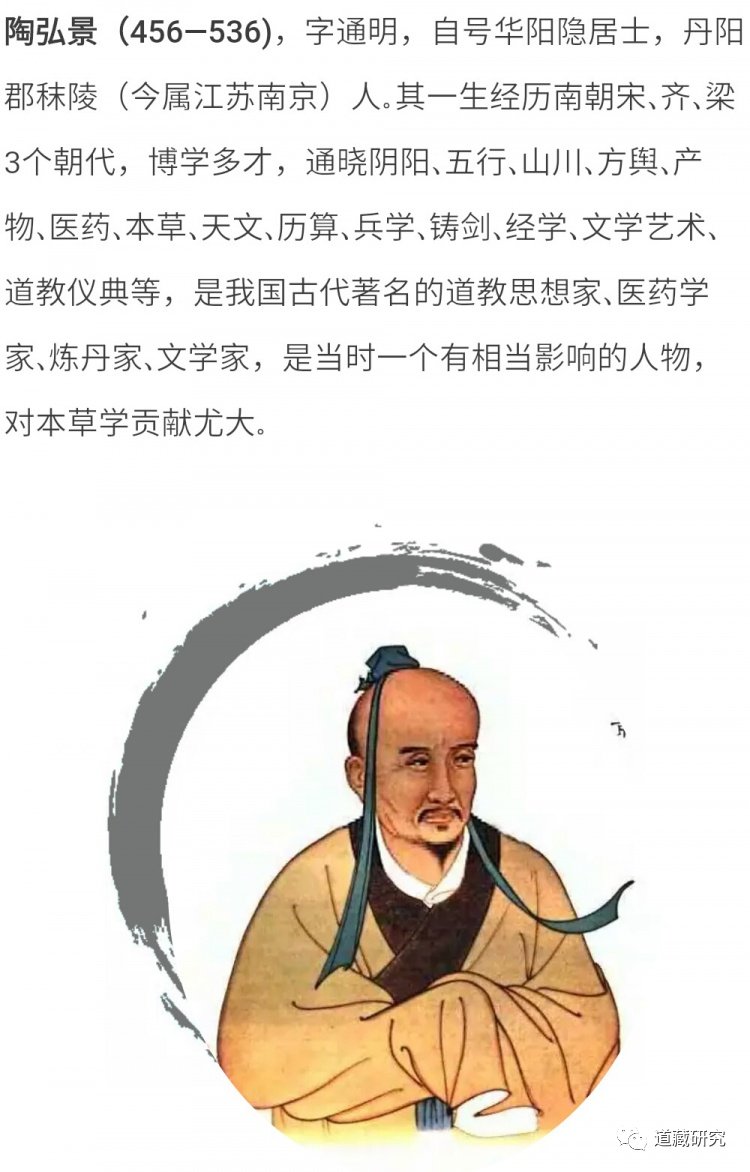
今天接着介绍陶弘景《养性延命录》第二章的第三部分。
春宜食辛,夏宜食酸,秋宜食苦,冬宜食咸,此皆助五藏,益血气,辟诸病。食酸咸甜苦,即不得过分食。春不食肝,夏不食心,秋不食肺,冬不食肾,四季不食脾,如能不食此五藏,尤顺天理。
杨子注:春天适合吃辣味,夏天适合吃酸味,秋天适合吃苦味,冬天适合吃咸味。如果读过本公号之前发过的《孙真人摄养论》一文,对此段内容不难理解。陶弘景与孙真人都是养生专家,他们的意见基本一致,只是孙思邈已是唐代了,对陶弘景的一些理论进行了一些补充。照此进食,有助于五脏的保养,增加人的血气精力,排除诸病的发生。但所食酸、咸、甜、苦,不要过量。凡食,春天不要吃肝脏,夏天不要吃心脏,秋天不要吃肺脏,冬天不要吃肾脏,四季都不要吃脾脏。如能不吃此动物五脏,尤其与天道相顺应。
我们这个民族,吃,太讲究。冷热酸甜都很讲究,就是不能太过。处处体现着我们的“中和”文化。而且,按二十四节气进补,也是一种饮食养生的大文化。中国人本能的都知道,外国人一时半会理解不了。一讲到吃,每一位中国人都是专家。每一位妈妈,都是顶级大厨。中国传统女人,她们不读书不识字,但能维系住一个越来越大的家族,都是因为她们的智慧多。在中国女人最强的竞争力中,出嫁之前,最大的竞争力(甚至可以说唯一的竞争力)就是长相(这与中国男人几千年来只看长相的阅读习惯直接关系)。但嫁人之后,女人其他的品质就变得越来越重要了,在女人所有的竞争力中,排名前三位的是:温柔、胸怀、厨艺。
女人的胸怀,男人的战场。一个有胸怀的女人,她辅佐的男人就有无限的事业前景。女人的视野和胸怀有局限,是男人最大的不幸。这个历史是都是有丰富案例的。不再列举。很多男人也很有事业心,气概冲天,就是老婆面前不敢出大气。我们一位同学有一次喝多了,嘲笑另一位同学怕老婆,说他“外面英雄好汉,回家脓包软蛋;河东狮一吼,英雄浑身抖”,话音未落,他看到他老婆脸色不好看,马上补了一句,说:“这样的男人,才是真正疼老婆的,可不可爱?”大家哄堂大笑。现在“惧内”似乎已不是丢人的事了,反而是光荣的事。很多做小视频的经常拿怕老婆来当段子讲。

胡适是民国时期知识分子中怕老婆最典型的。他们那一代人都是有较好的国学功底,然后又接受了西方教育,再回到中国来为这个民族寻求出路的。所以他们的思想代表着当时知识阶层的时髦动态。蒋介石最后给他评价是“新文化中旧道德的楷模,旧伦理中新思想的师表”,是非常有水平的。因为胡适极其怕老婆,总担心社会瞧不起他,于是他经常寻找一些案例来为自己开脱。他研究一番中外文化后说,凡是大男子主义的国家,都是独裁国家;凡是男人怕老婆的国家,都是民主国家。如果这个理论真成立,那么我们现在可以恭喜九泉之下的胡适先生,我们已真正进入了民主国家行列了。现在社会,怕老婆已经不丢人了。男人们说:“这不是怕,是爱。”我们的民主化进行,只需要女权至上就可以快推进了,还搞什么体制改革,办女权培训班就行了。呵呵。扯远了。
传统文化中,教育女人相夫教子、贤惠做家务的内容很多。其中一种说法是:如果掌握了一个男人的胃,就掌握了这个男人。这个理论是不是对男人有所折辱且不论(因为这里暗示男人只知道吃似的),但现实生活中,确实如此。不要说男人,就是女人,对味觉的依赖也是普遍的。我们都想妈妈,这自然包括想念妈妈做的饭菜香。“家的味道”,这是妈妈的法宝,也是开饭店的秘诀,一个好的、长期固定的口味,就有不断的客源。吃,是民生之天。怎么吃才是最大的学问,吃到营养,吃出健康,吃出长寿,才是真正的懂吃。

燕不可食,入水为蛟蛇所吞,亦不宜杀之。
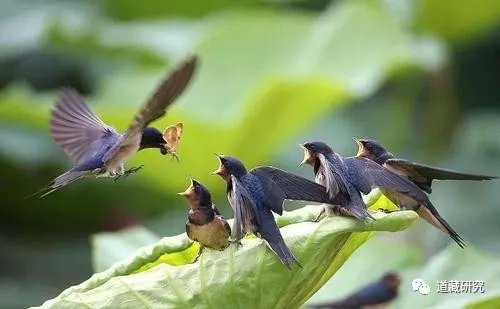
杨子注:燕子不可以吃;吃了燕子,入水会被蛟龙所吞(这个说法我无法佐证,也解释不清,但也不会妄然否定,只是直译);也不宜捕杀它们,因为中国人认为燕子是神物,春天来了,燕子到家中的房梁上安家,一般人家都很欢迎。小燕子从南方飞回来了,需要物色一个家。选址,是燕子最具有战略眼光的工作。先找一户合适落户的人家,开始搞基建。它们勤快地飞来飞去,衔来春泥,在堂屋正中间的梁头上,做个结实的窝。然后开始在里面生儿育女,产卵孵化,一窝燕子把黄黄的小嘴伸到窝边时,据说是吉祥降临的时刻。而且,燕子有一种择窝的大智慧,就是会本能寻找条件好的人家。“旧时王谢堂前燕,飞入寻常百姓家”,如果大户人家不倒台,他们厅堂里的燕子会不会飞入寻常百姓家呢?可见燕子的势力眼。
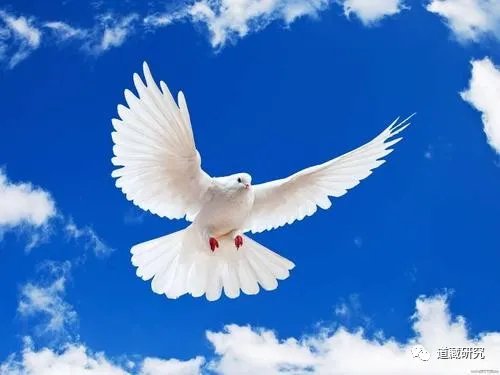
我们有一种俗语,形容非常势力,爱巴结权贵,同时也看不起穷人的那种,叫“鸽子眼儿”,很好笑。鸽子的口碑与形象,多与其超强的飞行能力和归巢能力有关,所以鸽子古人用鸽子来导航或传递书信,甚至是和平的象征。但为什么会有“势力眼”的外号,我没想太明白,可能与鸽子喜欢落在高屋顶的习惯有关。也可能与鸽子眼睛的形状有关,我观察过,虽说不丑,但可能因为太圆了,显得不太厚道,再加上鸽子非常敏感,这可能人们认为鸽子圆滑世故的原因吧。《世说新语》记载阮籍能作青白眼,看到俗人他就翻白眼,而对自己赏识的人,就以青眼相待。
籍又能为青白眼,见礼俗之士,以白眼对之。及嵇喜来吊,籍作白眼,喜不怿而退。喜弟康闻之,乃赍酒挟琴造焉。籍大悦,乃见青眼。由是礼法之士,疾之若仇。(《晋书‧阮籍传》)
用现代话讲,这叫“分别心”。去“分别心”可是非常不容易的事。看到衣衫褴褛的穷人,连狗都会狂吠不止,何况人呢?动物的心思,不比人的差。十多年前,我在翻译唐朝道士谭峭的《化书》中,讲到不同的鸟儿,与人类相处的方式也不同,从而有不同的命运,很是有趣,以前的文中提过。不再重复。在我看来,燕子倒是比鸽子还势力。但不知道为什么燕子的名声那么好,因为身材好?长得俊?还是因为携春而来?呵呵,不知道了,反正人们都很喜欢咏写燕子。而且不同的人,不同的心情写燕子,往往有不同的情形:
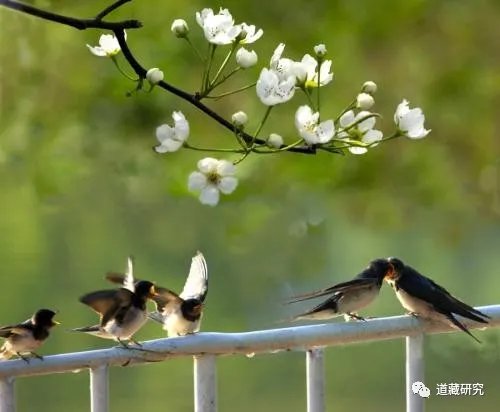
我印象最深的写燕子的诗,是唐朝诗人白居易写的:
《燕诗示刘叟》
梁上有双燕,翩翩雄与雌。
衔泥两椽间,一巢生四儿。
四儿日夜长,索食声孜孜。
青虫不易捕,黄口无饱期。
觜爪虽欲敝,心力不知疲。
须臾十来往,犹恐巢中饥。
辛勤三十日,母瘦雏渐肥。
喃喃教言语,一一刷毛衣。
一旦羽翼成,引上庭树枝。
举翅不回顾,随风四散飞。
雌雄空中鸣,声尽呼不归。
却入空巢里,啁啾终夜悲。
燕燕尔勿悲,尔当返自思。
思尔为雏日,高飞背母时。
当时父母念,今日尔应知。
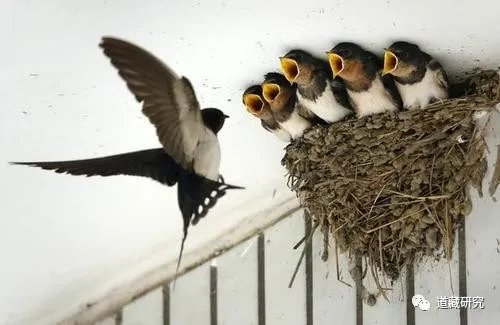
这首诗,我是读一次,哭一次。为人子时,读起来落泪;为人母时,方知真味。“须臾十来往,犹恐巢中饥”,所有的父母,每天上班下班,风里来雨里去,还是担心为孩子付出的不够,积累的不多。一旦羽翼成,引上庭树枝。一旦长大成人了啊,有本事了,有见识了,父母的见识就不足以再辅导他们了,开始对父母大声讲话了。天底没有比这更伤心的事了,但父母年迈时的心情,年轻的燕子,不会懂。等有一天自己有了经历,懂了。双亲已不在。很多家庭都是如此。这是人性,无关道德。
家里还有父母的,能回去的,就常回家看看吧。如果父母到了另一个世界,想回家听父母唠叨,也不是车票可以解决的事了。天堂哪里寻,恐只在梦中。
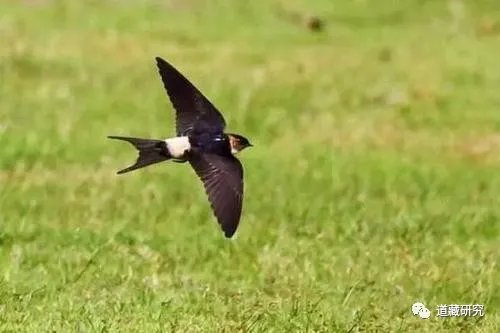
《归燕》杜牧
画堂歌舞喧喧地,
社去社来人不看。
长是江楼使君伴,
黄昏犹待倚阑干。
杜牧的寂寞和无聊,跃然纸上,而且是那种 “没人搭理、不受待见的落寞”。印象中,“黄昏倚阑干”这一类吃饱寻愁的无聊事,都是宋朝文人腻腻歪歪的小资情怀,原来唐朝人的黄昏,早已经把栏杆倚上了。倚栏杆是怎样的一种感觉,我还真不知道,因为我从没有倚过。小时候接受是传统教育,家教,意味着保守又严格。站要直,行要正,倚门、倚树、跷二郎腿都是不行的,所以小时候行走坐卧都很拘束小心。后,读书,了解到女人倚门,在古代有两种意思,一是老太太倚门,叫“倚门之望”,就是翘首以盼儿女的那种慈母之苦,意为心酸、牵挂、孤寂、无助;另一种是年轻女人倚门,只有青楼女子才会“艳装倚门”,以待客人。读过这样的“国学”,从小到大,再累,都直直地站着,不敢倚任何东西。渐渐地,行为反过来影响性情。生命中,不但不敢倚附东西,也变得不敢依靠任何人。看到一个电影,名字不再记得了,故事大概也不太记得了,一个白人女性落到了土著部落中,渐渐忘记了自己的语言,后遇到男主角,但语言不通了,她费劲地用肢体语言告诉对方,自已名字叫“stand in wind”,印象太深刻了。多么戳心的名字。每一个在风中独立的身影,都有一颗生了茧的心吧。
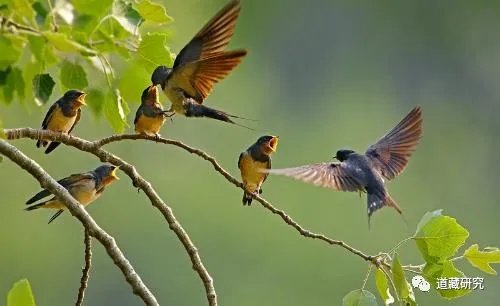
回到倚栏杆。感觉多是宋代的文人。个人体会,读宋词,文字是优美的,但不能常读,连读上几首婉约派的词,整个人都没力气走路了,顿时有林妹妹的多情与脆弱。这是我相对更喜欢唐诗,而远离宋词的原因。唐诗多豪迈、豁达、直抒胸意,爽爽利利的。宋词嘛,也有豪放的,但大多数都是病弱兮兮的,比如,也是写燕子的,晏殊的词句:
无可奈何花落去,
似曾相识燕归来。
看到“无可奈何”两字,特别无助。有一首山西民歌叫《想亲亲》,我们班有位师兄张院长(我们亲切地称呼他二哥)的代表作。每次同学聚会,酒过三巡,菜过五味,杯中物已让不少同学们头脑开始麻麻的了,于是好戏开始了。表演节目!在同学们的欢呼声中,二哥起身,端着酒杯,表情到位,声调极具山西风格:
“想亲亲,想得我手腕腕软。呀呼嘿!拿起了筷子我---端不起碗……呀呼嘿!”
因为二哥唱得最好,最能凝聚我们班的欢乐之心,于是大家决定班里的接头暗号是:“想亲亲,呀呼嘿”,有一次在北京朝阳公园烧烤,好几个班在一起,玩到很晚,天黑了看不清人,一个同学说:“想亲亲”,如果对方不答,就走开了。如果有人对上:“呀呼嘿”,立即就知道是同班的了。亲得不得了。笑死人。

看到“无可奈何花落去”这句词,真是没有一点力气了,连打字的力气都没了。这真是“读宋词读得我手腕腕软…”哈哈哈…
杜牧写燕子是“社来社去人不看”,文字中透着忧伤,透着哀怨。真是可怜可怜又可怜。换了我,爱看不爱,随他便。自由自在岂不更好,在这一点上,我更喜欢杜甫的那句:
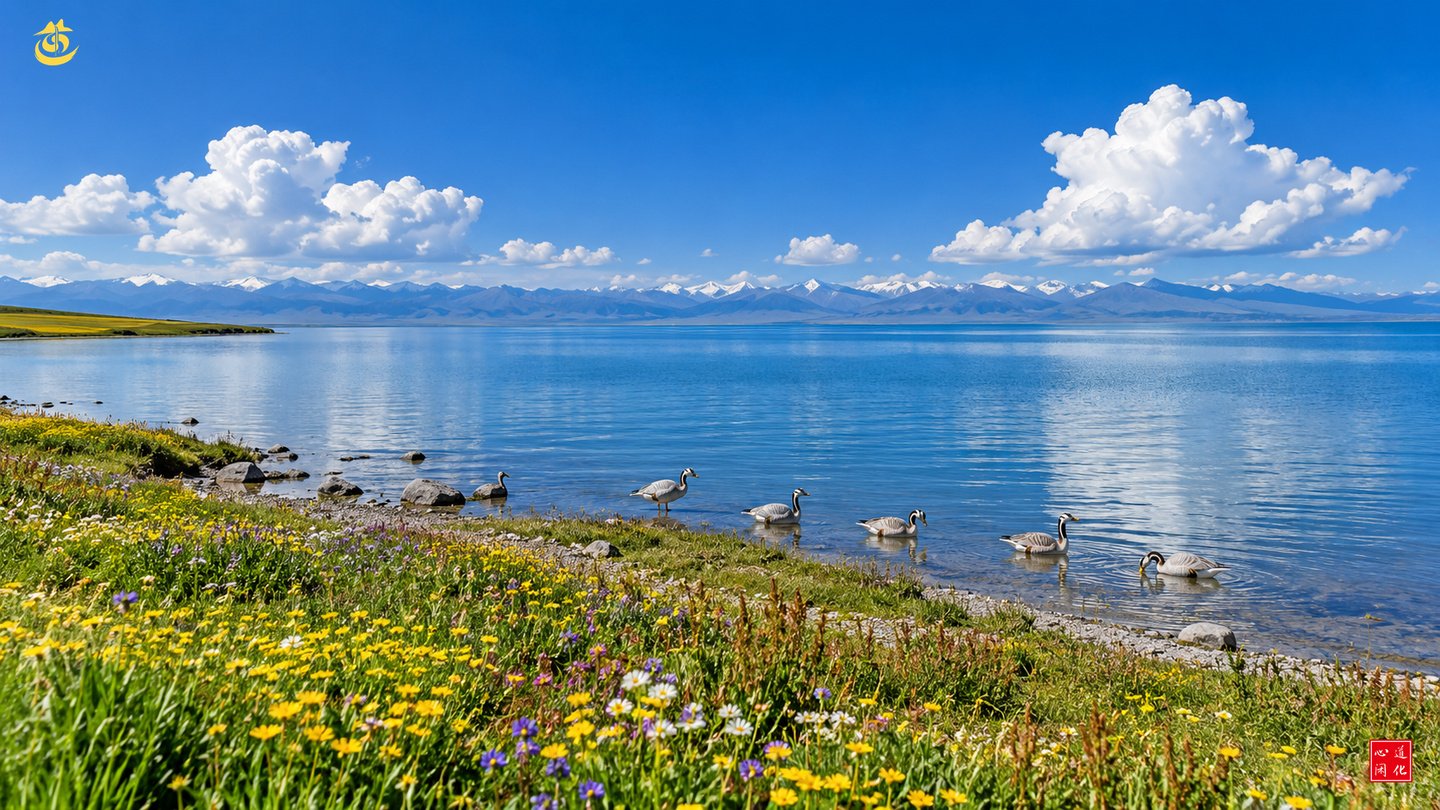
自来自去堂上燕,
相亲相近水中鸥。
但这首诗可能是杜甫在家过安闲日子,心情好的时候写的。同样是杜甫本人,同样是写燕子,下一首就很不同了:
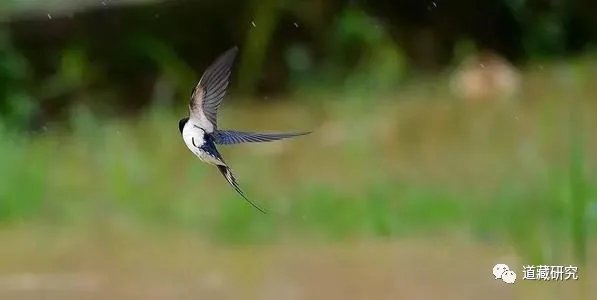
《双燕》杜甫旅食惊双燕,衔泥入此堂。应同避燥湿,且复过炎凉。养子风尘际,来时道路长。今秋天地在,吾亦离殊方。
这里的堂前燕子,不再是“自由自在”的幸福鸟了,而是和作者一样,是历经世态炎凉的飘零客了。作者心情,经历者才懂。读古诗,用的是心,是经历。人生如梦,人生如幻。
燕子不能吃,鸽子能吃吗?能。鸽子肉最为人知的功效是伤口复合能力,一般手术后炖鸽子汤(也有炖黑鱼汤的),长伤口比较快。写到这里,也顺手说个偏方法吧,麻雀,也是可以吃的,有壮阳功效。以后在药膳专章中细说配料和做法。
饱食讫即卧成病背疼。饮酒不欲多,多即吐,吐不佳。
杨子注:饱食完毕后就睡卧,会使人生病或背疼。饮酒多了会呕吐,呕吐是食物倒流,对身体不好。现实生活中,喝酒是社交中最不可缺少的饮品,喝酒就难免不醉,对此,古人也是有方法的,我们看药王孙思邈真人怎么建议的:
饮酒不欲使多,多则速吐之为佳。(孙思邈 《千金要方》卷二十七《道林养生》)
孙思邈真人也是说饮酒不能过多,但万一喝多了怎么办呢?立即吐出来为佳。不能等酒精深入脏腑了,造成伤害,被动的呕吐是非常伤身体的。这一观点,并不孤单,葛仙翁也持此观点,他说:
“沉醉呕吐,伤也。”(葛洪 《抱朴子内篇》)
很多人可能觉得醉后吐了,酒精不在胃里烧灼就好了,身体就是恢复了。其实不是的,身体的损伤,是找补不回来的。胃想吐的时候,其实是身体已经达到了无法承受的地步,呕吐伤的是五脏元气,酒肉交加,会催成一种病,叫注病。关于这个病,我会在本章后面几天发的段落中详细解释。
“醉卧不可当风,亦不可用扇,皆损人。”
喝酒醉了不能躺在风口上,也不可用扇子,都是损伤人的。陶弘景这一记录,互参文献也很多,其中,日本人丹波康赖引用《养生集要》的说法:
“酒醉不可当风,当风使人发音喑(yin1)不能言。……夏日饮酒醉流汗,不得以水洗泼,及持扇引风,成病”(日 丹波康赖《医心方》)
大意:醉酒后不能吹风,吹风了会使人喉部损失,失音,不能讲话。而且还会引起慢性的咽喉顽疾。夏天,因为天热,醉酒后更容易出汗,切记不可以用冷水洗脸洗澡,也不能用扇子扇风,会引起疾病。
我见到过很多慢性咽炎的朋友,他们说不抽烟、不唱歌,就是不知道什么原因造成的。其实古人早记录了发病原因:醉酒当风!有呼吸道疾病的朋友请回想一下,是不是这样的。这里忽然想到一个治疗喉咙卡老痰的偏方:煮海浮石(需长期坚持)。海浮石就是海上漂的有孔石头,比较轻,上面有小窝窝孔,估计是有点象肺的结构吧,所以古人用来治呼吸系统的病症。古人真是聪明,他们效法大自然,根据性质来活用大自然的“相生相克”法则。比如用花生叶治失眠,就是因为花生叶“白天开、晚上闭”的自然特性。比如用与肾外形相似的植物去补肾,这叫“以形补形”,很多中药就是这样试出来的很有趣。中选取中央台健康频道(中华医药)有关于海浮石治老痰一个纪录片,需要的朋友可以去查找看看,供参考。
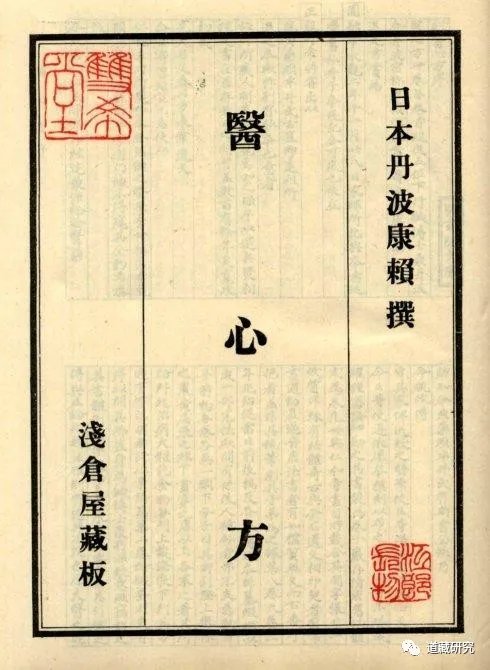
提到了《医心方》的作者丹波康赖,就简单说一下这本书。这位日本人的《医心方》是日本现存最早的养生疗疾名典,它荟集了已失传很久的中国医药养生典籍200多种精华,全书主要引摘中国的养生和医学典籍,为中国养生和中医文化的保存做出了杰出的贡献。《医心方》是日本的国宝,也是中日医学交流史上的丰碑。但中国却因为书中有房中(性医学)的内容被列为禁书好几十年。这是非常遗憾的事。感觉我们这民族最喜欢“禁”字了,禁这书,禁那书,禁来禁去,虽然目的是为了禁思想,但却耽误了不少文化的发展与进步。

白蜜勿合李子同食,伤五内。醉不可强食,令人发瘫疽、生疮。醉饱交接,小者令人面奸、咳嗽,不幸伤绝藏脉,损命。凡食,欲得恒温暖,宜入易消,胜於习冷。凡食,皆熟胜於生,少胜於多。
杨子注:白蜜不可和李子同吃,吃了会伤人五脏。酒醉后不可勉强吃食物;勉强吃了,会使人发痈疽或生疮。酒醉饭饱后性交,小者使人面色焦黄,咳嗽,严重的会极度伤害五脏血脉,减少寿命。凡进食,需要吃温暖的食物,既容易咽吞,又容易消化,比吃冷的食物好。凡进食,总是熟食比生食好,少吃比多吃好。
我非常赞同热食比冷食好,熟食比生食好。前者因为我体寒,吃冷的下去立即胃疼。后者是因为我觉得生肉中可能会有寄生虫,蔬菜中哪怕没有农药,也有虫卵,这些肉眼看不到的虫卵很小,清水是很难完全冲得掉的,吃到体内或许就是麻烦。所以,每次和别人一块吃牛排,朋友们很时尚地八分熟、七分熟,我总是土土地说:全熟!而且,对于生鱼片,不用芥末糊一圈,也不敢吃。在外面用餐,凉拌菜一般不动筷子,除了怕凉,也怕不洁净。我吃饭本不矫情,大大咧咧的,有什么吃什么,但渐渐在改变。没什么,可以不吃什么,但并不再是,有什么吃什么了。有时候给自己解嘲:“年纪大啦,不能胡吃海喝了。”因为有了敬畏之心。深信“病从口入”。或许是,真的老了?呵呵。

反正,关于饮食,我觉得古人说的对。我们的很多病,真的是吃出来的,如果真的会吃,确实可以多活好多年。
照例,两首道情,送给你:
《自然》
落花随风去,
新枝上高台;
枯枝常年存,
花难四季开。
江水日夜流,
人情不常在;
飞鸟饱食尽,
明春复重来。
YZ.2019.2.19
《闲》
山中多夜雨,
晓来天始晴;
沿谷长风至,
天边孤云生。
漫步宅门外,
独立望海亭。
此间俏语急,
林鸟不知名。
YZ.2019.2.20
杨子 2021.4.16 于厦门
Drunkenness and Nourishing Life--"Food Precepts" (3)
16. Drunkenness and Nourishing Life--"Food Precepts" (3)
Today I continue presenting the third part of the second chapter of Tao Hongjing's Yangxing Yanming Lu.
In spring one should eat pungent food, in summer sour food, in autumn bitter food, in winter salty food; all of these help the five zang, benefit blood and qi, and ward off every illness. But sour, salty, sweet, and bitter foods must not be eaten to excess. In spring do not eat liver, in summer do not eat heart, in autumn do not eat lung, in winter do not eat kidney, and in none of the four seasons eat spleen; if one can refrain from eating these five zang, one is especially in accord with the principle of Heaven.
Yang Zi's note: Spring suits pungent flavors, summer suits sour, autumn suits bitter, winter suits salty. If you have read the piece this WeChat official account posted earlier on Sun Zhenren Sheyang Lun, this passage is not hard to understand. Tao Hongjing and Sun the True Man were both experts in nourishing life, and their views are basically the same, except that Sun Simiao belonged to the Tang and added a few supplements to some of Tao Hongjing's theories. Eating by this rule helps maintain the five zang, increases a person's blood, qi, and vitality, and keeps every illness from arising. But the sour, salty, sweet, and bitter one eats must not be overdone. In all eating: in spring do not eat animal liver, in summer do not eat heart, in autumn do not eat lung, in winter do not eat kidney, and in all four seasons do not eat spleen. If one can refrain from these five animal organs, one is especially in keeping with the Way of Heaven.
We Chinese are exceedingly particular about eating. We are particular about cold and hot, sour and sweet; the only rule is not to go too far. Everywhere this shows our culture of "the mean and harmony." And taking tonics according to the twenty-four solar terms is also a great culture of nourishing life through diet. Chinese people know this instinctively; foreigners cannot take it in all at once. When it comes to eating, every Chinese is an expert. Every mother is a top-tier chef. Traditional Chinese women did not read or write, yet they could hold together a family that grew ever larger, and it was all because they had so much wisdom. Among the strongest competitive strengths of Chinese women, before marriage the greatest (one might even say the only) strength was looks--this is directly tied to the Chinese habit of several thousand years by which men looked at nothing but looks. But after marriage, a woman's other qualities grew more and more important, and of all a woman's strengths the top three were: gentleness, breadth of mind, and cooking.
A woman's breadth of mind is a man's battlefield. A man aided by a woman of breadth has boundless prospects in his career. When a woman's vision and breadth are cramped, that is a man's greatest misfortune. History is full of cases; I will not list them. Many men are full of enterprise, their spirit soaring to heaven, yet do not dare draw a deep breath in front of their wives. Once, when a classmate of ours had drunk too much, he mocked another classmate for fearing his wife, saying of him: "Outside, a hero among men; at home, a soft-boiled egg. Let the lioness east of the river roar once, and the hero trembles from head to foot." Before the words were out, he saw his own wife's face darken, and at once added: "Now that is a man who truly cherishes his wife. Isn't he adorable?" Everyone roared with laughter. These days "fearing the wife" seems no longer a shameful thing but a glorious one. Many who make short videos constantly use wife-fearing as a stock joke.
Hu Shi was the most typical wife-fearer among the intellectuals of the Republican period. That whole generation had a solid grounding in the national learning, then received a Western education, and came back to China to seek a way out for the nation; so their thought represented the fashionable currents of the educated class of the day. Chiang Kai-shek's final verdict on him--"a model of old morality within the new culture, a teacher of new thought within the old ethics"--was an insightful judgment. Because Hu Shi was utterly afraid of his wife, he always worried that society would look down on him, and so he kept hunting for cases to excuse himself. After studying Chinese and foreign cultures he declared: every country of male chauvinism is a dictatorship; every country where men fear their wives is a democracy. If that theory really holds, then we can now congratulate Mr. Hu Shi in the underworld: we have truly entered the ranks of the democratic nations. In today's society, fearing one's wife is no longer a disgrace. Men say: "This is not fear, it is love." To advance our democratization we need only put women's rights on top and it will move quickly--why bother with structural reform at all; just run women's rights training classes. Hehe. I have strayed far off.
In traditional culture there is a great deal that teaches women to aid their husbands and raise their children, to be virtuous and keep house. One saying goes: if you have a man's stomach in hand, you have the man in hand. Whether this theory insults men is another matter (it hints that men care only about eating), but in real life it is indeed so. Not to speak of men--even women are universally dependent on taste. We all miss our mothers, and that naturally includes missing the fragrance of the food our mothers cooked. "The taste of home": this is a mother's magic weapon, and the secret of running a restaurant. One good, long-established flavor keeps the customers coming. Eating is the heaven of the people's livelihood. How to eat is the greatest learning; to eat so as to gain nourishment, to eat into health, to eat into long life--that is truly knowing how to eat.
Swallows must not be eaten; if you eat them, on entering water you will be swallowed by a jiao dragon or a snake. Nor is it fitting to kill them.
Yang Zi's note: Swallows must not be eaten; if one eats a swallow, on entering water one will be swallowed by a jiao dragon (I cannot verify this saying, nor explain it, but neither will I rashly deny it--I simply translate it literally). Nor should they be hunted and killed, because the Chinese hold swallows to be sacred creatures. When spring comes and swallows build their homes on the roof beams of a house, ordinary families generally welcome them. The little swallows fly back from the south and need to find a home. Choosing the site is the swallow's most strategic task. First they find a suitable household to settle in, and begin construction. They fly busily back and forth, carrying spring mud, and on the beam head in the very middle of the main room they build a sturdy nest. Then they start raising a family inside, laying eggs and hatching them; when a nestful of swallows stretch their little yellow beaks to the rim, they say, that is the moment good fortune descends. What is more, swallows have a great wisdom in choosing a nest: they instinctively seek out well-off households. "The swallows before the halls of Wang and Xie in old times fly into the homes of common folk"--if the great houses had not fallen, would the swallows in their halls have flown into the homes of common folk? From this you can see how snobbish swallows are.
We have a common saying for someone exceedingly snobbish, who fawns on the powerful and looks down on the poor: "pigeon eyes." It is very funny. The pigeon's reputation and image have mostly to do with its extraordinary powers of flight and of finding its way home, so the ancients used pigeons for navigation or for carrying letters, and even as a symbol of peace. But why it got the nickname of the "snobbish eye" I have never quite worked out. It may have to do with the pigeon's habit of alighting on high rooftops. It may also have to do with the shape of a pigeon's eyes: I have looked--they are not ugly, but perhaps because they are too round they look less than honest; add that pigeons are very skittish, and that may be why people think them sleek and worldly. Shishuo Xinyu records that Ruan Ji could show approval or disdain with his eyes: when he saw a vulgar man he turned up the whites, while toward someone he esteemed he looked on them with favor.
Ji could also show approval or disdain with his eyes. When he saw gentlemen of rite and custom, he met them with the whites of his eyes. When Ji Xi came to offer condolences, Ji made white eyes, and Xi withdrew displeased. Xi's younger brother Kang heard of it, and so came bringing wine and carrying a zither. Ji was greatly delighted, and looked on him with favor. From this the gentlemen of rites and laws hated him as an enemy. (Jin Shu, "Ruan Ji Zhuan")
In modern words, this is called "the discriminating mind." Getting rid of the discriminating mind is no easy thing at all. Set a ragged poor man before them and even dogs will bark without stop--how much more so people? An animal's mind is no less keen than a person's. More than ten years ago, when I was translating the Tang Daoist Tan Qiao's Hua Shu, it spoke of how different birds, keeping company with humans in different ways, meet different fates; it was most interesting, and I have mentioned it in earlier pieces. I will not repeat it here. To my mind, swallows are even more snobbish than pigeons. Yet I do not know why swallows have so good a name--is it their fine figure? Their handsome looks? Or that they come carrying spring? Hehe, I do not know; in any case people dearly love to write poems about swallows. And different people, in different moods, write of swallows in quite different ways:
The poem about swallows that has left the deepest impression on me was written by the Tang poet Bai Juyi:
"The Swallow Poem, Shown to Old Man Liu"
On the beam a pair of swallows, fluttering, one male and one female; / They carry mud between two rafters, and in one nest raise four children. / The four grow day and night, clamoring unceasingly for food. / Green caterpillars are not easily caught; the yellow beaks are never full. / Though beak and claws would wear quite through, their heart and strength know no fatigue. / In a moment they come and go ten times, still fearing hunger in the nest.
For thirty days they toil; the mother grows thin, the fledglings plump.
Murmuring, they teach them words; one by one they preen their feathers. / Once their wings are full grown, they lead them up to a branch in the courtyard. / They lift their wings and never look back, scattering on the wind in four directions. / Male and female cry in the air, calling till their voices fail, but none return. / They go back into the empty nest and chirp in grief the whole night long. / Swallows, swallows, do not grieve; you should turn and think of yourselves. / Think of the day you were fledglings, flying high and turning your backs on your mother. / What your parents felt then, today you ought to know.
This poem makes me cry every single time I read it. Reading it as a child, I shed tears; only when I became a mother did I know its true flavor. "In a moment they come and go ten times, still fearing hunger in the nest"--all parents, going to work and coming home, out in the wind and rain, still worry that they have not given enough to their children, have not laid up enough. "Once their wings are full grown, they lead them up to a branch in the courtyard." Once the children are grown, capable, and have seen something of the world, their parents' experience is no longer enough to guide them, and they begin to speak loudly to their parents. Nothing under heaven is more heartbreaking, but the young swallows will not understand how their parents feel in old age. Then one day they have lived enough to understand--and both parents are gone. So it is in very many families. This is human nature; it has nothing to do with morality.
If your parents are still here and you can still go back, go home more often. If your parents have gone to another world, then wanting to go home and listen to their nagging is no longer something a train ticket can solve. Where is heaven to be found? I fear only in dreams.
"The Returning Swallow" by Du Mu
In the painted hall, a place of clamorous song and dance,
They return at the spring She festival and depart at the autumn She festival, and no one watches.
Always the companions of the governor in his river tower,
At dusk still waiting, leaning on the railing.
Du Mu's loneliness and boredom leap off the page, and it is the kind of "nobody pays me any mind, nobody wants me around" desolation. I had the impression that "leaning on the railing at dusk"--that sort of idle, well-fed search for melancholy--was the cloying petty-bourgeois mood of Song literati; it turns out that in the Tang, people were already leaning on railings at dusk. What leaning on a railing actually feels like I truly do not know, because I have never once leaned on one. As a child I was given a traditional upbringing; family discipline meant conservative and strict. Stand straight, walk upright; leaning on a door, leaning on a tree, crossing one leg over the other were all forbidden, so in childhood I was cramped and careful in every posture, walking, standing, sitting, lying. Later, reading, I learned that a woman leaning on a door had two meanings in antiquity: an old woman leaning on the door was "the hope of one who leans at the gate," the ache of a loving mother craning her neck for her children--meaning heart-soreness, longing, solitude, helplessness; the other was a young woman leaning on a door, which only courtesans did, "leaning at the door in bright dress," waiting for customers. Having read such "national learning," from childhood on, however tired I was, I stood straight and dared not lean on anything. Gradually, behavior worked back upon temperament. In life I not only dared not lean on things, I grew afraid to rely on any person. I once saw a film--I no longer remember its name, and barely remember the story--in which a white woman fell among a native tribe and little by little forgot her own language; later she met the hero, but they could no longer speak to each other, and with great effort she told him in body language that her name was "stand in wind." It left a deep impression. What a name that pierces the heart. Every figure standing alone in the wind must have a heart grown callused.
Back to leaning on railings. It feels mostly like the literati of the Song. My own experience: reading Song lyrics, the words are beautiful, but one cannot read them often; read a few lyric poems of the delicate school in a row and the whole person loses the strength to walk, and one is seized at once with Lin Daiyu's sentimentality and fragility. This is why I rather prefer Tang poetry and keep away from Song lyrics. Tang poems are mostly bold, open, and speak the heart directly, crisp and clean. Song lyrics have their bold and unconstrained ones too, but most are sickly and frail. For instance, also on swallows, Yan Shu's lines:
Flowers fall, and there is nothing to be done;
Swallows return, as if familiar from before.
Seeing the words "nothing to be done" I feel especially helpless. There is a Shanxi folk song called "Thinking of My Dear," the signature piece of an elder schoolmate of ours, Dean Zhang (whom we affectionately call Second Brother). At every class reunion, when the wine has gone three rounds and the dishes five flavors, and what is in the cups has begun to numb no few classmates' heads, then the good part starts: performances! Amid the cheers, Second Brother rises, wine cup in hand, his expression exactly right, his tones utterly Shanxi:
"Thinking of my dear, thinking till my wrists go all soft. Ya-hu-hei! I pick up my chopsticks and I---cannot lift the bowl...... Ya-hu-hei!"
Because Second Brother sang it best and could best gather up our class's joy, everyone decided our class password would be "Thinking of my dear!" answered by "Ya-hu-hei!" Once at a barbecue in Beijing's Chaoyang Park, several classes together, we played late; when it grew dark and you could not make out faces, a classmate would say "Thinking of my dear," and if the other did not answer, he walked away. If someone answered "Ya-hu-hei!" you knew at once he was from our class. Dear beyond words. It killed us laughing.
Seeing that line "Flowers fall, and there is nothing to be done," I truly have not a shred of strength left, not even the strength to type. This really is "reading Song lyrics till my wrists go all soft..." Hahaha...
Du Mu writes of swallows, "They return at the spring She festival and depart at the autumn She festival, and no one watches," the words steeped in sorrow, steeped in plaint. Pitiable, pitiable, and pitiable again. If it were me, look or not look, as you please. Would not being free and easy be better? On this point I prefer Du Fu's line:
Swallows in the hall come and go as they please,
Gulls on the water draw near and keep one another company.
But this poem was probably written when Du Fu was living at ease at home and in good spirits. The very same Du Fu, writing of swallows again, is quite different in the next one:
"A Pair of Swallows" by Du Fu: Eating on my travels, I am startled by a pair of swallows; they carry mud into this hall. They must, like me, be shunning dry and damp, and passing once again through heat and cold. They raise their young in the midst of wind and dust, having come a long road. This autumn, with heaven and earth still standing, I too shall leave this strange country.
The swallows before the hall here are no longer happy birds "free and easy"; like the author, they are drifters who have been through the warmth and cold of the world. The author's mood is known only to those who have lived it. Reading old poems uses the heart, uses experience. Life is like a dream, life is like an illusion.
Swallows cannot be eaten; can pigeons be? They can. The best-known virtue of pigeon meat is that it helps wounds close; generally after surgery one stews pigeon soup (some stew snakehead fish soup instead), and the wound heals faster. While I am here, let me pass on a folk remedy too: sparrows can also be eaten, and they have the effect of strengthening yang. I will go into the ingredients and method in detail later in the special chapter on medicinal food.
To lie down as soon as one has eaten one's fill brings illness and a painful back. In drinking wine one should not take much; too much brings vomiting, and vomiting is not good.
Yang Zi's note: To sleep lying down right after a full meal makes a person ill or gives a backache. Drinking too much brings vomiting, and vomiting is food flowing backward, which is bad for the body. In real life, wine is the one drink that cannot be done without in social life, and where there is wine, drunkenness is hard to avoid. The ancients had methods for this too; let us see what Sun Simiao, the King of Medicine, the True Man, advised:
In drinking wine, do not let it be much; if it is much, it is best to vomit it out at once. (Sun Simiao, Qianjin Yaofang, Volume 27, "Daolin Yangsheng")
Sun Simiao the True Man likewise says one must not drink too much, but what if one has drunk too much after all? Vomiting it out at once is best. One cannot wait until the alcohol has gone deep into the zang and fu and done harm; passive vomiting is very damaging to the body. This view is not a lonely one; Ge the Immortal Elder held it too. He said:
"Vomiting from deep drunkenness is an injury." (Ge Hong, Baopuzi Neipian)
Many people may think that once they have vomited after getting drunk, the alcohol is no longer burning in the stomach and the body has recovered. In fact it is not so; the damage to the body cannot be made good again. When the stomach wants to vomit, it is because the body has already reached the point it cannot bear; vomiting injures the original qi of the five zang, and wine and meat together will stir up an illness called zhu disease. I will explain this illness in detail in the passages I post in the days later in this chapter.
"When lying down drunk one must not face the wind, nor use a fan; both harm a person."
When drunk one must not lie in a draft, nor use a fan; both injure a person. Tao Hongjing's record here has many cross-referencing texts; among them, the Japanese Tanba no Yasuyori cites the Yangsheng Jiyao:
"When drunk on wine one must not face the wind; facing the wind makes a person's voice turn hoarse so that he cannot speak. ...... If in summer, drunk and sweating, one must not wash or splash with water, nor hold a fan to draw the wind, or illness results" (Tanba no Yasuyori of Japan, Yixin Fang)
In sum: After drunkenness one must not face the wind; doing so damages the throat, loses the voice, and leaves one unable to speak, and can also bring on a stubborn chronic throat ailment. In summer, because it is hot, one sweats more easily after drinking; be sure not to wash the face or bathe in cold water, and not to fan oneself, or illness will follow.
I have met many friends with chronic pharyngitis who say they neither smoke nor sing and simply do not know what caused it. In fact the ancients recorded the cause long ago: facing the wind while drunk! Friends with respiratory ailments, please think back--is that not how it was? Here I suddenly recall a folk remedy for an old lump of phlegm stuck in the throat: boil pumice (it takes long persistence). Pumice is a porous stone that floats on the sea, fairly light, with little pits on it; I suppose it somewhat resembles the structure of the lung, which is why the ancients used it for ailments of the respiratory system. The ancients were truly clever: they took their model from great nature and, according to properties, made living use of nature's law of "mutual generation and mutual overcoming." For instance, peanut leaves are used for insomnia because of their natural habit of "opening by day and closing by night." For another instance, plants shaped like the kidney are used to supplement the kidney; this is called "using form to supplement form," and a great many Chinese medicines were found by such trial. It is very interesting. CCTV's health channel (Zhonghua Yiyao) has a documentary about pumice for old phlegm; friends who need it can look it up, for reference.
Since I have mentioned Tanba no Yasuyori, the author of Yixin Fang, let me say a little about the book. This Japanese man's Yixin Fang is the earliest extant famous classic of nourishing life and healing in Japan. It gathers the essence of more than two hundred Chinese medical and nourishing-life texts long since lost; the whole work mainly quotes from Chinese nourishing-life and medical classics, and made an outstanding contribution to preserving Chinese nourishing-life and Chinese-medicine culture. Yixin Fang is a national treasure of Japan and a monument in the history of Sino-Japanese medical exchange. Yet in China, because the book contains material on the bedchamber arts (sexual medicine), it was listed as a banned book for several decades. That is a great pity. I feel our nation is fondest of the word "ban": banning this book, banning that book, banning on and on; though the aim is to ban thought, it has held back no little cultural development and progress.
White honey must not be eaten together with plums; it harms the five interior organs. When drunk one must not force down food; it brings on abscesses and sores. Intercourse when drunk and full: in the mild case it makes the face sallow and brings coughing; in the unfortunate case it wounds and severs the vessels of the zang and shortens life. In all eating, one wants food constantly warm, easy to swallow and easy to digest; this is better than being used to cold. In all eating, cooked is always better than raw, and little better than much.
Yang Zi's note: White honey must not be eaten with plums; doing so harms a person's five zang. After drunkenness one must not force down food; if one does, it brings on abscesses or sores. Intercourse when drunk and full of food: in the mild case it makes the face dull yellow and brings coughing; in the severe case it utterly wounds the blood and vessels of the five zang and shortens life. In eating generally, one should take warm food, which is both easy to swallow and easy to digest, better than eating cold food. In eating generally, cooked food is always better than raw, and eating little better than eating much.
I very much agree that hot food is better than cold and cooked food better than raw. The first, because my body is cold-natured and cold food going down gives me a stomachache at once. The second, because I feel raw meat may contain parasites, and even if vegetables carry no pesticide they carry insect eggs; these eggs, invisible to the eye, are tiny and very hard to rinse off completely with plain water, and once eaten they may become trouble. So whenever I eat steak with others and my friends fashionably order between medium and well done, I always say, earthily: well done! And with sashimi, I dare not eat it unless it is ringed with mustard. When dining out I generally do not touch cold dressed dishes--partly from fear of the cold, partly from fear that they are not clean. I am by nature not fussy about food, easygoing, eating whatever is there; but I am gradually changing. If something is unavailable, I can do without it; but I no longer simply eat whatever happens to be there. Sometimes I laugh at myself: "Getting on in years, I cannot eat and drink recklessly anymore." Because I have grown reverent. I deeply believe "illness enters by the mouth." Or is it that I am truly old? Hehe.
Anyway, on diet I think the ancients were right. Many of our illnesses really are eaten into us; if we truly knew how to eat, we really could live a good many years longer.
As usual, two Daoqing chants, for you:
"Nature"
Fallen flowers go off with the wind,
New branches climb the high terrace;
Dead branches stay on year after year,
But flowers cannot bloom in all four seasons.
River water flows day and night,
Human feeling does not always stay;
The birds eat their fill and are gone,
Next spring they come again.
YZ.2019.2.19
"Leisure"
In the mountains, much rain at night,
At dawn the sky clears at last;
Along the valley a long wind comes,
At the sky's edge a lone cloud is born.
I stroll outside my gate,
And stand alone in the sea-viewing pavilion.
Here sweet birdsong comes thick and fast,
From woodland birds whose names I do not know.
YZ.2019.2.20
Yang Zi, Xiamen, April 16, 2021